
Chef Joost
Aardappelschotel met Gehakt
A plain name for a quietly clever dish: fresh mince, sweet fried onion, nutmeg, and mashed potato baked until the top goes golden and the table goes silent.
A cooking platform built around craft, culture, and the stories behind what we eat.
Created by
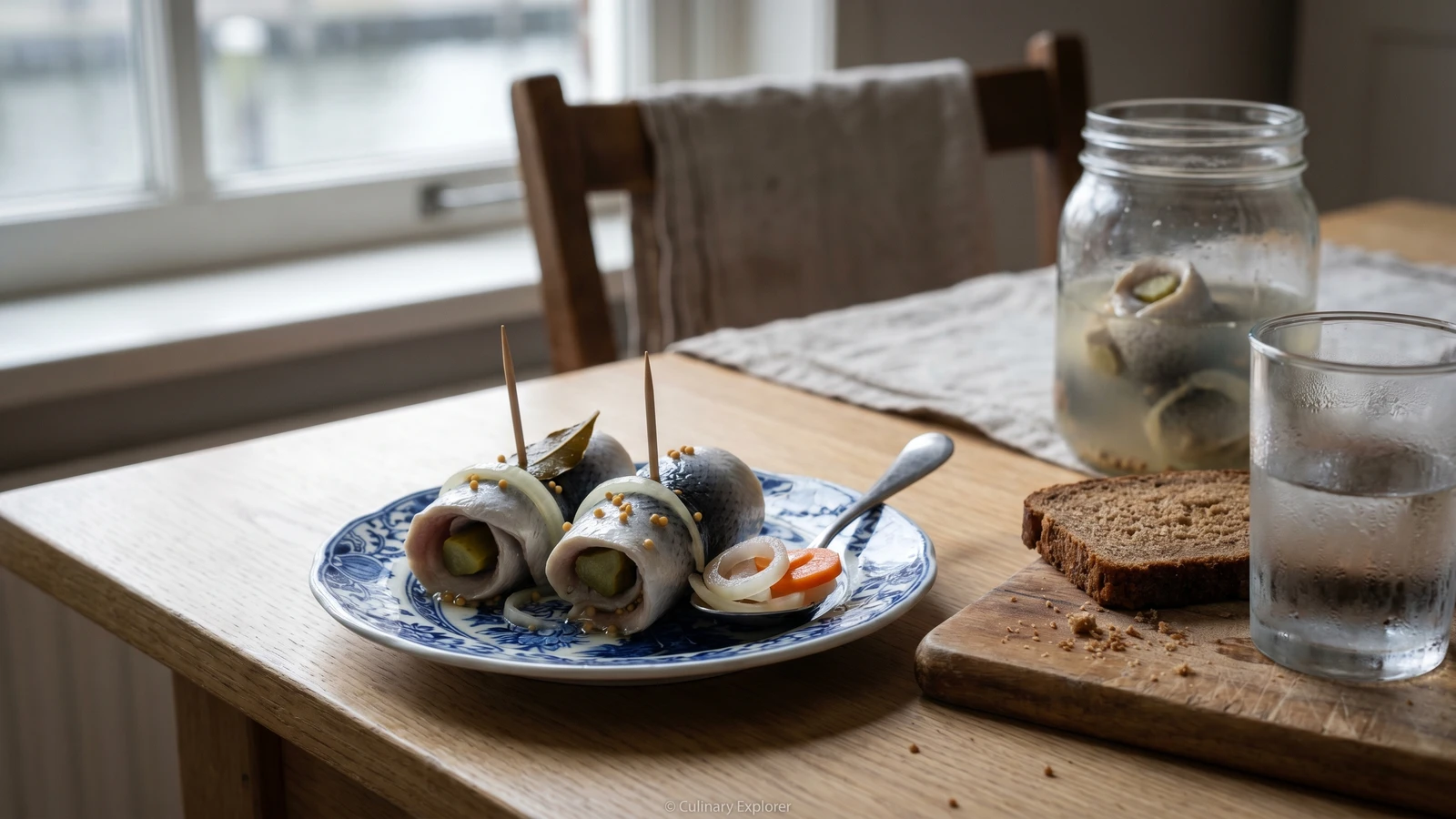
Rolmops is the North Sea in a jar: herring, vinegar, onion, and patience, rolled tight for the old Dutch talent of making a small fish last.
In Yerseke, the tide table taught us what was fresh, but the pantry taught us what survived. Herring is both lessons at once. It arrives silver and quick from the cold sea, then becomes something sharper, stricter, more Dutch: salted, soured, rolled around onion and augurk, the little pickled gherkin that makes the whole thing snap awake.
The name already tells you most of the joke. Rolmops comes through German Rollmops, from rollen, to roll, and Mops, the pug dog, because somebody in the nineteenth century looked at a curled herring with its little skewered face and saw a dog. For obvious reasons, scholars do not always get invited to parties. But let me tell you a secret: the joke survives because the food is serious. Before refrigeration, vinegar was not decoration. It was time, bought in a bottle.
Use herring that has already been properly salted and parasite-safe, then give it a clean vinegar bath with onion, bay, mustard seed, pepper, and just enough sugar to keep the sourness from shouting. The rolling is simple. Hou het altijd simpel, always keep it simple. A strip of onion, a piece of gherkin, a tight curl, a wooden pick, and then the hardest instruction in Dutch cooking: leave it alone for a day or two. The vinegar must enter the fish, the onion must soften, and the jar must become one conversation.
Serve rolmops cold, with rye bread, boiled potatoes, or nothing but a fork and a clear conscience. It is New Year's food because it wakes you up after the old year has done its worst. A dish without its story is half a meal, and this one tells of quays, barrels, vinegar, winter tables, and a country that learned to keep the sea on the shelf.
Rolmops entered Dutch foodways through the same North Sea herring culture that shaped medieval Holland, but the rolled pickled form is most closely associated with nineteenth-century German and Dutch urban preserving traditions. The German name Rollmops, literally rolled pug, appears in that period, when bottled vinegar, rail transport, and commercial fish curing made sour herring rolls common in shops and taverns. In the Netherlands it became a practical borrelhap, a small drinking bite, and a make-ahead dish for winter tables, especially around New Year.
Quantity
8
parasite-safe and ready to eat
Quantity
250ml
Quantity
150ml
Quantity
2 tablespoons
Quantity
1 teaspoon
Quantity
1 large
thinly sliced
Quantity
8 small
halved lengthwise if large
Quantity
2
Quantity
1 teaspoon
Quantity
1 teaspoon
Quantity
4
Quantity
1 small
thinly sliced
Quantity
to serve
| Ingredient | Quantity |
|---|---|
| salted herring filletsparasite-safe and ready to eat | 8 |
| white wine vinegar | 250ml |
| water | 150ml |
| sugar | 2 tablespoons |
| fine sea salt | 1 teaspoon |
| onionthinly sliced | 1 large |
| pickled gherkins (augurken)halved lengthwise if large | 8 small |
| bay leaves | 2 |
| yellow mustard seeds | 1 teaspoon |
| black peppercorns | 1 teaspoon |
| allspice berries | 4 |
| carrot (optional)thinly sliced | 1 small |
| dark rye bread (optional) | to serve |
Taste a small corner of one herring fillet. It should be pleasantly salty, not punishing. If it tastes harsh, soak the fillets in cold water for 20 minutes, then pat them very dry. Do not begin with fresh raw herring unless it has been professionally frozen and cured for this purpose; vinegar is not a miracle worker.
Put the vinegar, water, sugar, salt, half the sliced onion, bay leaves, mustard seeds, peppercorns, allspice, and carrot into a small pan. Bring just to a simmer, stir until the sugar dissolves, then take it off the heat. Let it cool completely. Warm pickle tightens fish into rubber, and we are preserving herring, not punishing it.
Lay each herring fillet skin-side down. Place a strip or two of onion and one piece of gherkin across the wide end, then roll the fillet firmly around it. Fasten each roll with a wooden cocktail stick. The roll should hold its shape without being squeezed dry; a rolmops is a curl, not a clenched fist.
Set the rolled herrings upright or snugly on their sides in a clean glass jar, scattering the remaining raw onion between them. Pour the completely cooled pickle over the fish until covered. Tap the jar gently on the counter to release trapped air, then close it and refrigerate.
Chill for at least 24 hours, and 48 hours if you can bear it. The fish firms, the onion loses its bite, and the vinegar settles into the herring instead of sitting on top of it. Serve cold with some of the pickled onion, a piece of dark rye, or boiled potatoes. This is food for a small plate, a sharp fork, and a glass kept properly cold.
1 serving (about 140g)
Culinary guides, cultural storytelling, and the editorial depth that makes cooking meaningful.
Discover Culinary ExplorerChef Joost
A plain name for a quietly clever dish: fresh mince, sweet fried onion, nutmeg, and mashed potato baked until the top goes golden and the table goes silent.

Chef Joost
Ajam Besengek is the golden chicken stew of the Indo-Dutch table: coconut milk, turmeric, and candlenut cooked down until the sauce clings to the meat like memory.

Chef Joost
The old Dutch spelling says ajam, the city says Batavia, and the pot says exactly what the rijsttafel always was: memory, trade, and dinner in one dish.

Chef Joost
The name means simply fried chicken, but the Dutch spelling carries a whole Indies kitchen: turmeric, coriander, garlic, and a golden crust that remembers the boemboe.