
Chef Joost
Aardappelschotel met Gehakt
A plain name for a quietly clever dish: fresh mince, sweet fried onion, nutmeg, and mashed potato baked until the top goes golden and the table goes silent.
A cooking platform built around craft, culture, and the stories behind what we eat.
Created by
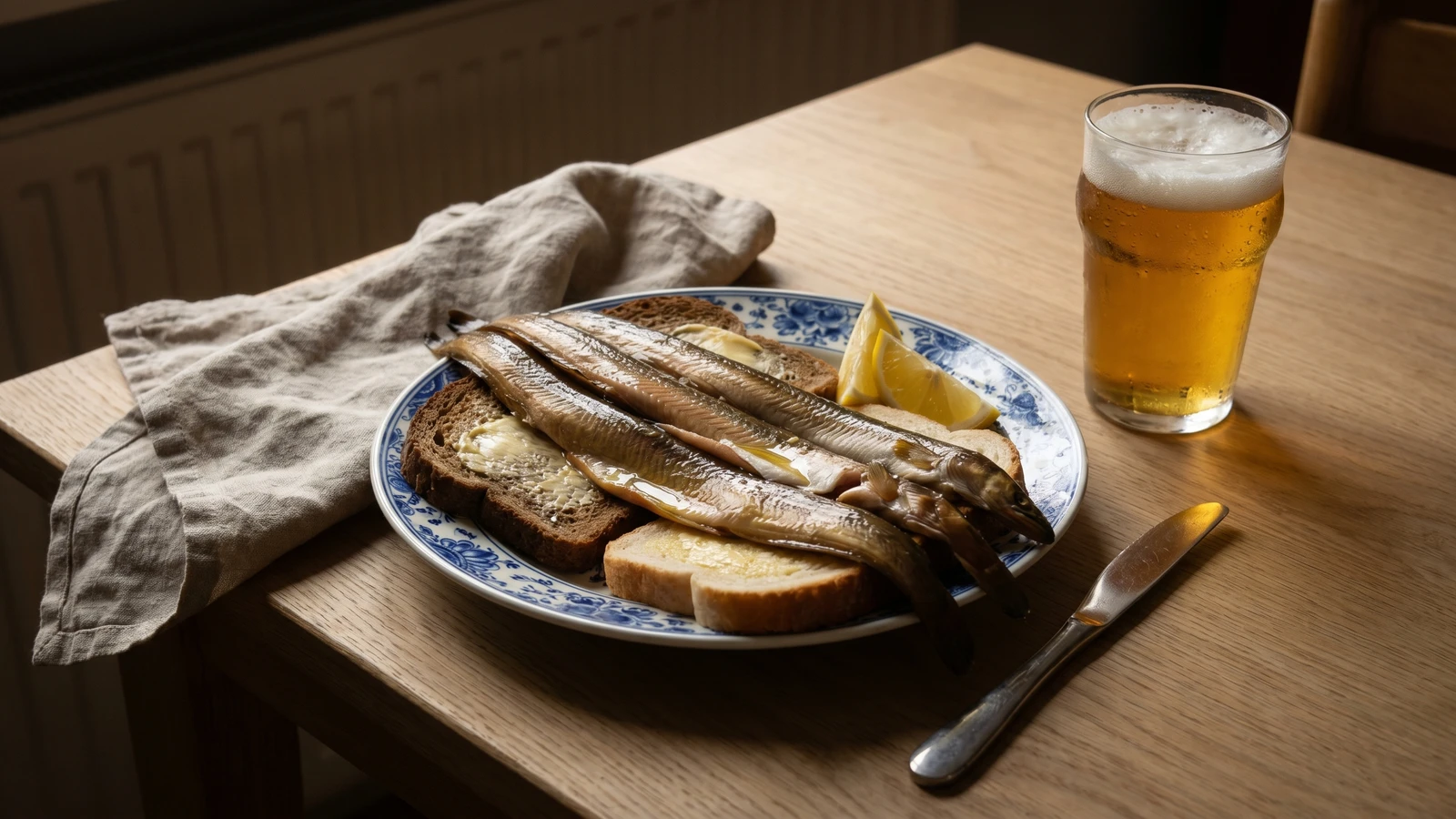
Golden smoked eel on buttered bread, the old feast food of Holland's wet country, where rivers, peat ditches, and the former Zuiderzee once set the table.
The tide sets the menu, but eel has always been the fish that ignored the tidy borders of our maps. It moves from river to sea and back through ditches, lakes, sluices, and stories, slipping through the Low Countries like a secret with fins. In Zeeland we knew the sea by its shellfish, but in Holland's waterlands, around Volendam, Marken, Harderwijk, and the old Zuiderzee towns, the feast fish was paling, rich as butter before butter ever touched the bread.
The name is plain Dutch, and that is part of its charm. Gerookte paling means exactly what it says: smoked eel. No poetry hiding in the syllables, no Latin mouse in the shell this time. But let me tell you a secret: the luxury is not in complication. It is in restraint. Salt, air, beechwood smoke, and enough patience for the skin to turn bronze and the flesh to set into soft flakes.
This is celebration food, but not restaurant food. Hou het altijd simpel, always keep it simple. Buy eel only from a fishmonger who can tell you where it came from, because the European eel has been badly treated by our appetite. Then brine it properly, dry it until the surface is tacky, smoke it gently, and eat it the Dutch way: on buttered bread, with a little lemon if you must, and silence for the first bite.
Smoked eel became closely associated with the fishing towns of the former Zuiderzee, especially Volendam and Harderwijk, where eel smoking grew from preservation work into a feast-day trade during the nineteenth and early twentieth centuries. After the Afsluitdijk closed the Zuiderzee in 1932 and created the IJsselmeer, the old saltwater fishery changed sharply, but paling remained a marker of Dutch waterland identity. Today the dish carries a sustainability burden: European eel stocks are endangered, so responsible sourcing from licensed, traceable fisheries or carefully managed farms is part of cooking the tradition honestly.
Quantity
4, about 250g each
skin on, from a traceable source
Quantity
1 liter
Quantity
60g
Quantity
15g
Quantity
1
Quantity
6
lightly crushed
Quantity
as needed
for smoking
Quantity
8 slices
Quantity
as needed
Quantity
1
cut into wedges
| Ingredient | Quantity |
|---|---|
| cleaned eelsskin on, from a traceable source | 4, about 250g each |
| cold water | 1 liter |
| fine sea salt | 60g |
| light brown sugar | 15g |
| bay leaf | 1 |
| black peppercornslightly crushed | 6 |
| beechwood chips or chunksfor smoking | as needed |
| good white or rye bread | 8 slices |
| soft butter | as needed |
| lemon (optional)cut into wedges | 1 |
Stir the salt and brown sugar into the cold water until dissolved, then add the bay leaf and crushed peppercorns. The sugar is not there to make the eel sweet; it helps the skin take colour in the smoke. Keep the brine cold.
Lay the cleaned eels in the brine, cover, and refrigerate for 3 hours. Do not taste raw eel and do not leave it warm on the counter; eel is generous once cooked and unforgiving before it. After brining, rinse the eels briefly under cold water and pat them very dry.
Set the eels on a rack in the refrigerator, uncovered, for 1 to 2 hours, until the surface feels slightly tacky. This tacky skin is what holds the smoke. Skip it and the smoke sits on the eel like a coat in the rain.
Heat a smoker to 80C to 90C and add beechwood. You want steady heat and a clean, pale smoke smell, not a bitter cloud. If using wood chips, soak them briefly and drain well so they smoulder rather than flare.
Smoke the eels for 60 to 90 minutes, depending on thickness, until the skin is deep golden-brown and the thickest part reaches 63C. The flesh should pull from the backbone in moist flakes. If the skin darkens too quickly, lower the heat; smoke should preserve the eel's richness, not bully it.
Let the eel rest until just warm or cool completely, then peel away the skin and lift the flesh from the bones in long pieces. Spread bread generously with butter, lay the smoked eel on top, and serve with lemon wedges only if the table asks for them. The first bite should taste of fat, salt, wood, and water.
1 serving (about 245g)
Culinary guides, cultural storytelling, and the editorial depth that makes cooking meaningful.
Discover Culinary ExplorerChef Joost
A plain name for a quietly clever dish: fresh mince, sweet fried onion, nutmeg, and mashed potato baked until the top goes golden and the table goes silent.

Chef Joost
Ajam Besengek is the golden chicken stew of the Indo-Dutch table: coconut milk, turmeric, and candlenut cooked down until the sauce clings to the meat like memory.

Chef Joost
The old Dutch spelling says ajam, the city says Batavia, and the pot says exactly what the rijsttafel always was: memory, trade, and dinner in one dish.

Chef Joost
The name means simply fried chicken, but the Dutch spelling carries a whole Indies kitchen: turmeric, coriander, garlic, and a golden crust that remembers the boemboe.