
Chef Joost
Aardappelschotel met Gehakt
A plain name for a quietly clever dish: fresh mince, sweet fried onion, nutmeg, and mashed potato baked until the top goes golden and the table goes silent.
A cooking platform built around craft, culture, and the stories behind what we eat.
Created by
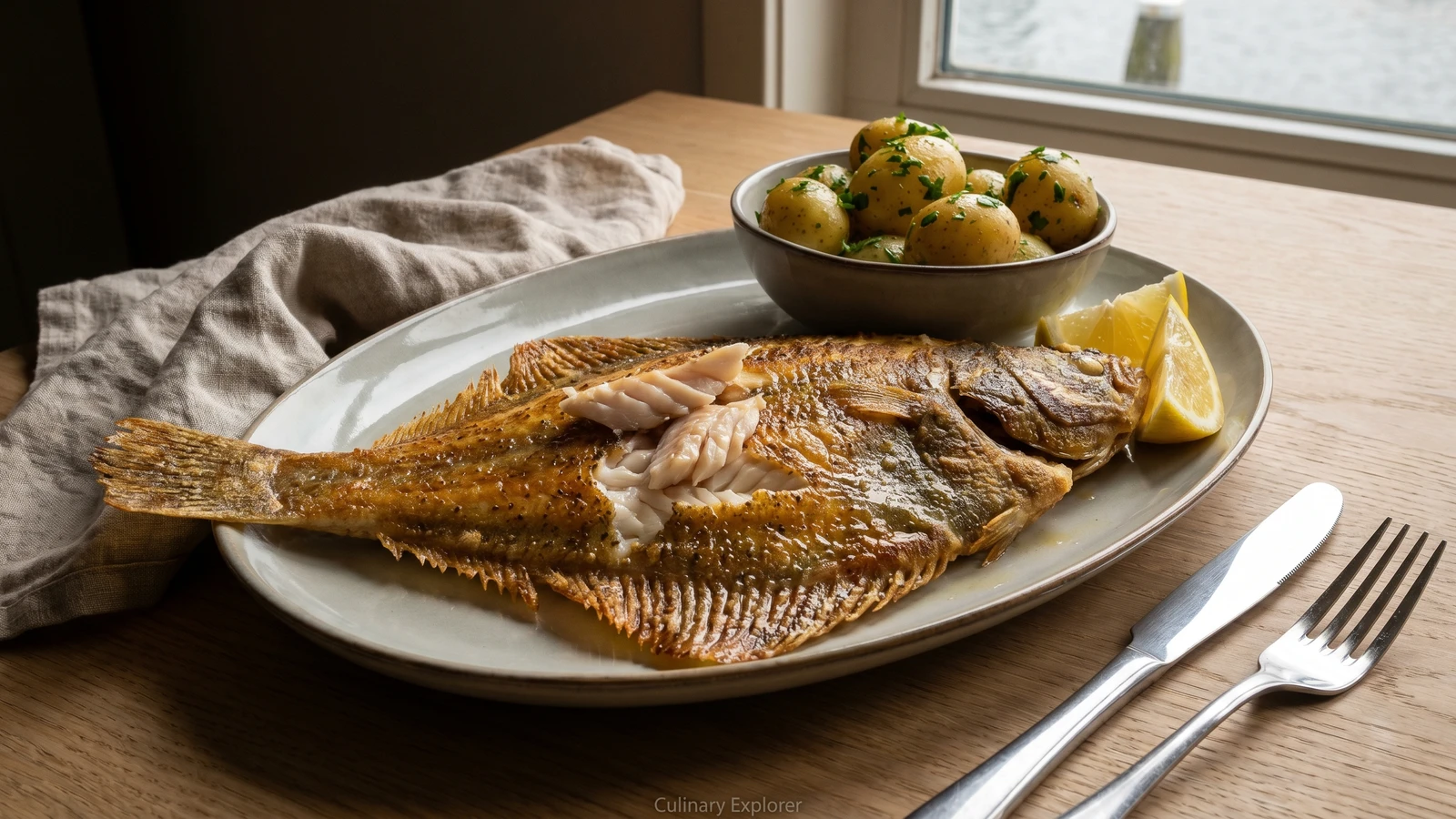
A whole North Sea plaice, dusted with flour and fried in butter, is the Dutch weeknight fish at its plainest and best: crisp skin, sweet flesh, potatoes waiting.
In Zeeland, the sea does not announce dinner politely. It lands it at the quay, bright-eyed and cold, and everyone nearby adjusts their plans. Schol, plaice, was never the grand fish on the table. It was the flat, freckled, affordable one: the fish you bought on a weekday because it cooked faster than the potatoes and tasted of the North Sea without asking for ceremony.
But let me tell you a secret. The dishes tourists miss are often the ones Dutch families eat most faithfully. Gebakken schol means fried plaice, and that plain name is doing useful work. Gebakken, fried in the pan here, tells you not to hide the fish under sauce or ambition. Flour, butter, salt, lemon. Hou het altijd simpel, always keep it simple. The fish is thin, so it punishes delay; the skin wants a dry surface, a hot pan, and enough butter to brown at the edges without burning.
There is one seasonal truth worth taking to the fishmonger. People still say meischol, May plaice, as if May alone crowns the fish, but after spawning the plaice can be lean. By later spring and summer it eats its way back into sweetness. The tide sets the menu, and so does the calendar. Buy the freshest whole schol you can, let the bones protect the flesh, and serve it with boiled potatoes, melted butter, parsley, and lemon. That is not poverty of imagination. It is confidence.
Plaice, Pleuronectes platessa, has long been one of the ordinary flatfish of the North Sea and Wadden Sea fisheries, landed in Dutch ports from Scheveningen and IJmuiden to Den Helder and Vlissingen. Early twentieth-century Dutch household cookbooks, shaped by the Amsterdamse Huishoudschool tradition, treated small whole fish as practical weekday fare: dried well, dusted in flour, and fried quickly in butter or fat. The market term meischol, May plaice, survives, but modern fishmongers often prefer plaice later in summer after spawning, when the fish has fed and regained fullness.
Quantity
4, 300 to 400g each
gutted, trimmed, skin on
Quantity
800g
peeled if desired
Quantity
120g
divided
Quantity
2 tablespoons
Quantity
80g
Quantity
1 1/2 teaspoons
divided
Quantity
1/2 teaspoon
Quantity
1 small bunch
finely chopped
Quantity
1
cut into wedges
| Ingredient | Quantity |
|---|---|
| whole cleaned plaice (schol)gutted, trimmed, skin on | 4, 300 to 400g each |
| small waxy potatoespeeled if desired | 800g |
| unsalted butterdivided | 120g |
| neutral oil | 2 tablespoons |
| all-purpose flour | 80g |
| fine sea saltdivided | 1 1/2 teaspoons |
| freshly ground white pepper | 1/2 teaspoon |
| flat-leaf parsleyfinely chopped | 1 small bunch |
| lemoncut into wedges | 1 |
Ask the fishmonger for whole cleaned plaice, with the skin left on and the fins trimmed if your pan is modest. At home, pat the fish very dry inside and out with kitchen paper. This is not fussing; flour clings to dry skin, and dry skin crisps while wet skin sulks.
Put the potatoes in a pan of salted water, bring to a boil, and cook until tender, about 15 to 18 minutes depending on size. Drain them and let them sit uncovered for a minute so their surfaces dry. A wet potato refuses butter, and we are not here to argue with potatoes.
Mix the flour with 1 teaspoon of the salt and the white pepper on a wide plate. Season the fish lightly with the remaining salt, then press each plaice into the flour on both sides. Shake off more flour than you think necessary. You want a thin veil, not a winter coat.
Set a wide frying pan over medium-high heat and add 1 tablespoon oil with 20g butter. When the butter foams and begins to smell nutty, lay in one plaice, dark side down if it fits best that way. Fry for 3 to 4 minutes, pressing gently at the thickest part so the fish lies flat. The edges should turn golden and crisp.
Slide a broad spatula under the fish, turn it carefully, and fry the second side for 2 to 3 minutes more. Spoon the browned butter over the top once or twice. The flesh is done when it lifts easily from the backbone near the head. Repeat with the remaining fish, adding fresh butter and oil as needed so the pan never smells burnt.
Melt the remaining butter in the warm potato pan, add the chopped parsley, and roll the potatoes through it. Serve each plaice at once with the parsley-butter potatoes and lemon wedges. Teach the table to lift the top fillets from the bone, then turn the frame and find the second side. A whole flatfish gives two small lessons, both edible.
1 serving (about 380g)
Culinary guides, cultural storytelling, and the editorial depth that makes cooking meaningful.
Discover Culinary ExplorerChef Joost
A plain name for a quietly clever dish: fresh mince, sweet fried onion, nutmeg, and mashed potato baked until the top goes golden and the table goes silent.

Chef Joost
Ajam Besengek is the golden chicken stew of the Indo-Dutch table: coconut milk, turmeric, and candlenut cooked down until the sauce clings to the meat like memory.

Chef Joost
The old Dutch spelling says ajam, the city says Batavia, and the pot says exactly what the rijsttafel always was: memory, trade, and dinner in one dish.

Chef Joost
The name means simply fried chicken, but the Dutch spelling carries a whole Indies kitchen: turmeric, coriander, garlic, and a golden crust that remembers the boemboe.