
Chef Joost
Aardappelschotel met Gehakt
A plain name for a quietly clever dish: fresh mince, sweet fried onion, nutmeg, and mashed potato baked until the top goes golden and the table goes silent.
A cooking platform built around craft, culture, and the stories behind what we eat.
Created by
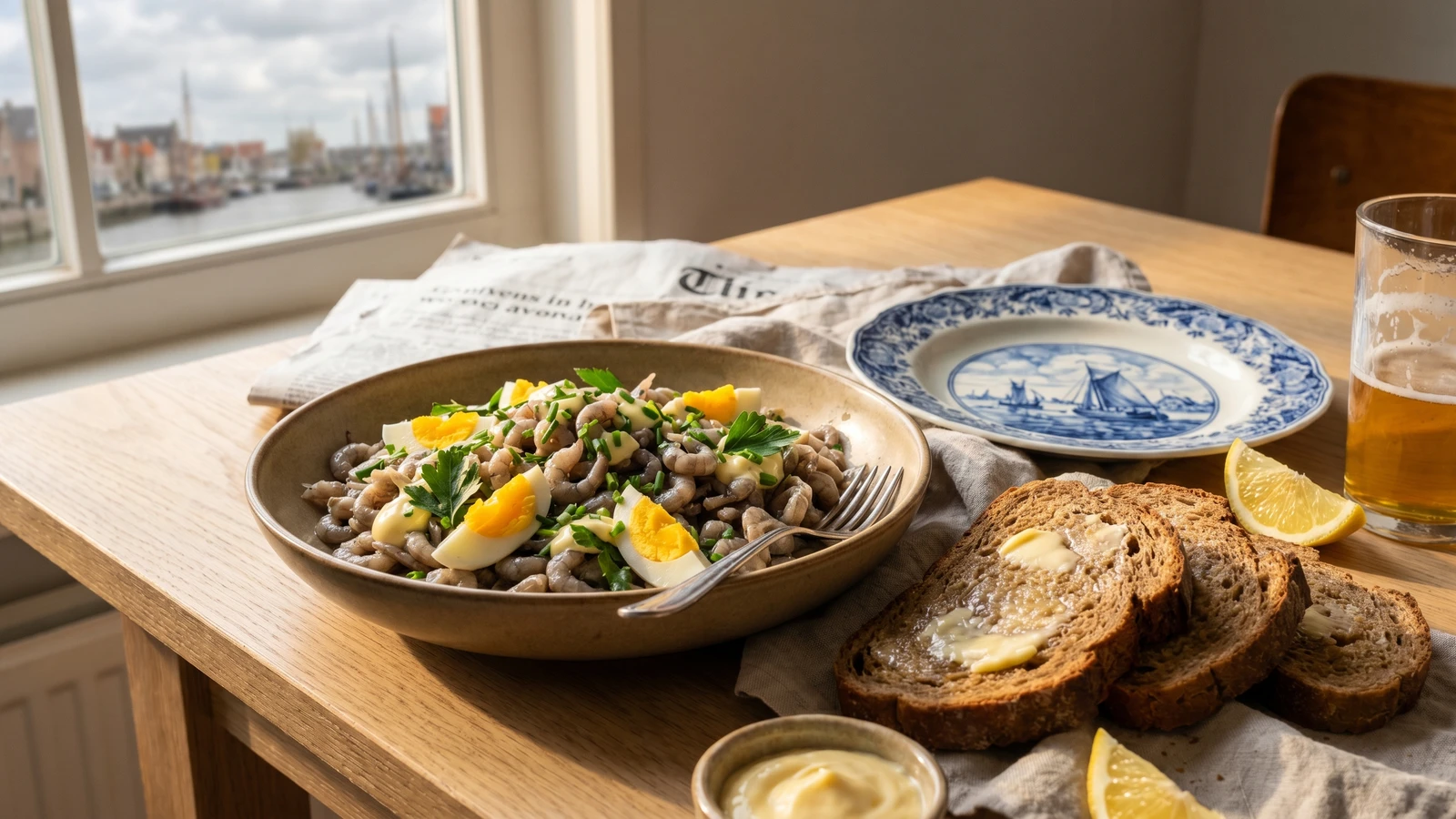
The smallest shrimp on the Dutch table carries the largest bit of coast: sweet North Sea grey shrimp, cooked at sea, peeled by hand, and served without fuss.
In Yerseke, the tide table told us when mussels arrived, but the little grey shrimp belonged to the quay in a different way. You bought them already cooked, still faintly salty from the North Sea, and if you were lucky someone had peeled them by hand before impatience ruined the afternoon. Hollandse garnalen, Dutch grey shrimp, are not impressive at first glance. That is their trick.
But let me tell you a secret: these small brown-grey creatures are one of the great luxuries of the Dutch coast. They are cooked aboard or soon after landing because they spoil quickly, then peeled, traditionally by hand, a task so fiddly it makes you understand why a bowl of them feels like a gift. The flavour is delicate, sweet, mineral, almost nutty. If you drown it in sauce, you have paid good money to taste mayonnaise. For obvious reasons, this is a poor bargain.
So we keep it simple. Hou het altijd simpel, always keep it simple. A little lemon, a soft mayonnaise, buttered brown bread, maybe chopped chives or parsley, and the shrimp kept cold until the last moment. The cook's work is restraint. Let the sea speak first, then pass the bread.
Hollandse garnalen are the brown shrimp Crangon crangon, long landed along the Dutch North Sea coast and especially associated with fishing places such as Stellendam, Den Oever, Lauwersoog, and the Wadden Sea ports. Their fragility shaped the tradition: the shrimp are cooked very soon after capture, then peeled by hand or machine, with hand-peeled garnalen still prized for their intact texture and clean sweetness. The dish is less a single formal recipe than a coastal way of eating, served on buttered bread, in cocktails, through ragout for croquettes, or by the bowl at a feestelijke tafel, a celebratory table.
Quantity
400g
chilled
Quantity
4 large slices
Quantity
50g
softened
Quantity
2 large
Quantity
1
Quantity
1 teaspoon
Quantity
150ml
sunflower oil preferred
Quantity
1 tablespoon
plus wedges to serve
Quantity
1 teaspoon
finely grated
Quantity
1 tablespoon
finely chopped
Quantity
1 tablespoon
finely chopped
Quantity
to taste
| Ingredient | Quantity |
|---|---|
| hand-peeled Hollandse garnalen (Dutch grey shrimp)chilled | 400g |
| dark brown bread or rye bread | 4 large slices |
| good buttersoftened | 50g |
| eggs | 2 large |
| egg yolk | 1 |
| Dutch mustard | 1 teaspoon |
| neutral oilsunflower oil preferred | 150ml |
| fresh lemon juiceplus wedges to serve | 1 tablespoon |
| lemon zestfinely grated | 1 teaspoon |
| chivesfinely chopped | 1 tablespoon |
| flat-leaf parsleyfinely chopped | 1 tablespoon |
| fine sea salt and white pepper | to taste |
Lower the two whole eggs into simmering water and cook for 8 minutes. Cool them in cold water, peel, and cut into halves or quarters. You want the yolk just set and still golden, not chalky; chalk has no business near shrimp.
Whisk the egg yolk with the mustard and a pinch of salt. Add the oil very slowly at first, drop by drop, then in a thin stream once the mixture thickens. Whisk in the lemon juice, lemon zest, and a little white pepper. Taste it carefully. The sauce should brighten the shrimp, not sit on them like a winter coat.
Keep the garnalen cold until you need them. Fold half the lemon mayonnaise through the shrimp with the chives and parsley, using a spoon and a light hand. Stop when they are just glossy. These shrimp are small and tender; stirring them as if you are mixing mortar is a crime against the coast.
Spread the bread generously with softened butter. The butter is not decoration, it is structure: it protects the bread from the shrimp juices and gives the briny sweetness something rich to lean against.
Pile the dressed garnalen onto the buttered bread or serve them in a shallow bowl with the bread alongside. Add the boiled eggs, lemon wedges, and the remaining mayonnaise in a small dish. Serve cold, immediately, with forks for polite company and fingers for the people you actually trust.
1 serving (about 230g)
Culinary guides, cultural storytelling, and the editorial depth that makes cooking meaningful.
Discover Culinary ExplorerChef Joost
A plain name for a quietly clever dish: fresh mince, sweet fried onion, nutmeg, and mashed potato baked until the top goes golden and the table goes silent.

Chef Joost
Ajam Besengek is the golden chicken stew of the Indo-Dutch table: coconut milk, turmeric, and candlenut cooked down until the sauce clings to the meat like memory.

Chef Joost
The old Dutch spelling says ajam, the city says Batavia, and the pot says exactly what the rijsttafel always was: memory, trade, and dinner in one dish.

Chef Joost
The name means simply fried chicken, but the Dutch spelling carries a whole Indies kitchen: turmeric, coriander, garlic, and a golden crust that remembers the boemboe.