
Chef Lesia
Arnautka (арнаутка, southern durum-wheat loaf)
Durum wheat makes bread the color of late steppe sun: golden, firm, nutty, and strong enough to hold salo, tomato juice, and green sunflower oil without collapsing.
A cooking platform built around craft, culture, and the stories behind what we eat.

Created by
The best rohalyky are not tidy little pastries. They are thin triangles rolled tight around jam, with dark tips, sugared backs, and one sticky seam where the filling tried to escape.
The jam always tries to escape. That is how you know the rohalyky are alive: thin dough wrapped around something too fragrant to behave, plum povydlo dark as old wine, apricot jam glowing amber, poppy seed paste black and sweet under your teeth. The tips go darker than the middle, the sugar catches on your fingers, and the first one disappears before the tea has even brewed properly.
This is comfort food with a clever dough. Sour cream makes it tender and faintly tangy, butter gives it its crumble, and a small spoon of yeast lets the pastry puff just enough without becoming bread. The filling must be thick. Runny jam will boil out and glue itself to the tray, which is not a tragedy, only a lesson Aunt Nadia would have written as, "not liquid, Lesiu, proper jam."
Roll the triangles tight from the wide end to the point, but don't bully them. You want the crescent to hold its shape while still showing the hand that made it. My grandmother would have called this the kind of baking you make before guests, then hide from the family so any are left. She was correct.
Make a full tray. Rohalyky are picnic food, after-school food, train food, the little sweet thing tucked into a napkin because somebody might get hungry later. A recipe only lives while somebody cooks it, and these live best in pockets, tins, and hands dusted with sugar.
Rohalyk means a little horn, from the Ukrainian word rih, and crescent pastries of this kind have long moved through Halychyna, Volyn, Bukovyna, and central Ukrainian home kitchens, especially where market-town baking met village preserve-making. Ukrainian versions often depend on povydlo, a very thick plum or apple preserve cooked down until it can sit inside dough without flooding it, or on mak, sweet poppy seed filling used in holiday breads and winter baking. Soviet bakery counters made plainer, drier versions, but the home form stayed generous: butter or sour cream dough, jam from the pantry, and enough for a table that keeps reaching.
Quantity
500g
plus more for rolling
Quantity
200g
cubed
Quantity
150g
Quantity
1 large
Quantity
2 tablespoons
Quantity
1 teaspoon
Quantity
1 teaspoon
Quantity
1 teaspoon
Quantity
2 tablespoons
Quantity
300g
Quantity
80g
for absorbing looser jam
Quantity
1 yolk plus 1 tablespoon milk
for glazing
Quantity
3 tablespoons
for sprinkling
Quantity
for dusting
| Ingredient | Quantity |
|---|---|
| plain flourplus more for rolling | 500g |
| cold unsalted buttercubed | 200g |
| full-fat sour cream or smetana | 150g |
| egg | 1 large |
| sugar | 2 tablespoons |
| vanilla sugar or vanilla extract | 1 teaspoon |
| fine sea salt | 1 teaspoon |
| dried yeast | 1 teaspoon |
| warm milk | 2 tablespoons |
| thick plum povydlo, apricot jam, or thick apple butter | 300g |
| ground walnuts (optional)for absorbing looser jam | 80g |
| egg yolk mixed with milkfor glazing | 1 yolk plus 1 tablespoon milk |
| granulated sugarfor sprinkling | 3 tablespoons |
| icing sugar (optional) | for dusting |
Stir the dried yeast into the warm milk with a pinch of the sugar and leave it until the surface looks creamy and smells faintly bready. It does not need to foam like a festival. It only needs to wake up.
Put the flour, sugar, vanilla sugar, and salt in a wide bowl. Rub in the cold butter with your fingertips until the mixture looks like uneven breadcrumbs, with a few pea-sized flakes left. Those little flakes give the baked rohalyky their tender bite, so don't rub them into dust.
Beat the sour cream, egg, and woken yeast together, then pour into the flour mixture. Bring it together with a fork first, then your hand, just until there are no dry pockets. The dough should feel soft, cool, and a little shy of sticky. If it grabs your fingers badly, dust in flour one spoon at a time.
Pat the dough into a thick disc, wrap it, and chill until it firms and relaxes, at least one hour. You are not waiting for a big rise. You are letting the flour drink, the butter settle, and the dough become willing under the rolling pin.
Spoon the povydlo or jam into a bowl and test it: it should mound, not run. If it slides like syrup, stir in ground walnuts until it thickens enough to hold a line when you drag a spoon through it. This is the step that decides the dish. Thick filling stays inside; thin filling escapes and burns before the pastry is ready.
Divide the chilled dough into four pieces. Roll one piece at a time into a thin circle, roughly the thickness of a coin, keeping the rest cold. Cut the circle into eight triangles, like a sun with sharp rays. If the dough resists, leave it for five minutes; dough sulks when rushed.
Place a small teaspoon of filling at the wide end of each triangle. Roll from the wide end toward the point, gently stretching the point so it tucks underneath, then curve the ends into a small crescent. Set them seam-side down on a lined tray. My hands want them neat, but the table likes the funny ones too.
Brush lightly with the egg yolk and milk, then scatter with granulated sugar. Bake at 180C until the bodies are golden, the tips are darker, and the kitchen smells of butter and cooked fruit. Listen when you lift one: the bottom should sound dry and crisp against the tray, not soft.
Let the rohalyky sit on the tray until the bubbling jam quiets, then move them to a rack. Dust with icing sugar once cool, if you like that snowdrift look. Eat one while standing up. This is quality control, not theft.
1 serving (about 40g)
Culinary guides, cultural storytelling, and the editorial depth that makes cooking meaningful.
Discover Culinary ExplorerChef Lesia
Durum wheat makes bread the color of late steppe sun: golden, firm, nutty, and strong enough to hold salo, tomato juice, and green sunflower oil without collapsing.

Chef Lesia
A proper hearth loaf announces itself before you cut it: dark crust, hollow knock, flour caught in the blisters, and that deep oven smell that makes people move closer.
Chef Lesia
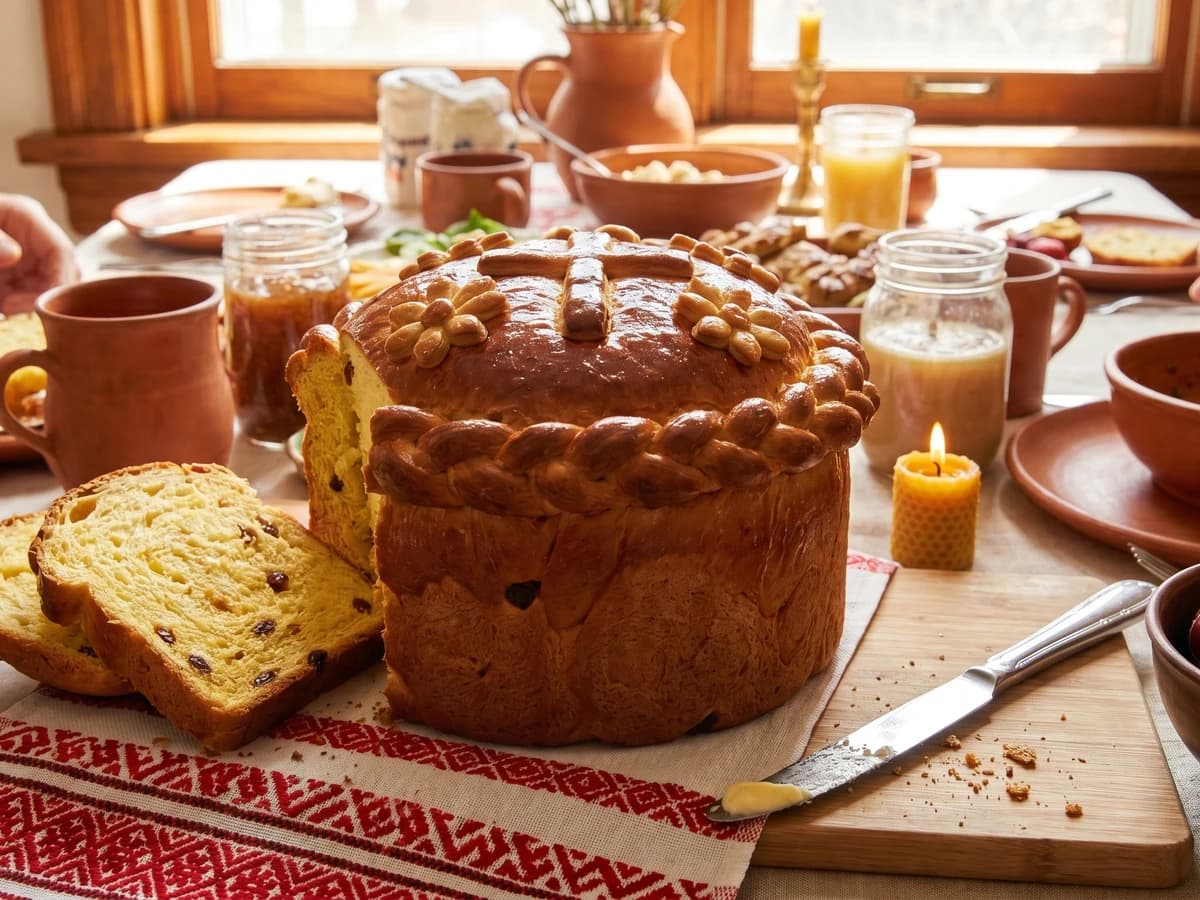
This is the Easter bread that climbs upward before it spreads out, a golden tower of eggs, butter, braids, flowers and crosses from Bukovyna's western table.
Chef Lesia
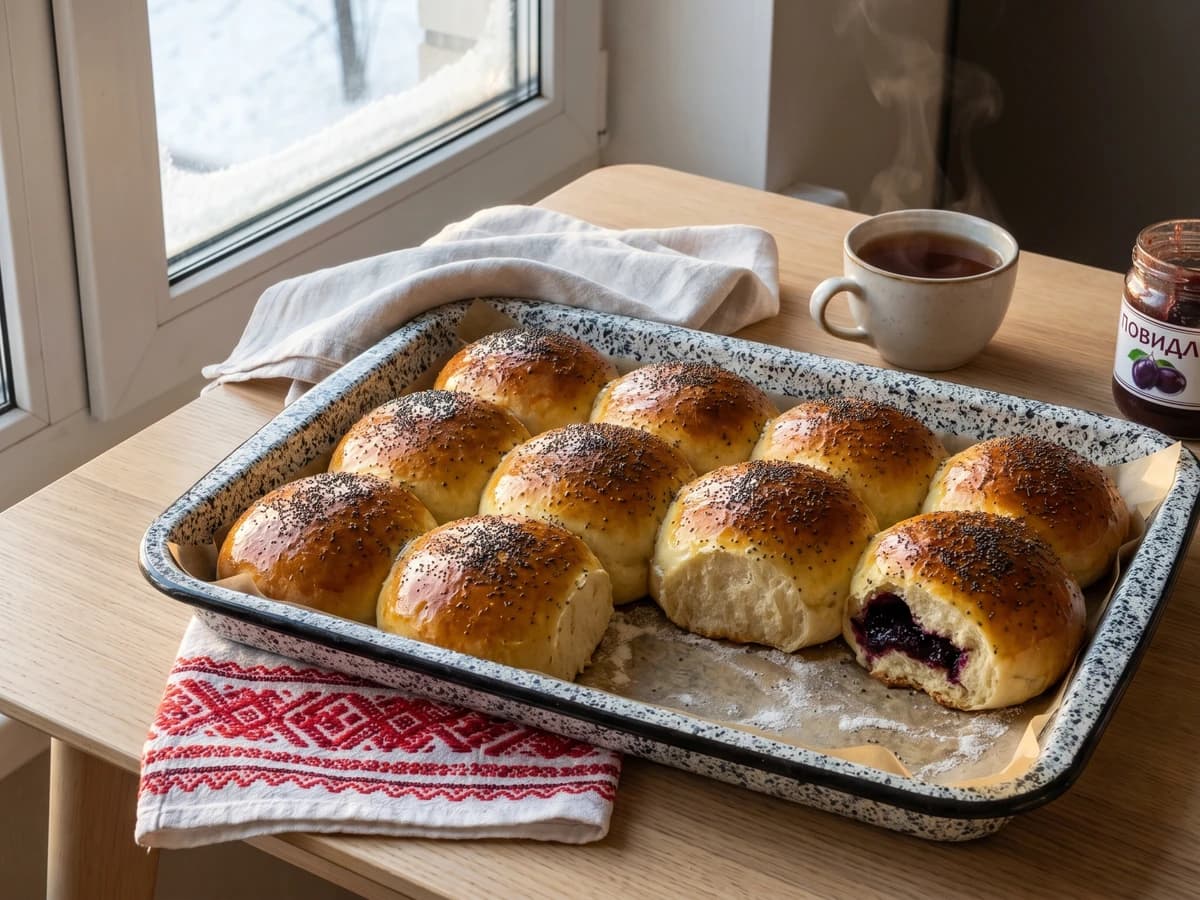
The sweetest part of bulochky is not sugar but milk: it makes a dough that pulls apart in pale threads, ready to stay plain or hide a spoon of thick povydlo.