Culinary Explorer

A cooking platform built around craft, culture, and the stories behind what we eat.
Discover Culinary Explorer
Robalo a la Tabasqueña

Robalo a la Tabasqueña

Created by

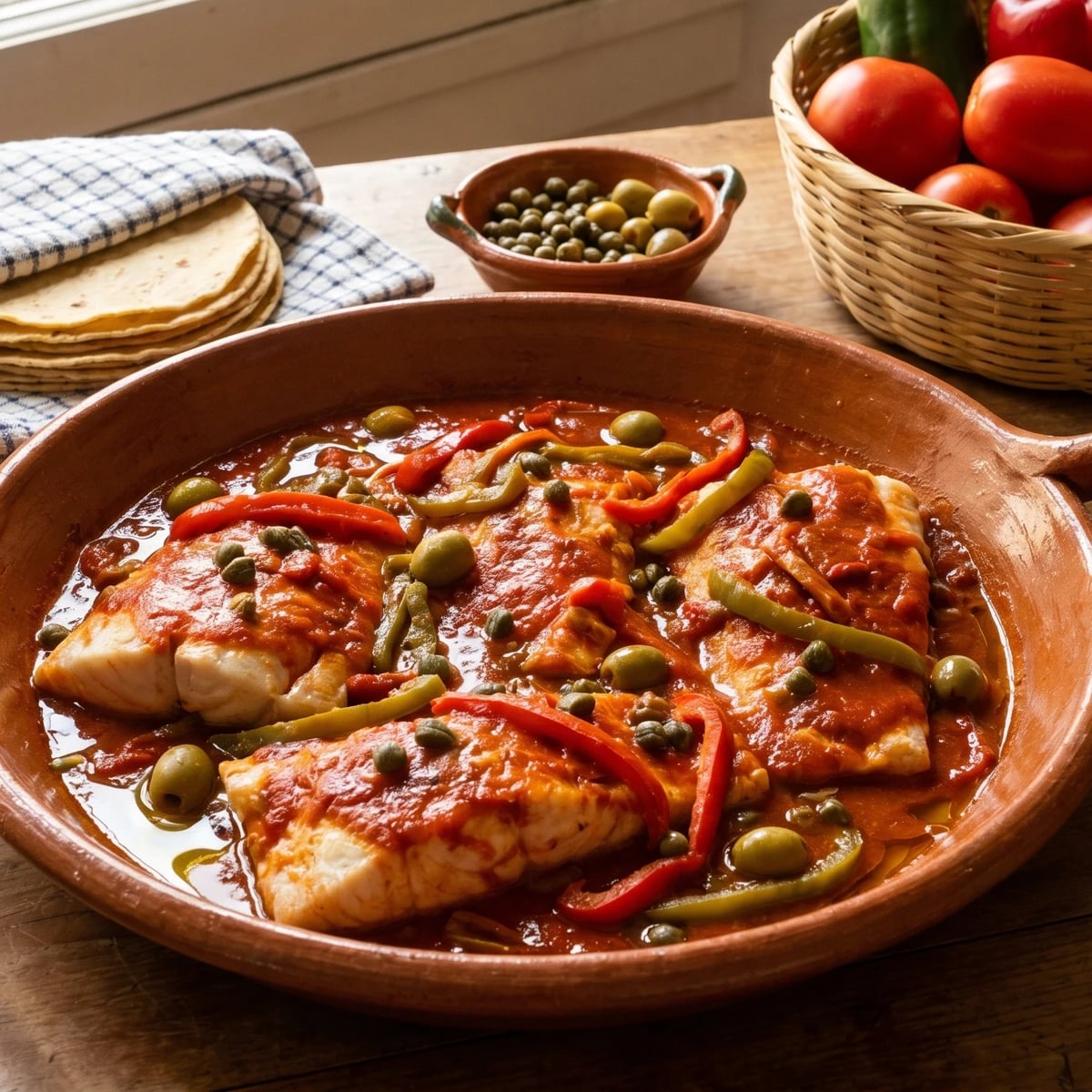
Tabasco's river-country robalo baked under tomato, olive, caper, bell pepper, and chile amashito sauce, a Gulf dish that carries both Indigenous fish cookery and the colonial pantry.

Main Dishes
Mexican
Dinner Party
Special Occasion
Holiday
30 min
Active Time
35 min cook1 hr 5 min total
Yield6 servings

Tabasco, especially the river country between the Grijalva, the Usumacinta, and the wetlands near Centla, knows robalo because the water gives it robalo. This is not a northern fish taco situation. This is a whole fillet or thick steaks baked with tomato, onion, garlic, bell pepper, olives, capers, and chile amashito until the sauce stains the fish and the oil shines red-orange at the edges.

The chile that marks the dish is chile amashito, that small wild Tabasco chile that looks harmless until it teaches you manners. Use it whole or lightly crushed. It gives perfume and heat without turning the dish into a dare. Not all Mexican food is hot, but Tabasco cooks know how to use a chile so it speaks clearly.

The women who taught me versions of this dish in Villahermosa and along the road toward Frontera did not treat the capers and olives as decoration. They are part of the coastal colonial pantry, brought into a kitchen that already knew fish, tomato, chiles, herbs, and banana leaves. Cada estado, su propia cocina. Here the fish goes to the table in the same cazuela where it cooked, with arroz blanco, fried plantain, and warm corn tortillas. Saber cocinar es saber vivir.

Robalo a la Tabasqueña reflects the Gulf and river trade routes that connected Tabasco to Veracruz, Campeche, and the Caribbean during the colonial period, when olives, capers, and vinegar entered local fish cookery. The Indigenous base was already there: freshwater and brackish fish from the Grijalva and Usumacinta systems cooked with tomato, chile, and local herbs. The Tabasco version is often compared to pescado a la veracruzana, but chile amashito, regional river fish, and the local habit of serving it from a clay cazuela make it its own dish, not a copy.

The technique, the tradition, and the story behind every dish.

Discover Culinary Explorer

Ingredients

robalo (snook) fillets or thick steaks

Quantity

2 1/2 pounds

skin on if possible

kosher salt

Quantity

1 1/2 teaspoons, plus more to taste

freshly ground black pepper

Quantity

1/2 teaspoon

fresh lime juice

Quantity

3 tablespoons

olive oil

Quantity

3 tablespoons

pork lard (manteca de cerdo)

Quantity

1 tablespoon

white onion

Quantity

1 large

thinly sliced

garlic cloves

Quantity

4

finely chopped

red bell pepper

Quantity

1

sliced into thin strips

green bell pepper

Quantity

1

sliced into thin strips

ripe Roma tomatoes

Quantity

2 pounds

peeled and chopped, or use 1 can (28 ounces) whole peeled tomatoes crushed by hand

tomato paste

Quantity

2 tablespoons

fresh chile amashito

Quantity

8 to 12

left whole or lightly crushed

pimiento-stuffed green olives

Quantity

1/2 cup

drained

capers

Quantity

3 tablespoons

drained

caper brine

Quantity

1 tablespoon

bay leaf

Quantity

1

fresh epazote

Quantity

1 sprig

fresh hoja santa or momo (optional)

Quantity

1 sprig

dried Mexican oregano

Quantity

1/2 teaspoon

crushed between your fingers

dry white wine or fish stock

Quantity

1/2 cup

apple cider vinegar

Quantity

1 tablespoon

fresh cilantro (optional)

Quantity

1 tablespoon

chopped, for finishing

lime wedges (optional)

Quantity

for serving

arroz blanco (optional)

Quantity

for serving

fried ripe plantains (optional)

Quantity

for serving

warm corn tortillas (optional)

Quantity

for serving

Equipment Needed

  • Wide clay cazuela or heavy oven-safe skillet
  • Sharp fillet knife
  • Wooden spoon
  • Instant-read thermometer

Instructions

  1. 1

    Season the fish

    Pat the robalo dry. Season both sides with the salt, black pepper, and lime juice. Let it sit for 20 minutes while you build the sauce. Do not leave it longer or the lime will tighten the flesh. You want seasoning, not ceviche.

  2. 2

    Start the sofrito

    Heat the olive oil and lard in a wide clay cazuela or heavy skillet over medium heat. Add the onion and cook for 5 minutes, until soft and glossy but not brown. Add the garlic and cook for 30 seconds. The lard gives body to the sauce. La manteca es el sabor, even when there is only a spoonful.

  3. 3

    Cook the peppers

    Add the red and green bell peppers. Cook for 6 to 8 minutes, stirring often, until the strips soften and their edges relax into the oil. They should still hold their color. This is a Tabasco table, not a pot of gray vegetables.

  4. 4

    Reduce the tomato

    Stir in the chopped tomatoes and tomato paste. Cook for 10 to 12 minutes, until the tomato collapses, thickens, and the oil begins to separate at the edges. That separation tells you the sauce is cooked. Raw tomato tastes thin and sour. Cooked tomato tastes like it belongs to the fish.

  5. 5

    Add the briny pantry

    Add the chile amashito, olives, capers, caper brine, bay leaf, epazote, hoja santa if using, Mexican oregano, white wine or fish stock, and vinegar. Simmer for 5 minutes. Taste before adding more salt because the olives and capers already speak. The sauce should be bright, savory, lightly sharp, and fragrant with chile.

  6. 6

    Bake the robalo

    Heat the oven to 375F. Spread one third of the sauce in the bottom of a baking cazuela. Lay the seasoned robalo on top in a single layer, then spoon the remaining sauce over the fish. Bake uncovered for 18 to 22 minutes, depending on thickness, until the fish flakes at the center but still looks moist. If you have a thermometer, stop at 130F to 135F in the thickest part.

  7. 7

    Rest and serve

    Let the cazuela rest for 5 minutes. Pull out the bay leaf and the herb sprigs. Scatter the chopped cilantro over the top only if you are using it. Serve family-style with arroz blanco, fried ripe plantains, warm corn tortillas, and lime wedges. The sauce is meant to be dragged through rice. Recetas probadas y garantizadas.

Chef Tips

  • Robalo is snook. If you cannot find it, use grouper, red snapper, or striped bass. That is a compromise, not an upgrade. What you need is firm white fish that can take the sauce without falling apart.
  • Chile amashito is the Tabasco chile for this dish. Ask at Mexican markets with Central Gulf ingredients or look for it dried. If you cannot find it, use 1 or 2 chile habanero left whole and removed before serving, but understand the perfume is different.
  • Use ripe tomatoes when the market gives you ripe tomatoes. If the tomatoes are pale and hard, use good canned whole tomatoes. Mexican grandmothers cook with what the mercado is selling today, not what looks good in a picture.
  • Do not rinse the capers until they taste like nothing. Drain them. Keep a spoonful of brine. That sharpness is part of the colonial pantry that stayed in Tabasco's coastal cooking.

Advance Preparation

  • The tomato, olive, caper, and chile amashito sauce can be made one day ahead and refrigerated. Reheat it gently before baking the fish.
  • Do not bake the robalo ahead. Fish waits for nobody. Assemble and bake just before serving.
  • Leftover sauce keeps for three days and is good over rice or eggs. Leftover fish should be eaten the next day, gently warmed, not boiled into sadness.

Frequently Asked Questions

Nutrition Information

1 serving (about 510g)

Calories
730 calories
Total Fat
23 g
Saturated Fat
5 g
Trans Fat
0 g
Unsaturated Fat
16 g
Cholesterol
85 mg
Sodium
1280 mg
Total Carbohydrates
93 g
Dietary Fiber
8 g
Sugars
18 g
Protein
41 g

Note: Chef personas and recipes are created with AI assistance. Cook with care: follow safe food-handling practices, check doneness with a thermometer when needed, and adapt for allergies and your kitchen.

Where cooking meets culture.

Culinary guides, cultural storytelling, and the editorial depth that makes cooking meaningful.

Discover Culinary Explorer

More from Chiapas & Tabasco Main Dishes

Browse the full collection