Chef Graziella
Casoncelli alla Bergamasca
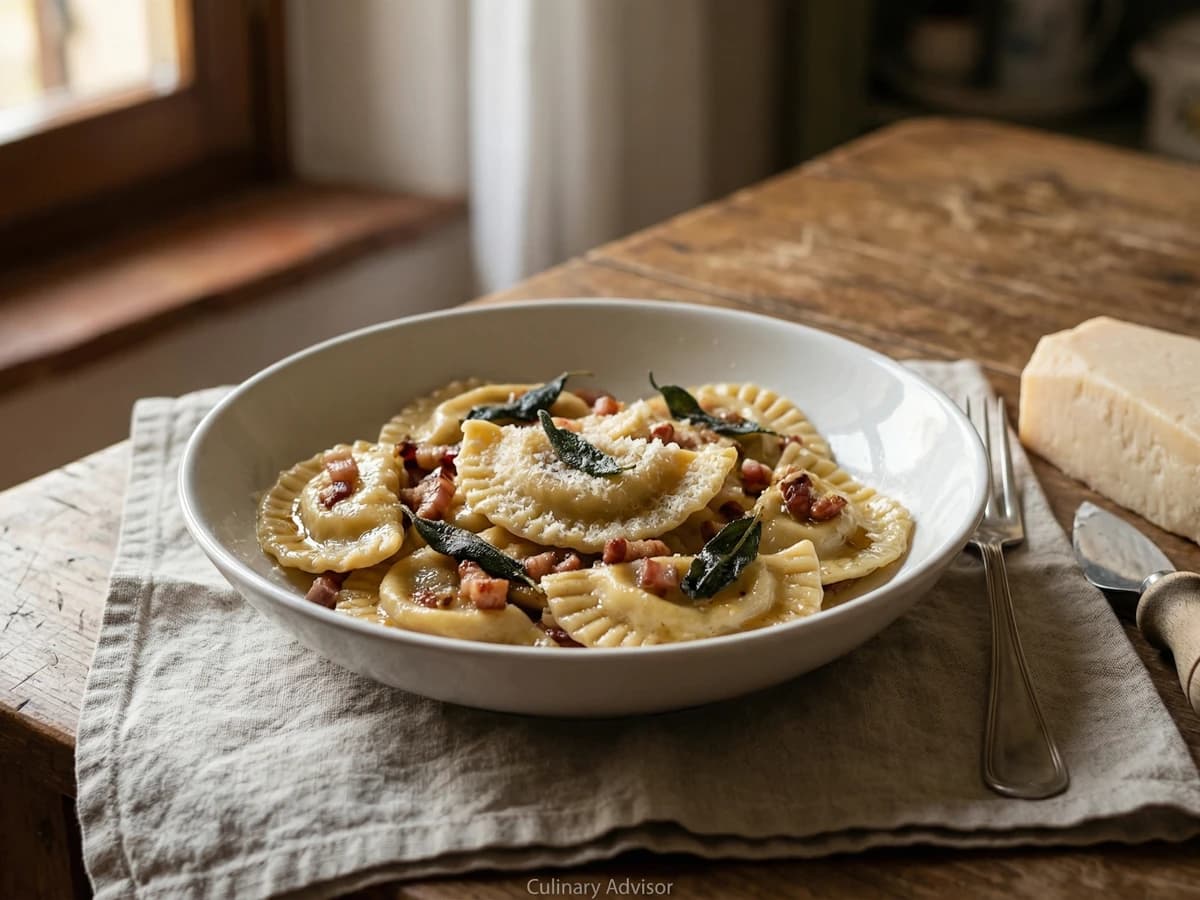
The stuffed pasta of Bergamo's valleys, where crushed amaretti in the meat filling creates a sweet-savory balance that exists nowhere else in Italy. Dressed simply in browned butter and sage.
A cooking platform built around craft, culture, and the stories behind what we eat.
Created by
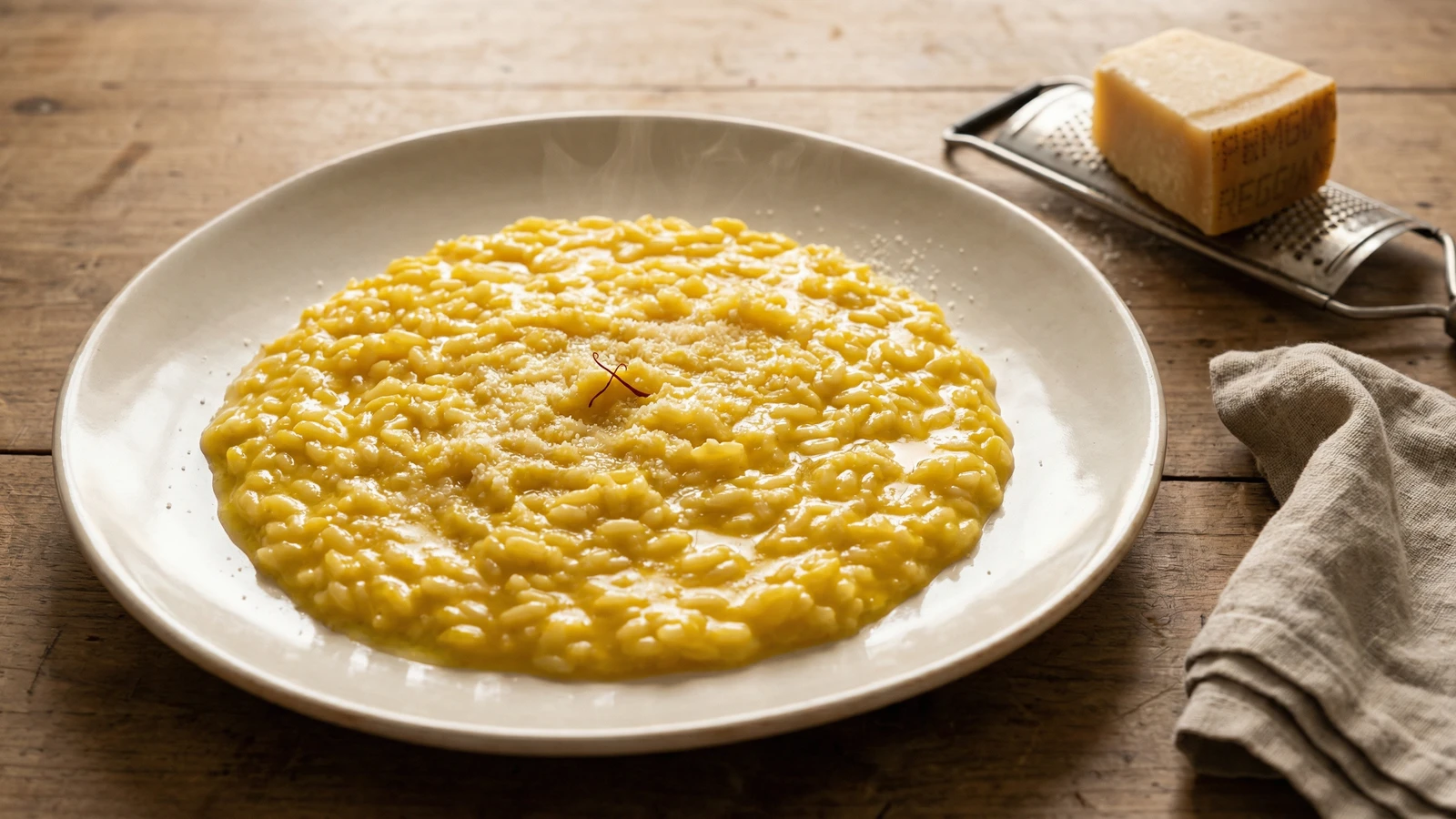
The golden rice of Milan, perfumed with saffron and enriched with bone marrow, cooked to proper all'onda consistency so it flows like a wave when you tilt the plate. Serve it the moment it is ready.
Risotto alla Milanese requires your undivided attention for exactly 25 minutes. You cannot walk away. You cannot answer the telephone. You stand at the stove, ladle in hand, and you pay attention. This is the price of entry.
The saffron must be real. True saffron costs what it costs because each thread is the stigma of a crocus flower, harvested by hand. If your saffron was inexpensive, it will taste like nothing and color the rice an artificial yellow that fools no one. Spend the money or make a different risotto.
The bone marrow is traditional but often omitted today. I include it because the Milanese have included it for centuries, and because it creates a depth of flavor that butter alone cannot achieve. Ask your butcher for marrow bones and he will know you are serious.
All'onda means 'like a wave.' When you shake the finished risotto, it should ripple and flow. If it sits in a stiff mound, you have made rice pudding. If it runs like soup, you have added too much liquid. The perfect risotto finds the space between.
Legend places the birth of risotto alla Milanese at a wedding feast in 1574, when a glassmaker's apprentice known as Zafferano (for his habit of adding saffron to stained glass) tinted the rice as a prank. The guests loved it. The dish almost certainly predates this story, but Milan has embraced the tale for five centuries. What is certain is that saffron, bone marrow, and short-grain rice have defined Lombard cooking since the Renaissance.
Quantity
6 cups
kept at a bare simmer
Quantity
1/4 teaspoon (about 30 threads)
Quantity
2 tablespoons
extracted from 2 marrow bones
Quantity
4 tablespoons
divided
Quantity
1 small
diced fine
Quantity
1 1/2 cups
Quantity
1/2 cup
Quantity
1 cup
freshly grated, plus more for serving
Quantity
to taste
| Ingredient | Quantity |
|---|---|
| beef or veal brothkept at a bare simmer | 6 cups |
| saffron threads | 1/4 teaspoon (about 30 threads) |
| beef bone marrowextracted from 2 marrow bones | 2 tablespoons |
| unsalted butterdivided | 4 tablespoons |
| yellow oniondiced fine | 1 small |
| Carnaroli rice | 1 1/2 cups |
| dry white wine | 1/2 cup |
| Parmigiano-Reggianofreshly grated, plus more for serving | 1 cup |
| kosher salt | to taste |
Ladle one half cup of hot broth into a small bowl. Add the saffron threads. Let them steep while you prepare everything else, at least 10 minutes. The broth will turn deep gold and smell of honey and hay. This is the soul of the dish.
If using whole marrow bones, roast them at 450°F for 15 minutes, then scoop out the soft marrow. Alternatively, ask your butcher to extract the marrow for you. The marrow should be soft and spreadable. Set it aside.
In a heavy-bottomed pot or deep skillet, melt 2 tablespoons of butter with the bone marrow over medium heat. When the fats have combined, add the diced onion. Cook slowly, stirring occasionally, until the onion is completely soft and translucent. This takes 8 to 10 minutes. The onion must not brown. You are building a foundation, not creating caramelization.
Add the rice to the soffritto all at once. Stir thoroughly for 2 minutes, coating every grain with the hot fat. The exterior starch toasts and creates a seal that allows the grain to absorb liquid gradually while remaining firm at the center. The grains will become translucent at the edges, opaque at the center. You will hear a faint crackling sound. This is correct.
Pour in the white wine. It will hiss and steam. Stir constantly until the wine has evaporated completely. You should no longer smell alcohol. The pan should be nearly dry before you proceed. Only then do you begin adding broth.
Add the saffron with its steeping liquid. Stir until absorbed. Then begin adding the remaining hot broth one ladleful at a time, stirring frequently. Never add the next ladleful until the previous one is nearly absorbed. The rice should always be moist but never swimming. Adjust heat to maintain a gentle simmer. This process takes approximately 18 minutes.
After 16 minutes, begin tasting. The rice is ready when it is tender but retains a whisper of resistance at the very center. Not crunchy. Not mushy. This takes between 18 and 22 minutes depending on your rice and your heat. You may not need all the broth. You may need a bit more. The rice tells you what it needs.
Remove the pot from heat. Add the remaining 2 tablespoons of cold butter, cut into pieces, and the grated Parmigiano-Reggiano. Stir vigorously for 30 seconds. This is the mantecatura, the final enrichment that makes risotto creamy without cream. Taste and add salt as needed. The saffron broth and cheese may have provided enough.
Let the risotto rest for one minute off heat, covered. Then check the consistency. When you shake the pan, the risotto should flow like a wave. This is all'onda. If it is too thick, stir in a splash of hot broth. It will continue to thicken as it sits, so err toward loose.
Spoon the risotto onto warm plates, spreading it with the back of the spoon so it flows naturally toward the edges. Do not mound it. Risotto waits for no one. Once plated, invite your guests to put off talking and start eating. Pass additional Parmigiano-Reggiano at the table.
1 serving (about 300g)
Culinary guides, cultural storytelling, and the editorial depth that makes cooking meaningful.
Discover Culinary ExplorerChef Graziella
The stuffed pasta of Bergamo's valleys, where crushed amaretti in the meat filling creates a sweet-savory balance that exists nowhere else in Italy. Dressed simply in browned butter and sage.

Chef Graziella
The Milanese cutlet made with pork instead of veal: bone-in, pounded thin, breaded simply, fried in clarified butter until the crust shatters at the touch of a fork. This is not schnitzel. This is older.
Chef Graziella
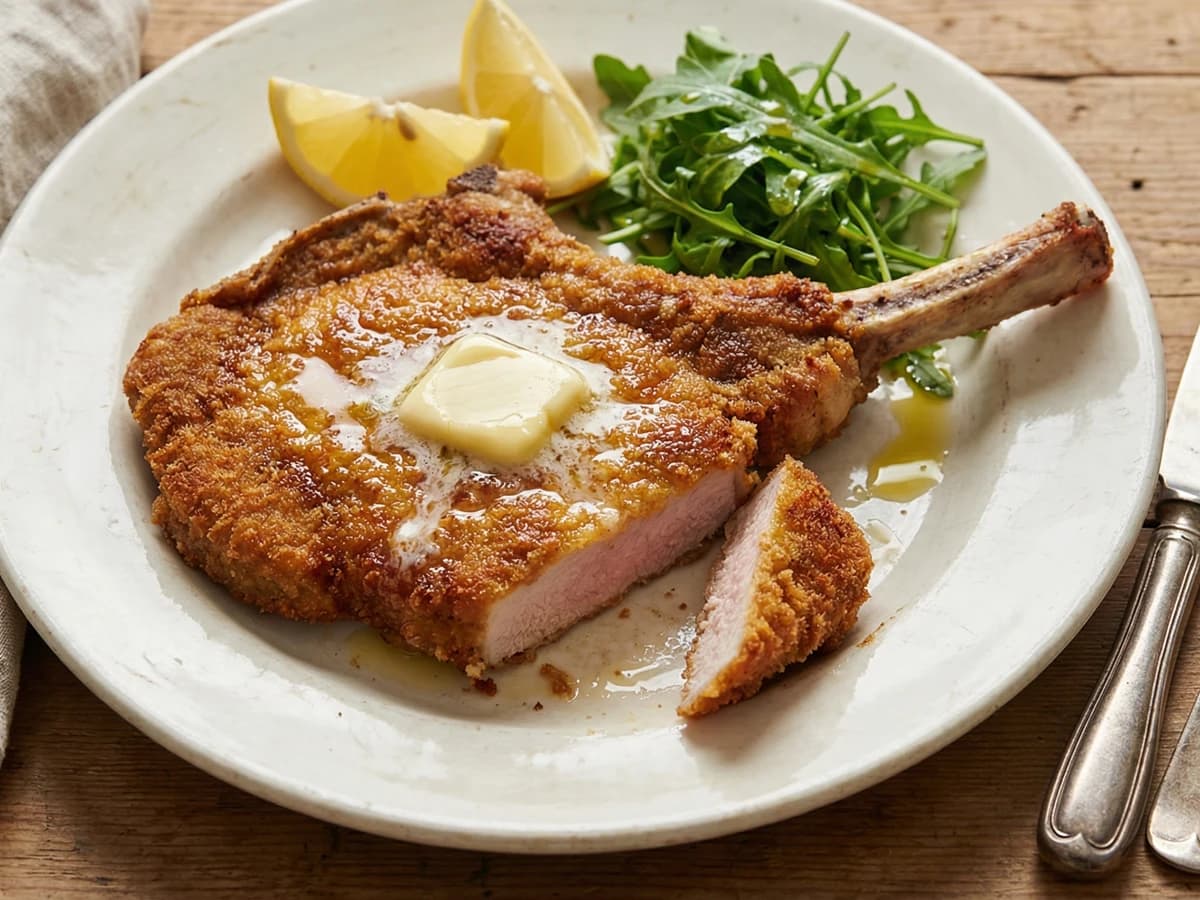
The original bone-in veal cutlet of Milan, pounded thin and fried in clarified butter until the crust shatters and the meat stays juicy. The Viennese borrowed this dish. The Milanese perfected it.
Chef Graziella
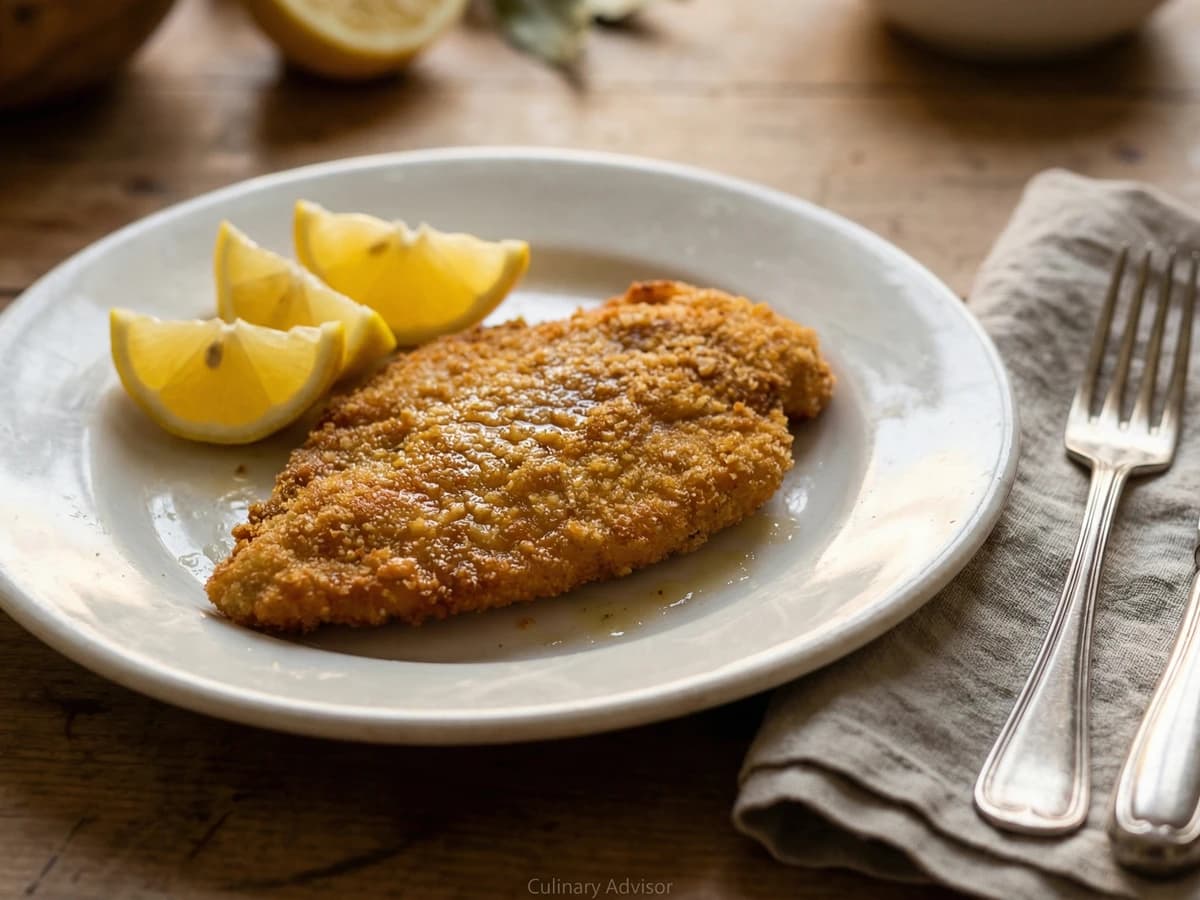
The golden cutlet of Lombardy, where chicken is pounded thin, coated in the finest crumbs, and fried in butter until it shatters at the touch of a fork. Lemon is the only adornment it needs.