Chef Graziella
Arista alla Fiorentina
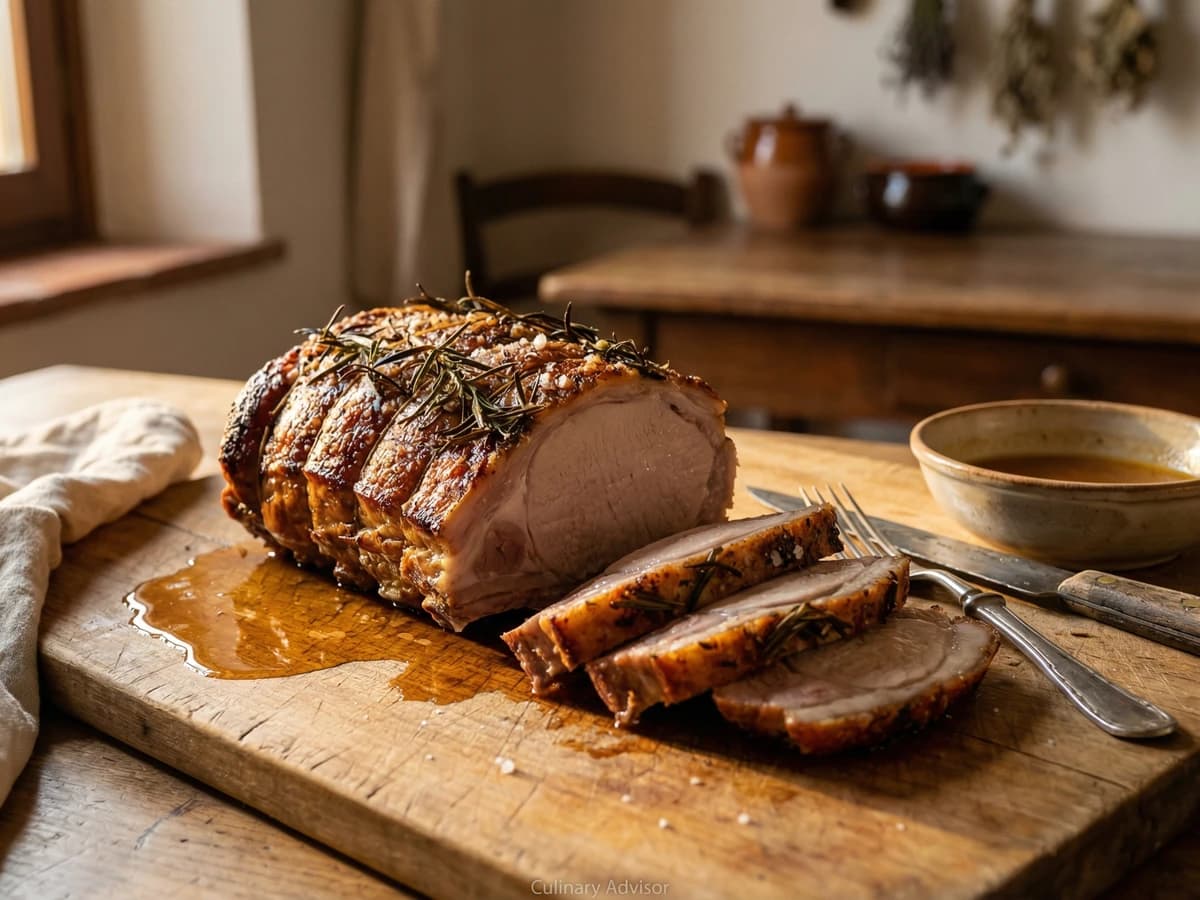
The roast pork of Florence: bone-in loin studded with rosemary and garlic, nothing more. This is the dish that earned its name from a Byzantine bishop who declared it aristos, the best.
A cooking platform built around craft, culture, and the stories behind what we eat.
Created by
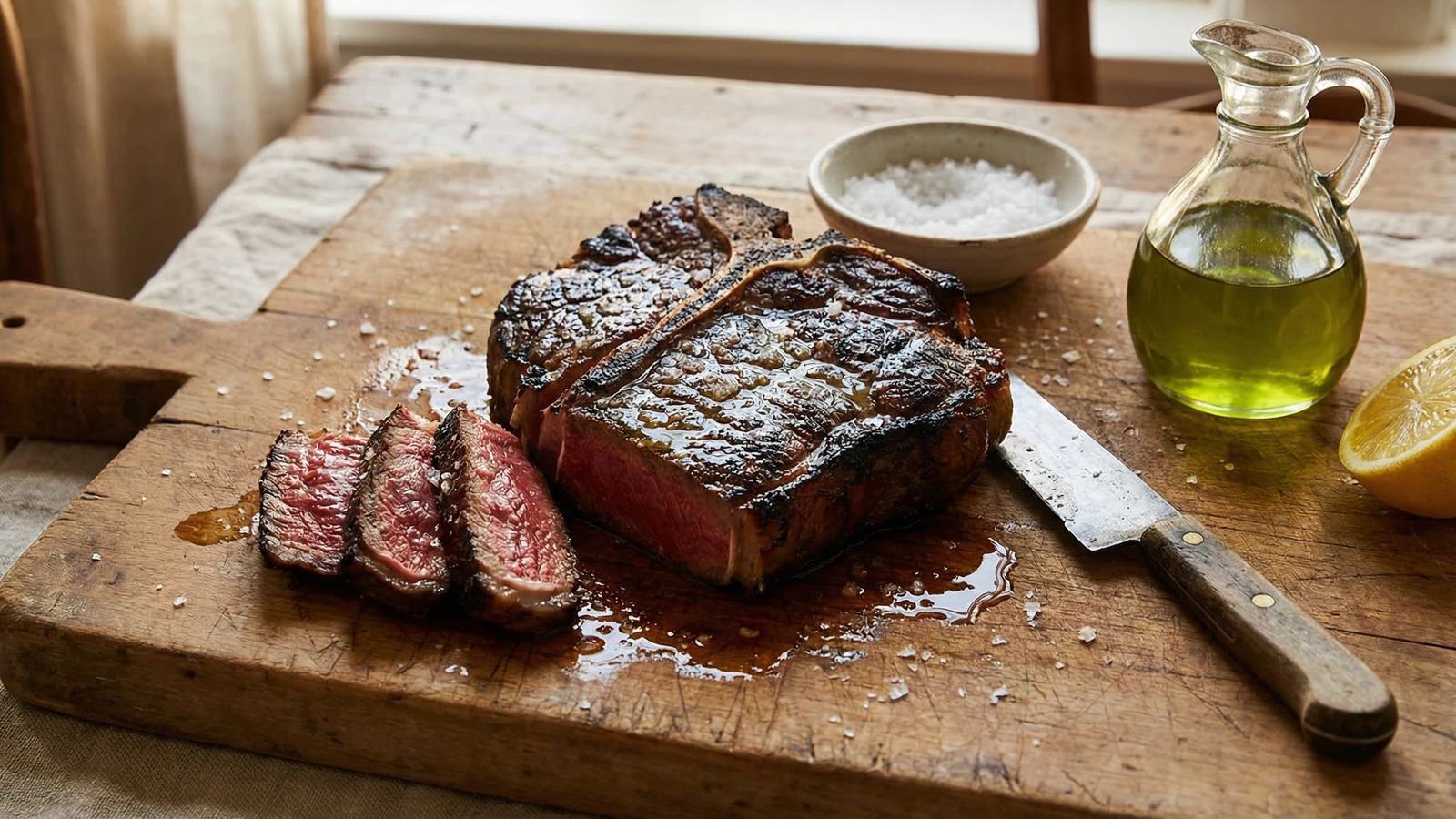
The T-bone of Florence, thick as three fingers and charred over blazing coals, rested until the juices settle, finished with nothing but salt and the best olive oil Tuscany can offer.
There is no more honest piece of meat in all of Italian cooking than the bistecca alla Fiorentina. It requires no sauce, no marinade, no technique beyond fire and patience. What it requires is an excellent steak, cut thick from the loin of a well-raised animal, and the restraint to leave it alone.
The Florentines have been cooking beef this way for centuries, originally using the massive white Chianina cattle from the Val di Chiana. These animals, once bred as draft oxen, produce beef of extraordinary tenderness with a clean, mineral flavor that needs no embellishment. You may not find true Chianina outside of Tuscany, but you can find good beef raised well and aged properly. That is what matters.
The thickness of the cut is non-negotiable. A proper bistecca measures at least three fingers thick, which translates to roughly two inches. Thinner cuts cannot develop the proper char while remaining rare inside. If your butcher gives you a one-inch steak and calls it Fiorentina, find another butcher. What you keep out of this dish is as significant as what you put in: no garlic, no herbs, no butter basting, no compound sauces. Just fire, salt, pepper, and olive oil. The beef does the rest.
The bistecca alla Fiorentina traces its name to English tourists who wandered Florence during the Renaissance, calling out for 'beefsteak' in the markets near San Lorenzo. The Florentines adopted both the word and the method of grilling thick cuts over open flame. The dish became inseparable from the great white Chianina cattle, whose meat was prized enough that the Duke of Tuscany once banned its export.
Quantity
1 (2-3 pounds)
at least 1 1/2 inches thick
Quantity
generous
Quantity
to taste
freshly cracked
Quantity
finest quality
Quantity
1
cut into wedges
| Ingredient | Quantity |
|---|---|
| T-bone or porterhouse steakat least 1 1/2 inches thick | 1 (2-3 pounds) |
| coarse sea salt | generous |
| black pepperfreshly cracked | to taste |
| extra virgin olive oil | finest quality |
| lemon (optional)cut into wedges | 1 |
Remove the steak from the refrigerator at least one hour before cooking. Two hours is better. The meat must reach room temperature throughout. A cold center will not cook properly no matter how perfect your technique. Pat the surface completely dry with paper towels.
Build a very hot fire using hardwood charcoal or, if you are fortunate, oak or olive wood. The grill grate should be positioned four to five inches above the coals. Wait until the flames have subsided and the coals glow white-hot. Hold your hand at grate level. If you cannot keep it there for more than two seconds, the fire is ready. A gas grill set to its highest setting will work, though Florentines would shake their heads.
Just before cooking, season the steak generously with coarse salt on both sides. Some Florentine cooks salt only after cooking. Both traditions are correct. What matters is that you use enough salt. A steak this thick needs more than you think. Do not add pepper yet. It will burn over the fire.
Place the steak on the hottest part of the grill. Do not move it. Do not press it. Do not touch it. Let it sear undisturbed for five to six minutes, until a dark crust forms and the meat releases from the grate naturally. You will hear it sizzle and pop. You will smell the char. This is correct.
Turn the steak once, using tongs, never a fork that would pierce the meat and release its juices. Sear the second side for another five to six minutes. For a steak of proper thickness, this will produce meat that is rare to medium-rare in the center, as tradition demands.
If you wish, stand the steak upright on its bone edge for two minutes. This crisps the fat along the spine and ensures the strip side and tenderloin side cook evenly. Not all Florentines do this. Many do. You may decide.
Transfer the steak to a warm platter. Let it rest for ten minutes. This is not optional. The juices must redistribute throughout the meat. A steak cut immediately will bleed across the plate and be dry in the mouth. Cover loosely with foil if your kitchen is cold.
Season with freshly cracked black pepper. Drizzle generously with your finest olive oil. The oil is not a garnish. It is essential, cutting through the richness and awakening the flavors. Carve the meat from the bone in thick slices, or present the whole steak on a wooden board and let guests serve themselves. Offer lemon wedges for those who want them, though many Florentines consider this heresy.
1 serving (about 290g)
Culinary guides, cultural storytelling, and the editorial depth that makes cooking meaningful.
Discover Culinary ExplorerChef Graziella
The roast pork of Florence: bone-in loin studded with rosemary and garlic, nothing more. This is the dish that earned its name from a Byzantine bishop who declared it aristos, the best.
Chef Graziella
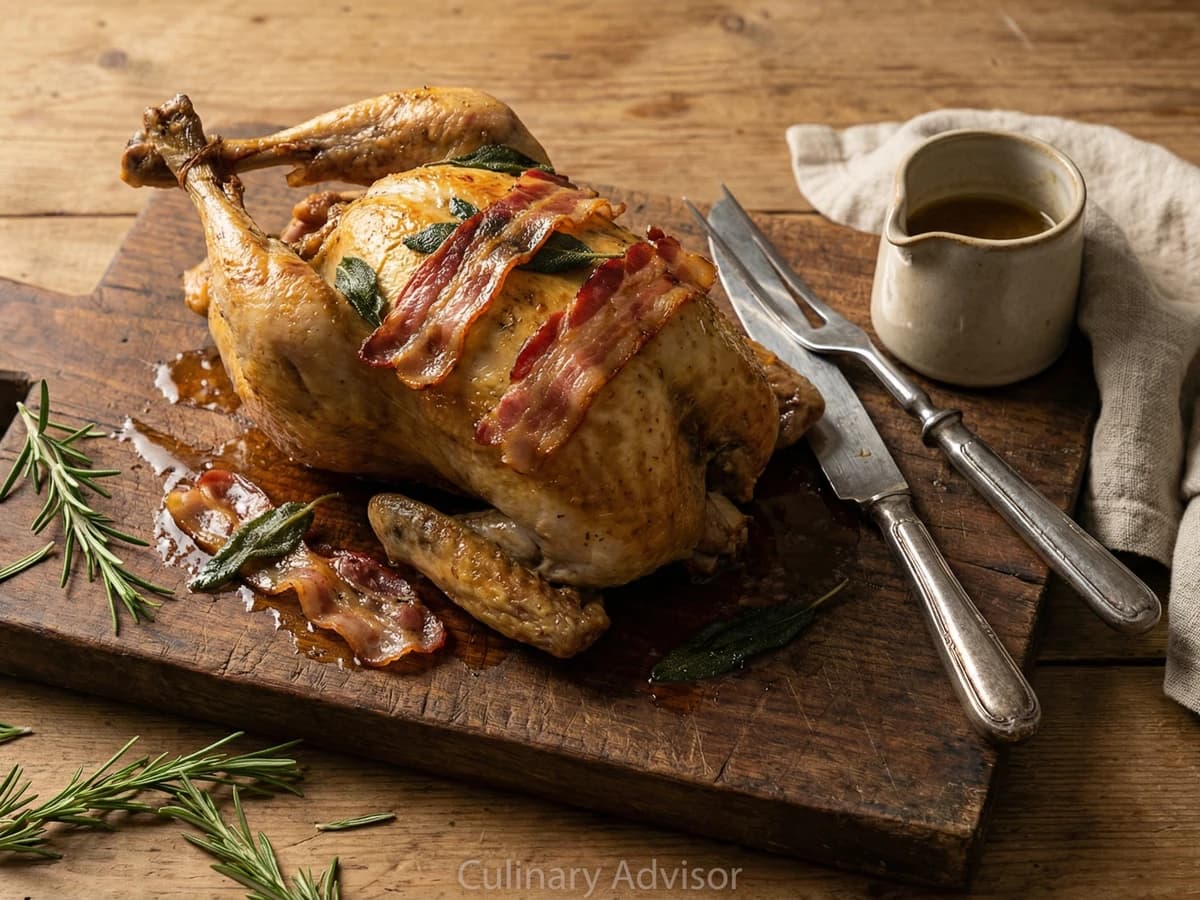
The noble guinea fowl of Tuscan farmhouses, wrapped in pancetta, perfumed with sage, roasted until the skin shatters and the meat stays moist. This is what Italians bring to the table when ordinary poultry will not serve.

Chef Graziella
The ancient grain of the Garfagnana, simmered with whatever the garden offers and finished with the green-gold olive oil that Tuscany produces better than anywhere else. Peasant food that sustained Roman legions and Tuscan farmers alike.

Chef Graziella
Thin pork slices rolled around spinach and ricotta, wrapped in pancetta, braised in white wine with sage until tender. The Tuscan approach to pork: herbs, restraint, and technique that rewards patience.