Chef Graziella
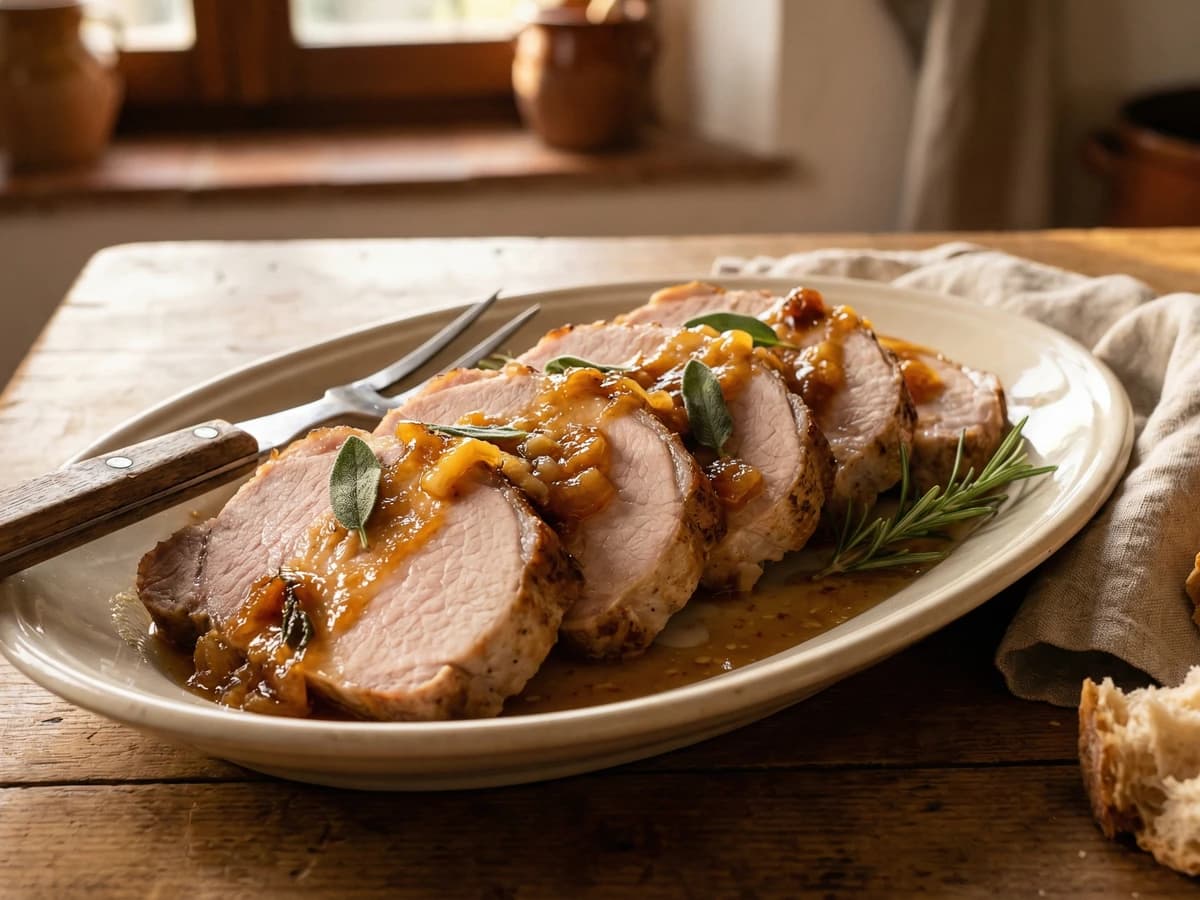
Arrosto di Maiale al Latte
Pork loin braised in milk until the liquid transforms into nutty, golden curds that cling to impossibly tender meat. The technique looks like failure and tastes like triumph.
A cooking platform built around craft, culture, and the stories behind what we eat.
Created by
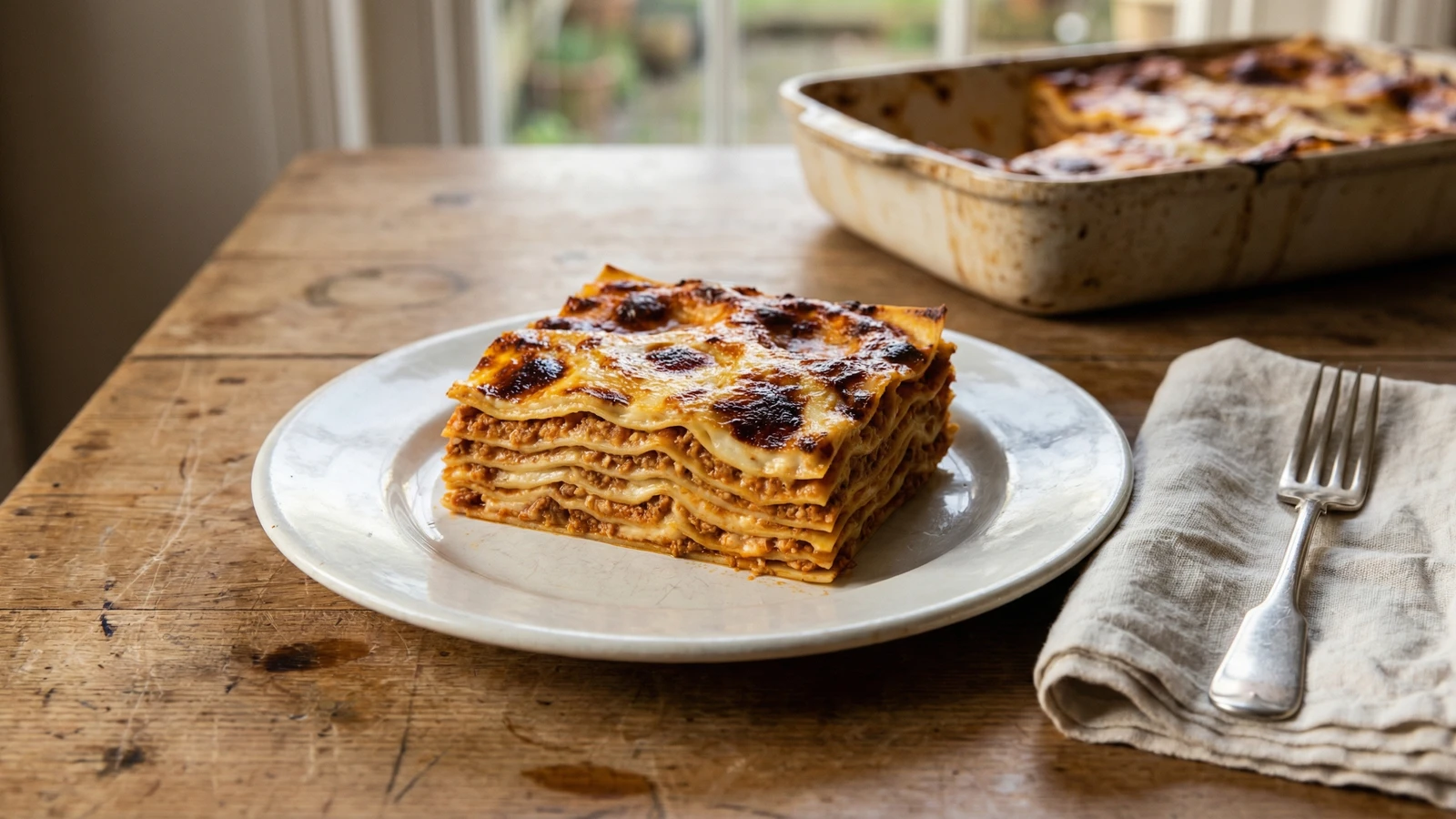
The true lasagne of Emilia-Romagna: gossamer sheets of egg pasta, slow-simmered ragù, and light béchamel layered with restraint. This is not the leaden casserole Americans call lasagna.
Americans have been making lasagna wrong for generations. They pile on ricotta, which has no place in this dish. They use thick, corrugated noodles from a box. They drown everything in tomato sauce and call it Italian. It is not.
True lasagne alla Bolognese is something else entirely. The pasta sheets must be thin enough to read a newspaper through, if you still read newspapers. The ragù is the authentic meat sauce of Bologna, simmered for hours until the meat surrenders completely, with restrained tomato and no garlic whatsoever. The béchamel is light, almost pourable, binding the layers without overwhelming them. And Parmigiano-Reggiano, grated fresh between each layer, provides the only sharpness.
This dish requires three separate preparations before assembly: the ragù, the pasta, and the béchamel. None can be rushed. If you are not prepared to give this a full afternoon, make something else. But if you do it properly, you will understand why the families of Emilia-Romagna have been making this for Sunday pranzo for centuries.
It is extremely important to avoid overcooking lasagna. Mushy lasagna is an abomination. The pasta should hold its delicate texture, the top should be golden but not burned. And you must let it rest before cutting, or the layers will collapse into chaos.
Lasagne alla Bolognese achieved its modern form in the wealthy kitchens of Emilia-Romagna during the Renaissance, when egg-enriched pasta became a marker of prosperity. The Bolognese registered their lasagne with béchamel and ragù as the definitive version in the 20th century, though every grandmother in the region maintains her method is the original. The dish remains the centerpiece of Sunday lunch throughout Emilia-Romagna, where families still argue about the proper number of layers.
Quantity
3 tablespoons
Quantity
3 tablespoons, plus 4 tablespoons for béchamel, plus 2 tablespoons for assembly
Quantity
1 medium
diced fine
Quantity
1 medium
peeled and diced fine
Quantity
1
diced fine
Quantity
12 ounces
Quantity
8 ounces
Quantity
4 ounces
Quantity
1 cup
Quantity
1 cup for ragù, plus 3 cups for béchamel
Quantity
1/4 teaspoon total
freshly grated
Quantity
1 can (14 ounces)
passed through food mill
Quantity
to taste
Quantity
to taste
freshly ground
Quantity
400g (about 3 cups)
Quantity
4
Quantity
for dusting
Quantity
1/4 cup
Quantity
1/2 teaspoon
Quantity
6 ounces (about 2 cups)
freshly grated
| Ingredient | Quantity |
|---|---|
| extra virgin olive oil | 3 tablespoons |
| unsalted butter | 3 tablespoons, plus 4 tablespoons for béchamel, plus 2 tablespoons for assembly |
| yellow oniondiced fine | 1 medium |
| carrotpeeled and diced fine | 1 medium |
| celery stalkdiced fine | 1 |
| ground beef chuck | 12 ounces |
| ground pork | 8 ounces |
| ground veal | 4 ounces |
| dry white wine | 1 cup |
| whole milk | 1 cup for ragù, plus 3 cups for béchamel |
| nutmegfreshly grated | 1/4 teaspoon total |
| San Marzano tomatoespassed through food mill | 1 can (14 ounces) |
| kosher salt | to taste |
| black pepperfreshly ground | to taste |
| tipo 00 flour | 400g (about 3 cups) |
| large eggs | 4 |
| semolina flour | for dusting |
| all-purpose flour | 1/4 cup |
| fine sea salt | 1/2 teaspoon |
| Parmigiano-Reggianofreshly grated | 6 ounces (about 2 cups) |
In a heavy-bottomed Dutch oven, heat the olive oil and 3 tablespoons butter over medium heat until the butter foam subsides. Add the onion, carrot, and celery. Cook slowly, stirring occasionally, until the vegetables are completely soft and the onion is pale gold. This takes at least 15 minutes. Do not rush. One can often trace the unsatisfying taste of would-be Italian dishes to the reluctance of cooks to execute this step thoroughly.
Add all three ground meats to the pot. Break them up with a wooden spoon and cook over medium-high heat, stirring frequently, until the meat has lost its raw color and begins to brown. The meat should crumble into small pieces, not clump. This takes 15 to 20 minutes.
Pour in the white wine and stir thoroughly. Let it simmer until evaporated completely. You should no longer smell alcohol. Then add 1 cup milk and the nutmeg. Let the milk simmer until it has been completely absorbed. The sauce will look quite dry. This is correct. The milk creates the characteristic creaminess of true Bolognese.
Add the passed tomatoes and stir thoroughly. When the sauce begins to bubble, reduce heat to the lowest possible setting. The sauce should cook at the laziest simmer, with only an occasional bubble breaking the surface. Partially cover the pot. Cook for at least 3 hours, stirring occasionally and adding water in small amounts if the sauce reduces too much. Season with salt and pepper.
While the ragù simmers, make the pasta. Pour the flour onto a wooden board and create a well in the center. Crack the eggs into the well. Using a fork, beat the eggs and gradually incorporate flour from the inner walls of the well. When the dough becomes too stiff to mix with a fork, use your hands to bring it together.
Knead the dough for 8 to 10 minutes, pushing with the heel of your hand, folding it over, and pushing again. The dough should become smooth and elastic, like your earlobe when pressed. If it is too dry, wet your hands and continue kneading. If too sticky, add flour sparingly. Wrap in plastic and rest for 30 minutes at room temperature.
Divide the rested dough into 4 pieces. Working with one piece at a time (keep others covered), flatten it into a rectangle and pass through a pasta machine at the widest setting. Fold in thirds, turn 90 degrees, and pass through again. Repeat this process 3 times to develop the gluten. Then roll progressively thinner, reducing the setting each time, until you reach the second-thinnest setting. The sheets should be thin enough to see your hand through. Cut into rectangles that fit your baking dish.
Bring a large pot of well-salted water to boil. Prepare a bowl of ice water. Working in batches of 2 or 3 sheets, cook the pasta for 30 seconds, just until pliable. Transfer immediately to ice water to stop cooking, then lay flat on clean kitchen towels. Do not stack wet sheets or they will stick together.
In a medium saucepan, melt 4 tablespoons butter over medium heat. Add the flour and whisk constantly for 2 minutes. The mixture should bubble gently but not brown. Gradually add the warm milk, whisking constantly to prevent lumps. Cook, whisking often, until the sauce thickens enough to coat a spoon, about 8 minutes. Remove from heat and stir in the nutmeg and salt. The béchamel should be pourable, not stiff.
Heat oven to 400°F (200°C). Spread a thin layer of béchamel on the bottom of a 9x13 inch baking dish. Cover with a layer of pasta, trimming to fit. Spread a thin layer of ragù over the pasta. Drizzle with béchamel. Sprinkle with Parmigiano-Reggiano. Repeat this layering 5 to 7 more times, ending with a layer of pasta topped with béchamel and a generous coating of Parmigiano. Dot the surface with the cold butter pieces.
Bake uncovered for 20 to 25 minutes, until the top is golden brown and the edges bubble. Watch it carefully. The difference between golden perfection and burned is a matter of minutes. If the top browns too quickly, cover loosely with foil for the final minutes.
Remove from oven and let rest for at least 15 minutes before cutting. This is not a suggestion. If you cut immediately, the layers will slide apart and you will have a mess rather than a dish. The lasagne needs time to set. When you do cut, the layers should be distinct, the pasta tender but not mushy, the top golden. This is what you have worked for.
1 serving (about 375g)
Culinary guides, cultural storytelling, and the editorial depth that makes cooking meaningful.
Discover Culinary ExplorerChef Graziella
Pork loin braised in milk until the liquid transforms into nutty, golden curds that cling to impossibly tender meat. The technique looks like failure and tastes like triumph.

Chef Graziella
Thick pork chops rubbed with salamoia bolognese and grilled over live fire. This is how we eat in summer in Emilia-Romagna: simply, outdoors, with family.
Chef Graziella
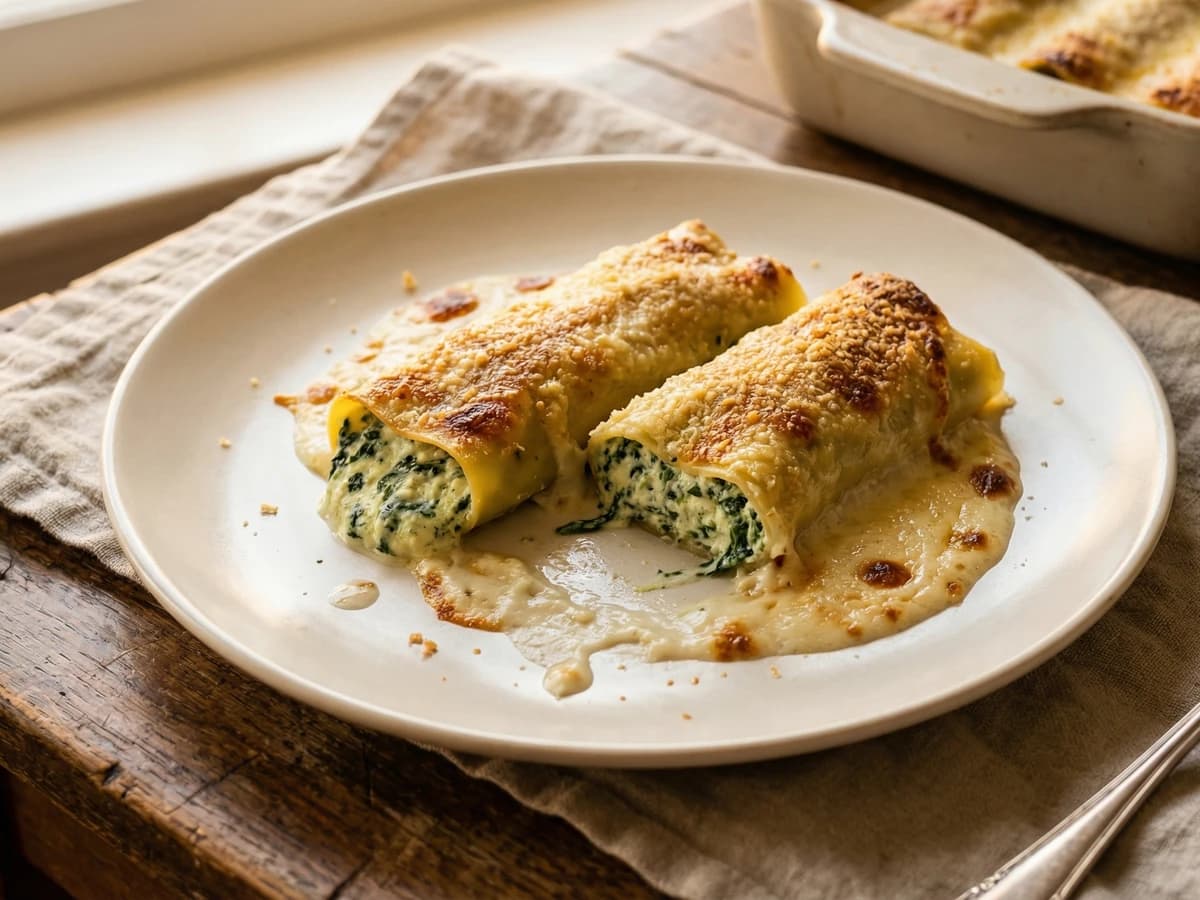
Hand-rolled pasta sheets wrapped around a filling of ricotta and spinach, covered in besciamella and baked until golden. This is the Sunday cooking of Emilia-Romagna, made without shortcuts.
Chef Graziella
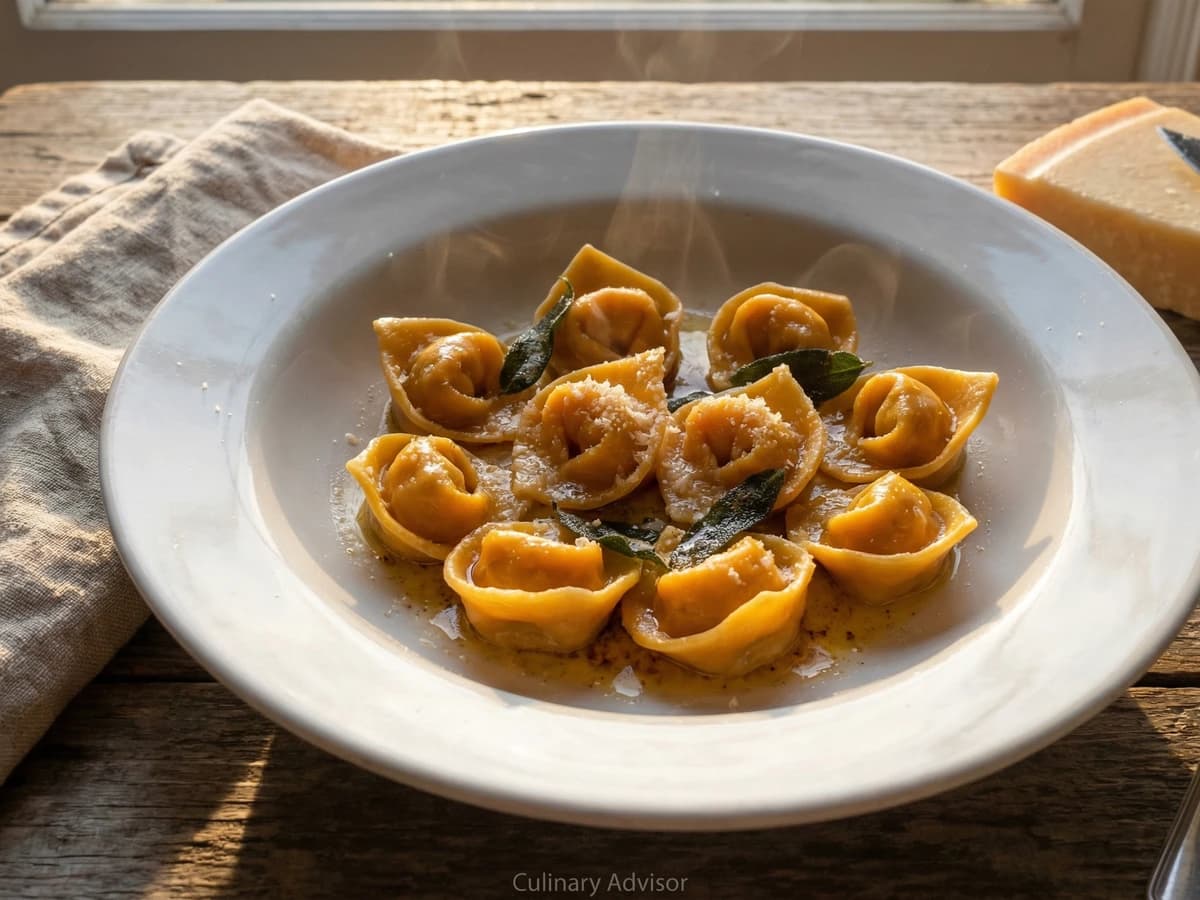
The pasta of the Este dukes, where sweet roasted pumpkin meets fresh egg pasta in shapes like little peasant hats. Dressed only with butter and sage, as Ferrara has done since the Renaissance.