
Chef Klaus
Ähzezupp (Kölsche Erbsensuppe)
The Cologne pea pot earns its depth from soaked peas and cured pork bone, simmered slowly until the soup thickens itself and the meat falls clean from the knuckle.
A cooking platform built around craft, culture, and the stories behind what we eat.
Created by
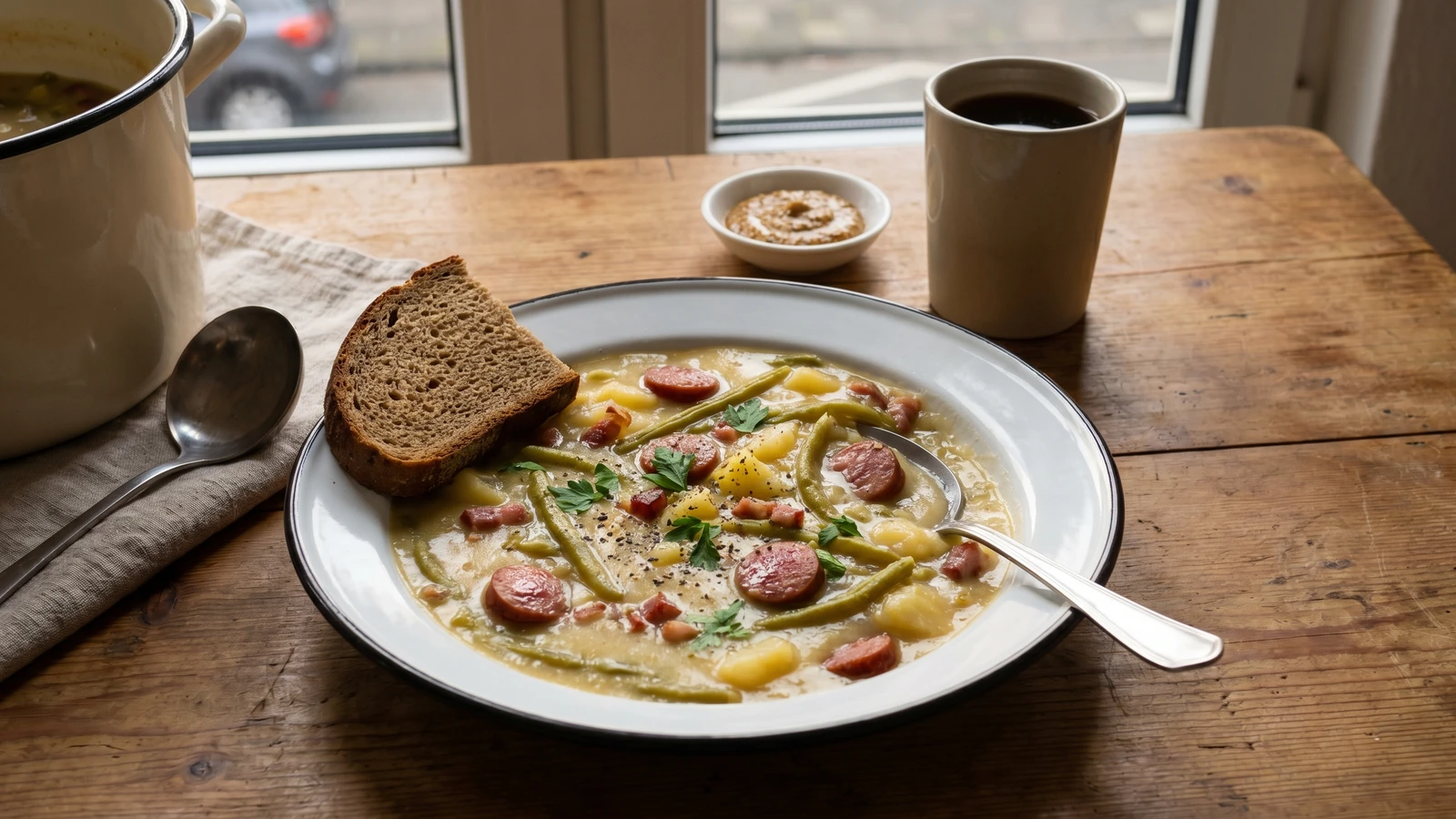
The Rhenish bean stew built from the preserving crock: sour sliced beans, floury potatoes, smoked bacon, and Mettenden, with the acid kept in its place.
Schnippelbohneneintopf belongs to the Rhineland and the old preserving larder, strongest in autumn and winter when the fresh bean season is shut and the crock has done its work. The beans are sliced, salted, and soured by lactic fermentation, then cooked with potato, bacon, and smoked sausage until the pot tastes sharp, smoky, and plain in the right way. This is weekday food that can sit on a Sunday table without dressing itself up.
The regions disagree the way they should. In the Rhineland and the Ruhrgebiet, the sour bean is the point, often with Mettenden, smoked pork sausage, and a little bacon fat. Westphalian pots run darker and smokier. Further south, green beans are more often cooked fresh with savory and potato, and the sour crock has less to say. Im Norden anders, im Süden anders. German food is not one plate.
The technique is simple and it decides the stew: rinse the sour beans, then add them only after the potatoes have started to soften. Acid tightens potato starch and keeps it stubborn; put the beans in too early and the potatoes stay hard at the edges while the sausage gives up all its smoke. Rinse too long and you've thrown away the dish. Taste, rinse briefly, and keep a spoon of the bean brine for the end if the pot needs its bite back.
Weggeworfen wird nichts. The bacon rind, if you've got it, goes into the pot and comes out before serving, because it gives body where a packet would give salt and dust. Nicht aus dem Glas, unless the glass is your own preserving jar of beans. There is a difference.
Schnippelbohnen, also called Schnibbelbohnen in parts of the west, come from the Rhenish and Westphalian preserving tradition, where late-summer green beans were finely sliced, salted, and lacto-fermented so they could be eaten through the cold months. The hand-cranked bean slicer became a common household tool in the 19th and early 20th centuries, because cutting the beans thin let salt and lactic fermentation work evenly through the harvest. The dish shows a regional line clearly: the Rhineland keeps the sour bean at the centre of the stew, while many southern kitchens treat green beans fresh with savory rather than fermented.
Quantity
600g
drained, brine reserved, rinsed briefly
Quantity
800g
peeled and cut into 2cm chunks
Quantity
200g
diced, rind kept if present
Quantity
4, about 300g total
Quantity
2
finely diced
Quantity
1
cleaned and sliced
Quantity
1
diced
Quantity
1.5 litres
Quantity
1
Quantity
1 teaspoon dried or 2 sprigs fresh
Quantity
1 tablespoon
Quantity
1 teaspoon
Quantity
to taste
Quantity
only if needed
Quantity
2 tablespoons
chopped
| Ingredient | Quantity |
|---|---|
| lacto-fermented Schnippelbohnen or sour sliced green beansdrained, brine reserved, rinsed briefly | 600g |
| floury potatoespeeled and cut into 2cm chunks | 800g |
| smoked streaky bacondiced, rind kept if present | 200g |
| Mettenden or smoked pork sausages | 4, about 300g total |
| onionsfinely diced | 2 |
| leekcleaned and sliced | 1 |
| carrotdiced | 1 |
| unsalted pork, beef, or vegetable stock | 1.5 litres |
| bay leaf | 1 |
| dried savory or fresh savory | 1 teaspoon dried or 2 sprigs fresh |
| lard or neutral oil (optional) | 1 tablespoon |
| mustard (optional) | 1 teaspoon |
| freshly ground black pepper | to taste |
| salt | only if needed |
| flat-leaf parsley (optional)chopped | 2 tablespoons |
Drain the Schnippelbohnen and save a small cup of their brine. Taste one bean before you rinse. If it is cleanly sour and only moderately salty, rinse it once under cold water and stop; if it bites hard with salt, soak it ten minutes, then drain. The souring is the point of the stew, so don't wash the dish down the sink.
Put the bacon in a heavy pot over medium heat and let the fat come out slowly. If the bacon is lean, add the spoon of lard. Slow rendering gives you fat for the onions and smoke for the broth; hard heat scorches the lean bits before the fat has done its work. Add the bacon rind too if you have it, because Weggeworfen wird nichts.
Add the onions, leek, and carrot to the bacon fat and cook until the onions turn glassy, not brown. You want sweetness and body in the broth, not a fried onion taste that fights the sour beans. Stir in the bay leaf and savory so the herb opens in the fat before the stock goes in.
Add the potatoes and stock, bring the pot to a gentle simmer, and cook for 15 minutes before the sour beans go in. This is the step people skip. Acid keeps potato starch firm, so the potatoes need a head start in clean stock or they stay stubborn while everything else overcooks.
Stir in the rinsed Schnippelbohnen and lay the Mettenden on top. Keep the stew at a low simmer for 25 to 30 minutes, until the potatoes are soft and the beans have mellowed into the broth. Runter mit der Temperatur. A hard boil splits the sausages and knocks the potatoes to rubble before the sourness settles.
Lift out the Mettenden and slice them thickly, then return them to the stew. Remove the bacon rind and bay leaf. Crush a few potato pieces against the side of the pot to thicken the broth naturally; flour would dull it and a packet has no business here. Taste now, not earlier, because the bacon and beans bring their own salt. Add pepper, the mustard if you want a sharper Rhenish edge, and a spoon of reserved bean brine if the stew needs its sour bite back.
Ladle the stew into warm bowls with sausage in each one and parsley only if you use it at your own table. Let it stand five minutes before eating, because the potato thickens the broth as it rests and the sourness rounds off. Serve with dark rye bread and mustard. Schön ist, was schmeckt.
1 serving (about 680g)
Culinary guides, cultural storytelling, and the editorial depth that makes cooking meaningful.
Discover Culinary ExplorerChef Klaus
The Cologne pea pot earns its depth from soaked peas and cured pork bone, simmered slowly until the soup thickens itself and the meat falls clean from the knuckle.

Chef Klaus
The Allgäu's Alpine cheese soup works only if the Bergkäse melts gently off the heat, where it turns smooth instead of stringy.

Chef Klaus
A firm egg dough, grated into tiny crumbs and cooked in clear broth: Allgäu kitchen thrift, warm in the bowl, and finished only when the Riebele keep their bite.

Chef Klaus
The Altmark wedding broth is a clear soup with no tricks: bones for depth, patient skimming for clarity, and small semolina dumplings that make it festive.