Chef Klaus
Allgäuer Kaspressknödel
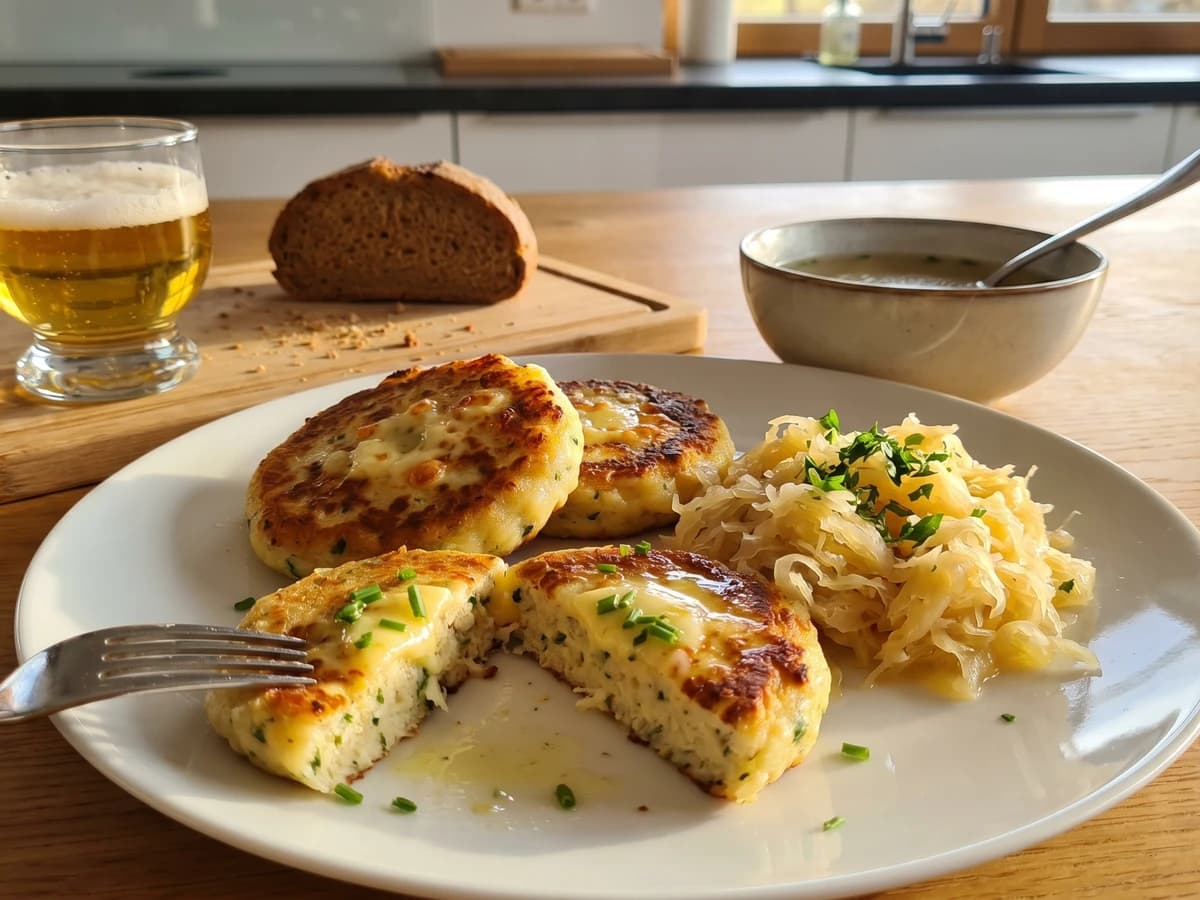
Pressed bread dumplings from the Alpine south, fried until the cheese catches at the edges and the middle stays soft enough for broth, kraut, or a weekday plate.
A cooking platform built around craft, culture, and the stories behind what we eat.
Created by
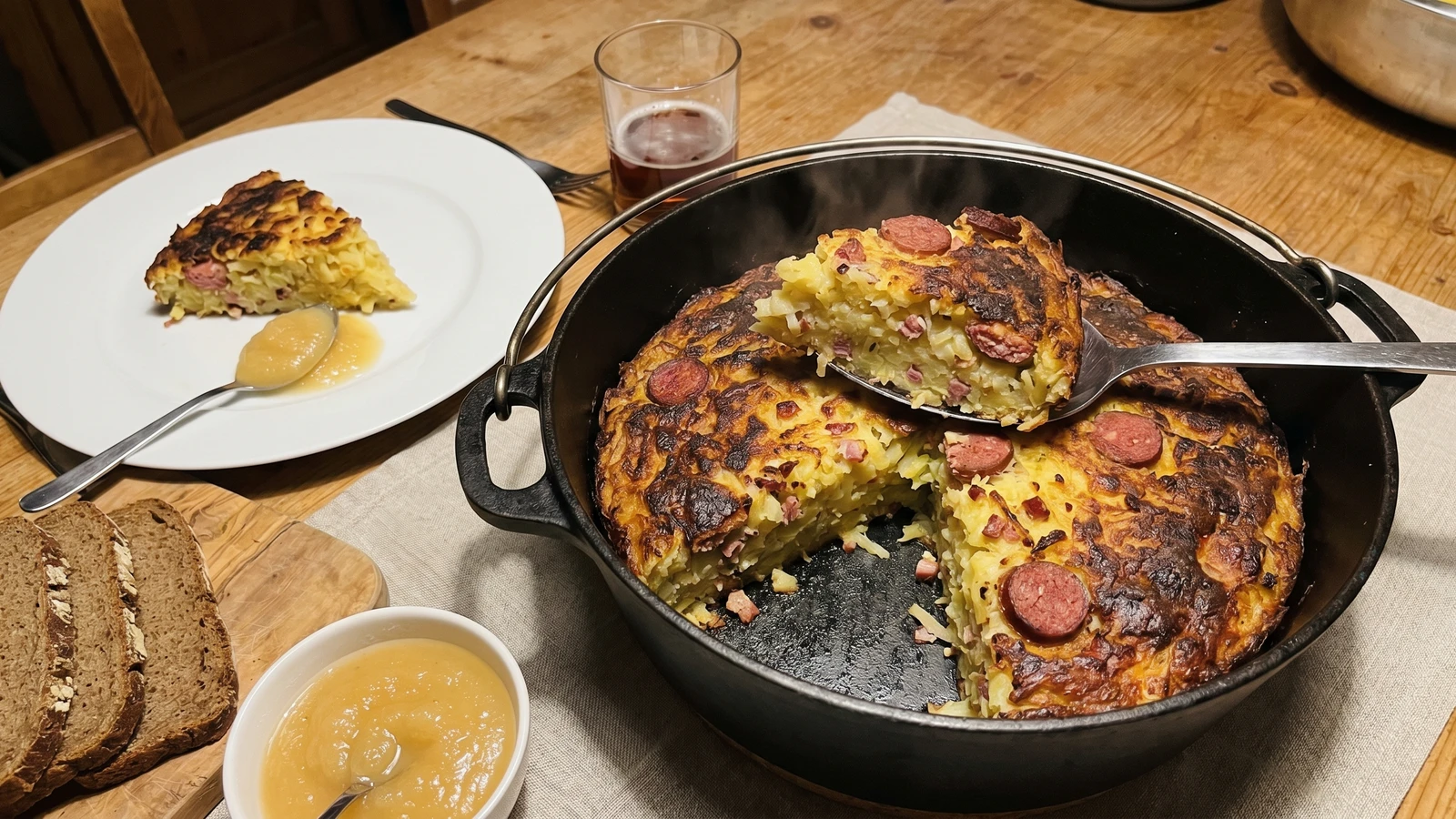
The Rhenish potato pot-cake for St. Martin's night: raw grated potatoes, bacon, onion, and sausage baked slowly until the middle sets and the edge turns dark and crisp.
Döppekooche belongs to the Rhineland, especially the Niederrhein and the Eifel, and it belongs to the dark half of the year. Around St. Martin's Day, when the goose was for people with money, the potato pot went into the oven for everyone else. Floury potatoes, onion, bacon, a little Mettwurst. A cheap dish, if you respect it.
Every town argues over the name and the pot. Döppekooche, Düppekooche, Kesselsknall, Uhles, Kesselsknall from where the crust knocks against the kettle. Some add leek, some stretch it with grated carrot, some keep the sausage out and let bacon do the work. I stay with the Rhenish pot version: raw potato, enough fat, and a heavy lidded pot that makes a dark crust all the way round.
The technique is simple and unforgiving: grate the potatoes raw, then squeeze out the loose water and stir back only the settled starch from the bottom of the bowl. Throw all the liquid in and the cake bakes wet and grey. Throw all of it away and you've lost the binder. Erst verstehen, dann kochen.
Bake it low first so the potato cooks through before the outside burns, then uncover it so the top dries and the edges crust. Runter mit der Temperatur. Das braucht seine Zeit. Cut it in wedges, put apple sauce beside it if your part of the Rhineland does, and don't apologize for the colour. Schön ist, was schmeckt.
Döppekooche is tied closely to the Rhenish St. Martin's table on 11 November, when poorer households made a filling potato dish in place of the Martin's goose eaten by wealthier families. The potato itself became common German food only after the eighteenth century, helped by Prussian promotion under Frederick II, whose 1756 potato orders pushed cultivation in regions that had been slow to trust the tuber. Its many local names, including Döppekooche, Düppekooche, Uhles, and Kesselsknall, mark how tightly the dish belongs to local Rhineland and Eifel kitchens rather than to one national recipe.
Quantity
2kg
peeled
Quantity
3 large
2 grated, 1 sliced
Quantity
250g
diced
Quantity
200g
sliced
Quantity
2 large
Quantity
2 tablespoons
Quantity
1 teaspoon, plus more to taste
Quantity
1 teaspoon
freshly ground
Quantity
1/2 teaspoon
freshly grated
Quantity
2 tablespoons, plus more for the pot
Quantity
1 tablespoon
for the top
Quantity
to serve
| Ingredient | Quantity |
|---|---|
| floury potatoespeeled | 2kg |
| onions2 grated, 1 sliced | 3 large |
| smoked bacondiced | 250g |
| Mettwurst or smoked German sausagesliced | 200g |
| eggs | 2 large |
| plain flour or potato starch | 2 tablespoons |
| fine salt | 1 teaspoon, plus more to taste |
| black pepperfreshly ground | 1 teaspoon |
| nutmegfreshly grated | 1/2 teaspoon |
| lard or neutral oil | 2 tablespoons, plus more for the pot |
| butterfor the top | 1 tablespoon |
| apple sauce (optional) | to serve |
Heat the oven to 180C. Grease a heavy lidded pot or cast-iron casserole well with lard, then put it in the oven while you prepare the filling. A hot, fat-lined pot starts the crust the moment the potato touches it; a cold pot gives you a pale bottom and a damp edge.
Cook the diced bacon in a pan over medium heat until the fat runs and the edges take colour, then lift out half for layering. Fry the sliced onion in the bacon fat until soft and golden. Weggeworfen wird nichts: that fat is seasoning and browning in one, and it belongs in the potato, not down the sink.
Grate the raw potatoes and the two raw onions on the coarse side of a box grater or with a processor disc, then tip the mixture into a clean cloth and squeeze firmly over a bowl. Let the liquid stand for 5 minutes, pour off the brown water, and scrape the white starch from the bottom back into the potatoes. Keep the starch because it binds; lose the water because it makes the cake heavy and wet.
Mix the squeezed potato with the returned starch, eggs, flour or potato starch, salt, pepper, nutmeg, the rendered bacon fat, and the cooked onion. Stir hard enough to coat every strand. Taste a tiny spoonful cooked in the bacon pan if you need to check salt; raw potato lies to you, cooked potato tells the truth.
Carefully take the hot pot from the oven and spread in half the potato mixture. Scatter over the reserved bacon and the Mettwurst slices, then cover with the rest of the potato and dot the top with butter. Keep the sausage inside, not all on top, because the fat melts through the middle instead of burning before the potato sets.
Cover the pot and bake for 1 hour at 180C. The lid traps enough moisture for the raw potato to cook through before the crust gets too dark. This is the part you can't rush. Das braucht seine Zeit.
Uncover the pot and bake 35 to 45 minutes more, until the top is deep golden brown, the edges pull slightly from the pot, and a knife pushed into the centre meets a set, tender potato cake rather than loose shreds. If the top colours too fast, runter mit der Temperatur to 160C; a burnt lid over a raw middle is not dinner.
Let the Döppekooche rest 15 minutes before cutting. Resting lets the starch firm up, so wedges lift cleanly instead of collapsing under the spoon. Serve with apple sauce if that is your Rhenish habit, or with a sharp green salad and mustard. Würzen, Fett, Salz zum Schluss.
1 serving (about 455g)
Culinary guides, cultural storytelling, and the editorial depth that makes cooking meaningful.
Discover Culinary ExplorerChef Klaus
Pressed bread dumplings from the Alpine south, fried until the cheese catches at the edges and the middle stays soft enough for broth, kraut, or a weekday plate.

Chef Klaus
The Bavarian potato salad that works because warm waxy slices drink hot broth first, then oil last, until the bowl turns glossy without mayonnaise.

Chef Klaus
White cabbage shaved thin, wilted with hot caraway vinegar, and finished with crisp Speck fat: the Bavarian salad that belongs beside bread, sausages, and roast pork.

Chef Klaus
The south's sweet-sour white cabbage, cooked from fresh Kraut rather than sauerkraut, soft enough for roast pork and sharp enough to wake the plate.