
Chef Klaus
Allgäuer Krautkrapfen
The Allgäu pan dish that makes a meal from noodle dough, winter kraut, onion, and fat: brown the cut sides first, then cook gently so the rolls hold.
A cooking platform built around craft, culture, and the stories behind what we eat.
Created by
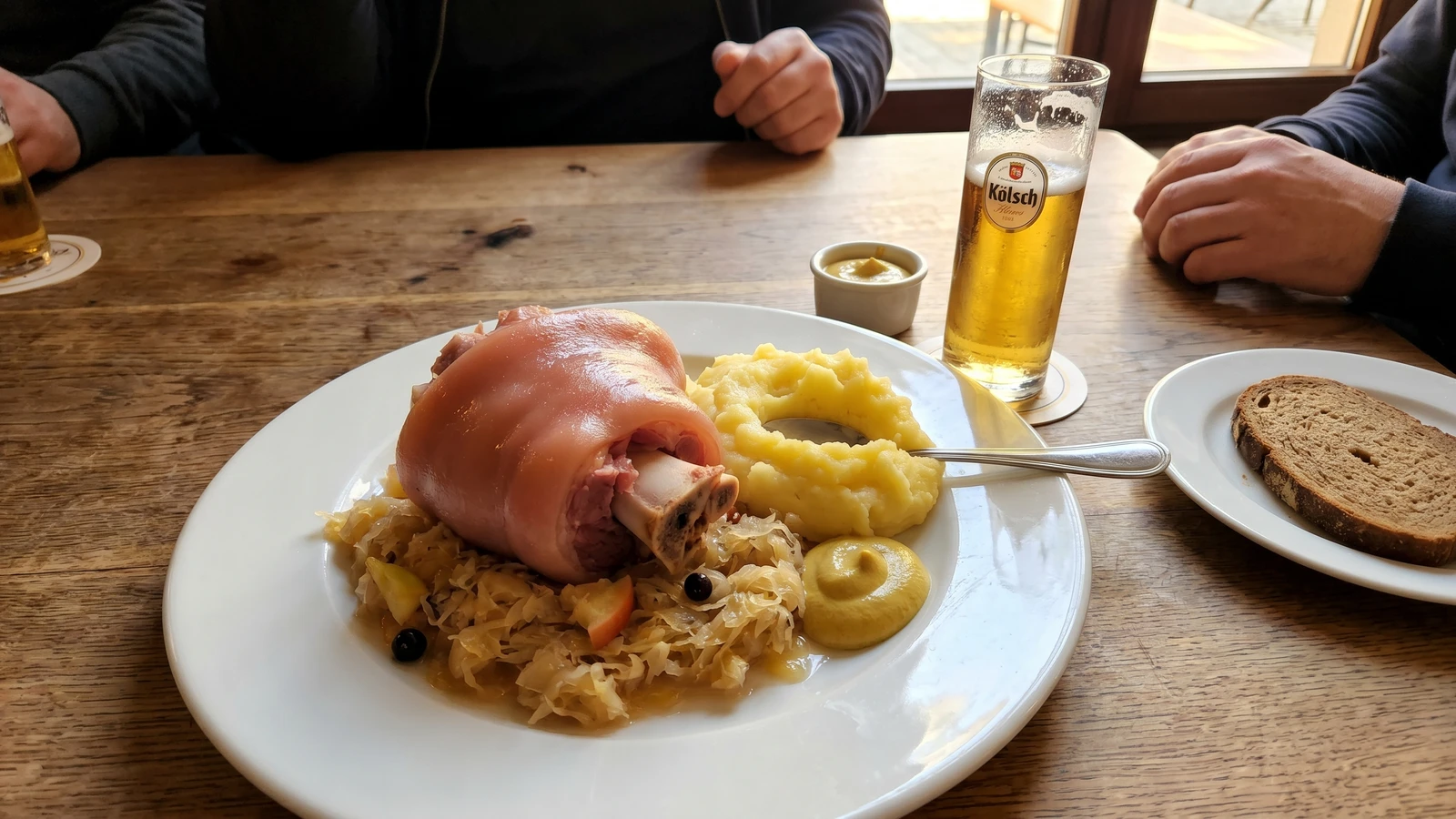
The Rhenish pork knuckle that belongs to the Brauhaus table: cured, simmered gently, set on sour cabbage, and served with potatoes that catch every spoon of broth.
Hämmche met Kappes is Cologne food, Rhenish and plain, the cured pork knuckle set over sour cabbage until the rind softens, the meat loosens from the bone, and the kraut has taken the pork's salt and fat. You see it in the Brauhaus with a glass of Kölsch, but it belongs just as well on a Sunday table or a cold weeknight when the larder is doing its work.
Every region treats the knuckle differently. In the Rhineland it is cured and simmered, pale and tender, with Kappes, sauerkraut, and mustard. In Bavaria the Schweinshaxe is usually roasted for crackling. In Berlin, Eisbein comes with pea puree. Im Norden anders, im Süden anders. This is not a beer tent dressed up for tourists; this is the Cologne pot.
The deciding technique is the simmer. Keep the liquid below a boil because cured pork tightens hard if you thrash it around, and the rind needs time to soften without the meat turning stringy. Das braucht seine Zeit. The sauerkraut goes under the knuckle late enough to stay sharp, but long enough to drink in the broth. Weggeworfen wird nichts: the bone and rind season the pot, and the cooking liquor goes on the plate, not down the sink.
Taste before you salt. Cured pork brings its own salt, sauerkraut brings acid, and the mustard finishes the job at the table. Würzen, Fett, Salz zum Schluss. Schön ist, was schmeckt.
Hämmche is the Cologne and Rhenish name for a cured pork knuckle, close to the Berlin Eisbein but served in the local Brauhaus register with Kappes, the regional word for cabbage. The dish grew out of the preserved winter larder: pork was salted or cured after slaughter, cabbage was fermented for the cold months, and both could be turned into a full meal with potatoes after the potato became common in German kitchens in the eighteenth century. Cologne's beer halls fixed the pairing with Kölsch, mustard, and sauerkraut, while other regions took the same joint toward roast crackling or pea puree.
Quantity
2, about 900g each
Quantity
1 tablespoon
Quantity
2
sliced
Quantity
1
chopped
Quantity
1 small
cleaned and sliced
Quantity
2
Quantity
8
lightly crushed
Quantity
1 teaspoon
Quantity
1 teaspoon
Quantity
750ml
Quantity
1kg
drained but not rinsed
Quantity
1
grated
Quantity
800g
peeled and cut into chunks
Quantity
120ml
Quantity
40g
Quantity
to taste
Quantity
to serve
| Ingredient | Quantity |
|---|---|
| cured pork knuckles | 2, about 900g each |
| lard or neutral oil | 1 tablespoon |
| onionssliced | 2 |
| carrotchopped | 1 |
| leekcleaned and sliced | 1 small |
| bay leaves | 2 |
| juniper berrieslightly crushed | 8 |
| black peppercorns | 1 teaspoon |
| caraway seeds | 1 teaspoon |
| water or unsalted pork stock | 750ml |
| sauerkrautdrained but not rinsed | 1kg |
| tart applegrated | 1 |
| floury potatoespeeled and cut into chunks | 800g |
| warm milk | 120ml |
| butter | 40g |
| freshly grated nutmeg | to taste |
| sharp German mustard | to serve |
Rinse the cured pork knuckles under cold water and pat them dry. If the cure smells very strong or the butcher warns you they are heavily salted, soak them in cold water for 1 hour, changing the water once; the soak pulls excess salt from the surface so the final broth seasons the kraut instead of bullying it.
Warm the lard in a heavy pot and soften the onions, carrot, and leek for 8 minutes without browning them hard. You want sweetness in the broth, not roasted bitterness. Add the bay, juniper, peppercorns, caraway, and the knuckles, then pour in enough water or unsalted stock to come two-thirds up the meat.
Bring the liquid just to a tremble, then cover the pot and lower the heat so it barely moves for about 2 hours. Do not boil it hard. Cured pork tightens when it is knocked around, while a quiet simmer gives the rind time to soften and lets the meat loosen from the bone.
Lift the knuckles out to a plate. Stir the drained sauerkraut and grated apple into the pot, scraping the bottom so the cabbage sits in the pork broth. Put the knuckles back on top, cover, and cook 35 to 45 minutes more, until the meat pulls easily and the kraut tastes sour, salty, and rounded. Do not rinse the sauerkraut unless it is harsh; the acid is the reason the dish does not eat heavy.
While the kraut finishes, boil the potatoes in salted water until they fall apart at the point of a knife, then drain them well and let the dry heat leave the pot for a minute. Mash with warm milk, butter, and nutmeg. Warm milk keeps the mash loose, and floury potatoes take it in cleanly instead of turning slick.
Taste the cabbage and broth before adding salt, because the cure has been seasoning the pot from the first minute. Set a mound of Kappes on each plate, put the knuckle on top or carve the meat from the bone, and spoon over a little cooking liquor. Serve with mashed potatoes and sharp mustard. Nicht aus dem Glas, except the mustard, which may come from a proper jar and mind its business.
1 serving (about 850g)
Culinary guides, cultural storytelling, and the editorial depth that makes cooking meaningful.
Discover Culinary ExplorerChef Klaus
The Allgäu pan dish that makes a meal from noodle dough, winter kraut, onion, and fat: brown the cut sides first, then cook gently so the rolls hold.

Chef Klaus
Swabian egg pasta turned toward the apple cellar: fresh Spätzle tossed with browned butter, tart apples, cinnamon, and enough restraint to stay supper, not cake.

Chef Klaus
Hesse's pork goulash belongs to Apfelwein country: shoulder, onions, and tart cider cooked low until the cheap cut turns soft and the sauce lands sweet-sour, not sour-sweet.

Chef Klaus
The old sweet supper that saves yesterday's loaf: stale bread drinks eggy milk, the pan stays moderate, and butter browns the outside only after the centre has set.