Chef Juliana
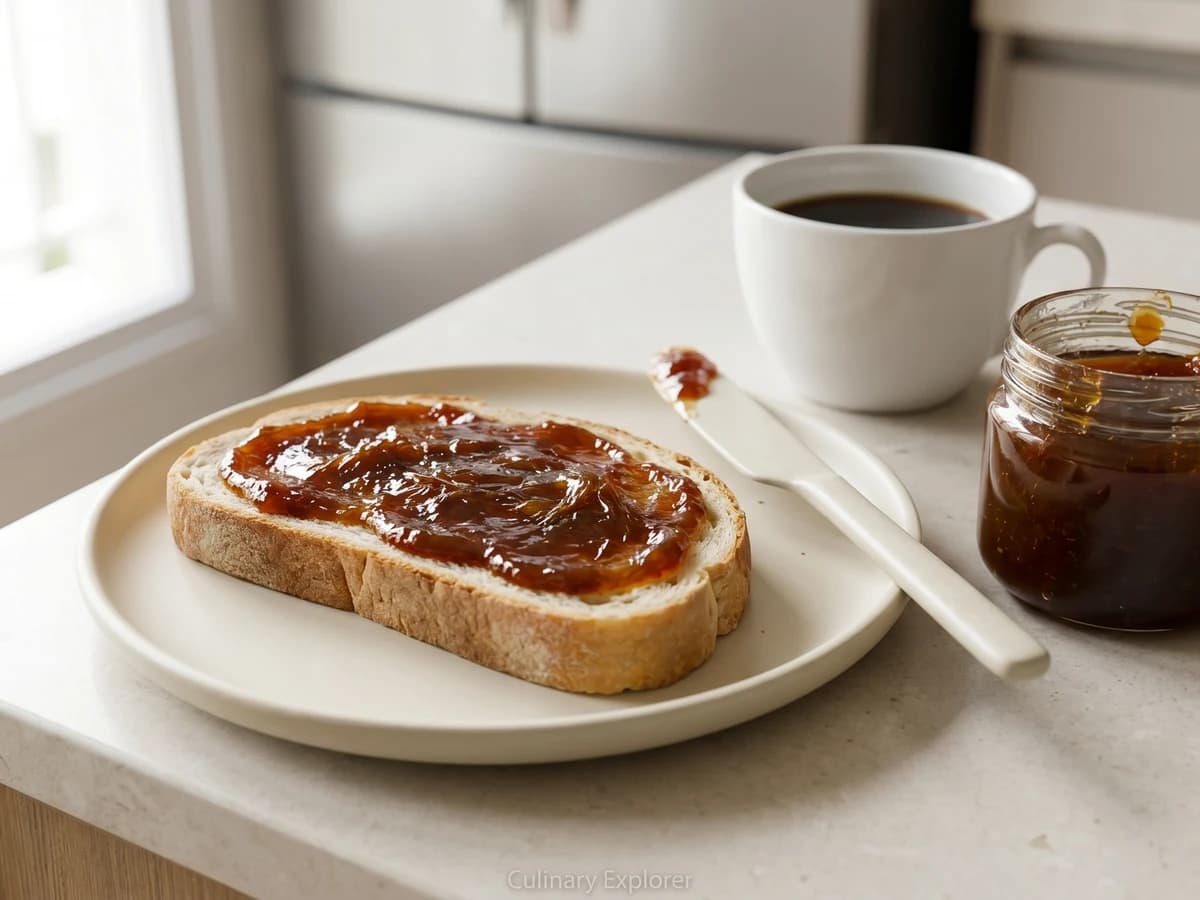
Chimia de Fruta
You don't need a factory jar to put something good on bread. Fruit, sugar, lemon, and patience turn into chimia, the kind of comida de verdade that makes breakfast behave.
A cooking platform built around craft, culture, and the stories behind what we eat.

Created by
You don't need a seasoning packet. You need an onion, a few cloves of garlic, good fat, and the patience to let each one behave before the next one goes in.
You know that quiet little voice, isso não é pra mim, that shows up before dinner and tries to send you back to the packet? I know it. I had it too. The first onions I cooked went from raw to burnt while I stood there pretending I meant to do that. So anota aí: cooking isn't a gift, it's something you learn. Even this. Especially this.
Refogado is the foundation under the everyday Brazilian plate, the pê-efe: rice, beans, a piece of meat or an egg, and something green. Before arroz soltinho tastes like home, before feijão gets thick and glossy, before couve smells like lunch, there is usually onion murchando in fat and garlic joining at the end. Not a powder. Not a cube. Comida de verdade starts with real aromatics doing real work.
The method is small, but it teaches you half the kitchen. Onion goes first because it needs time to soften, sweeten, and turn see-through. Garlic goes later because it burns fast, and burnt garlic is bitter and bossy. Salt goes in early because it helps the onion release water and soften without panic. This is a receita que funciona because every step tells you what to watch for and why it matters.
Make this once and you'll recognize the smell. Make it five times and you'll stop measuring your courage before dinner. A gente starts here, with the base that helps resolver o jantar.
Refogado is part of the Portuguese cooking base that traveled into Brazilian kitchens and became everyday infrastructure, especially in rice, beans, stews, greens, and meat dishes. In Brazil it usually means onion and garlic cooked in oil, lard, butter, or another household fat, with regional additions changing by pot: tomato, scallion, cilantro, bay leaf, pepper, or colorau. The surprising part is how invisible it became, because the thing that makes the plate taste Brazilian is often the step nobody wrote down.
Quantity
2 tablespoons
Quantity
1 medium
finely chopped
Quantity
1/2 teaspoon
Quantity
3 cloves
minced or finely grated
Quantity
1
Quantity
1 tablespoon
chopped, for finishing
| Ingredient | Quantity |
|---|---|
| oil, lard, or butter | 2 tablespoons |
| onionfinely chopped | 1 medium |
| salt | 1/2 teaspoon |
| garlicminced or finely grated | 3 cloves |
| bay leaf (optional) | 1 |
| parsley or cilantro (optional)chopped, for finishing | 1 tablespoon |
Put a small pan over medium heat and add the oil, lard, or butter. Let it warm until it looks loose and glossy, about 30 seconds for oil or 1 minute for butter. If the fat is cold, the onion sits there sweating sadly instead of starting to murchar; if it's smoking, you've gone too hot and the garlic will punish you later.
Add the onion and salt, then stir so every little piece gets coated. Cook, stirring now and then, until the onion turns soft, shiny, and see-through, about 5 to 6 minutes. This is not browning for drama. You're softening the onion so its sharpness relaxes and its sweetness can carry the dish underneath it.
Add the garlic and bay leaf, if using, and stir for 1 minute, no more, until the smell rises clean and sharp from the pan. Garlic goes after the onion because it burns faster. Burn it now and that bitterness follows your rice, your beans, your greens, everything. One minute. Watch the pan.
Use the refogado right away, or scrape it into a small bowl and let it cool. It should look glossy, pale gold, and soft, with no black flecks and no raw onion crunch. Stir it into cooked beans, start rice with it, toss couve through it, or build a simple pan sauce around it. Before the dish, this.
1 serving (about 18g)
Culinary guides, cultural storytelling, and the editorial depth that makes cooking meaningful.
Discover Culinary ExplorerChef Juliana
You don't need a factory jar to put something good on bread. Fruit, sugar, lemon, and patience turn into chimia, the kind of comida de verdade that makes breakfast behave.

Chef Juliana
You think preserves belong to grandmothers and copper pots. Wrong. A heavy pot, ripe pumpkin, sugar, coconut, and attention to the ponto get you there.

Chef Juliana
You don't need a copper pan or a grandmother watching your elbow. Green figs, sugar, cloves, and patience make a glossy preserve that waits in the fridge for the next pê-efe.

Chef Juliana
You don't need a copper pot or a grandmother watching over your shoulder. You need ripe jabuticabas, a heavy pan, and the patience to learn the ponto.