
Chef Lupita
Aceite de Chiltepin Bajacaliforniano
Baja California's wild chiltepin steeped in olive oil with garlic, orejon, and lime peel, until the oil turns ruby-amber and carries the slow, sneaky burn of the desert coast.
A cooking platform built around craft, culture, and the stories behind what we eat.

Created by
Comitán's highland recado is a brick-red paste of toasted ancho, pasilla, and chile simojovel, sharpened with vinegar and cumin, ready to carry asado and butifarra the Chiapas way.
Chiapas, in the Meseta Comiteca Tojolabal around Comitán de Domínguez, is where this recado belongs. The town sits in the highlands near the Guatemalan line, with cold mornings, market tables full of dried chiles, and rough clay bowls that look like they have fed three generations. At the Mercado Primero de Mayo, I learned this paste from women who sold butifarra by the link and asado by the cazuela. They did not call it a sauce. They called it the beginning.
The color comes from chile ancho, chile pasilla mexicano, and chile simojovel, the small Chiapas chile seco that gives the paste its local bite. The ancho gives body and sweetness. The pasilla gives dark fruit and depth. The simojovel reminds you where you are. Garlic, cumin, pimienta gorda, clove, Mexican oregano, salt, and vinegar make the recado sharp enough to enter pork and stay there. This is not Yucatecan recado rojo. No achiote block. No sour orange. This is not an Oaxacan chile paste either. Cada estado, su propia cocina.
The technique is the discipline: wipe the chiles, toast them separately, soak them gently, grind them with roasted garlic and spices, then let the paste rest overnight. A blender works if you make it work. A rushed blender gives you chile water. A patient cook gives you recado. My mother used to say that a recipe starts before the stove, with what you know how to buy. Si no conoces el mercado, no conoces la cocina.
The term recado comes from the Spanish recaudo, meaning provision or prepared seasoning, and in southeastern Mexico it became the name for concentrated spice and chile pastes used to season meat, stews, and sausages. Comitán's version reflects the city's highland border position between Chiapas and Guatemala: Mesoamerican dried chiles are ground with colonial-era vinegar, cumin, clove, and black pepper, then used in dishes such as asado comiteco and butifarra. After Chiapas joined Mexico in 1824, comiteco cooks kept a borderland kitchen distinct from central Mexican adobos and from the achiote-heavy recados of Yucatán.
Quantity
5
wiped clean, stemmed, seeded, and deveined
Quantity
3
wiped clean, stemmed, seeded, and deveined
Quantity
10 to 12
stemmed
Quantity
enough to cover the chiles
Quantity
8
unpeeled
Quantity
1 teaspoon
Quantity
1 teaspoon
Quantity
3
Quantity
2
Quantity
1 teaspoon
Quantity
2 teaspoons, plus more to taste
Quantity
3/4 cup
Quantity
2 to 4 tablespoons
only if needed for blending
Quantity
as needed
for frying the recado when making asado
| Ingredient | Quantity |
|---|---|
| dried chile anchowiped clean, stemmed, seeded, and deveined | 5 |
| dried chile pasilla mexicanowiped clean, stemmed, seeded, and deveined | 3 |
| dried chile simojovel or small local chile seco chiapanecostemmed | 10 to 12 |
| hot water | enough to cover the chiles |
| garlic clovesunpeeled | 8 |
| cumin seeds | 1 teaspoon |
| black peppercorns | 1 teaspoon |
| pimienta gorda berries | 3 |
| whole cloves | 2 |
| dried Mexican oregano | 1 teaspoon |
| coarse sea salt | 2 teaspoons, plus more to taste |
| vinagre de caña or vinagre de piña | 3/4 cup |
| chile soaking liquidonly if needed for blending | 2 to 4 tablespoons |
| manteca de cerdofor frying the recado when making asado | as needed |
Wipe the ancho, pasilla, and simojovel chiles with a dry cloth. Do not rinse them. Open the ancho and pasilla, remove the stems, seeds, and thick veins, then shake the stems off the simojovel. Good ancho bends like old leather. Good pasilla is dark and glossy. Good simojovel is small, red, and sharp in the nose. If the chiles crumble into dust, they are old. Start again at the market.
Heat a dry comal over medium. Toast the ancho first, about 20 to 30 seconds per side, pressing it flat with a spatula until it softens and smells sweet. Toast the pasilla next, 15 to 20 seconds per side. Toast the simojovel last, only 5 to 8 seconds, because the small ones burn before you finish thinking. The chiles should darken one shade and wake up, not blacken. Burned chile makes bitter recado. No me vengas con atajos.
Put the toasted chiles in a bowl and cover them with hot water, not boiling water. Set a small plate on top to keep them submerged. Let them soften for 20 minutes. Drain them and taste a drop of the soaking liquid. If it tastes clean and chile-deep, reserve a few tablespoons for blending. If it tastes bitter, throw it out. The vinegar will carry the paste better anyway.
While the chiles soak, put the unpeeled garlic cloves on the same comal. Turn them until the skins are spotty and the cloves soften, 8 to 10 minutes. Peel them. Toast the cumin, black peppercorns, pimienta gorda, and cloves for 30 to 45 seconds, just until fragrant. Rub the Mexican oregano between your palms over the warm comal for 5 seconds. That is enough. Oregano burns fast and then it tastes like dust.
For a molcajete or metate, grind the toasted spices with the salt first, then work in the roasted garlic until you have a paste. Add the softened chiles a few at a time and grind until the skins break down. Work in the vinegar slowly. For a blender, add the chiles, garlic, spices, salt, and vinegar, then blend on high until thick and smooth, stopping to scrape the sides. This should be a paste, not a soup. If the blades refuse to move, add chile soaking liquid one tablespoon at a time.
Pass the recado through a medium-mesh sieve if you are using it for butifarra filling. For asado, a very smooth blender paste does not need straining. Taste it now. It should be sharp from vinegar, deep from the dried chiles, clear with cumin, and slightly over-salted. Pork will calm it down. A timid recado disappears once it meets meat.
Pack the recado into a clean glass jar, press out air pockets, and smooth the top. Spoon one tablespoon of vinegar over the surface, close the jar, and refrigerate at least 12 hours before using. For asado comiteco, fry about 1/4 cup recado per pound of pork in hot manteca de cerdo until it darkens and the fat begins to separate, then add the meat. For butifarra filling, knead 2 tablespoons recado per pound of ground pork and let it rest cold before stuffing. Así se hace y punto.
1 serving (about 30g)
Culinary guides, cultural storytelling, and the editorial depth that makes cooking meaningful.
Discover Culinary ExplorerChef Lupita
Baja California's wild chiltepin steeped in olive oil with garlic, orejon, and lime peel, until the oil turns ruby-amber and carries the slow, sneaky burn of the desert coast.

Chef Lupita
Puebla's Lenten convent adobo, a brick-red vinegar chile paste of ancho, guajillo, garlic, oregano, and comino made to dress fish for the meatless calendar.
Chef Lupita
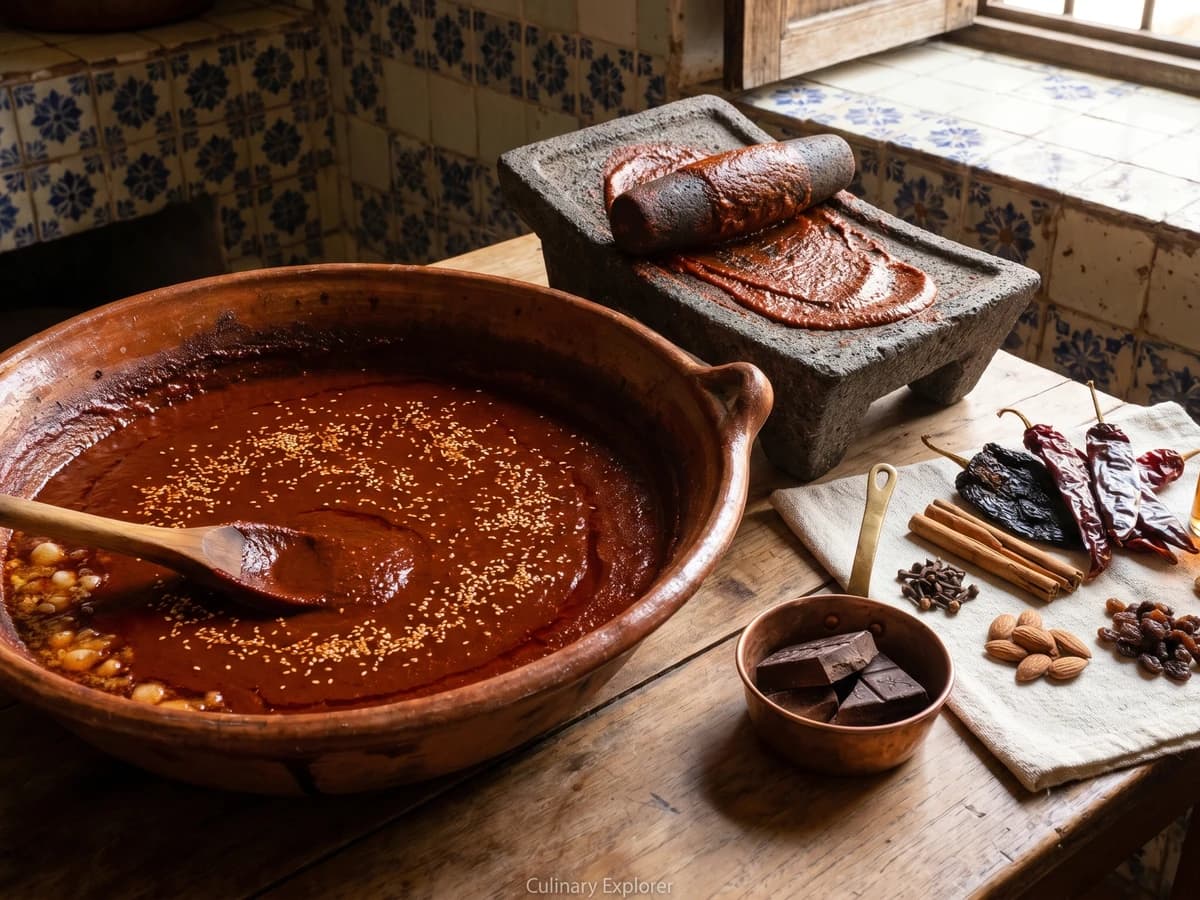
Zacatecas' wedding-table adobo, built from toasted guajillo and ancho, piloncillo, sour orange, chocolate, canela, clavo, almonds, sesame, and lard.

Chef Lupita
Puebla's convent kitchens built this adobo with ancho, guajillo, jerez, almonds, raisins, clove, and lard, a baroque marinade that stains pork loin and finishes as the sauce.