Chef Makoa
Kuru Salad (Cook Islands Breadfruit Salad)
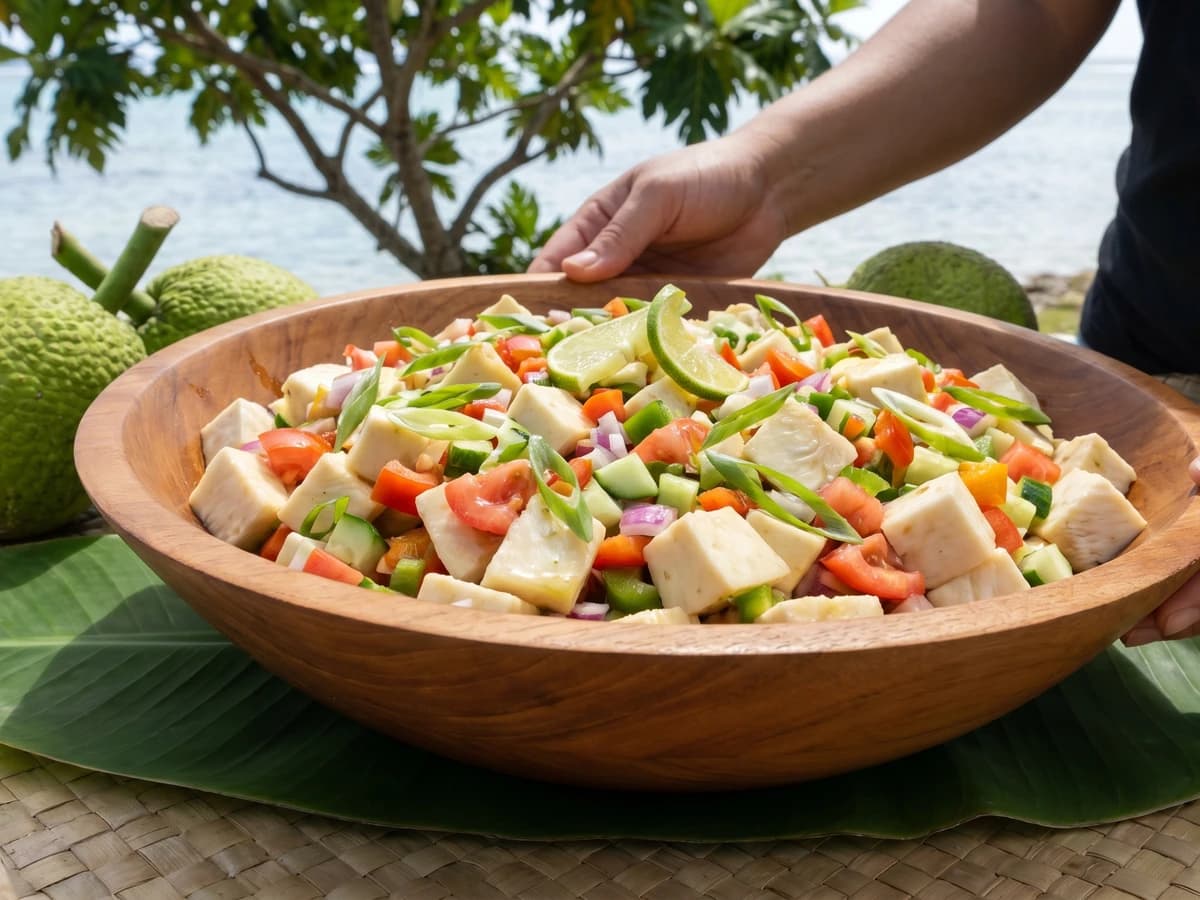
Cook Islands kuru, breadfruit boiled tender, cooled, and tossed with crisp vegetables and a clean lime dressing. The canoe crop comes to the picnic table, unfussy and still full of mana.
A cooking platform built around craft, culture, and the stories behind what we eat.

Created by
From a Cook Islands table in Rarotonga: crisp cucumber, tomato, onion, and pisupo corned beef folded under coconut cream, chilled cold, and spooned over rice for the potluck spread.
The canoe carried the old foods, taro, breadfruit, coconut, the fish knowledge, but the ship brought the tin. On Cook Islands tables, especially around Rarotonga, Raro tarati, tarati meaning salad, is that later story made home: pisupo, tinned corned beef, loosened with cucumber, tomato, onion, and coconut cream so one can feeds the whole potluck. The old people would look at the pantry, look at the family, and say the same kind of thing my kumu said back home: Eat what you have.
This is Cook Islands food, not a nameless plate from the ocean. Its cousins keep their own names: Sāmoan palusami fai pisupo wraps corned beef with taro leaf and coconut cream, Tongan lū pulu folds the tin into lū leaves, and Hawaiian plate lunch puts corned beef beside rice and cabbage when that is what the week allows. One ocean, one canoe, one root, but every island's hand stays its own.
Don't dress this up like it is ceremony. The deep foods, taro in rukau, breadfruit, fish from the reef, the umukai (Cook Islands earth oven), they carry an older weight. Raro tarati is everyday cleverness, ship food made tender by coconut, cold salad for the aunties' table, the church hall, the backyard, the budget week when no one leaves hungry.
So keep the cuts clean, chill the tin, and fold gently. The cucumber and tomato give water, the onion wakes the bowl, and the coconut cream turns that salty corned beef soft and rich. Serve it over rice, family-style, enough for one more. No shame in the tin when the table is fed.
Raro tarati belongs to the Cook Islands' modern pantry, especially after the islands came under New Zealand administration in 1901 and imported tins, rice, and cash-store goods moved more steadily alongside taro, breadfruit, coconut, fish, and the umukai (Cook Islands earth oven). The word tarati carries the sound of the English 'salad' in Cook Islands usage, and the dish shows the post-contact line plainly: pisupo from the ship, coconut from the canoe plants, rice from later trade, all made into budget food for family tables and potlucks. Its cousins are named, not blurred, Sāmoan palusami fai pisupo, Tongan lū pulu, and Hawaiian corned-beef plate-lunch plates each carry the tin in their own island's hand.
Quantity
1 can (12 ounces / 340 g)
chilled
Quantity
1 large
peeled in stripes, seeded, and sliced into half-moons
Quantity
2 medium
seeded and cut into bite-size wedges
Quantity
1 small sweet onion or 1/2 red onion
very thinly sliced
Quantity
2
thinly sliced
Quantity
3/4 to 1 cup
fresh-squeezed if possible or well-stirred canned
Quantity
1 tablespoon
Quantity
to taste
Quantity
only if needed
Quantity
4 cups
for serving
| Ingredient | Quantity |
|---|---|
| corned beef (pisupo)chilled | 1 can (12 ounces / 340 g) |
| cucumberpeeled in stripes, seeded, and sliced into half-moons | 1 large |
| ripe tomatoesseeded and cut into bite-size wedges | 2 medium |
| sweet onion or red onionvery thinly sliced | 1 small sweet onion or 1/2 red onion |
| green onions (optional)thinly sliced | 2 |
| thick coconut creamfresh-squeezed if possible or well-stirred canned | 3/4 to 1 cup |
| fresh lime or lemon juice (optional) | 1 tablespoon |
| freshly ground black pepper | to taste |
| fine sea salt (optional) | only if needed |
| cooked white ricefor serving | 4 cups |
Set the unopened can of corned beef in the fridge until firm, at least 1 hour if you thought ahead. Open it, lift away any hard cap of fat if you like, and break the beef into thumb-size flakes. Keep some shape to it. You're feeding the salad, not making paste.
Seed the cucumber and tomatoes so the salad stays creamy instead of watery. Slice the onion thin enough that it bends, not snaps. If the onion is sharp, soak it in cold water for 10 minutes, then drain it well. The bowl should smell clean and green before the corned beef goes in.
Whisk the coconut cream until smooth and glossy. Stir in the lime or lemon juice if you're using it, then add black pepper. Taste before you add salt, because pisupo already brings plenty. Fresh coconut cream has the best body, but a good thick can does the weeknight job.
Put the cucumber, tomato, onion, green onion if using, and corned beef into a wide bowl. Pour over 3/4 cup coconut cream and fold with a broad spoon until everything is coated. Add the last 1/4 cup only if the rice wants more sauce. Gentle hands here. Let the corned beef stay in soft pieces.
Cover and chill for 30 minutes so the onion softens and the coconut cream takes the salt from the corned beef. Serve cold over cooked white rice, family-style, with more pepper if the bowl asks for it. At a potluck, keep it cold and don't leave it sitting out longer than 2 hours, less if the day is hot.
1 serving (about 295g)
Culinary guides, cultural storytelling, and the editorial depth that makes cooking meaningful.
Discover Culinary ExplorerChef Makoa
Cook Islands kuru, breadfruit boiled tender, cooled, and tossed with crisp vegetables and a clean lime dressing. The canoe crop comes to the picnic table, unfussy and still full of mana.
Chef Makoa
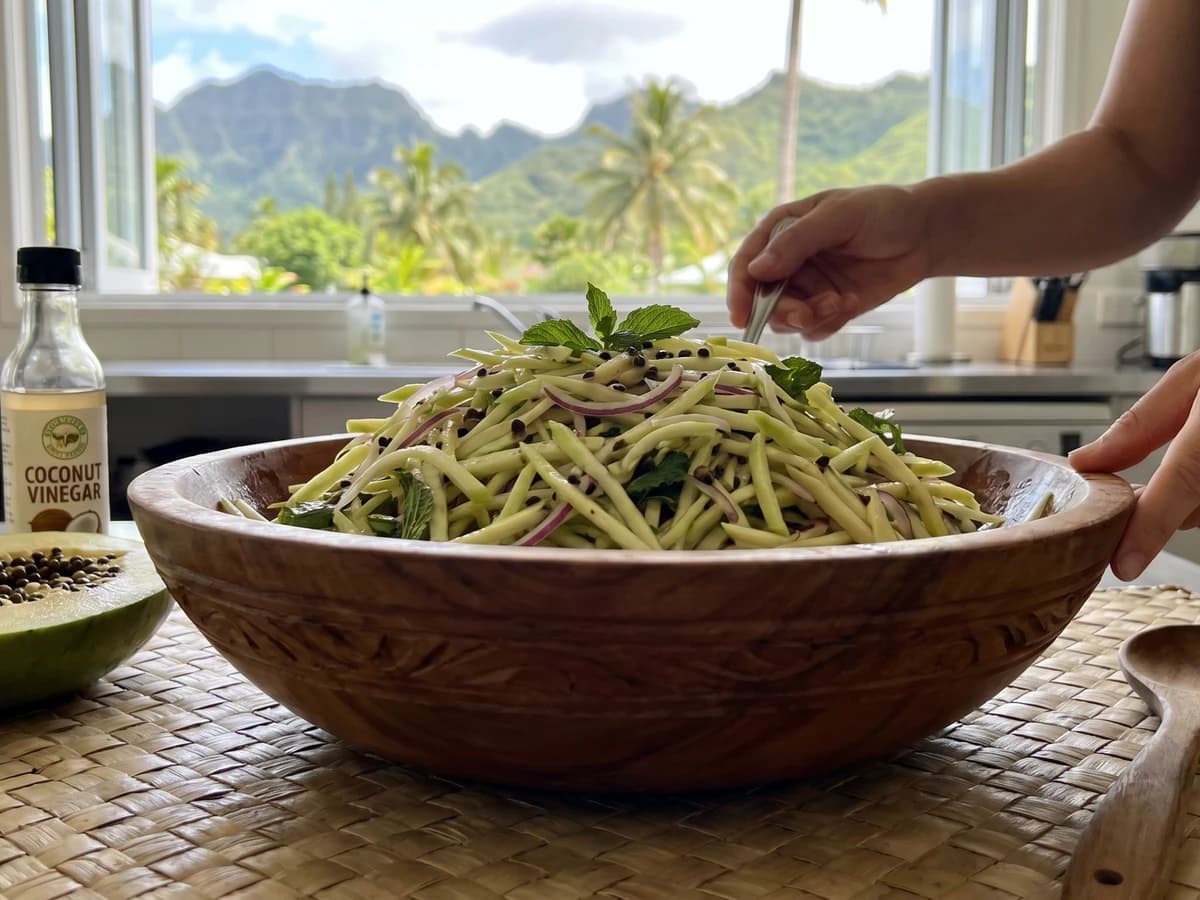
Crisp green pawpaw cut fine, red onion sliced thin, mint bruised in the hand, and a peppery dressing made from the seeds. This is Cook Islands salad, Raro style, bright enough for any picnic table.
Chef Juliette
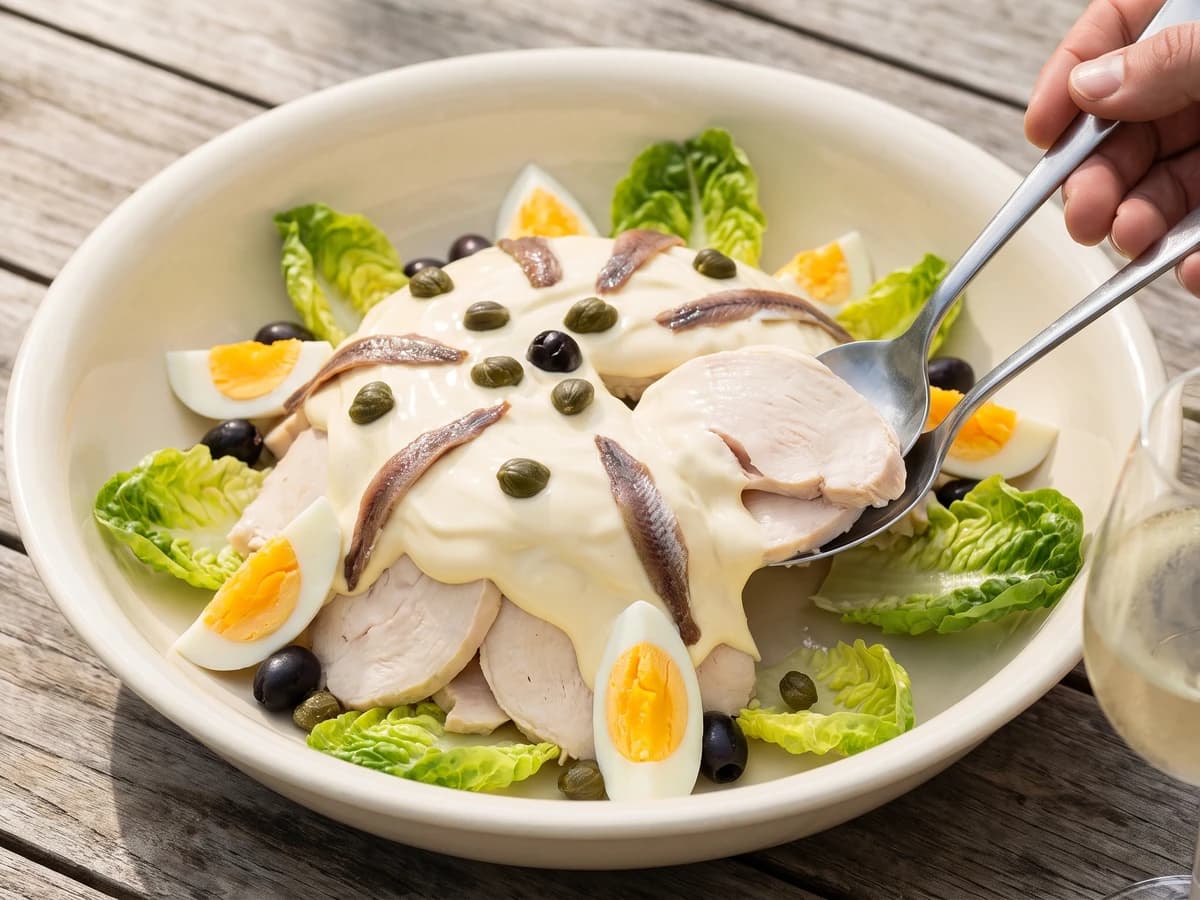
Cold roast chicken, ciseled lettuce, and a shining coat of homemade mayonnaise, arranged with capers, olives, anchovies, eggs, and lettuce hearts, then tossed at the table as the canon intends.

Chef Juliette
Cold roast or poached chicken with fine ribbons of lettuce, dressed at the final moment with oil and vinegar: a composed salad whose freshness depends entirely on timing.