Culinary Explorer

A cooking platform built around craft, culture, and the stories behind what we eat.
Discover Culinary Explorer
Rare Cheesecake (レアチーズケーキ)

Rare Cheesecake (レアチーズケーキ)

Created by

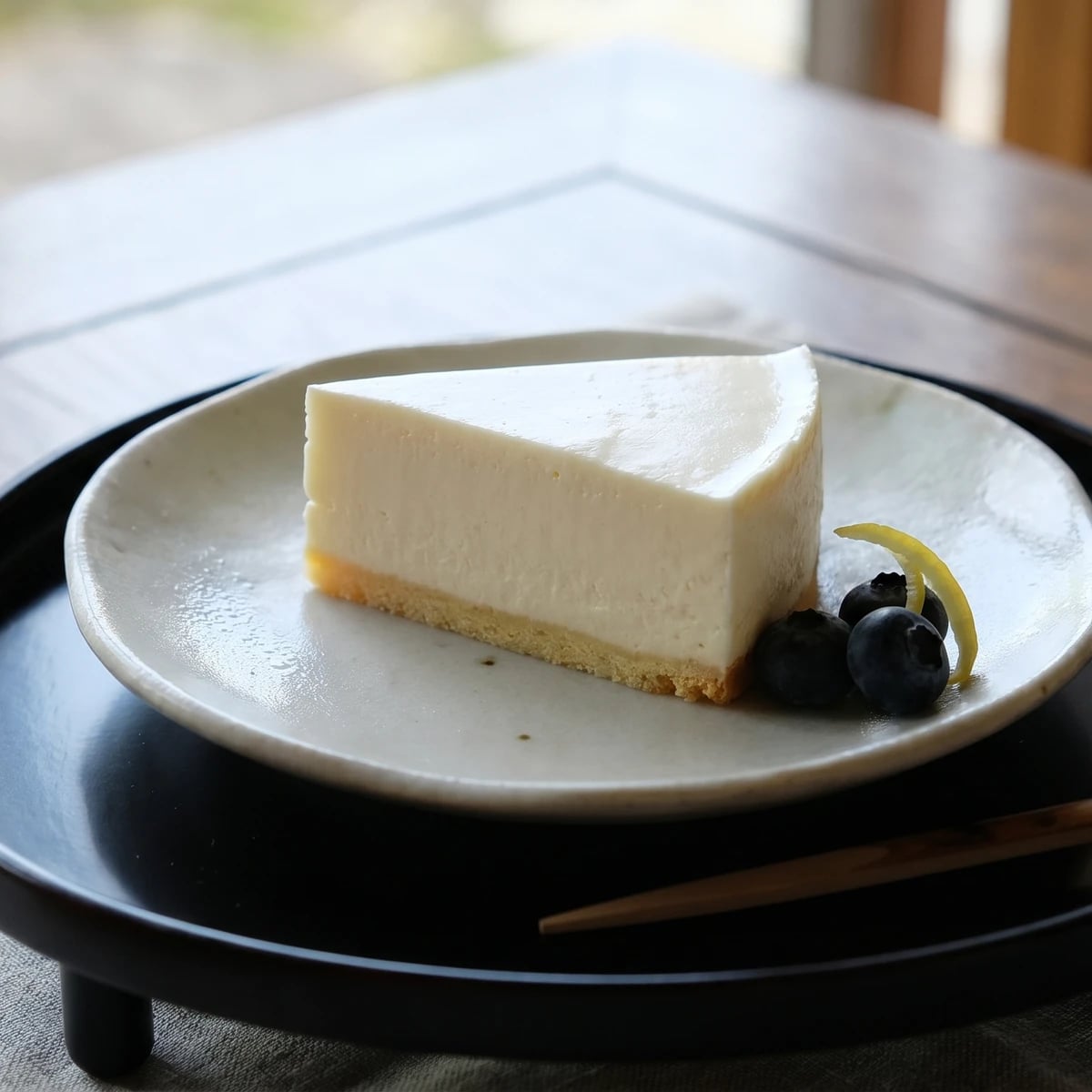
Rare cheesecake is not a baked cake behaving badly. It is a chilled cream set softly with gelatin, clean with lemon, light enough to finish a meal without leaning on it.

Desserts
Japanese
Make Ahead
Dinner Party
Comfort Food
30 min
Active Time
5 min cook8 hr 35 min total
Yield8 servings

Rare cheesecake sounds like a mistake until you learn the Japanese use of the word. Rare here doesn't mean careless or underdone. It means unbaked, softly set, and kept cold: cream cheese lightened with cream, sharpened with lemon, and held just firmly enough to slice. A grand name for a very calm cake, which is often how these things go.

The first secret is temperature. Cream cheese must be truly soft before you begin, because cold cheese breaks into little stubborn beads no whisk can politely persuade. Gelatin must be bloomed in cold water and dissolved gently, because dry grains need time to drink before heat can make them disappear. Do those two things and the filling turns smooth before it ever meets the mold.

This is yōgashi, a Western-style sweet settled into the Japanese table, and it belongs after a meal when you want something cool and clean rather than rich for its own sake. Lemon is not decoration here. It cuts the dairy and makes the finish light, which is why we don't bury the cake under a heavy fruit sauce. A few pieces of fruit at their shun are enough if the season offers them.

Chill it overnight. That isn't waiting for no reason, it is the set becoming even from edge to center and the biscuit base learning to hold its slice. The cake should cut with a clean pale face and a thin biscuit line underneath, nothing hidden, nothing hurried.

Rare cheesecake belongs to Japan's postwar yōgashi culture, when home refrigeration and dairy sweets became more common in urban confectionery. In 1965, Top's in Ginza helped set the style with a no-bake cheesecake: cream cheese and cream held with gelatin over a biscuit base, served chilled rather than baked. In Japanese dessert language, "rare" points to the cake not being baked, close in feeling to nama, or fresh, rather than to anything raw or unsafe.

The technique, the tradition, and the story behind every dish.

Discover Culinary Explorer

Ingredients

plain tea biscuits or digestive biscuits

Quantity

100g

unsalted butter

Quantity

50g

melted

powdered gelatin

Quantity

6g

cold water

Quantity

30ml

full-fat cream cheese

Quantity

250g

softened to room temperature

granulated sugar

Quantity

70g

plain full-fat yogurt

Quantity

120g

heavy cream

Quantity

200ml

chilled

fresh lemon juice

Quantity

2 tablespoons

lemon zest

Quantity

1 teaspoon

finely grated

fine sea salt

Quantity

1/4 teaspoon

seasonal berries or thin strips of lemon peel (optional)

Quantity

for serving

Equipment Needed

  • 18cm cake ring or 7-inch springform pan
  • Parchment paper or acetate collar
  • Small heatproof cup for gelatin
  • Electric hand mixer or sturdy whisk
  • Offset spatula
  • Fine-mesh sieve, optional for extra-smooth filling

Instructions

  1. 1

    Line the mold

    Line the bottom of an 18cm cake ring or 7-inch springform pan with parchment, and line the sides with a strip of parchment or acetate. This small bit of neatness matters later: a soft cake releases cleanly only if you have given it a clean path out.

  2. 2

    Press the base

    Crush the biscuits into fine crumbs, then mix with the melted butter until the crumbs look evenly damp, like wet sand. Press them into the pan in an even layer, firm but not brutal. Too loose and the base crumbles; too hard and it cuts like a paving stone. Chill while you make the filling.

    The butter firms in the cold and binds the crumbs. Give it that time, and the biscuit line will stay thin and tidy under the cream.
  3. 3

    Bloom the gelatin

    Sprinkle the powdered gelatin evenly over the cold water in a small heatproof cup. Leave it five to ten minutes, until every grain has swollen and the surface looks dull and thick. Cold water lets the gelatin hydrate evenly. Hot water grabs the outside first and leaves little specks that no one invited.

  4. 4

    Smooth the cheese

    Beat the softened cream cheese with the sugar, salt, and lemon zest until glossy and completely smooth, scraping the bowl more than once. Add the yogurt and lemon juice and beat again. If the cheese is cool in the center, wait and beat later; lumps now become lumps in the slice, and this cake has nowhere to hide.

    Room-temperature cream cheese is not a nicety. It is the texture of the finished cake being decided before the gelatin arrives.
  5. 5

    Dissolve the gelatin

    Set the cup of bloomed gelatin in a small pan of hot water, or warm it in very short microwave bursts, just until clear and fluid. Do not boil it. Whisk a spoonful of the cheese mixture into the gelatin, then pour that back into the bowl while whisking. Bringing the two closer in temperature keeps the gelatin from setting into thin threads.

  6. 6

    Fold the cream

    Whip the chilled cream until it falls from the whisk in soft ribbons, not stiff peaks. Fold it into the cheese base in two additions, turning the bowl and lifting from the bottom until no white streaks remain. Soft cream gives the cake its lightness; overwhipped cream gives it a rough, airy chew.

  7. 7

    Fill and chill

    Pour the filling over the chilled biscuit base and smooth the top with an offset spatula. Tap the pan once or twice on the counter to settle any large air pockets, then cover without touching the surface. Refrigerate at least eight hours, preferably overnight. Gelatin sets from edge to center slowly, and patience is the difference between a clean slice and a slump.

  8. 8

    Unmold and slice

    Run a warm towel around the outside of the pan, then release the ring and peel away the lining. Cut with a warm, dry knife, wiping between slices so each face stays pale and smooth. Serve cold, with a few seasonal berries or a thin curl of lemon peel if you like. Leave most of the top plain; the quiet white surface is part of the dish.

Chef Tips

  • Use full-fat cream cheese and fresh cream. Low-fat cheese turns chalky here, and a heavy sauce won't rescue it. Sourcing first, even for a cake.
  • Measure the gelatin. Too little and the cake bows when sliced; too much and it bounces back at the fork, which is not the ambition of dessert.
  • Kanten, Japanese agar, is a fine ingredient, but it is not a straight stand-in here. It sets more firmly and breaks clean rather than melting softly, so it changes what this cake is.
  • If your yogurt is thin and watery, drain it in a lined sieve for twenty minutes before using. The filling wants tang, not extra water.
  • Garnish by the season and with restraint: three berries, a little citrus peel, nothing poured over the whole top. Let the dairy and lemon speak clearly.

Advance Preparation

  • This cake is best made the day before serving. Overnight chilling gives the gelatin time to set evenly and the biscuit base time to firm.
  • The biscuit base can be pressed into the pan one day ahead and kept refrigerated, tightly covered.
  • The finished cake keeps two days refrigerated. Garnish only at the end so fruit juices don't stain the pale surface.
  • For transport, keep the cake in its mold and unmold it after arrival. Cold and structure are friends here.

Frequently Asked Questions

Nutrition Information

1 serving (about 108g)

Calories
345 calories
Total Fat
28 g
Saturated Fat
16 g
Trans Fat
1 g
Unsaturated Fat
10 g
Cholesterol
80 mg
Sodium
240 mg
Total Carbohydrates
21 g
Dietary Fiber
0 g
Sugars
14 g
Protein
5 g

Note: Chef personas and recipes are created with AI assistance. Cook with care: follow safe food-handling practices, check doneness with a thermometer when needed, and adapt for allergies and your kitchen.

Where cooking meets culture.

Culinary guides, cultural storytelling, and the editorial depth that makes cooking meaningful.

Discover Culinary Explorer

More from Yogashi: Japanese Cakes, Cheesecakes & Pudding

Browse the full collection