
Chef Margarida
Areias de Cascais
The sand cookies of Cascais, where three simple ingredients become something that melts on your tongue and sparkles like the beach at sunset. Butter, flour, sugar. That's all. That's enough.
A cooking platform built around craft, culture, and the stories behind what we eat.
Created by
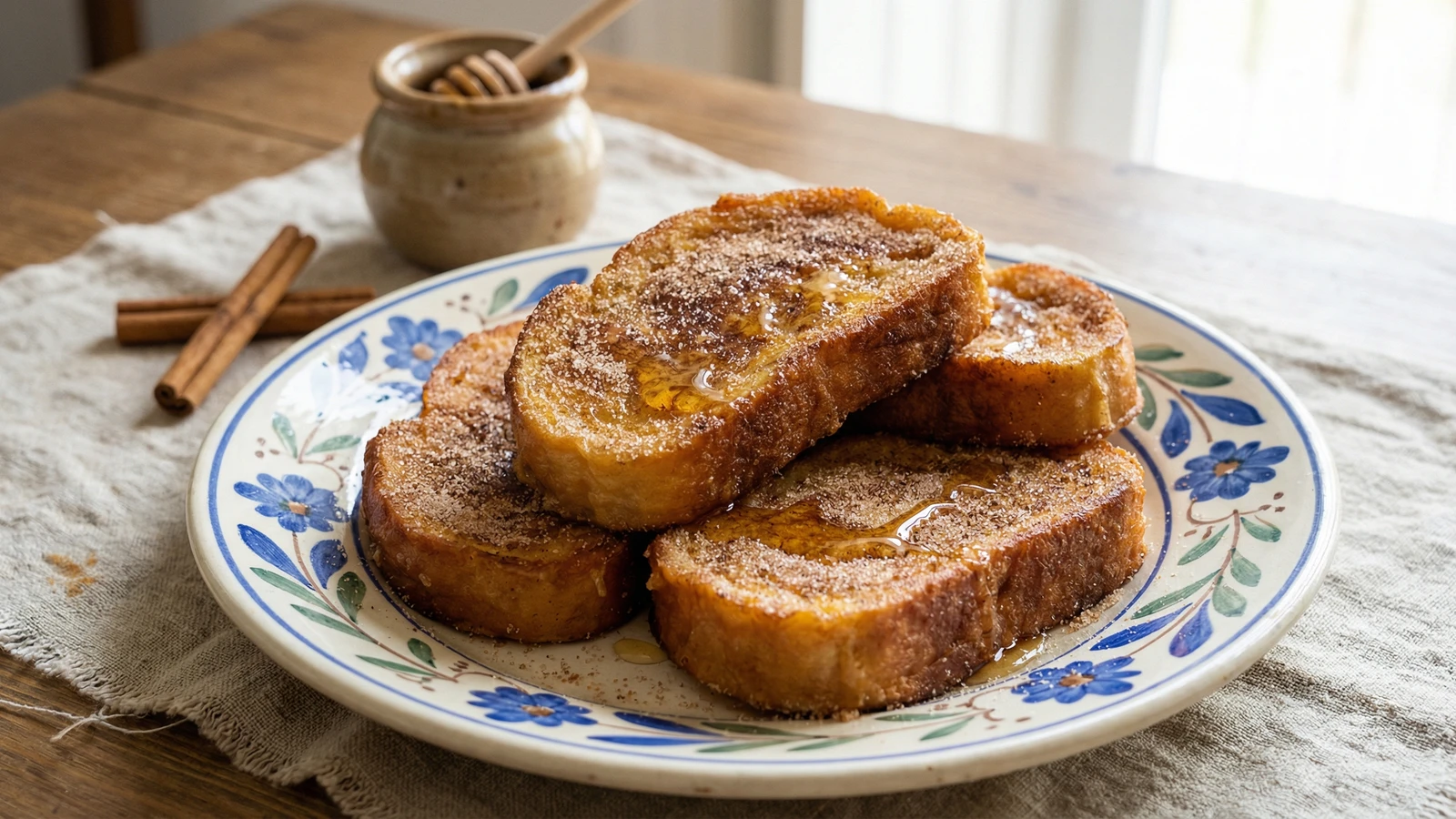
The golden slices of Portuguese Christmas, when stale bread transforms into something sacred. Soaked, fried, sugared, fought over at the table while the house smells of cinnamon and memory.
Christmas morning at Avó Leonor's house smelled of cinnamon and hot oil. The rabanadas were already piled on a platter by the time we woke, dusted with so much sugar they looked like they'd been caught in a snowstorm. She'd been up since dawn, standing at the stove in her housecoat, frying slice after slice in her blackened pan.
This is the dish that says Christmas in Portugal. Not the bacalhau on Christmas Eve, not the bolo rei. The rabanadas. Every family makes them. Every family has their way. Some soak the bread in milk, some in sweetened wine, some in a mixture of both. Some coat them in cinnamon sugar while still warm. Some drizzle honey. Some do both because why choose?
In the south, they call these fatias douradas, golden slices, and eat them year-round. In the north, they're rabanadas and belong to Christmas. But the technique is the same everywhere: day-old bread, a good soak, a dip in beaten egg, and into hot oil until they turn the color of autumn leaves.
Avó Leonor used pão de forma from the padaria, but she always said her mother used whatever bread was going stale. That's the origin of this dish: peasant thrift, making something wonderful from what others would throw away. The convents perfected it, as they did with so many Portuguese sweets, but the grandmothers kept it alive. A cozinha é memória. This is how we remember Christmas.
Rabanadas trace back to 15th-century Portugal, likely adapted from medieval European bread puddings. Portuguese convents refined the technique during the Age of Discoveries, when sugar from colonial trade made sweet dishes possible for common people. The name 'rabanada' may derive from 'rabo' (tail), referring to the bread's ends, or from 'rabão' (large radish), describing the sliced shape.
Quantity
1 loaf (about 400g)
cut into 2cm thick slices
Quantity
500ml
Quantity
150g
divided
Quantity
1 strip (about 5cm)
Quantity
1
Quantity
4 large
Quantity
for frying (about 2 cups)
Quantity
2 teaspoons
Quantity
for drizzling
| Ingredient | Quantity |
|---|---|
| day-old dense white breadcut into 2cm thick slices | 1 loaf (about 400g) |
| whole milk | 500ml |
| granulated sugardivided | 150g |
| lemon zest | 1 strip (about 5cm) |
| cinnamon stick | 1 |
| eggs | 4 large |
| vegetable oil or mild olive oil | for frying (about 2 cups) |
| ground Portuguese cinnamon | 2 teaspoons |
| honey (optional) | for drizzling |
Pour the milk into a wide shallow pan. Add 50g of the sugar, the lemon zest, and the cinnamon stick. Warm over medium-low heat, stirring until the sugar dissolves. Don't let it boil. You want it warm, fragrant, infused with lemon and cinnamon. Remove from heat and let it steep for 10 minutes. The whole kitchen should smell like Christmas.
Cut the bread into slices about 2cm thick. Not too thin or they'll fall apart. Not too thick or the center won't soak through. Remove the crusts if you like, though Avó Leonor never bothered. Day-old bread is essential. Fresh bread turns to mush. If your bread is too fresh, slice it and leave it uncovered overnight.
Remove the cinnamon stick and lemon zest from the milk. Dip each bread slice into the warm milk, letting it soak for about 10 seconds per side. The bread should absorb the milk but not become so saturated it falls apart. It should feel heavy but still hold its shape. Work in batches, laying the soaked slices on a tray.
Crack the eggs into a shallow bowl and beat them well with a fork until completely smooth. No streaks of white should remain.
Pour oil into a large heavy skillet to a depth of about 1cm. Heat over medium-high until the oil shimmers and a small piece of bread sizzles immediately when dropped in. The temperature should be around 170°C (340°F). Not so hot that the egg burns before the inside warms. Not so cool that the rabanadas absorb oil and turn greasy.
Working one at a time, dip each milk-soaked bread slice into the beaten egg, coating both sides completely. Let the excess drip off for a second, then carefully slide it into the hot oil. Fry until deep golden brown on the bottom, about 2 minutes, then flip and fry the other side. The color should be the warm amber of autumn leaves, not pale yellow, not dark brown. Remove to a wire rack or paper towels.
Mix the remaining 100g sugar with the ground cinnamon on a wide plate. While the rabanadas are still warm, press each one into the cinnamon sugar, coating both sides generously. The sugar should stick to the warm surface and form a sweet crust. Be generous. This is not the moment for restraint.
Pile the rabanadas on a serving platter. Drizzle with honey if you like, or serve the honey alongside for people to add their own. Eat them warm, though they're also good at room temperature. At Avó Leonor's house, they never lasted long enough to find out if they were good cold.
1 serving (about 180g)
Culinary guides, cultural storytelling, and the editorial depth that makes cooking meaningful.
Discover Culinary ExplorerChef Margarida
The sand cookies of Cascais, where three simple ingredients become something that melts on your tongue and sparkles like the beach at sunset. Butter, flour, sugar. That's all. That's enough.

Chef Margarida
The Christmas turnovers of Alentejo, where humble chickpeas become something miraculous inside a crispy shell. Proof that Portuguese grandmothers could turn anything into celebration.

Chef Margarida
The butter cookies of the Azores, shaped into golden rings by island grandmothers who knew that the best things in life are simple: good butter, fresh eggs, and a cup of strong coffee.

Chef Margarida
The almond cookies of the Algarve, where Moorish orchards still bloom white against blue January skies. Three ingredients, centuries of tradition, the taste of southern Portugal in every tender bite.