Chef Lupita
Acúmara Tatemada al Comal
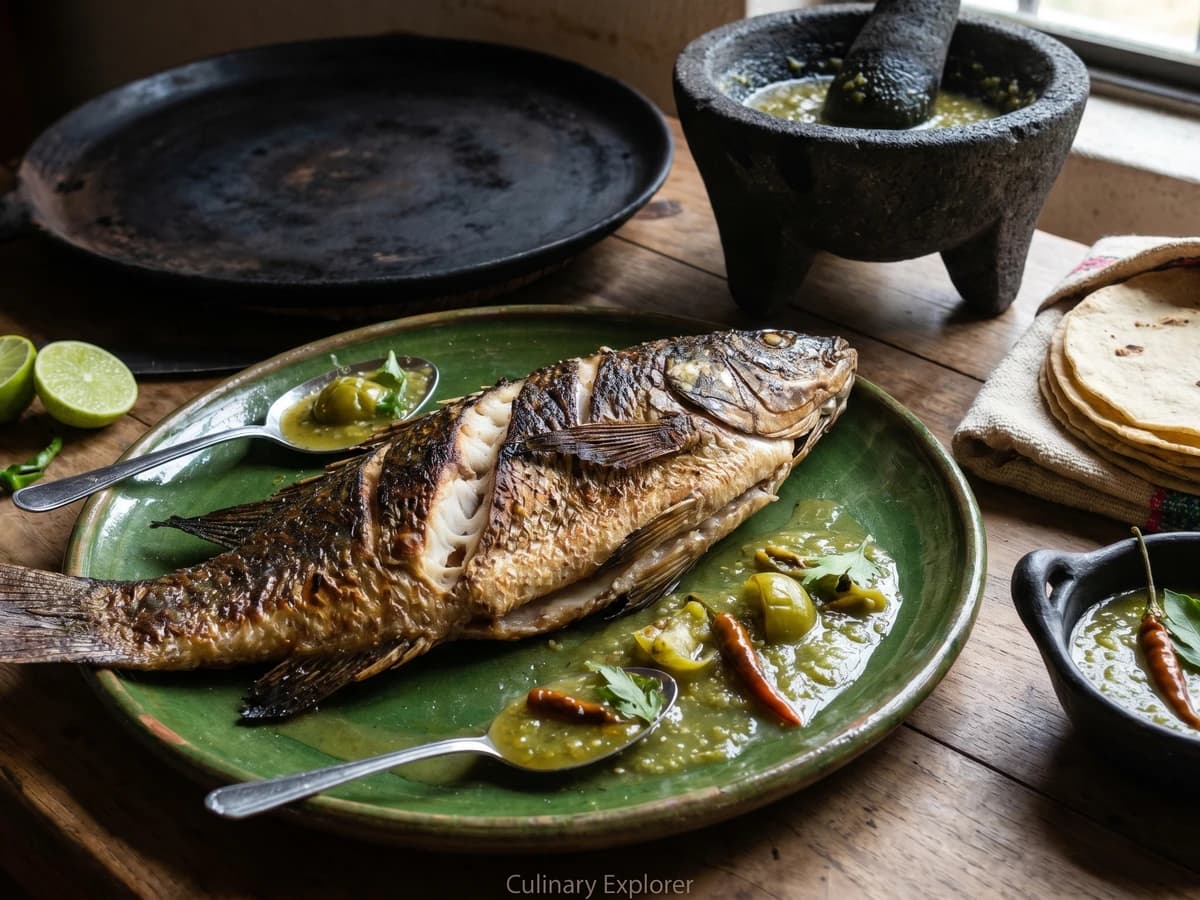
Michoacán's Lake Pátzcuaro acúmara, a whole kurucha from the lago tatemada on a comal de leña and served with chile perón atápakua, corn tortillas, and P'urhépecha discipline.
A cooking platform built around craft, culture, and the stories behind what we eat.
Created by
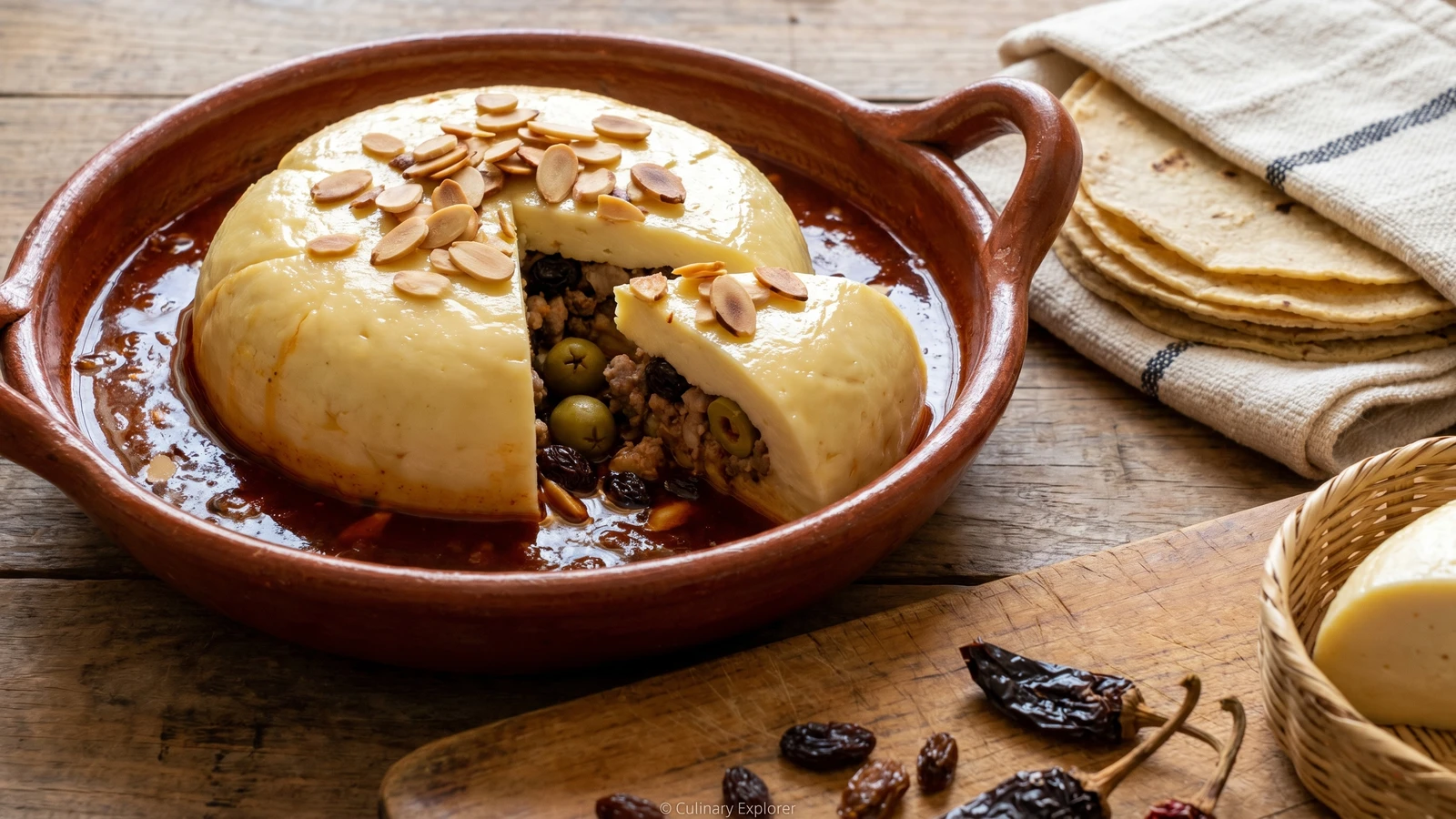
Chiapas's Ocosingo ball cheese is hollowed by hand, packed with pork picadillo, raisins, almonds, olives, and chile ancho caldillo, then baked in clay until the shell softens around the filling.
Chiapas, specifically Ocosingo and the road that runs from San Cristobal toward the Selva Lacandona, is where this dish stands. Not Yucatan with its Dutch Edam. Chiapas uses its own queso de bola de Ocosingo, a firm cow's milk cheese made in ranch country and sold in the municipal market by women who know which ball will hollow cleanly and which one will crack.
The defining ingredient is the cheese. You cut a cap, scoop the center, fill it with pork picadillo cooked in manteca de cerdo, raisins, almonds, olives, and a caldillo colored with chile ancho and a little chile simojovel when the mercado gives it to you. This is not a hot dish. The chile gives depth and color, not a dare for tourists. Not all Mexican food is trying to hurt you.
Women in Chiapas perfected this kind of holiday food because it solves the problem of abundance: one cheese, one cazuela, enough filling to feed the table. The clay should be barro de Amatenango del Valle if you have it, set down family-style, with corn tortillas wrapped in a servilleta and no flour tortillas unless you wandered north by accident. Cada estado, su propia cocina.
I learned a version from a senora in the Ocosingo market who tapped the cheese with her knuckle before she let me buy it. "This one," she said. My mother would have approved. The recipe is not difficult, but it is disciplined: dry picadillo, fried caldillo, gentle baking. No me vengas con atajos.
Queso relleno in southeastern Mexico is often associated with Yucatan's Edam version, a product of 19th-century Caribbean trade that brought Dutch cheeses into peninsula kitchens. Chiapas's version belongs to Ocosingo's cattle country, where queso de bola developed from post-conquest dairy traditions and became a local marker of the valleys between the Altos de Chiapas and the Selva Lacandona. The pork picadillo with raisins, almonds, olives, cinnamon, and clove reflects the colonial Mexican habit of balancing meat with fruit, nuts, and spices, a technique that appears from Puebla to the Maya south but tastes different in every state.
Quantity
1, 2 to 2 1/2 pounds
chilled, wax or plastic coating removed
Quantity
2
stemmed and seeded
Quantity
1
stemmed, or 1 dried chile de arbol as a compromise
Quantity
1 1/2 pounds
Quantity
1 medium
half left whole and half finely chopped
Quantity
4
3 unpeeled and 1 minced
Quantity
4 tablespoons
divided
Quantity
1 cup
Quantity
1 large
wiped clean
Quantity
1 pound
Quantity
1 1/2 teaspoons, plus more to taste
divided
Quantity
1/2 teaspoon
Quantity
1/2 teaspoon
crumbled
Quantity
1/4 teaspoon
Quantity
1 pinch
Quantity
1/2 cup
Quantity
1/3 cup
toasted and chopped
Quantity
1/3 cup
chopped
Quantity
1 tablespoon
rinsed and chopped
Quantity
2 tablespoons
for finishing
Quantity
for serving
| Ingredient | Quantity |
|---|---|
| queso de bola de Ocosingochilled, wax or plastic coating removed | 1, 2 to 2 1/2 pounds |
| dried chile anchostemmed and seeded | 2 |
| dried chile simojovelstemmed, or 1 dried chile de arbol as a compromise | 1 |
| ripe Roma tomatoes | 1 1/2 pounds |
| white onionhalf left whole and half finely chopped | 1 medium |
| garlic cloves3 unpeeled and 1 minced | 4 |
| manteca de cerdodivided | 4 tablespoons |
| light chicken broth or pork broth | 1 cup |
| fresh hoja santa leafwiped clean | 1 large |
| ground pork shoulder or finely chopped pork shoulder | 1 pound |
| kosher saltdivided | 1 1/2 teaspoons, plus more to taste |
| freshly ground black pepper | 1/2 teaspoon |
| dried Mexican oreganocrumbled | 1/2 teaspoon |
| ground Mexican cinnamon | 1/4 teaspoon |
| ground clove | 1 pinch |
| raisins | 1/2 cup |
| blanched almondstoasted and chopped | 1/3 cup |
| pitted green oliveschopped | 1/3 cup |
| capersrinsed and chopped | 1 tablespoon |
| toasted sliced almonds (optional)for finishing | 2 tablespoons |
| warm hand-pressed corn tortillas (optional) | for serving |
Work with the queso de bola while it is cold. Cut a round cap from the top, about 2 1/2 inches wide, and keep it. Use a paring knife and a sturdy spoon to scoop out the center, leaving a wall and bottom about 1/2 inch thick. Chop 1 cup of the scooped cheese for the filling and save the rest for another use. Return the shell and cap to the refrigerator while you make the picadillo.
Heat a dry comal over medium. Toast the chile ancho one at a time, about 20 to 30 seconds per side, just until the skin darkens slightly and smells deep and raisiny. Toast the chile simojovel for only a few seconds, because it is smaller and sharper. Put the toasted chiles in a bowl and cover with hot water for 15 minutes. Hot water softens the flesh. Boiling water roughs up the skin and can turn the sauce bitter.
On the same comal, roast the tomatoes, the half onion, and the 3 unpeeled garlic cloves until blistered and softened in spots. Peel the garlic. Drain the chiles and blend them with the roasted tomatoes, roasted onion, peeled garlic, broth, and 1/2 teaspoon salt until completely smooth. This caldillo should be red-brown and loose enough to move around the cheese in the cazuela.
Melt 2 tablespoons manteca de cerdo in a clay cazuela or heavy skillet over medium heat. Pour in the blended caldillo carefully, because it will sputter. Cook 8 to 10 minutes, stirring often, until the color deepens and a light sheen of fat appears at the edge. Frying the sauce wakes up the chile. Raw blended tomato is not a finished sauce.
In a separate wide skillet, melt the remaining 2 tablespoons manteca de cerdo over medium-high heat. Add the pork, 1 teaspoon salt, and black pepper. Cook, breaking it into small pieces, until the liquid evaporates and the pork begins to brown at the edges. La manteca es el sabor. Vegetable oil will cook the meat, yes, but it will not give you this flavor.
Add the finely chopped half onion and the minced garlic to the pork. Cook until the onion softens. Stir in the Mexican oregano, cinnamon, clove, raisins, chopped almonds, olives, capers, and 1/2 cup of the fried caldillo. Cook 6 to 8 minutes, until the mixture is moist but no longer wet. Let it cool for 10 minutes, then fold in the 1 cup chopped Ocosingo cheese.
Heat the oven to 350F. Spoon most of the remaining caldillo into a clay cazuela or heavy baking dish. Lay the hoja santa leaf in the sauce. Pack the picadillo into the hollowed cheese, pressing firmly without cracking the shell. Replace the cap. Set the stuffed cheese in the center of the cazuela and spoon a little caldillo over the top and sides.
Cover the cazuela loosely with foil and bake for 25 minutes. Uncover and bake 10 to 15 minutes more, basting once with the caldillo, until the sauce bubbles at the edges and the cheese shell looks glossy and softened but still stands. Do not chase a melted cheese pull. This is a stuffed cheese, not a dip.
Let the queso relleno rest for 10 minutes before cutting. Scatter the toasted sliced almonds over the top. Bring the whole cazuela to the table and serve wedges with the chile ancho caldillo spooned around them and warm corn tortillas alongside. This is Chiapas on the table, not Yucatan, not the north, not one single Mexico. Cada estado, su propia cocina.
1 serving (about 360g)
Culinary guides, cultural storytelling, and the editorial depth that makes cooking meaningful.
Discover Culinary ExplorerChef Lupita
Michoacán's Lake Pátzcuaro acúmara, a whole kurucha from the lago tatemada on a comal de leña and served with chile perón atápakua, corn tortillas, and P'urhépecha discipline.

Chef Lupita
Puebla's weekday adobo of pork shoulder braised in a thick guajillo and ancho sauce sharpened with vinegar, cumin, and clove. The deep red of a market spice stall, the dish a poblana cooks without thinking.

Chef Lupita
Loreto's pit-roasted clams, planted hinge-up in beach sand and tatemadas under a fast fire of dried romerillo brush, the resinous Baja desert shrub that gives this dish its smoke.

Chef Lupita
Oaxaca's eighth mole, the silky, almond-and-cinnamon almendrado, served over poached chicken. Mild, sweet, restrained, and a quiet rebuttal to anyone who thinks Mexican food has to be hot to be Mexican.