Chef Isabel
Acedías Fritas de Cádiz
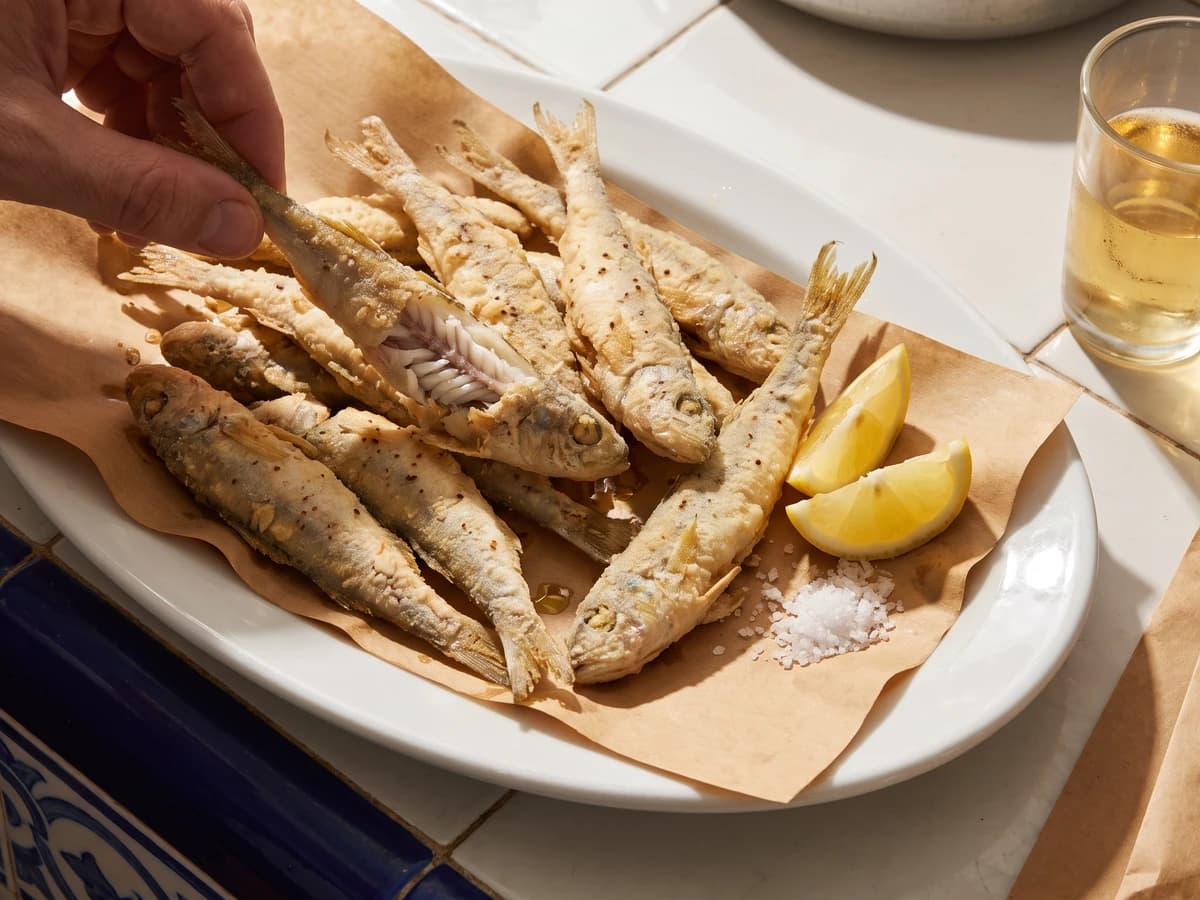
Acedías fritas belong to Cádiz: tiny wedge sole, salted, dusted in frying flour, and dropped into very hot olive oil so the rims crisp while the fish stays tender.
A cooking platform built around craft, culture, and the stories behind what we eat.

Created by
Queso Flor de Guía belongs to Gran Canaria's north: sheep and cow milk set with cardoon flower, pressed lightly, aged young, and served with miel de palma for that gentle bitter edge.
Queso Flor de Guía is Gran Canaria's northern cheese, from the country around Santa María de Guía, Gáldar, and Moya: sheep milk rounded with cow milk and set with flor de cardo, wild cardoon flower, not animal rennet. The flower is not decoration. It gives the young wheel its creamy paste, its soft slump under the knife, and that clean bitter edge at the end. Serve it with miel de palma, palm honey, and you understand why the island keeps this one close.
The method that decides it is the set. Cardoon works slowly and gently, so you hold the milk at 30 to 32°C, stir the infusion in once, then leave it alone. Add more flower because you're impatient and the cheese turns harsh. Press it as if it were Manchego and you squeeze out the softness you came for. This is Gran Canaria, not La Mancha in a smaller hat.
If you're far from the island, no hace falta haber pisado España. Use pasteurized, non-UHT sheep milk and rich whole cow milk; use dried Cynara cardunculus flowers or a bottled thistle coagulant made for cheese. If all you can buy is animal rennet, make the cheese and enjoy it, but call it what it is: a pressed sheep-and-cow cheese, not Flor de Guía.
My margin note is short here: cuajo limpio, leche templada, clean coagulant, warm milk. Weigh the flower. Watch the thermometer. Give the curd time. Siempre sale, si lo sigues.
Queso Flor de Guía belongs to the north of Gran Canaria, especially Santa María de Guía, Gáldar, and Moya, where shepherds and cheesemakers worked with sheep milk from the medianías, the island's mid-slope pastures. Its name comes from la flor, the dried flower heads of cardoon steeped in water to coagulate the milk and give a faint bitterness no animal rennet gives. The protected name separates Flor de Guía from Media Flor de Guía and Queso de Guía by the coagulant used, a practical difference that changes the texture as much as the flavor.
Quantity
3L
Quantity
2L
preferably rich Jersey-style milk
Quantity
0.6ml
diluted in 30ml cool non-chlorinated water
Quantity
1/8 teaspoon
Quantity
8g
purple florets only
Quantity
120ml
30 to 35°C, for the cardoon infusion
Quantity
2g
for the cardoon infusion
Quantity
2 percent of drained cheese weight, usually 16 to 20g
for dry salting
Quantity
80g
to serve
Quantity
to serve
| Ingredient | Quantity |
|---|---|
| pasteurized, non-UHT whole sheep milk | 3L |
| pasteurized, non-UHT whole cow milkpreferably rich Jersey-style milk | 2L |
| calcium chloride solutiondiluted in 30ml cool non-chlorinated water | 0.6ml |
| mesophilic starter culture | 1/8 teaspoon |
| dried cardoon flowers (Cynara cardunculus)purple florets only | 8g |
| warm non-chlorinated water30 to 35°C, for the cardoon infusion | 120ml |
| fine sea saltfor the cardoon infusion | 2g |
| fine sea saltfor dry salting | 2 percent of drained cheese weight, usually 16 to 20g |
| miel de palma (Canarian palm honey)to serve | 80g |
| country bread (optional) | to serve |
Scald or sanitize the pot, mold, follower, cloth, knife, ladle, and thermometer; cheese is patient food, not dirty food. Pull 8g of purple florets from the dried cardoon heads, pound them in a mortar with 2g salt, then stir in 120ml warm non-chlorinated water. Leave 30 minutes, strain through a scalded cloth or coffee filter, and squeeze hard. You want a clear tea-coloured infusion with no flower dust left to make the cheese bitter.
Combine the sheep milk and cow milk in a 6 to 8L stainless steel pot and warm slowly to 31°C, stirring from the bottom so no hot pocket forms. Stir in the diluted calcium chloride. Sprinkle the mesophilic culture over the surface, wait 3 minutes for it to hydrate, then stir gently for 1 minute. Cover and hold the milk at 31°C for 30 minutes.
Measure 100ml of the strained cardoon infusion, topping up with non-chlorinated water if you have less. Stir it into the milk for 45 seconds with slow up-and-down strokes, then stop the milk, cover the pot, and hold it at 30 to 32°C for 60 to 90 minutes. Cardoon sets softly, not with the snap of animal rennet. The curd is ready when a knife lifts a soft clean break and pale whey gathers at the edge.
Cut the curd into 2cm cubes with a long knife, first straight down, then at an angle as best you can. Let it rest 10 minutes so the cut faces firm. Stir with your hand or a ladle for 5 minutes, barely moving it, until the curds shrink a little and the whey turns yellow-green. Keep the pot around 30°C. Rough stirring makes paste, and paste does not become Flor de Guía.
Line a 12 to 14cm cheese mold with damp butter muslin and set it over a tray. Ladle in the curds gently, letting whey run through before adding the next spoonful. Fold the cloth over the top, set the follower on, and let it drain under its own weight for 20 minutes. The curd should settle into one mass but still look tender.
Press with 1kg for 30 minutes, then unwrap, flip, and rewrap the cheese. Press with 2kg for 1 hour, flip again, then press with 3kg for 4 hours. The wheel should knit at the edge but still give under your fingers. If the whey runs milky white under pressure, back off; you're pushing out fat, not just whey.
Weigh the drained wheel. Rub it all over with fine sea salt equal to 2 percent of its weight, usually 16 to 20g for this size. Pésalo, no lo adivines. Set it on a draining mat in a ripening box at 10 to 12°C for 12 hours, turning once. The salt draws off surface whey and begins the rind without drying the paste hard.
Age the cheese 15 to 21 days at 10 to 12°C with about 85 percent humidity. Turn it daily for the first week, then every other day. Keep the rind barely tacky, not wet; crack the box lid if moisture beads heavily, and close it more if the rind dries. Wipe stray blue or black mold with a cloth dipped in 3 percent brine, 3g salt in 100ml water, then dry the surface. If the cheese swells, smells rotten, or turns sharply ammoniacal, discard it.
Take the cheese from the refrigerator 1 hour before serving so the paste softens. Cut it into wedges and spoon miel de palma beside it or let a little run over the cut face. Add plain country bread if you like. No jam parade, no hot pepper jelly. The flower and the milk have already done the work.
1 serving (about 110g)
Culinary guides, cultural storytelling, and the editorial depth that makes cooking meaningful.
Discover Culinary ExplorerChef Isabel
Acedías fritas belong to Cádiz: tiny wedge sole, salted, dusted in frying flour, and dropped into very hot olive oil so the rims crisp while the fish stays tender.
Chef Isabel
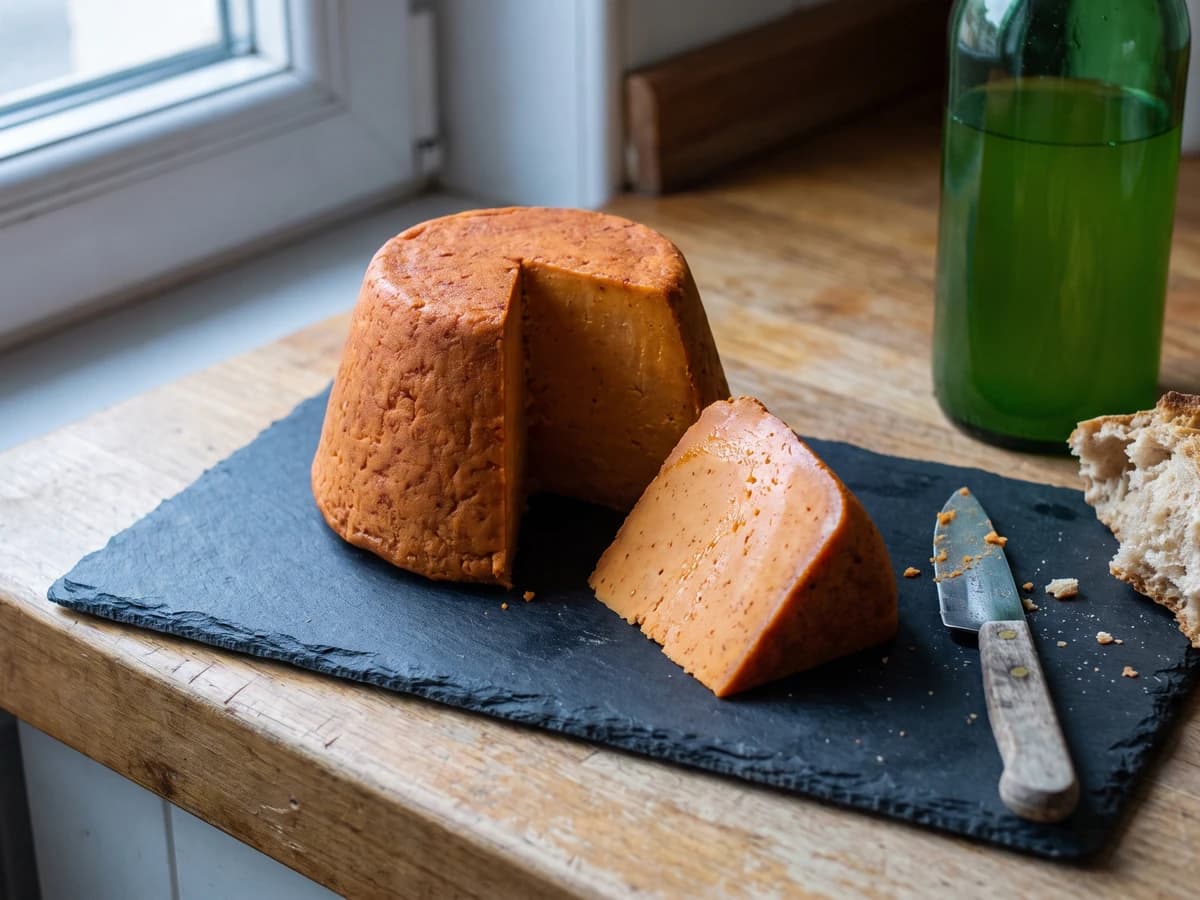
Afuega'l Pitu Roxu is Asturias in a small cheese: cow's milk set slowly to a dense curd, drained without squeezing, then kneaded with pimentón until it turns orange and grips the throat.
Chef Isabel
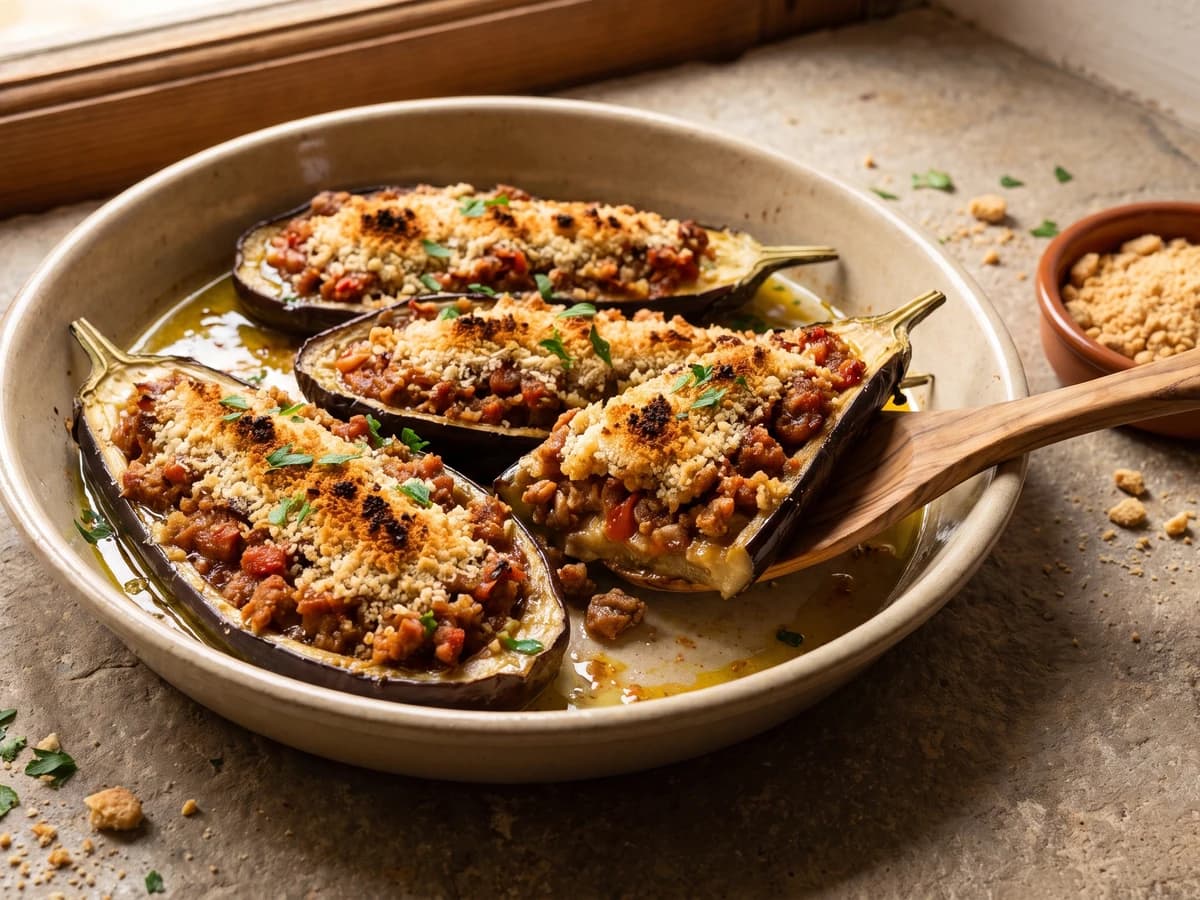
Albergínies farcides are Mallorca's summer stuffed aubergines: tender boiled shells, a slow pork sofrito with moraduix, and a plain breadcrumb cap baked until the top turns crisp and golden.

Chef Isabel
Carxofes farcides are Catalan stuffed artichokes: tender hearts filled with jamón, slow sweet onion, and breadcrumbs, then baked in a light creamy sauce until the tops turn golden.