Chef Isabel
Acedías Fritas de Cádiz
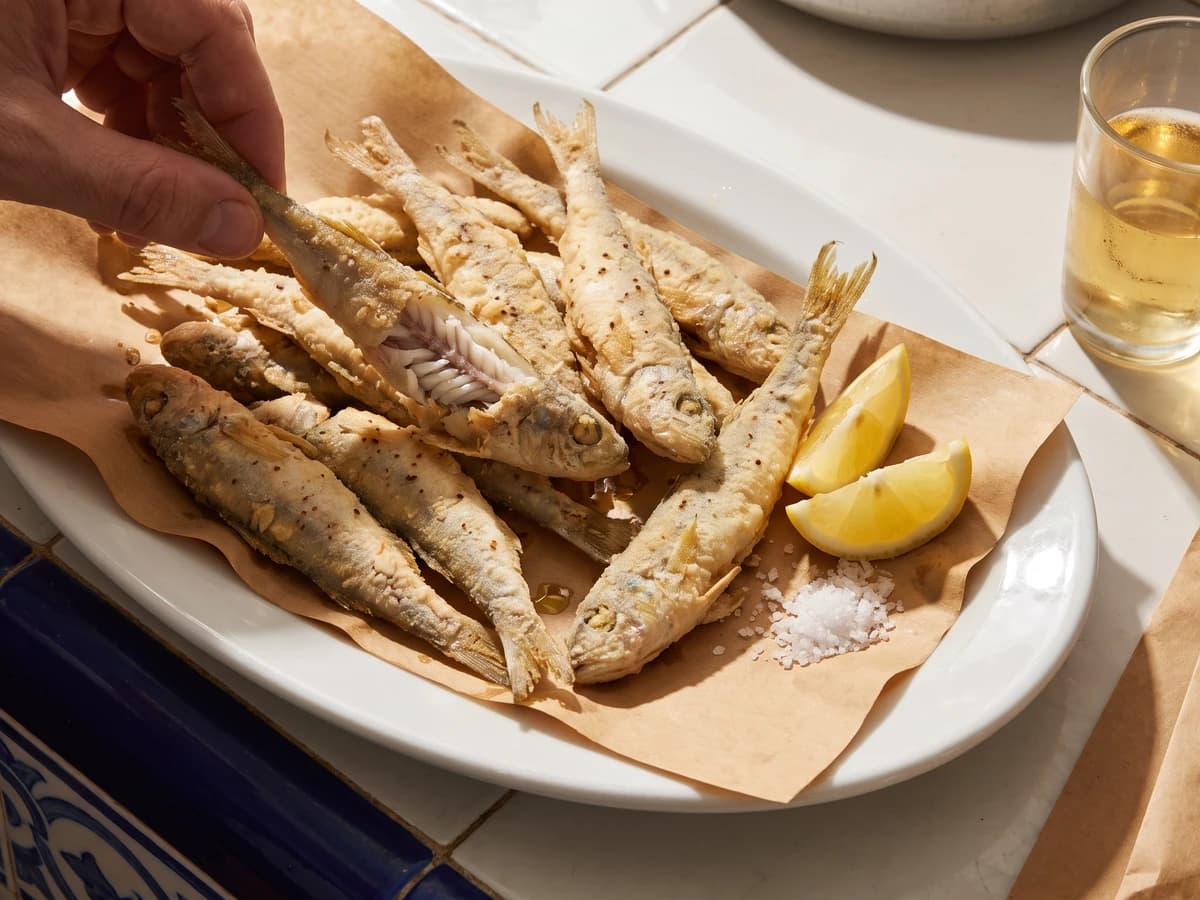
Acedías fritas belong to Cádiz: tiny wedge sole, salted, dusted in frying flour, and dropped into very hot olive oil so the rims crisp while the fish stays tender.
A cooking platform built around craft, culture, and the stories behind what we eat.

Created by
Gamonéu is Asturias in a wedge: mixed-milk mountain cheese, lightly smoked before cave aging, firmer and quieter than Cabrales. Let it warm, cut it right, and serve it with sidra.
Gamonéu is Asturian, from the Picos de Europa, and it is not Cabrales with another name. It is a mixed-milk cheese, usually cow with sheep or goat, lightly smoked before the caves finish it, so the paste stays firm and buttery and the blue veining runs faintly through it rather than taking over.
The method that decides this dish is not cooking. It is temperature. Serve Gamonéu cold from the fridge and you taste salt, smoke, and little else. Let it stand until the paste softens at the edge and the smell opens, then cut wedges from rind to centre so every piece gets the rind, the pale paste, and a little blue. That is the plate.
If you are far from Asturias, look first for DOP Gamonéu or Gamonedo from a good cheese counter. If you can't find it, use a firm mixed-milk blue with a natural rind and only a little smoke, not a sharp creamy blue that collapses on the knife. What changes is the mountain smoke and that dry cave finish. No hace falta haber pisado España, but the cheese has to be good.
Serve it with Asturian sidra if you can, bread, a few walnuts, and apple. Nothing smeared, whipped, or sweetened into another thing. Pésalo, no lo adivines: a small wedge per person is enough, because this cheese speaks plainly.
Gamonéu belongs to the Asturian councils around the Picos de Europa, especially Onís and Cangas de Onís, where mountain dairying made use of cow, sheep, and goat milk from the same grazing country. The cheeses were lightly smoked in cabins before aging in natural limestone caves, where the damp air encouraged blue veining from the rind inward. Its two traditional forms, del Valle and del Puerto, tell the old rhythm of valley farms and high summer pastures.
Quantity
300g
one wedge, rind intact
Quantity
180g
sliced
Quantity
1 medium, about 180g
cut into thin wedges
Quantity
60g
shelled
Quantity
750ml
chilled
| Ingredient | Quantity |
|---|---|
| Gamonéu DOP cheeseone wedge, rind intact | 300g |
| rustic country breadsliced | 180g |
| crisp applecut into thin wedges | 1 medium, about 180g |
| walnutsshelled | 60g |
| Asturian sidra naturalchilled | 750ml |
Take the Gamonéu out of the refrigerator 35 minutes before serving. Leave it covered loosely, not wrapped tight, so the paste softens at the cut face and the smoke and cave smell open. Too cold, it tastes blunt and salty; at the right temperature, it turns buttery and long.
Use a strong, thin knife and cut from rind to centre, making small wedges of about 45 to 50g each. Do not cube it. Each serving should carry a little rind, firm pale paste, and a thread of blue, because that is how the cheese tells its whole story.
Set the wedges on a plain plate or slate, leaving room between them. Add bread, apple wedges, and walnuts to the side, not piled on top. The apple freshens the salt and smoke, the walnuts echo the cave-aged nuttiness, and the bread gives the cheese somewhere to land.
Pour Asturian sidra natural if you have it, cold and lively. If not, choose a dry hard cider with good acidity, not a sweet one. Serve at once, while the cheese is open but still firm. Siempre sale, si lo sigues.
1 serving (about 245g)
Culinary guides, cultural storytelling, and the editorial depth that makes cooking meaningful.
Discover Culinary ExplorerChef Isabel
Acedías fritas belong to Cádiz: tiny wedge sole, salted, dusted in frying flour, and dropped into very hot olive oil so the rims crisp while the fish stays tender.
Chef Isabel
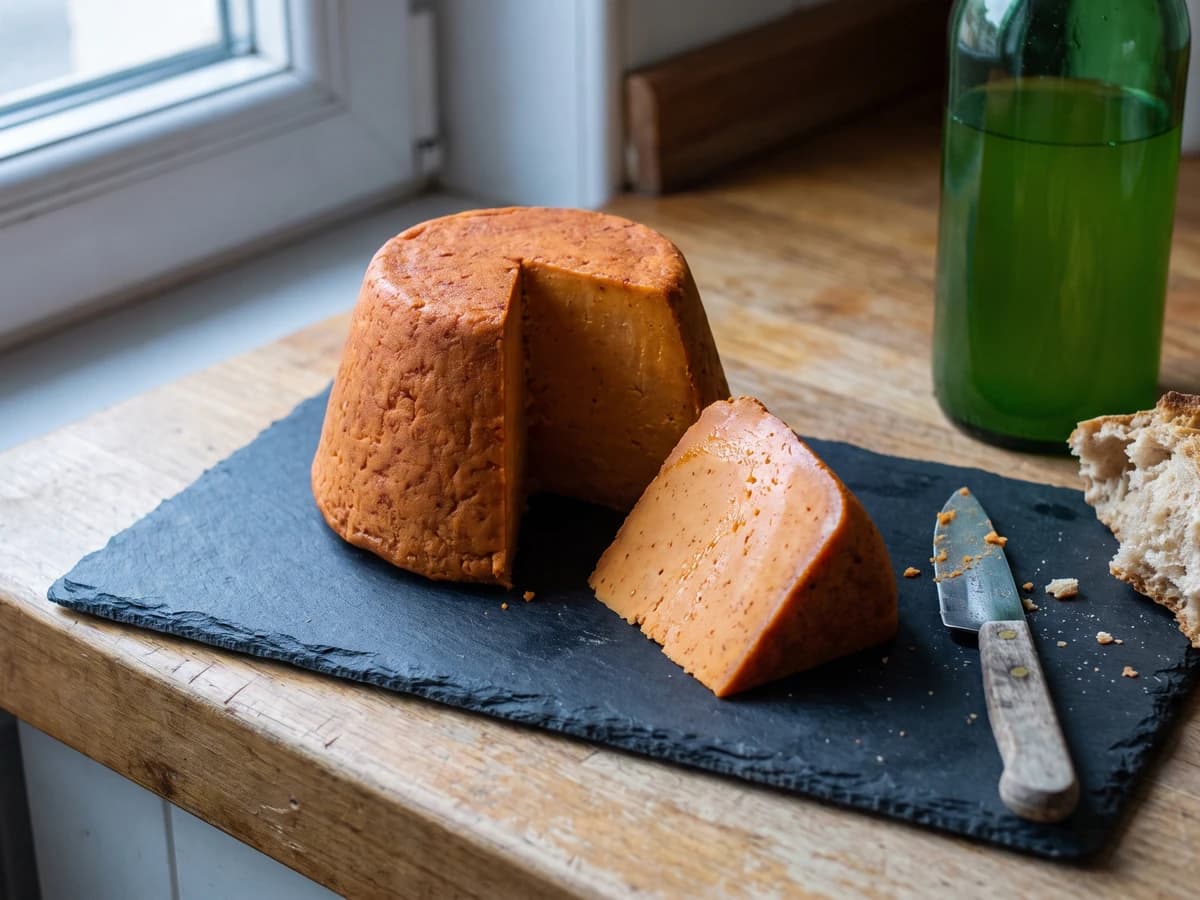
Afuega'l Pitu Roxu is Asturias in a small cheese: cow's milk set slowly to a dense curd, drained without squeezing, then kneaded with pimentón until it turns orange and grips the throat.
Chef Isabel
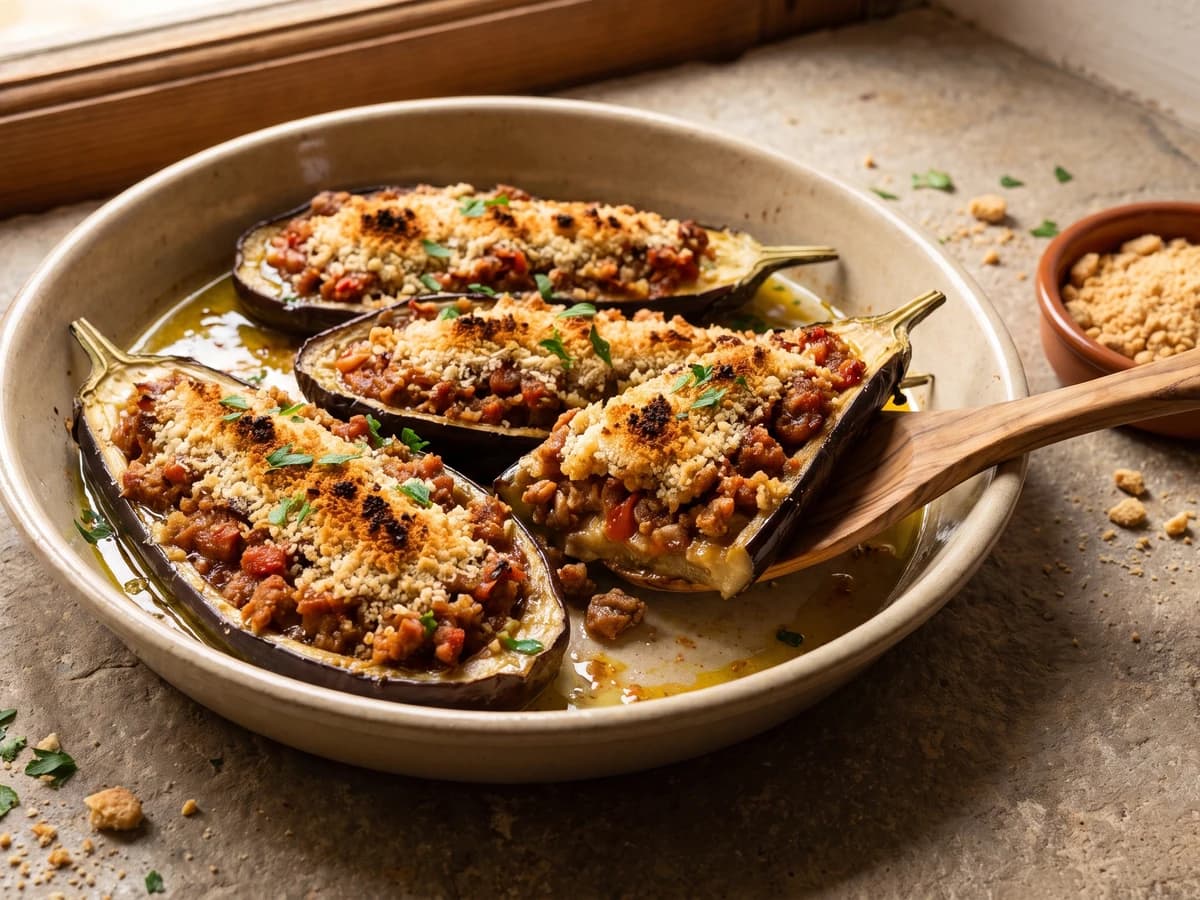
Albergínies farcides are Mallorca's summer stuffed aubergines: tender boiled shells, a slow pork sofrito with moraduix, and a plain breadcrumb cap baked until the top turns crisp and golden.

Chef Isabel
Carxofes farcides are Catalan stuffed artichokes: tender hearts filled with jamón, slow sweet onion, and breadcrumbs, then baked in a light creamy sauce until the tops turn golden.