Chef Isabel
Acedías Fritas de Cádiz
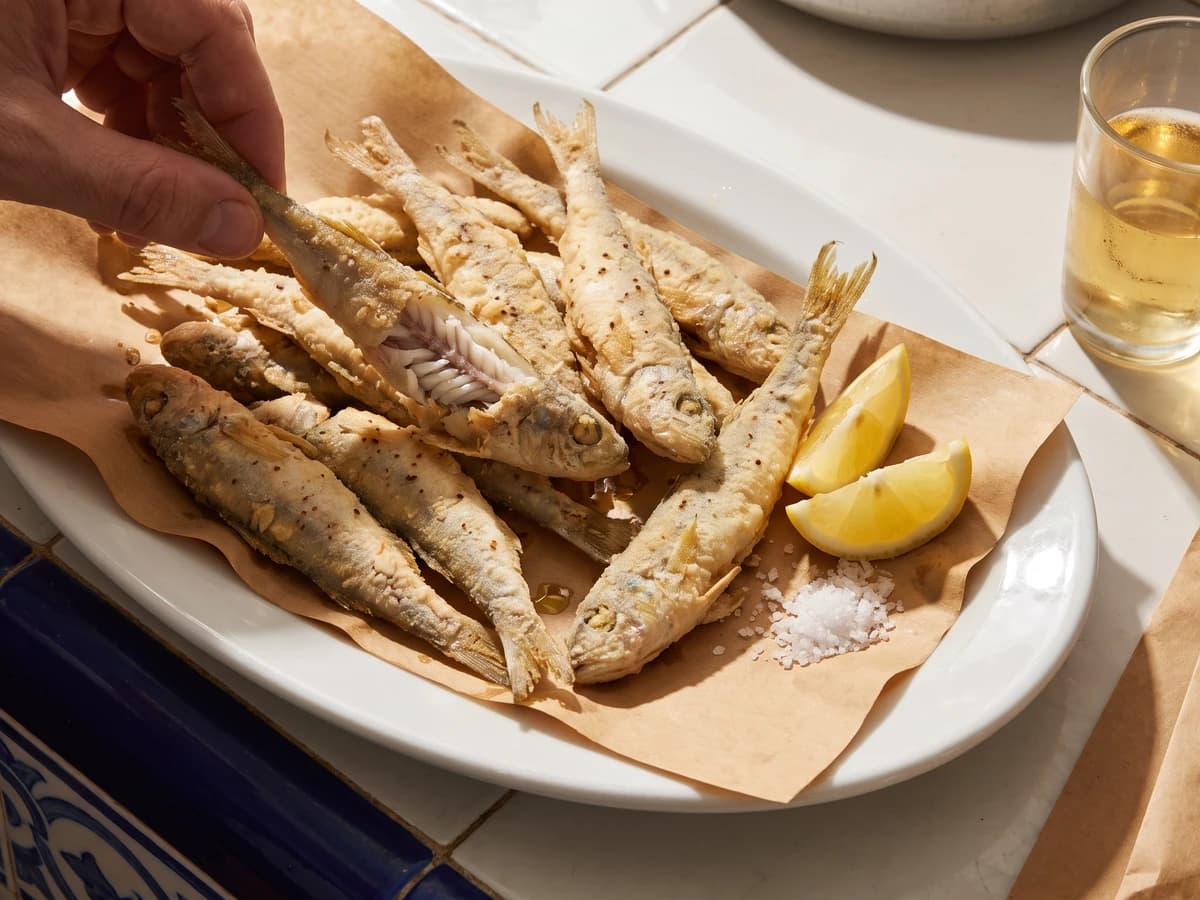
Acedías fritas belong to Cádiz: tiny wedge sole, salted, dusted in frying flour, and dropped into very hot olive oil so the rims crisp while the fish stays tender.
A cooking platform built around craft, culture, and the stories behind what we eat.

Created by
Afuega'l Pitu Roxu is Asturias in a small cheese: cow's milk set slowly to a dense curd, drained without squeezing, then kneaded with pimentón until it turns orange and grips the throat.
Afuega'l Pitu Roxu is Asturian, a cow's milk cheese from the damp dairy country of Asturias, acid-set until dense and tangy, then kneaded with pimentón until the paste turns orange. The name means 'it chokes the throat,' not because it is unpleasant, but because the cheese is firm, dry enough to catch a little, and full in the mouth. Esto es de Asturias, no de 'España' a secas.
The method that decides it is the set. You let the milk sour slowly with a little culture and only a whisper of rennet, then drain the curd without squeezing it. Push it with heat or press it like a hard cheese and you lose the close, gripping paste that makes Afuega'l Pitu itself. When it has drained, knead in measured salt and pimentón. Pésalo, no lo adivines.
Far from Asturias, use pasteurized whole cow's milk, never UHT, and live cultured buttermilk if you can't buy mesophilic starter. For the red color, use good Spanish pimentón dulce, with a pinch of picante if you like that sharper roxu bite; pimentón de la Vera works, but it brings more smoke than some Asturian versions. No hace falta haber pisado España. You do need clean tools, a cool room, and patience.
Serve it with bread and Asturian cider, cut thick or spread with the back of a knife if young. The Margin beside this one in my notebook says only: don't squeeze the bag. It always looked harmless. It wasn't. Siempre sale, si lo sigues.
Afuega'l Pitu belongs to the central and western valleys of Asturias, especially the market country around Grado, Pravia, Salas, Tineo, Morcín, and Riosa, where small cow dairies turned surplus milk into a lactic cheese that could be eaten young or dried firmer. Its Asturian name is commonly understood as 'it chokes the throat,' a plain joke with truth in it because the paste is dense, dry, and gripping. The roxu, red, version is kneaded with pimentón after draining; the blancu is left plain, and both appear in cloth-shaped trapu or truncated atroncau forms.
Quantity
3 litres
not UHT
Quantity
60ml or 1/8 teaspoon
Quantity
1/4 teaspoon
diluted in 30ml cool non-chlorinated water
Quantity
4 drops
diluted in 30ml cool non-chlorinated water
Quantity
10g
Quantity
8g
Quantity
1g
Quantity
to serve
Quantity
to serve
| Ingredient | Quantity |
|---|---|
| pasteurized whole cow's milknot UHT | 3 litres |
| live cultured buttermilk or mesophilic starter culture | 60ml or 1/8 teaspoon |
| calcium chloride (optional)diluted in 30ml cool non-chlorinated water | 1/4 teaspoon |
| single-strength liquid rennetdiluted in 30ml cool non-chlorinated water | 4 drops |
| fine sea salt | 10g |
| pimentón dulce | 8g |
| pimentón picante (optional) | 1g |
| rustic bread (optional) | to serve |
| Asturian cider (optional) | to serve |
Wash the pot, spoon, thermometer, cloth, and mould in hot soapy water, then rinse well. Warm the milk slowly to 22-24C in a stainless steel pot. If using calcium chloride, stir in the diluted calcium chloride now. This is a low, slow cheese; hotter is not better.
Stir in the live cultured buttermilk, or sprinkle in the mesophilic starter and let it hydrate for a minute before stirring. Cover the pot and let the milk sit for 30 minutes at 22-24C so the culture wakes up and starts souring the milk gently.
Add the diluted rennet and stir with six slow strokes, no more. Cover the pot and leave it undisturbed at 20-22C for 18-24 hours, until the curd looks like thick yogurt and a little whey gathers at the edges. The slow acid set is what gives Afuega'l Pitu its dense, clean tang; rush it and you get a weak curd with no character.
Line a colander with butter muslin or fine cheesecloth and set it over a bowl. Ladle the curd into the cloth, don't pour it hard, then gather the cloth and let it drain for 8-12 hours in a cool spot or in the refrigerator. Do not squeeze. When the curd weighs about 450-550g and holds a mound, it is ready for the pimentón.
Put the drained curd in a clean bowl. Add the salt, pimentón dulce, and pimentón picante if using, then knead with clean hands until the paste turns evenly orange and tight. If your curd yield is far from 500g, use this rule: 2g salt and about 1.5g pimentón for every 100g drained curd. Pésalo, no lo adivines.
For a trapu shape, spoon the orange curd into a clean square of cloth, gather the corners, twist, and tie it into a small pear shape. For atroncau, pack it into an 8-10cm perforated mould or small cheese mould and press only with your palm to settle it. Refrigerate on a rack for 12-24 hours, turning once, until it firms and the surface deepens to rusty orange.
Bring the cheese out of the refrigerator 20 minutes before serving. Slice it thick if firm, or spread it on bread with the back of a knife if young. Serve with Asturian cider. Keep it wrapped in cheese paper or parchment in a covered box in the refrigerator and eat within 5-7 days.
1 serving (about 63g)
Culinary guides, cultural storytelling, and the editorial depth that makes cooking meaningful.
Discover Culinary ExplorerChef Isabel
Acedías fritas belong to Cádiz: tiny wedge sole, salted, dusted in frying flour, and dropped into very hot olive oil so the rims crisp while the fish stays tender.
Chef Isabel
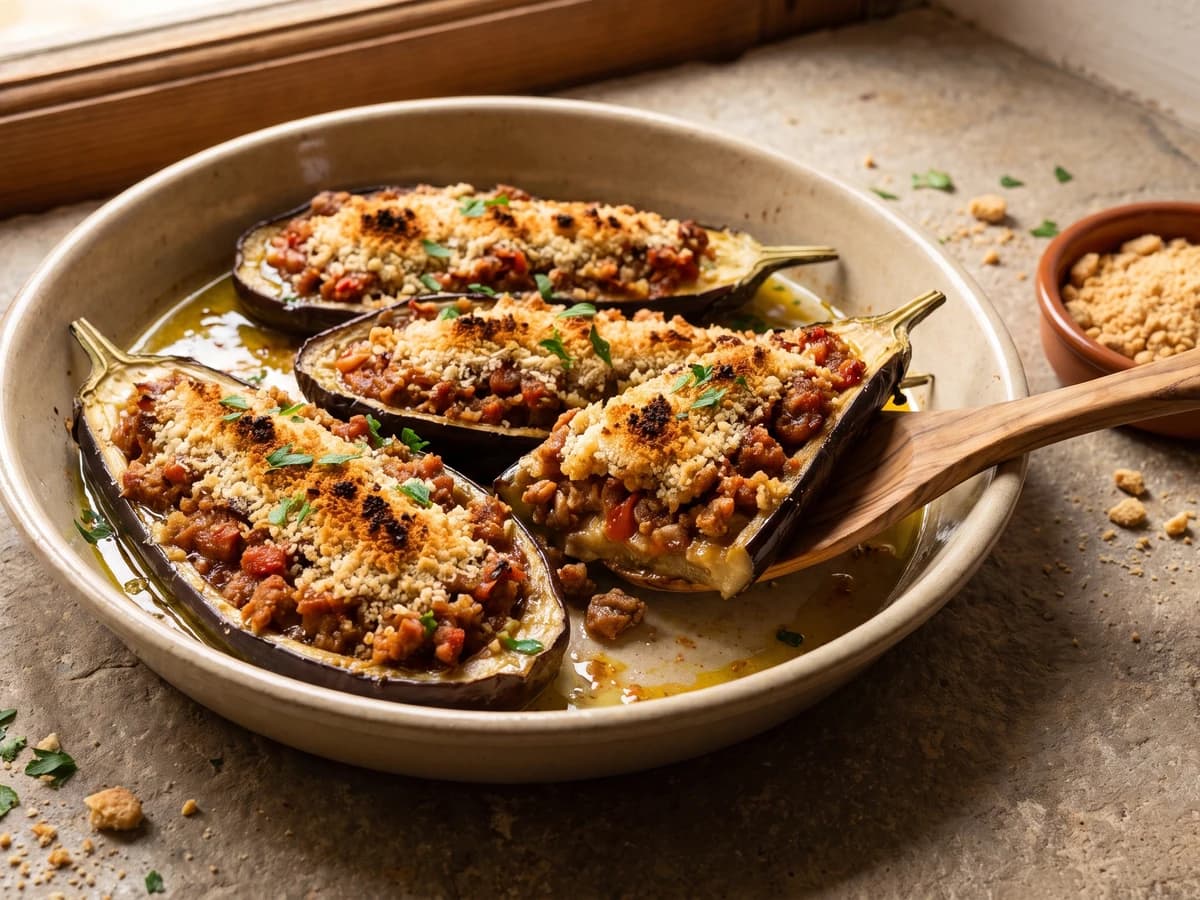
Albergínies farcides are Mallorca's summer stuffed aubergines: tender boiled shells, a slow pork sofrito with moraduix, and a plain breadcrumb cap baked until the top turns crisp and golden.

Chef Isabel
Carxofes farcides are Catalan stuffed artichokes: tender hearts filled with jamón, slow sweet onion, and breadcrumbs, then baked in a light creamy sauce until the tops turn golden.
Chef Isabel
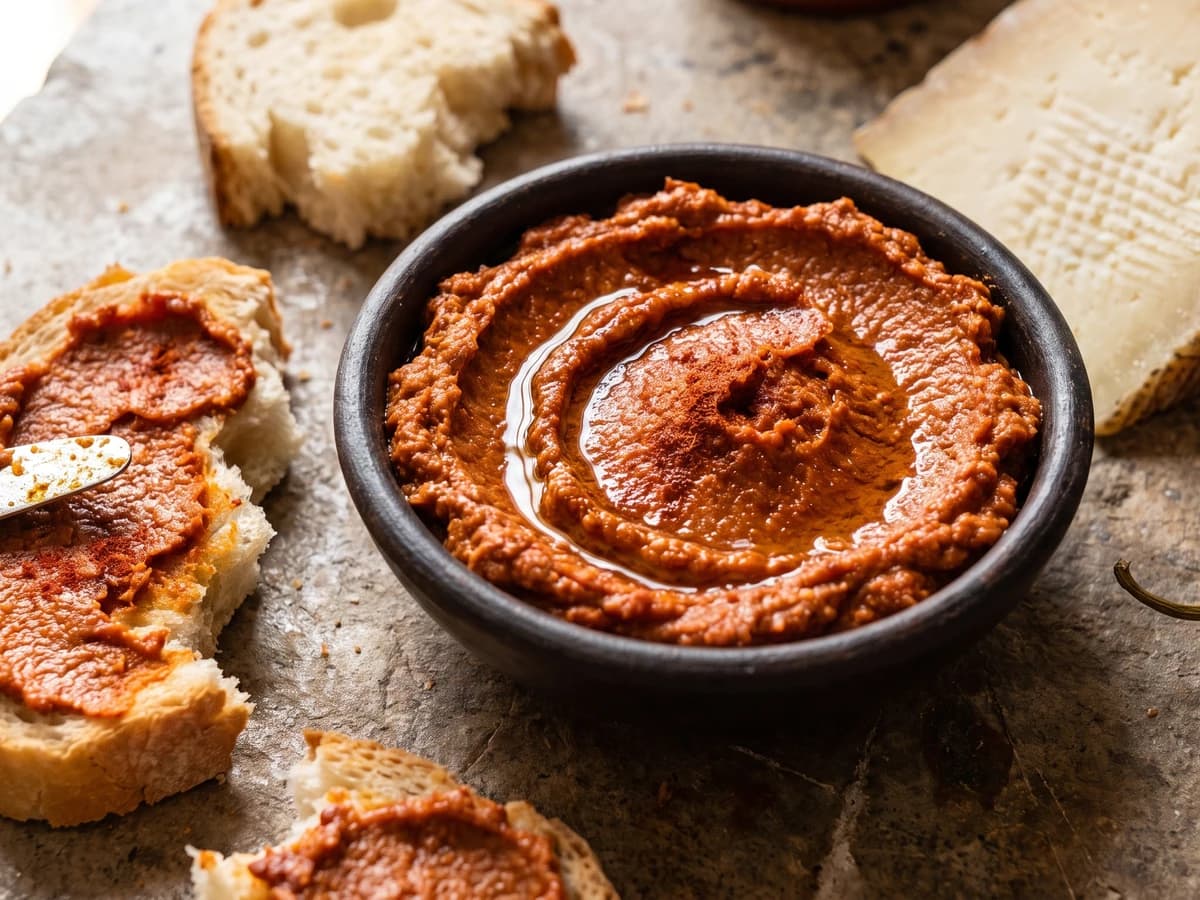
Almogrote Gomero is La Gomera's hard-cheese spread: cured goat cheese, garlic, pimentón, dried red pepper, and oil worked into a thick rust-red paste.