
Chef Isabel
Afuega'l Pitu Roxu
Afuega'l Pitu Roxu is Asturias in a small cheese: cow's milk set slowly to a dense curd, drained without squeezing, then kneaded with pimentón until it turns orange and grips the throat.
A cooking platform built around craft, culture, and the stories behind what we eat.
Created by
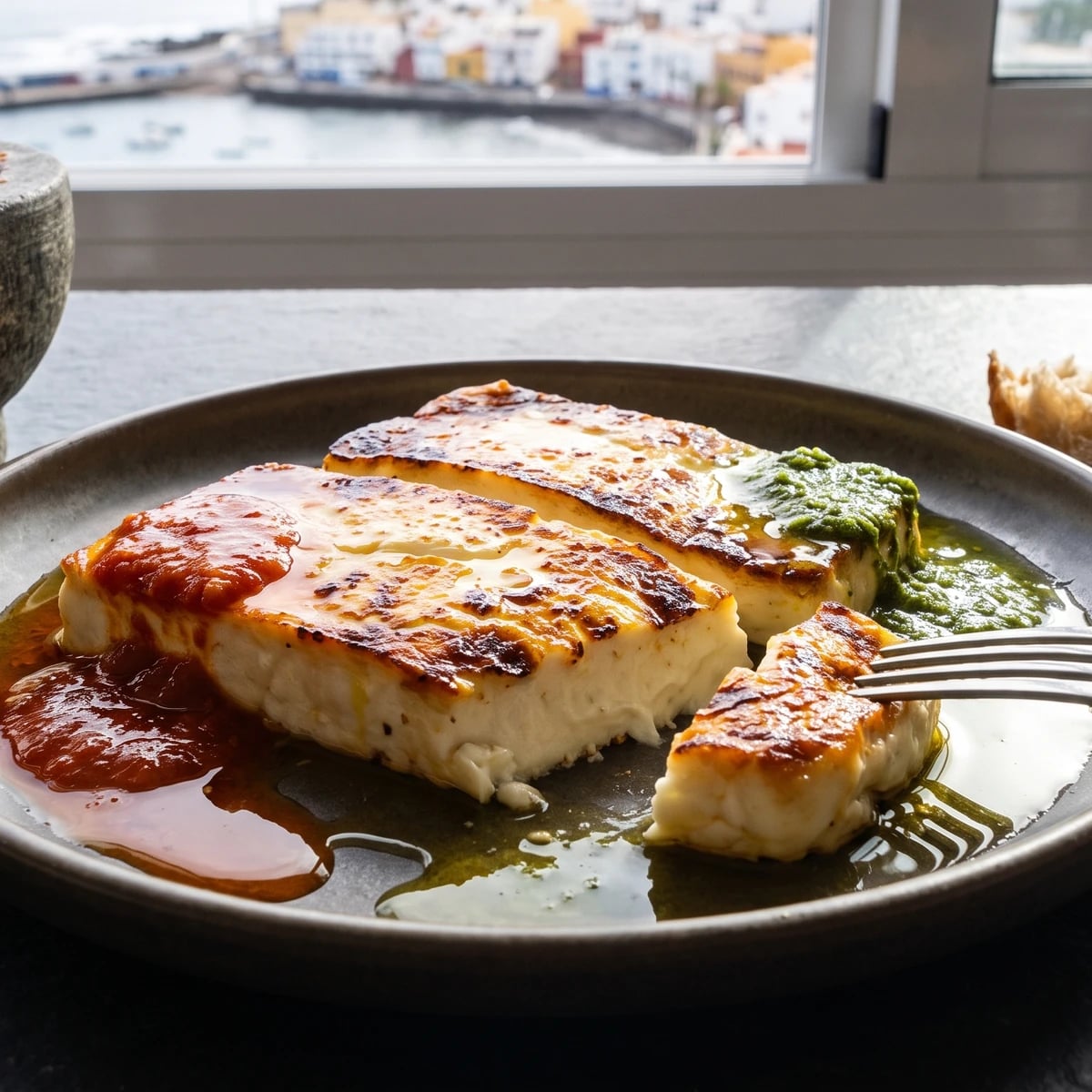
Queso asado con mojo is Canarian cheese at its plain best: firm goat cheese blistered on a hot plancha, then spooned with sharp red or green mojo and eaten before it slumps.
Queso asado con mojo is Canarian: firm goat cheese, often palmero from La Palma or majorero from Fuerteventura, seared on a plancha until it blisters, then covered with mojo verde or mojo rojo. This is cheese with a browned skin and a soft heart, not a melted pot for dipping. The mojo matters, but the cheese decides it.
The method is simple and unforgiving in a useful way. Cut the cheese thick, dry the surface, and put it on a properly hot plancha with almost no oil. If the pan is timid, the cheese weeps and slumps. If the pan is hot, it browns before it has time to run. That is the whole trick.
Far from the islands, look for a firm semi-cured goat cheese that holds its shape when warmed. Halloumi works at a pinch, but it is saltier and squeaks under the teeth, so salt the mojo lightly and know the center will be springier. Make one mojo or both, spoon it over while the cheese is hot, and eat it at once. No hace falta haber pisado España. Siempre sale, si lo sigues.
In the Margin beside this one I keep only one warning: cheese that melts is for another day.
Queso asado con mojo belongs to the Canary Islands, where goat cheeses such as palmero from La Palma and majorero from Fuerteventura have long been part of the household larder. The islands' mojos, red with dried pepper and pimentón or green with cilantro, garlic, cumin, vinegar, and oil, match a seafaring pantry and a landscape where potatoes, fish, meat, and cheese all need a sharp sauce beside them. In guachinches and home kitchens, the cheese is cooked to order because the pleasure is brief: blistered surface, soft center, sauce running over the edge.
Quantity
450g
cut into 4 slabs about 2cm thick
Quantity
1 teaspoon
Quantity
1 small, about 80g
seeded and chopped
Quantity
30g
Quantity
2 cloves
peeled
Quantity
1/2 teaspoon
Quantity
1/2 teaspoon
Quantity
1 tablespoon
Quantity
75ml
Quantity
1 to 2 tablespoons
Quantity
1 dried pepper or 2 teaspoons
soaked and scraped if using dried pepper
Quantity
2 cloves
peeled
Quantity
1/2 teaspoon
Quantity
1/2 teaspoon
Quantity
20g
soaked and squeezed
Quantity
1 tablespoon
Quantity
75ml
Quantity
1 small dried chile or 1/4 teaspoon
| Ingredient | Quantity |
|---|---|
| queso palmero, queso majorero, or firm semi-cured goat cheesecut into 4 slabs about 2cm thick | 450g |
| olive oil, for the plancha or pan | 1 teaspoon |
| green pepper, for mojo verdeseeded and chopped | 1 small, about 80g |
| fresh cilantro leaves and tender stems, for mojo verde | 30g |
| garlic, for mojo verdepeeled | 2 cloves |
| cumin seeds or ground cumin, for mojo verde | 1/2 teaspoon |
| coarse salt, for mojo verde | 1/2 teaspoon |
| white wine vinegar, for mojo verde | 1 tablespoon |
| extra virgin olive oil, for mojo verde | 75ml |
| water, for loosening mojo verde (optional) | 1 to 2 tablespoons |
| dried pimienta palmera or ñora pepper, or sweet pimentón, for mojo rojosoaked and scraped if using dried pepper | 1 dried pepper or 2 teaspoons |
| garlic, for mojo rojopeeled | 2 cloves |
| cumin seeds or ground cumin, for mojo rojo | 1/2 teaspoon |
| coarse salt, for mojo rojo | 1/2 teaspoon |
| day-old bread, for mojo rojosoaked and squeezed | 20g |
| white wine vinegar, for mojo rojo | 1 tablespoon |
| extra virgin olive oil, for mojo rojo | 75ml |
| small dried chile or hot pimentón, for mojo rojo (optional) | 1 small dried chile or 1/4 teaspoon |
Cut the cheese into four slabs about 2cm thick and pat them very dry with kitchen paper. Leave them on a plate for 10 minutes while you make the mojo, just enough to take the hard chill off without letting the cheese soften. A wet surface stews before it browns, and this dish wants blistered patches.
For mojo verde, pound or blend the green pepper, cilantro, garlic, cumin, and salt until rough and green. Add the vinegar, then work in the olive oil until the sauce is loose enough to spoon but still has a little texture. Add 1 or 2 tablespoons water if it sits too thick. Taste it against the cheese, not alone; the sauce should be sharp because the cheese is rich.
For mojo rojo, if using a dried pepper, soak it in hot water for 15 minutes, then scrape out the soft flesh and discard the skin and seeds. Pound or blend that flesh, or the sweet pimentón, with the garlic, cumin, salt, soaked bread, vinegar, and the optional chile or hot pimentón. Work in the olive oil until brick red and spoonable. Keep pimentón away from direct heat; scorched pimentón turns bitter, and there is no fixing it.
Set a cast-iron plancha or heavy frying pan over medium-high heat for 3 to 4 minutes. Film it with 1 teaspoon olive oil, then wipe so there is only a shine left. The pan must be properly hot before the cheese goes in. Too cool, and the cheese leaks before it browns.
Lay the cheese slabs in the hot pan and leave them alone for 60 to 90 seconds, until the underside has browned spots and releases cleanly. Turn with a thin spatula and cook the second side for 45 to 60 seconds. The edges should soften and the middle should give when pressed, but the slab should still hold together. If it starts to run, lift it out at once; the cheese has told you enough.
Move the cheese to a warm plate and spoon mojo verde, mojo rojo, or both over the top while the surface is still glossy from the pan. Serve straight away with bread for chasing the sauce. Queso asado waits for no one, which is not rudeness, just dairy telling the truth.
1 serving (about 195g)
Culinary guides, cultural storytelling, and the editorial depth that makes cooking meaningful.
Discover Culinary Explorer
Chef Isabel
Afuega'l Pitu Roxu is Asturias in a small cheese: cow's milk set slowly to a dense curd, drained without squeezing, then kneaded with pimentón until it turns orange and grips the throat.

Chef Isabel
Almogrote Gomero is La Gomera's hard-cheese spread: cured goat cheese, garlic, pimentón, dried red pepper, and oil worked into a thick rust-red paste.

Chef Isabel
Cabrales is Asturias in cheese form: raw milk aged in damp mountain caves until sharp, creamy, and blue-veined. Serve it warm from the fridge, never cold and mute.

Chef Isabel
Gamonéu is Asturias in a wedge: mixed-milk mountain cheese, lightly smoked before cave aging, firmer and quieter than Cabrales. Let it warm, cut it right, and serve it with sidra.