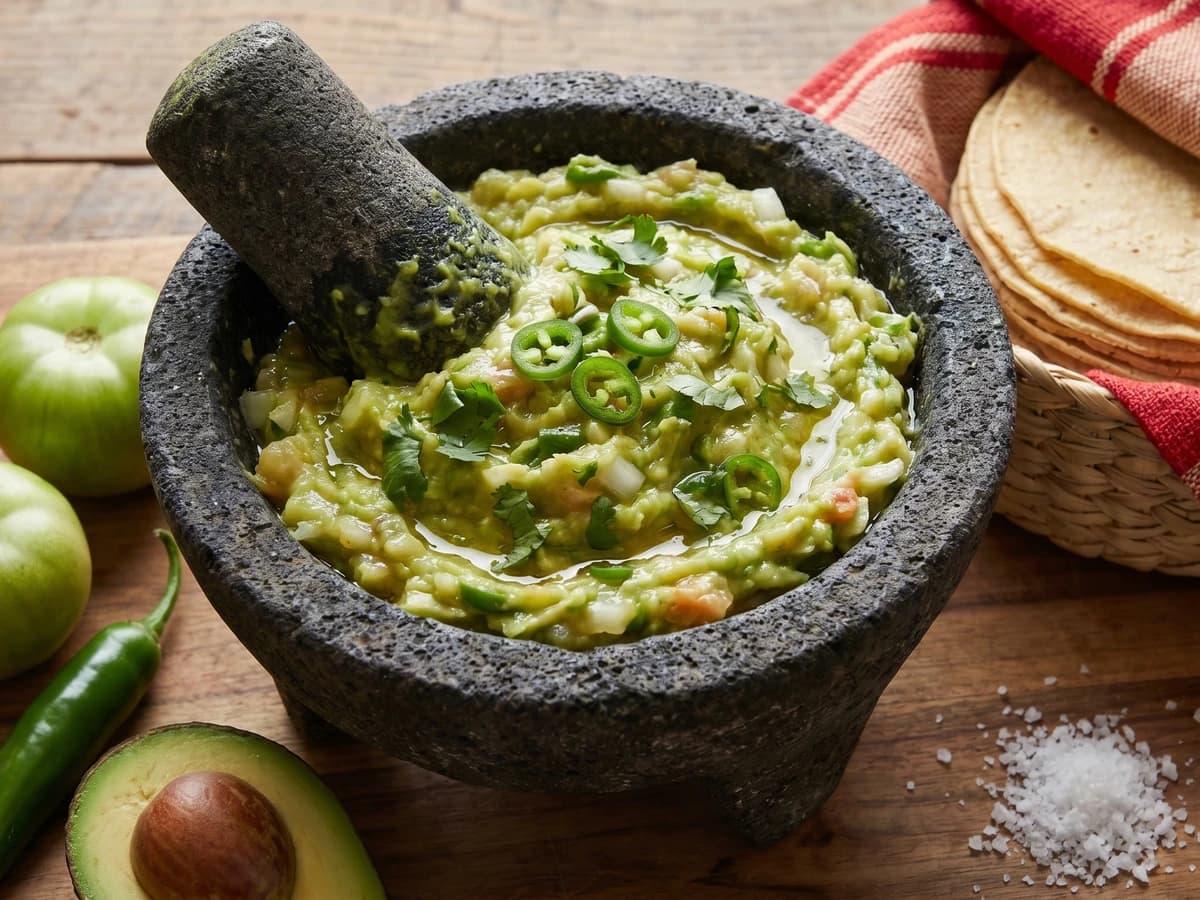
Ciudad de Mexico's rainy-season quesadilla, blue masa pressed by hand and folded around huitlacoche braised with epazote, garlic, and serrano, then fried in manteca until the crust crackles.
Appetizers & Snacks
Mexican
Special Occasion
Dinner Party
30 min
Active Time
25 min cook•55 min total
Yield4 servings (about 8 quesadillas)
This is from Ciudad de Mexico. Specifically from the central markets, San Juan, Jamaica, La Merced, where the huitlacoche vendors set out wide enamel basins of the black corn fungus from June through September. Outside of the rainy season, you do not make this dish. Cook what the mercado is selling today, not what you wish were on the shelf.
Let me settle the argument before anyone in CDMX corrects you: a quesadilla in the capital does not require cheese. It requires masa folded around a filling, fried or comaled. Cheese is one option among many. Huitlacoche, flor de calabaza, picadillo, tinga, chicharron prensado, sesos. The chilangos will fight a tourist about this and the chilangos are right.
Huitlacoche itself was nearly lost to industrial agriculture, which treats the fungus as a disease of corn and breeds against it. In the United States it is still called corn smut and sprayed off the cob. In Mexico it is a delicacy and the rainy-season cooks build entire menus around it. Earthy, mushroomy, with a mineral sweetness no other ingredient gives you. The epazote is not garnish. Epazote and huitlacoche grow together in the milpa and they belong together on the comal. One without the other is half a dish.
My mother was not from Mexico City. She was from Jalisco. But she learned huitlacoche quesadillas from a neighbor in Colonia Roma, a senora from Tlalpan who would knock on the door in July with a paper bag of the black galls and say, ya llego el huitlacoche. My mother would press the masa and the neighbor would build the guisado and they would feed half the building. Saber cocinar es saber vivir.
Huitlacoche, from the Nahuatl 'cuitlacochi,' is a fungus (Ustilago maydis) that grows on the ears of corn during humid weather and was cultivated deliberately by pre-Columbian Mesoamerican farmers, who valued it alongside the corn itself. Spanish chroniclers in the 16th century recorded its consumption in the Valley of Mexico, though European agricultural science later classified it as a pathogen and US corn breeders spent the 20th century eliminating it from commercial varieties. The quesadilla-as-folded-masa tradition of central Mexico predates the introduction of European cheese and the word 'quesadilla' itself: chilangos retained the original definition, in which the filling, not the cheese, defines the dish, while the rest of the country adopted the cheese-required convention.
The technique, the tradition, and the story behind every dish.
or 2 cans (7 ounces each) good Mexican huitlacoche
manteca de cerdo (pork lard)
Quantity
3 tablespoons
white onion
Quantity
1/2 medium
finely diced
garlic cloves
Quantity
3
finely minced
fresh chile serrano
Quantity
2
finely chopped, seeds and all
fresh epazote, leaves only
Quantity
1 large bunch (about 1/2 cup packed)
roughly chopped
kosher salt
Quantity
1 teaspoon, plus more to taste
masa harina azul (blue corn masa flour)
Quantity
2 cups
or 1 pound fresh blue masa from a tortilleria
warm water
Quantity
1 1/4 cups
if using masa harina
kosher salt for the masa
Quantity
1/2 teaspoon
manteca de cerdo, for frying
Quantity
1/2 cup
salsa verde cruda (optional)
Quantity
for serving
crema mexicana (optional)
Quantity
for serving
crumbled queso fresco (optional)
Quantity
for serving
Ingredient
Quantity
fresh huitlacocheor 2 cans (7 ounces each) good Mexican huitlacoche
1 pound
manteca de cerdo (pork lard)
3 tablespoons
white onionfinely diced
1/2 medium
garlic clovesfinely minced
3
fresh chile serranofinely chopped, seeds and all
2
fresh epazote, leaves onlyroughly chopped
1 large bunch (about 1/2 cup packed)
kosher salt
1 teaspoon, plus more to taste
masa harina azul (blue corn masa flour)or 1 pound fresh blue masa from a tortilleria
2 cups
warm waterif using masa harina
1 1/4 cups
kosher salt for the masa
1/2 teaspoon
manteca de cerdo, for frying
1/2 cup
salsa verde cruda (optional)
for serving
crema mexicana (optional)
for serving
crumbled queso fresco (optional)
for serving
Equipment Needed
•Cast iron tortilla press or heavy wooden press
•Quart-size plastic bag cut into two squares, or plastic wrap, for pressing
•Heavy 10-inch skillet or small clay cazuela for the guisado
•Deep heavy skillet or cazuela for frying
•Spider strainer or slotted spatula
•Wire rack set over a plate for draining
Instructions
1
Inspect the huitlacoche
If you have fresh huitlacoche from the mercado, pick through it on a wooden board. Pull off any pieces still attached to dry corn silk or husk. The dark gray-black galls are what you want, soft and slightly damp. Chop them into rough pieces about the size of a peso coin. Do not rinse them. Water washes the flavor straight down the drain. If you are using canned, drain off the brine but keep the liquor that clings to the kernels. That is concentrated huitlacoche flavor.
2
Build the huitlacoche guisado
In a heavy 10-inch skillet or small cazuela, melt the 3 tablespoons of manteca over medium heat. Add the diced white onion and cook for 4 minutes, until soft and translucent but not browned. Add the garlic and the chopped serrano. Stir for 30 seconds, until the kitchen smells sharp and green. La manteca es el sabor, and right now it is the base of everything else.
Do not seed the serrano. The seeds are where the heat lives and huitlacoche is rich enough to need the cut.
3
Cook down the huitlacoche
Add the chopped huitlacoche to the pan with the salt. Stir to coat with the manteca and aromatics. Within two or three minutes the huitlacoche will start to release its black liquor. The pan will turn ink-black. This is correct. This is what huitlacoche does. Lower the heat to medium-low and cook, stirring occasionally, for 10 to 12 minutes, until most of the liquid has cooked off and the mixture looks glossy and thick. Stir in the chopped epazote during the last two minutes. Epazote loses its perfume if you cook it too long. Taste and adjust salt. Set aside off the heat.
4
Mix the blue masa
If you bought fresh masa from a tortilleria, knead it briefly with the 1/2 teaspoon of salt and a tablespoon or two of warm water until it feels like soft clay. If you are working from masa harina azul, combine it with the salt in a large bowl, pour in the warm water, and knead with your hands for 3 to 4 minutes. The masa should be smooth, pliable, and just slightly tacky. Pinch a piece between your fingers. If it cracks at the edges, add water a teaspoon at a time. If it sticks to your palm, add a tablespoon of masa harina. Cover with a damp cloth and let it rest for 10 minutes. This rest is not optional. Hydrated corn flour needs time to relax or your tortillas will crack.
5
Press the tortillas
Divide the masa into 8 balls about the size of a small lime. Cut a quart-size plastic bag down the seams to make two flat squares, or use plastic wrap, and line both plates of a tortilla press. Place a ball of masa slightly off-center toward the hinge. Close the press and push the lever down firmly. The tortilla should be about 5 to 6 inches across and the thickness of a stack of three coins. Too thin and it will tear when you fold it. Too thick and the masa will not cook through before the outside browns.
6
Fill and fold
Peel the top plastic off the pressed tortilla. Flip the tortilla onto your palm and peel off the second plastic. Place about 2 tablespoons of the huitlacoche guisado on one half of the round, leaving a half-inch border. Fold the empty half over the filling like a half-moon. Press the edges gently to seal. Do not overfill. A quesadilla that bursts in the manteca is a quesadilla that lost. Repeat with the remaining masa and filling, keeping the finished quesadillas under a damp cloth so they do not dry out.
7
Fry in manteca
In a deep heavy skillet or small cazuela, heat the 1/2 cup of manteca over medium-high heat until it shimmers, about 350F. A small piece of masa dropped in should sizzle steadily and rise to the surface within a few seconds. Slide two or three quesadillas at a time into the hot manteca. Fry for 2 minutes per side, turning once with a spider or slotted spatula. The blue masa will darken almost to black where it touches the fat, with crisp golden edges around the seal. Lift them out and drain on a wire rack set over a plate. Do not stack them. Stacking steams the crust soft. Así se hace y punto.
Manteca that is not hot enough makes greasy quesadillas. Manteca that is too hot burns the masa before the inside warms through. Test with a scrap before you commit a full round.
8
Serve at the table
Pile the fried quesadillas on a warm clay platter. Set out the salsa verde cruda, crema, and crumbled queso fresco in small dishes. Each person spoons salsa and crema onto their own. Eat them with your hands while the masa is still crackling at the edges. A cold agua de jamaica on the table is the only other thing you need.
Chef Tips
•Fresh huitlacoche during the rainy season is non-negotiable if you can get it. In CDMX, the Mercado de San Juan and Mercado de Jamaica have it from June through September. Outside Mexico, look for Mexican grocery stores carrying canned Goya, San Miguel, or Aurrera brands. Canned is a compromise, not an upgrade, but it will work when fresh is impossible.
•Epazote does not have a substitute. It is the herb. If you cannot find it fresh at a Mexican mercado or in your own garden (it grows like a weed once planted), do not use cilantro or parsley to fill the gap. Make a different dish that day. No me vengas con atajos.
•Blue masa is traditional and gives this dish its CDMX identity, the dark crust against the black filling. White masa works in a pinch but you lose the visual signature and a layer of corn flavor. If your tortilleria sells masa azul fresca, that is the move.
•The manteca for frying matters as much as the manteca in the guisado. Buy real rendered pork lard from a carniceria, not the hydrogenated shortening in a green tub. The difference in flavor is the difference between a quesadilla you remember and one you forget.
Advance Preparation
•The huitlacoche guisado can be made up to one day ahead and refrigerated. Bring to room temperature before filling the quesadillas so the cold filling does not crack the masa.
•Fresh masa loses quality within hours of mixing. Mix it within an hour of when you plan to press, or use masa harina azul for better same-day flexibility.
•Fried quesadillas do not hold well. The crust softens within 10 minutes. Press, fill, and fry in batches as your guests are sitting down to eat.
Frequently Asked Questions
Nutrition Information
1 serving (about 290g)
Calories
590 calories
Total Fat
36 g
Saturated Fat
17 g
Trans Fat
0 g
Unsaturated Fat
17 g
Cholesterol
45 mg
Sodium
925 mg
Total Carbohydrates
55 g
Dietary Fiber
6 g
Sugars
3 g
Protein
16 g
Where cooking meets culture.
Culinary guides, cultural storytelling, and the editorial depth that makes cooking meaningful.