
Chef Lupita
Arroz a la Oaxaqueña
Oaxaca's red rice, stained with tomato and fried in lard, steamed with carrots, ejotes, black beans, and epazote. The side that anchors a Oaxacan family meal and earns its place beside the main.
A cooking platform built around craft, culture, and the stories behind what we eat.

Created by
Michoacan's Meseta Purhepecha bowl of cooked quelites, pinto beans, epazote, onion, and chile, the home plate that appears when the milpa gives greens before it gives corn.
Michoacan, the Meseta Purhepecha and the Lake Patzcuaro kitchens. This is shakua con frijoles, quelites cooked into bean broth until the greens soften, darken, and give their mineral taste to the pot. Not a salad. Quelites are cooked, never raw. Así se hace y punto.
In Purhepecha homes, shakua means the edible greens that come from the milpa and the edges of the path: quintonil, nabo, cenizo, verdolaga when the season gives it, and the tender leaves a good cook recognizes before a supermarket ever learns their name. The beans are usually flor de mayo or pinto, cooked until their broth has body. The fat is manteca de cerdo. La manteca es el sabor, and here it carries the onion, garlic, epazote, and chile into the beans.
I've eaten this around Patzcuaro in rough red barro, with tortillas from the comal de leña and a wooden spoon left in the cazuela. Nobody decorated it. Nobody had to. The dish knows what it is: budget food, comfort food, indigenous food, and a lesson in household economy. Saber cocinar es saber vivir.
Do not turn this into calabacitas con elote y rajas and call it close. That is another Mexican dish, broadly mestizo and useful in its place. This is Purhepecha. Cada estado, su propia cocina.
Purhepecha cooking in Michoacan has long relied on the milpa system, where corn, beans, squash, chiles, herbs, and edible wild greens support one another in the field and in the pot. Quelites were documented across central and western Mexico before the conquest, and their continued use in Purhepecha communities preserves a knowledge system based on season, soil, and foraging memory rather than written recipes. Dishes named in Purhepecha, including shakua for cooked greens, charamakua for certain bean preparations, iarini terekua and terekua kuin jatsiri for rainy-season mushroom plates, and chilke for chile-based sauces, show that Michoacan's indigenous cooking is not a regional garnish on national cuisine but its own structure.
Quantity
1 pound
picked over and rinsed
Quantity
8 cups, plus more as needed
Quantity
1/2
left in one piece, for the beans
Quantity
2
peeled, for the beans
Quantity
1 teaspoon, plus more to taste
Quantity
1 1/2 pounds
quintonil, cenizo, nabo greens, or tender verdolaga, washed very well and chopped
Quantity
2 tablespoons
Quantity
1/2
finely chopped
Quantity
2
finely chopped
Quantity
1
slit lengthwise
Quantity
2
toasted on a comal, stemmed, seeded, soaked, and blended with 1/2 cup bean broth
Quantity
1 sprig
Quantity
for serving
warmed on a comal de lena
| Ingredient | Quantity |
|---|---|
| dried pinto beans or flor de mayo beanspicked over and rinsed | 1 pound |
| water | 8 cups, plus more as needed |
| white onionleft in one piece, for the beans | 1/2 |
| garlic clovespeeled, for the beans | 2 |
| kosher salt | 1 teaspoon, plus more to taste |
| fresh quelitesquintonil, cenizo, nabo greens, or tender verdolaga, washed very well and chopped | 1 1/2 pounds |
| manteca de cerdo | 2 tablespoons |
| white onionfinely chopped | 1/2 |
| garlic clovesfinely chopped | 2 |
| fresh chile serrano or chile peronslit lengthwise | 1 |
| dried chile guajillotoasted on a comal, stemmed, seeded, soaked, and blended with 1/2 cup bean broth | 2 |
| fresh epazote | 1 sprig |
| hand-pressed corn tortillas (optional)warmed on a comal de lena | for serving |
Put the beans in a clay olla or heavy pot with the water, the half onion, and the two peeled garlic cloves. Bring to a gentle boil, then lower the heat and cook until the beans are tender, about 1 1/2 to 2 hours depending on age. Salt them only when they begin to soften. Old beans take longer. Don't argue with the pot.
Wash the quelites in several changes of water until no grit settles at the bottom of the bowl. Strip away tough stems and keep the tender stems and leaves. Chop them roughly. These are field greens, not lettuce from a plastic bag. Treat them like something that grew close to the soil because they did.
Heat a dry comal over medium heat, ideally a comal de barro over lena. Toast the guajillos just until the skins darken slightly and smell deep, about 20 to 30 seconds per side. Do not blacken them. Soak in hot water for 15 minutes, then blend with 1/2 cup of bean broth until smooth.
In a wide cazuela, melt the manteca over medium heat. Add the chopped onion and cook until translucent and sweet-smelling, 4 to 5 minutes. Add the chopped garlic and the slit chile serrano or peron. Stir for 30 seconds. The fat should smell like onion, garlic, and chile, not scorched garlic.
Add the chopped quelites by handfuls, turning them with a wooden spoon so the manteca coats every leaf. They will look like too much at first. They are not. In a few minutes they collapse, darken, and release their field smell. Cook them until they are fully softened, 6 to 8 minutes. Raw quelites do not belong in this dish.
Add 4 cups cooked beans with 3 cups of their broth to the cazuela. Stir in the blended guajillo and the epazote sprig. Simmer gently for 15 to 20 minutes, until the broth turns earthy red-brown and the greens taste like they belong to the beans. If the pot thickens too much, add more bean broth. Taste for salt at the end.
Remove the epazote stem and the whole slit chile if you don't want someone surprised at the table. Serve the shakua con frijoles in rough red barro with warm hand-pressed corn tortillas from the comal. No cheese blanket. No flour tortillas. No me vengas con atajos. This is a Purhepecha home dish and it stands on its own.
1 serving (about 430g)
Culinary guides, cultural storytelling, and the editorial depth that makes cooking meaningful.
Discover Culinary ExplorerChef Lupita
Oaxaca's red rice, stained with tomato and fried in lard, steamed with carrots, ejotes, black beans, and epazote. The side that anchors a Oaxacan family meal and earns its place beside the main.
Chef Lupita
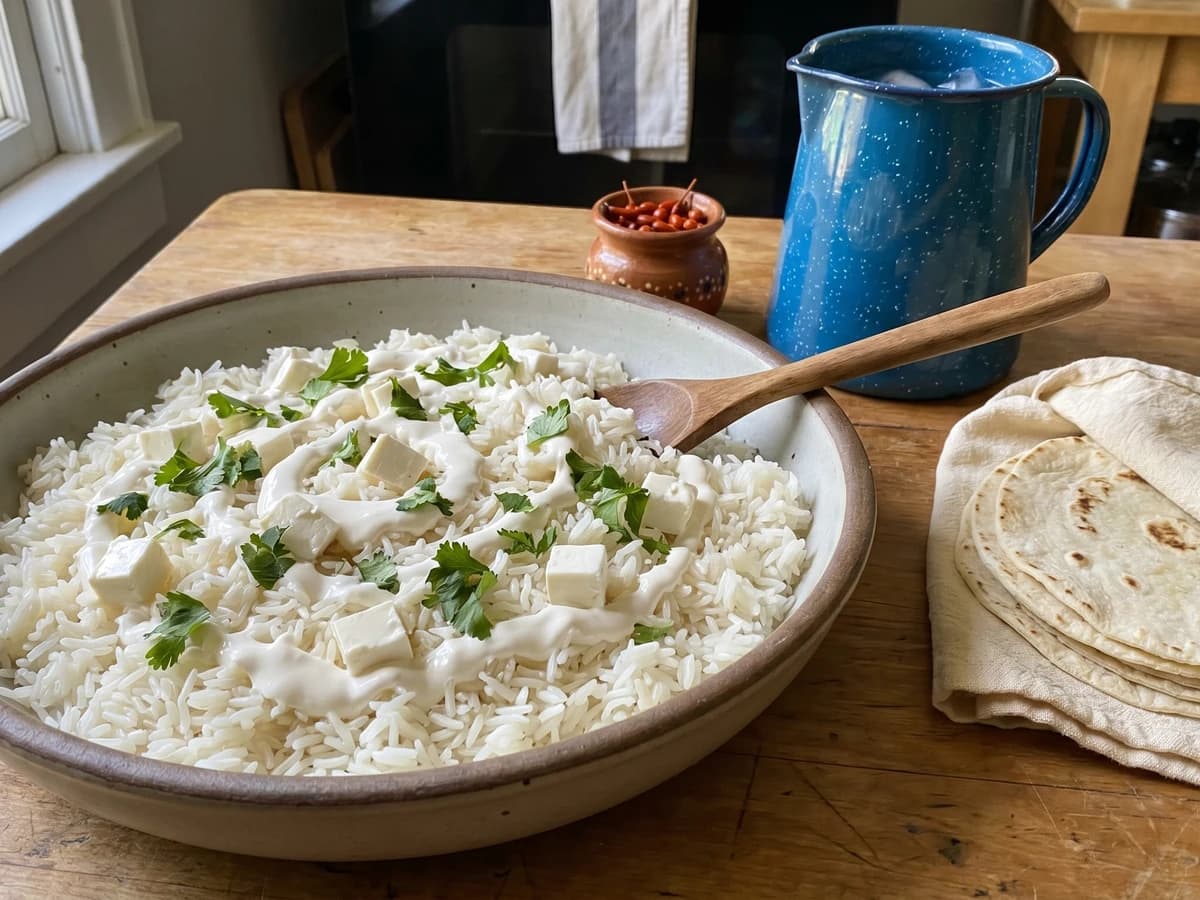
Sinaloa's home-cook white rice topped with cold cubes of cream cheese that soften into the warm grain, finished with crema and a sprinkle of chiltepin at the table. The trick that makes a side dish feel like a small luxury.
Chef Lupita
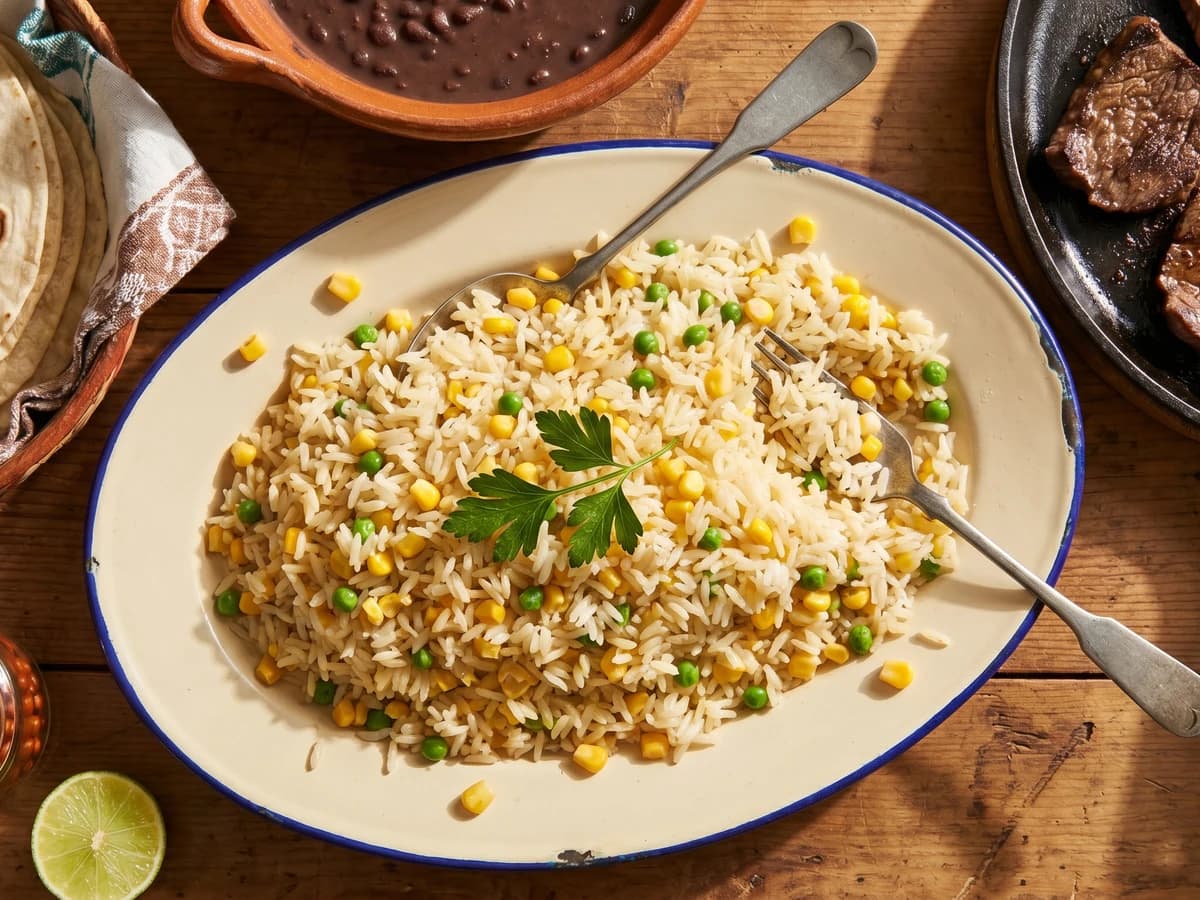
Sonora's white rice, toasted in butter and steamed with sweet corn and tender peas. The clean, quiet partner to a plate of carne asada, not the red rice of central Mexico.

Chef Lupita
Yucatán's white rice with sweet corn kernels, toasted in lard with garlic and onion. The quiet base that holds up against the peninsula's bold achiote-stained stews.