
Chef Jeong-sun
Agwi-jjim (Braised Monkfish with Bean Sprouts)
Firm monkfish buried under crisp soybean sprouts, minari, and a red gochugaru sauce thickened at the end; Masan's market dish asks for heat, timing, and a steady hand.
A cooking platform built around craft, culture, and the stories behind what we eat.
Created by
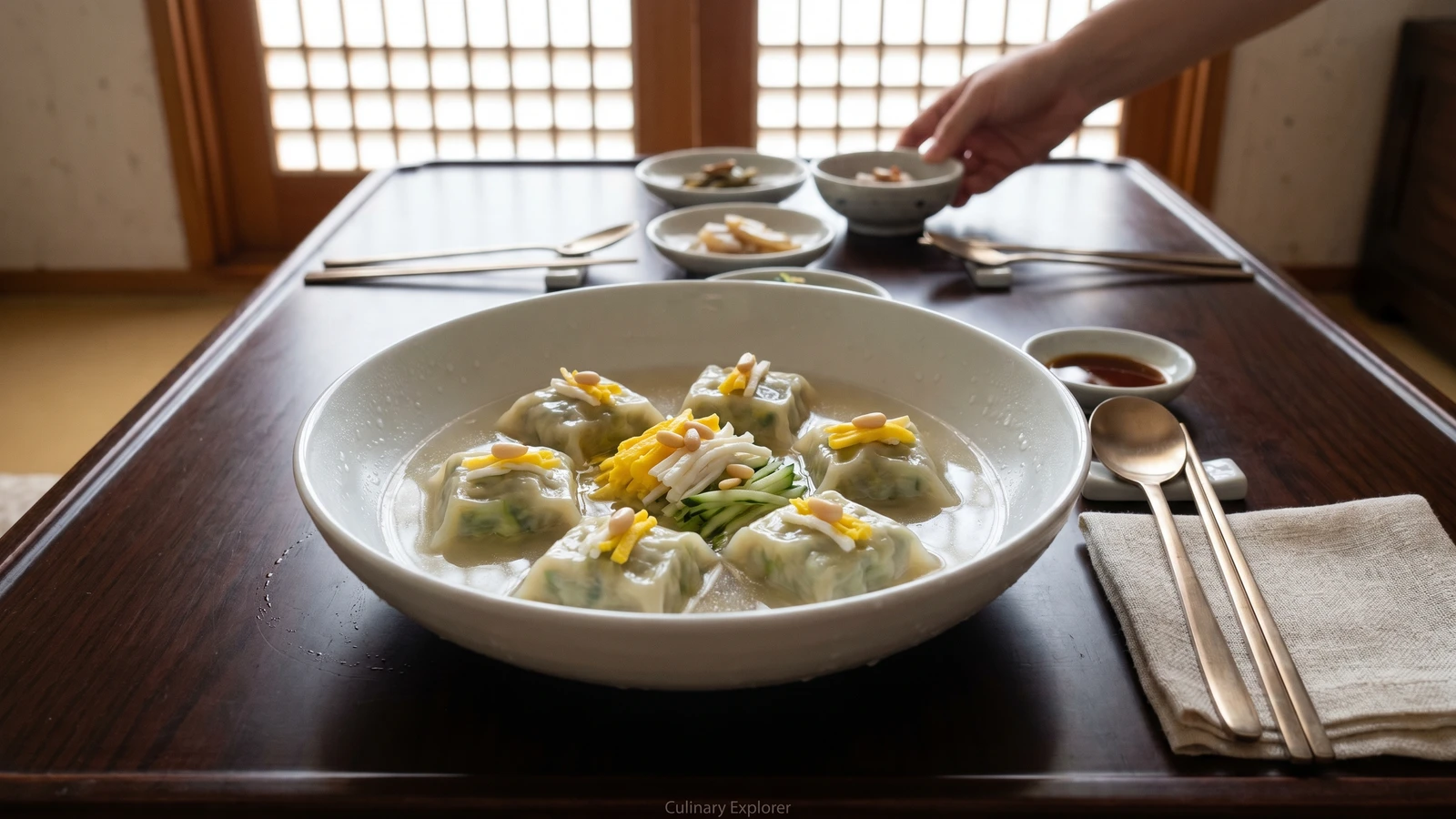
Square summer mandu from Kaesong, filled with zucchini, beef, tofu, and pine nuts, boiled just until tender and chilled in clear broth so the green filling shows through.
Pyeonsu belongs to summer, when zucchini is sweet and thin-skinned and the table wants something cool but still careful. Cook the month you're standing in. If your zucchini is watery and tired, don't force this dish; make a stew tonight and wait for better vegetables. Pyeonsu asks for good knife work more than expensive ingredients.
My teacher, Master Seong-nyeo, made us cut the zucchini twice: once with the knife, once with salt. The knife makes the pieces even. The salt pulls out water so the dumpling doesn't burst in the pot. People remember the square shape and forget the draining, then blame the wrapper. No. The filling was too wet.
These are not heavy winter mandu. They should be small, pale, and clean, with the green showing faintly through the skin and one pine nut tucked inside like a promise someone bothered to keep. I won't tell you this is quick. You will chop, salt, squeeze, season, fold four corners, and chill the broth. But the reward is a bowl that feels composed without being cold-hearted, special enough for guests and still honest to the home table. Write it down. Memory is a borrowed bowl.
Pyeonsu is most closely associated with Kaesong, the old Goryeo capital and a city famous for precise, refined home cooking before the division of Korea made its food part of northern memory for many families in the South. The dumplings are traditionally square, a shape that distinguishes them from rounder everyday mandu, and they are treated as summer food because the filling leans on zucchini or cucumber and the finished dumplings are often served cool in clear broth. Kaesong cuisine is known for small, carefully formed dishes such as bossam-kimchi and pyeonsu, where abundance shows through labor rather than size.
Quantity
32 wrappers, about 3 1/2 inches wide
thin, round or square
Quantity
1 medium, about 250g
finely diced
Quantity
1 teaspoon, divided
Quantity
180g
Quantity
150g
pressed and crumbled
Quantity
80g
trimmed
Quantity
4
soaked, squeezed dry, finely chopped
Quantity
2
finely chopped
Quantity
2 cloves
minced
Quantity
1 tablespoon
Quantity
2 teaspoons
Quantity
1 teaspoon
crushed
Quantity
1/2 teaspoon
Quantity
1/4 teaspoon
freshly ground
Quantity
32, plus more if desired
for filling and garnish
Quantity
1 large
lightly beaten, for sealing
Quantity
6 cups
well chilled
Quantity
1 tablespoon
Quantity
1 teaspoon
Quantity
1/2 teaspoon, plus more as needed
Quantity
1
separated, for jidan garnish
Quantity
1 teaspoon
for jidan
Quantity
1 small
seeded and cut into fine matchsticks, for garnish
| Ingredient | Quantity |
|---|---|
| mandu wrappersthin, round or square | 32 wrappers, about 3 1/2 inches wide |
| Korean zucchini (aehobak) or small green zucchinifinely diced | 1 medium, about 250g |
| kosher salt | 1 teaspoon, divided |
| lean ground beef | 180g |
| firm tofupressed and crumbled | 150g |
| mung bean sproutstrimmed | 80g |
| dried shiitake mushroomssoaked, squeezed dry, finely chopped | 4 |
| scallionsfinely chopped | 2 |
| garlicminced | 2 cloves |
| soy sauce | 1 tablespoon |
| toasted sesame oil | 2 teaspoons |
| toasted sesame seedscrushed | 1 teaspoon |
| sugar | 1/2 teaspoon |
| black pepperfreshly ground | 1/4 teaspoon |
| pine nuts (optional)for filling and garnish | 32, plus more if desired |
| egg whitelightly beaten, for sealing | 1 large |
| clear beef broth or light chicken brothwell chilled | 6 cups |
| soup soy sauce (guk-ganjang) | 1 tablespoon |
| rice vinegar | 1 teaspoon |
| kosher salt | 1/2 teaspoon, plus more as needed |
| egg (optional)separated, for jidan garnish | 1 |
| neutral oil (optional)for jidan | 1 teaspoon |
| cucumber (optional)seeded and cut into fine matchsticks, for garnish | 1 small |
Stir the chilled broth with the soup soy sauce, rice vinegar, and 1/2 teaspoon salt. Taste it cold. It should be clear, lightly savory, and a little sharper than you expect, because the dumplings will soften the seasoning. Refrigerate it while you work, and skim away any fat that firms on top.
Dice the zucchini into pieces no larger than 1/4 inch. Toss with 1/2 teaspoon kosher salt and leave it in a sieve for 20 minutes, then squeeze it firmly in a clean cloth until it stops dripping. This is the step that protects the dumpling skin. Wet filling tears thin wrappers and clouds the broth.
Boil the mung bean sprouts for 2 minutes, drain, and squeeze them dry. Chop them finely. They bring a clean crunch, but only if the water is pressed out first; otherwise the filling goes loose.
Wrap the tofu in a clean cloth and press hard until it feels crumbly rather than damp. Measure out 150g after pressing if you can. Tofu gives body to the filling, but extra water is not generosity. It is trouble.
In a bowl, combine the squeezed zucchini, chopped sprouts, pressed tofu, ground beef, shiitake, scallions, garlic, soy sauce, sesame oil, crushed sesame seeds, sugar, pepper, and the remaining 1/2 teaspoon kosher salt. Mix with your hand in one direction for 1 minute, just until the beef binds everything. The filling should hold together when pressed, not smear like paste.
Lay one wrapper on the board and brush the edge lightly with egg white. Put 2 teaspoons filling in the center and tuck 1 pine nut into it. Bring four sides or four corners up to make a neat square parcel, pinching the seams tightly so the top closes cleanly. Keep the finished dumplings under a barely damp towel so the skins do not dry.
Beat the egg yolk with a pinch of salt, then beat the white separately with a pinch of salt. Wipe a skillet with a little neutral oil and cook each into a very thin sheet over low heat. Let them cool, then cut into fine strips. Low heat keeps the color clean, which matters in a pale summer bowl.
Bring a wide pot of water to a steady simmer, not a violent boil. Slide in the dumplings in batches and cook 4 to 5 minutes, until they float and the skins turn slightly translucent. Stir once from the bottom so they don't stick, but don't chase them around the pot. Rough water opens careful seams.
Lift the dumplings out with a slotted spoon and rinse briefly in cold water to stop the cooking and wash off surface starch. Drain well on a tray. If serving cold, refrigerate them 20 to 30 minutes, loosely covered, so they cool without drying.
Divide the chilled dumplings among shallow bowls, 7 or 8 per person. Pour the cold seasoned broth around them, not over them hard, so the seams stay neat. Finish with yellow and white jidan, cucumber matchsticks, and a few pine nuts if you like. Serve at once, with a small dish of soy-vinegar dipping sauce only for those who want it.
1 serving (about 470g)
Culinary guides, cultural storytelling, and the editorial depth that makes cooking meaningful.
Discover Culinary ExplorerChef Jeong-sun
Firm monkfish buried under crisp soybean sprouts, minari, and a red gochugaru sauce thickened at the end; Masan's market dish asks for heat, timing, and a steady hand.

Chef Jeong-sun
A quick Korean rice bowl built on contrast: warm rice, cold popping flying-fish roe, chopped vegetables, gim, sesame oil, and the crisp rice bottom a hot stone bowl gives you.
Chef Jeong-sun
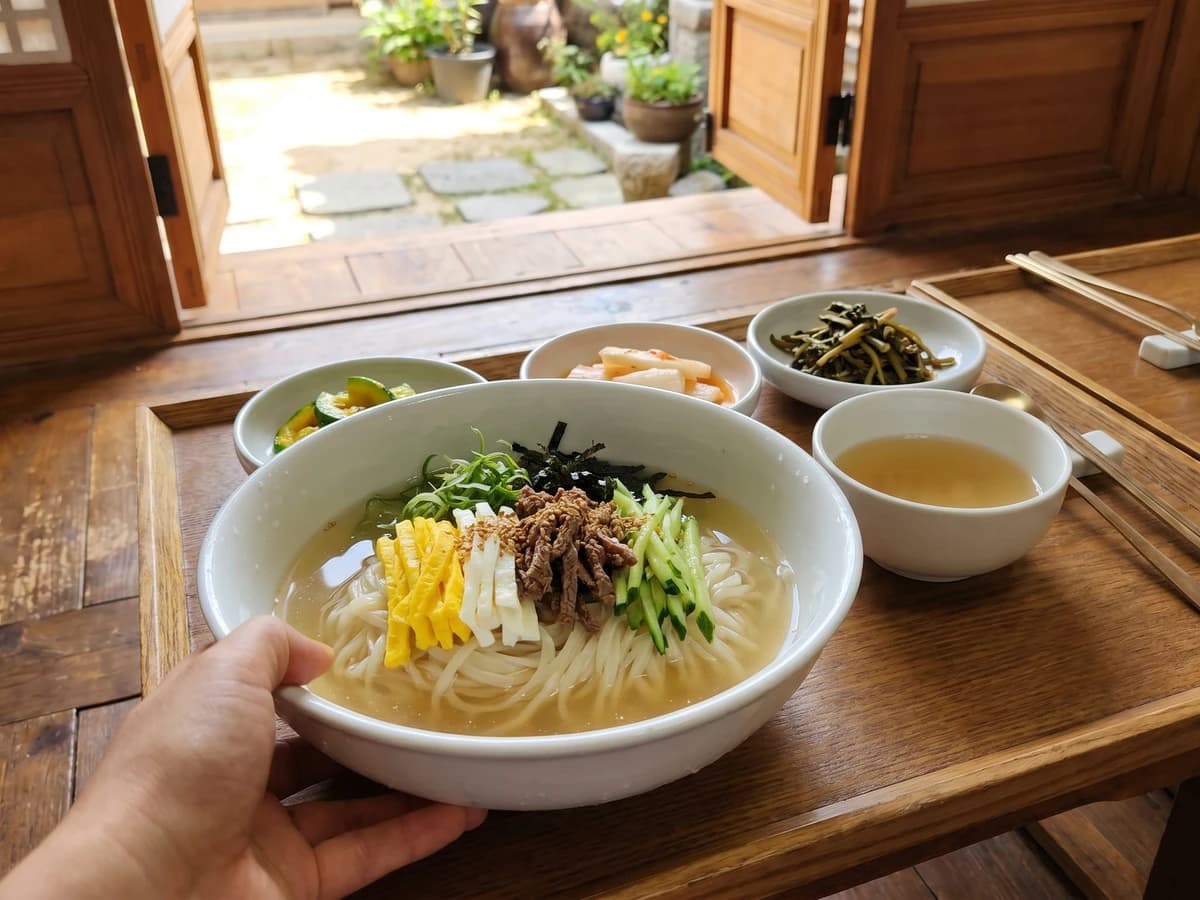
Andong's guest noodles, wheat and roasted soybean flour rolled thin, boiled and rinsed cold, then set in a clear chilled anchovy broth with careful strips of beef, egg, and cucumber.

Chef Jeong-sun
Andong's ritual-table rice served on an ordinary day: separate soy-sesame namul, warm rice, and clear radish soup, mixed without gochujang so every vegetable keeps its own voice.