
Chef Jeong-sun
Agwi-jjim (Braised Monkfish with Bean Sprouts)
Firm monkfish buried under crisp soybean sprouts, minari, and a red gochugaru sauce thickened at the end; Masan's market dish asks for heat, timing, and a steady hand.
A cooking platform built around craft, culture, and the stories behind what we eat.
Created by
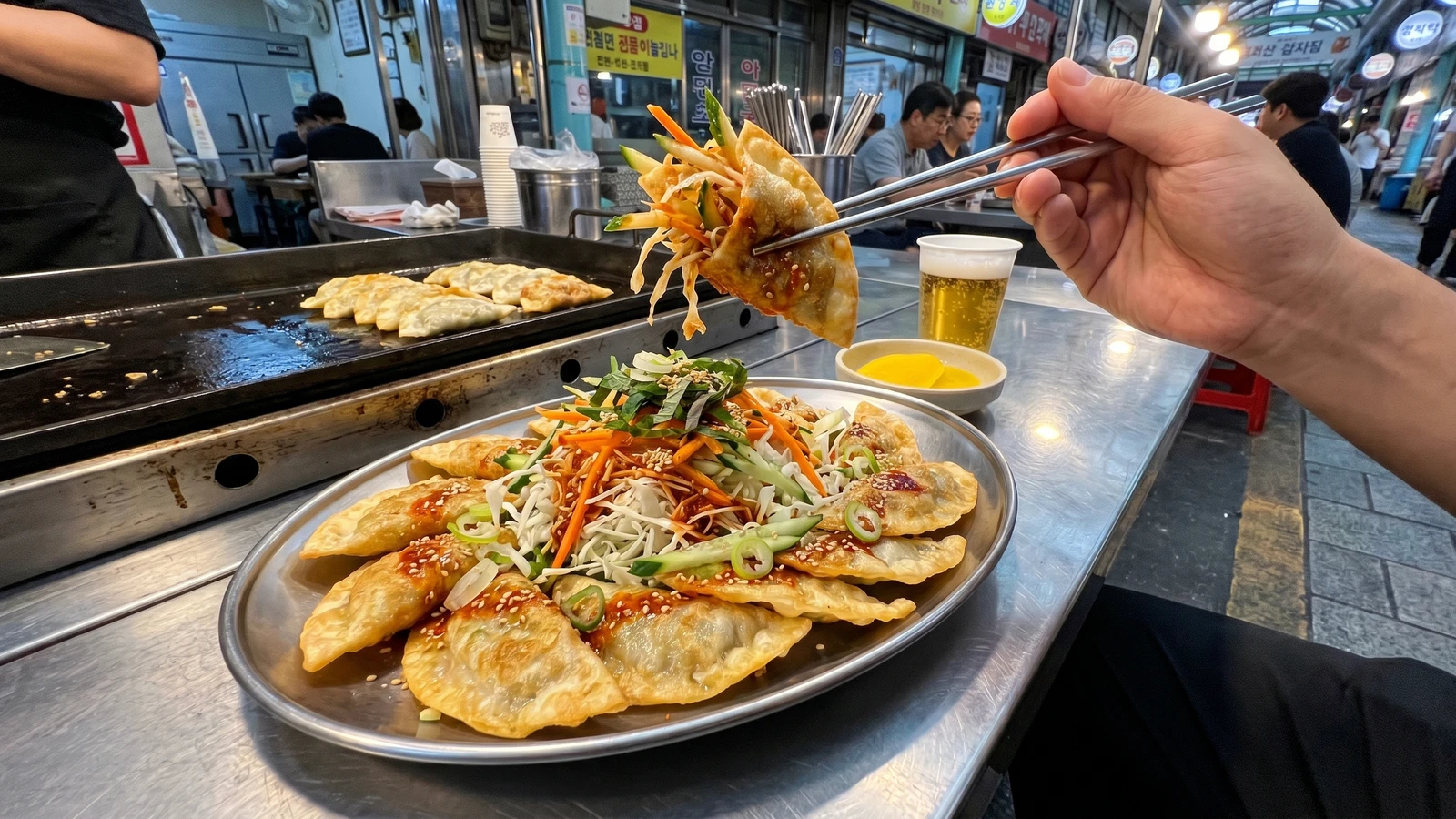
Daegu market flat dumplings, crisp at the edges and soft in the middle, tossed with cold shredded vegetables and a measured gochujang-vinegar sauce that should bite, not bury the cabbage.
Bibim-mandu is not a plate of dumplings drowned in red sauce. The dumplings stay crisp, the vegetables stay cold, and the dressing touches them just enough to make the cabbage wake up. This is Daegu market food: flat mandu, 납작만두 (thin dumplings), fried until the edges blister, then eaten with shredded vegetables that have the bright, sweet-tart bite of bibim-guksu without the noodles.
The dish asks for order, not difficulty. Cut the vegetables first and keep them cold. Mix the sauce by measure, then let it sit so the gochugaru softens. Fry the mandu last. If you reverse that, the dumplings wait and turn limp while your cabbage throws water into the bowl.
My teacher would have called this humble, then made you cut the cabbage again. She was right. A street plate still deserves a record. Notebook 61 says 300 grams cabbage to 3 tablespoons gochujang, because more sauce turns a bright plate into red paste. 손맛 (hand-taste) is real. I measure it anyway, so it can be handed on.
Bibim-mandu belongs to Daegu's market-snack line, especially the city's napjak-mandu (flat mandu): thin wrappers with a small glass-noodle and scallion filling, pan-fried and eaten with seasoned soy or spicy vegetables. The style is tied to post-war market cooking and shops such as Miseongdang, opened in 1963, which helped make flat mandu one of Daegu's named local foods. The bibim version borrows the sweet-tart cold crunch of bibim-guksu and turns an inexpensive dumpling into a plate for students, night markets, and beer tables.
Quantity
24 pieces, about 500g
thawed if frozen
Quantity
2 tablespoons
divided
Quantity
300g, about 5 packed cups
finely shredded
Quantity
1 small, about 80g
julienned
Quantity
1/2, about 150g
seeded and julienned
Quantity
1/4 small, about 50g
thinly sliced
Quantity
10 leaves
thinly sliced
Quantity
2
thinly sliced on the diagonal
Quantity
3 tablespoons
Quantity
2 1/2 tablespoons
Quantity
1 tablespoon
Quantity
1 tablespoon
Quantity
1 tablespoon
Quantity
1 tablespoon
Quantity
1 clove
finely grated
Quantity
2 teaspoons
Quantity
1 tablespoon, plus 1 to 2 teaspoons more if needed
Quantity
1 tablespoon
lightly crushed
Quantity
1 teaspoon
for finishing
| Ingredient | Quantity |
|---|---|
| Daegu-style flat mandu (napjak-mandu)thawed if frozen | 24 pieces, about 500g |
| neutral oildivided | 2 tablespoons |
| green cabbagefinely shredded | 300g, about 5 packed cups |
| carrotjulienned | 1 small, about 80g |
| English cucumberseeded and julienned | 1/2, about 150g |
| red onionthinly sliced | 1/4 small, about 50g |
| perilla leaves (kkaennip) (optional)thinly sliced | 10 leaves |
| scallionsthinly sliced on the diagonal | 2 |
| gochujang (Korean red chili paste) | 3 tablespoons |
| rice vinegar | 2 1/2 tablespoons |
| soy sauce | 1 tablespoon |
| maesil-cheong (green plum syrup) or rice syrup | 1 tablespoon |
| sugar | 1 tablespoon |
| gochugaru (Korean chili flakes) | 1 tablespoon |
| garlicfinely grated | 1 clove |
| toasted sesame oil | 2 teaspoons |
| water | 1 tablespoon, plus 1 to 2 teaspoons more if needed |
| toasted sesame seedslightly crushed | 1 tablespoon |
| toasted sesame seedsfor finishing | 1 teaspoon |
Shred the cabbage as thin as you can manage, about 2mm wide, and cut the carrot and cucumber into matchsticks about 5cm long. Soak the sliced red onion in cold water for 10 minutes, then drain it well. Keep the vegetables cold and dry in a large bowl. Do not salt them here; salt pulls out water, and this dish needs crunch.
Whisk together the gochujang, rice vinegar, soy sauce, maesil-cheong or rice syrup, sugar, gochugaru, grated garlic, sesame oil, 1 tablespoon water, and 1 tablespoon crushed sesame seeds. Let it sit 10 minutes so the gochugaru softens and the sugar dissolves. The sauce should fall from the spoon in a slow ribbon, not a paste. If it is too stiff, add water 1 teaspoon at a time, no more than 2 teaspoons.
Pat the mandu dry, especially if they were frozen. Heat a wide 12-inch skillet or griddle over medium-high heat and add 1 tablespoon oil. A dry surface and a hot pan are what give flat mandu their blistered edges.
Lay half the mandu in the pan in one flat layer, with space between them. Fry 2 to 3 minutes on the first side, then turn and fry 2 minutes more, pressing gently with a spatula so the centers warm through and the edges crisp. Move them to a wire rack, not a plate, so the bottoms stay crisp. Repeat with the remaining oil and mandu.
Add the perilla leaves and scallions to the cold vegetables. Spoon in 6 tablespoons of the dressing and toss with your hands or tongs 15 to 20 times, lifting from the bottom so the cabbage does not bruise. Add 1 more tablespoon dressing only if the vegetables look dry. You should still see pale cabbage and green cucumber; if everything is red, you used too much.
Arrange the crisp mandu around a wide platter and mound the dressed vegetables in the center. Scatter the remaining 1 teaspoon sesame seeds over the top and serve any leftover dressing on the side. Eat by folding a warm mandu around the cold vegetables, or tear the mandu and toss them at the table. Do not mix early, or the crisp edges go soft before anyone gets their first bite.
1 serving (about 315g)
Culinary guides, cultural storytelling, and the editorial depth that makes cooking meaningful.
Discover Culinary ExplorerChef Jeong-sun
Firm monkfish buried under crisp soybean sprouts, minari, and a red gochugaru sauce thickened at the end; Masan's market dish asks for heat, timing, and a steady hand.

Chef Jeong-sun
A quick Korean rice bowl built on contrast: warm rice, cold popping flying-fish roe, chopped vegetables, gim, sesame oil, and the crisp rice bottom a hot stone bowl gives you.
Chef Jeong-sun
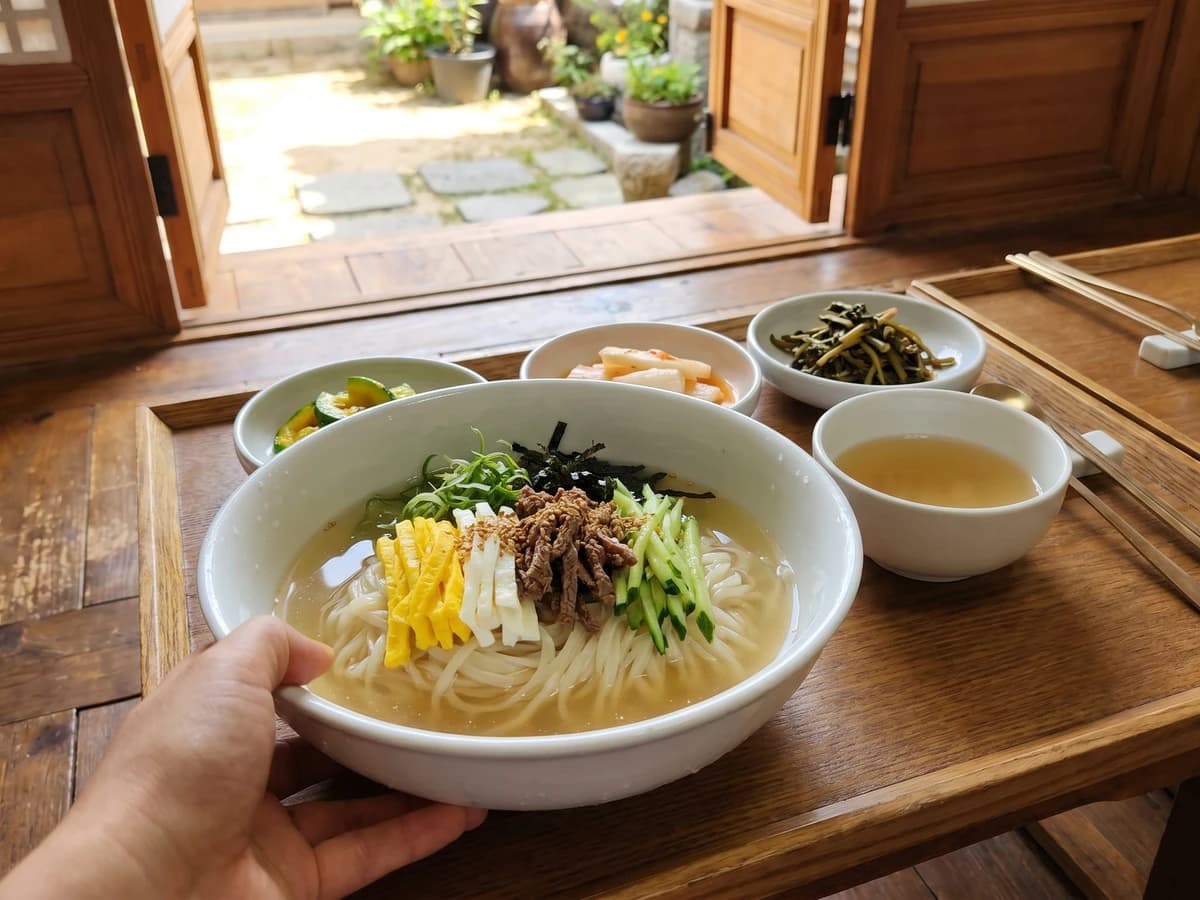
Andong's guest noodles, wheat and roasted soybean flour rolled thin, boiled and rinsed cold, then set in a clear chilled anchovy broth with careful strips of beef, egg, and cucumber.

Chef Jeong-sun
Andong's ritual-table rice served on an ordinary day: separate soy-sesame namul, warm rice, and clear radish soup, mixed without gochujang so every vegetable keeps its own voice.