
Chef Jeong-sun
Agwi-jjim (Braised Monkfish with Bean Sprouts)
Firm monkfish buried under crisp soybean sprouts, minari, and a red gochugaru sauce thickened at the end; Masan's market dish asks for heat, timing, and a steady hand.
A cooking platform built around craft, culture, and the stories behind what we eat.

Created by
Gangwon-style potato dumplings with a bouncy, near-translucent wrapper made from grated raw potato and starch, wrapped around pork and garlic chives, then steamed until tender and glossy.
Gangwon potatoes are not a side story. In the mountain country, where rice was harder won, potatoes fed people plainly and often, and cooks learned to make them do more than sit beside a meal. Gamja-mandu asks you to respect the potato as the wrapper itself: grated raw, squeezed hard, its own starch settled and returned, then strengthened with just enough potato starch to turn chewy and almost translucent.
This is not the wheat-skinned mandu most people picture first. The bouncy skin is the whole point. If you rush the squeezing, the dough turns wet and sulky. If you add too much starch, it becomes rubber. If you overfill it, it splits and complains in the steamer. I won't tell you this is easy, but it is honest work, and none of it is mysterious once the measures are written down.
Notebook 41 says pork, buchu (garlic chives), and a little cabbage make the cleanest filling for a weeknight table. The chives should speak first, the pork should hold them, and the potato wrapper should still taste like potato. 정성이 첫째예요. Sincerity comes first, and with this dish sincerity looks like squeezing the cloth until your hands know you meant it.
Gamja-mandu is associated with Gangwon-do, a mountainous province where potatoes became an important crop after their introduction to Korea in the nineteenth century and where potato starch still shapes dishes such as gamja-ongsimi and potato noodles. The dumpling belongs to regional home cooking rather than palace record: its wrapper reflects a practical mountain kitchen using potato and starch where wheat flour was less central. Modern versions often use commercial potato starch for consistency, but the older method of settling the starch from grated potatoes explains the dumpling's distinctive chewy, near-translucent skin.
Quantity
900g
peeled
Quantity
3/4 teaspoon
divided for potato dough
Quantity
90g, plus more for dusting
Quantity
2 tablespoons
only if the dough feels dry
Quantity
250g
Quantity
80g
finely chopped
Quantity
100g
finely chopped
Quantity
1 teaspoon
for drawing water from cabbage
Quantity
2
finely chopped
Quantity
2 cloves
minced
Quantity
1 tablespoon
for filling
Quantity
1 tablespoon
Quantity
1 tablespoon
for binding the filling
Quantity
1/2 teaspoon
grated
Quantity
1/4 teaspoon
Quantity
1 tablespoon
Quantity
2 tablespoons
for dipping sauce
Quantity
1 tablespoon
for dipping sauce
Quantity
1 teaspoon
for dipping sauce
Quantity
1/2 teaspoon
for dipping sauce
Quantity
1/2 teaspoon
for dipping sauce
| Ingredient | Quantity |
|---|---|
| starchy potatoespeeled | 900g |
| fine sea saltdivided for potato dough | 3/4 teaspoon |
| potato starch | 90g, plus more for dusting |
| boiling water (optional)only if the dough feels dry | 2 tablespoons |
| ground pork | 250g |
| garlic chives (buchu)finely chopped | 80g |
| napa cabbagefinely chopped | 100g |
| fine sea saltfor drawing water from cabbage | 1 teaspoon |
| scallionsfinely chopped | 2 |
| garlicminced | 2 cloves |
| soy saucefor filling | 1 tablespoon |
| toasted sesame oil | 1 tablespoon |
| potato starchfor binding the filling | 1 tablespoon |
| gingergrated | 1/2 teaspoon |
| ground black pepper | 1/4 teaspoon |
| toasted sesame seeds | 1 tablespoon |
| soy saucefor dipping sauce | 2 tablespoons |
| rice vinegarfor dipping sauce | 1 tablespoon |
| waterfor dipping sauce | 1 teaspoon |
| gochugaru (Korean chili flakes) (optional)for dipping sauce | 1/2 teaspoon |
| toasted sesame seedsfor dipping sauce | 1/2 teaspoon |
Put the chopped napa cabbage in a bowl with 1 teaspoon salt and toss well. Let it stand 15 minutes, then squeeze it in your fist until no more water runs freely. This small step keeps the filling from flooding the potato wrapper, and a wet filling is how these dumplings split.
Grate the peeled potatoes on the fine holes of a box grater into a bowl. Work steadily and do not wander away, because grated potato darkens when it waits. Scrape every bit of pulp from the grater. This wrapper lives from raw potato, not wheat flour, so the texture starts here.
Tip the grated potato into a clean cotton cloth set over a bowl and squeeze very hard. Keep the squeezed pulp in the cloth and let the potato liquid sit undisturbed for 15 minutes. Pour off the brownish water slowly and save the white starch settled at the bottom. That settled starch is not waste. It is the old cook's measure hiding in the bowl.
Put the squeezed potato pulp in a bowl. Add the settled potato starch, 90g potato starch, and 3/4 teaspoon salt. Knead 2 to 3 minutes until it gathers into a soft, slightly tacky dough that can be pinched without crumbling. If it cracks badly, add boiling water 1 teaspoon at a time, up to 2 tablespoons. Too much water makes paste; just enough makes the potato starch wake up and hold.
In a separate bowl, combine the ground pork, squeezed cabbage, garlic chives, scallions, garlic, soy sauce, sesame oil, 1 tablespoon potato starch, ginger, black pepper, and 1 tablespoon sesame seeds. Mix in one direction for 2 minutes until the pork turns sticky and holds together. That stickiness is structure, not fussiness.
Cook 1 teaspoon of filling in a small pan or microwave it until fully cooked, then taste it. It should be savory and clean, with chive first and pork behind it. Add a pinch of salt only if it tastes flat. Do not season the raw filling by guesswork when one cooked spoonful tells the truth.
Dust your hands and board lightly with potato starch. Divide the dough into 24 pieces, about 32g each, and keep them covered with a damp cloth. Flatten one piece into a 9cm round, thicker in the center and thinner at the edge. Potato dough has no wheat gluten to forgive rough handling, so press and pat instead of rolling it hard.
Place 1 level tablespoon of filling in the center of each wrapper. Fold into a half-moon and pinch the seam firmly, then press the sealed edge once more between thumb and finger. If the dough cracks, patch it with a pea-size bit of dough and smooth it with a damp fingertip. Do not overfill. A modest spoonful cooks evenly and lets the wrapper stay the main point.
Line a steamer with damp cotton cloth, parchment with holes, or cabbage leaves. Arrange the dumplings with space between them and steam over briskly boiling water for 15 to 18 minutes, until the skins turn glossy and near-translucent and the pork is cooked through. Rest them 3 minutes before lifting. Fresh from the steamer, the skins are delicate; give them a moment and they settle into their chew.
Stir together 2 tablespoons soy sauce, 1 tablespoon rice vinegar, 1 teaspoon water, 1/2 teaspoon gochugaru if using, and 1/2 teaspoon sesame seeds. Serve the gamja-mandu warm with the dipping sauce and a few sharp banchan. They are filling food, the kind that asks for kimchi and a quiet table.
1 serving (about 300g)
Culinary guides, cultural storytelling, and the editorial depth that makes cooking meaningful.
Discover Culinary ExplorerChef Jeong-sun
Firm monkfish buried under crisp soybean sprouts, minari, and a red gochugaru sauce thickened at the end; Masan's market dish asks for heat, timing, and a steady hand.

Chef Jeong-sun
A quick Korean rice bowl built on contrast: warm rice, cold popping flying-fish roe, chopped vegetables, gim, sesame oil, and the crisp rice bottom a hot stone bowl gives you.
Chef Jeong-sun
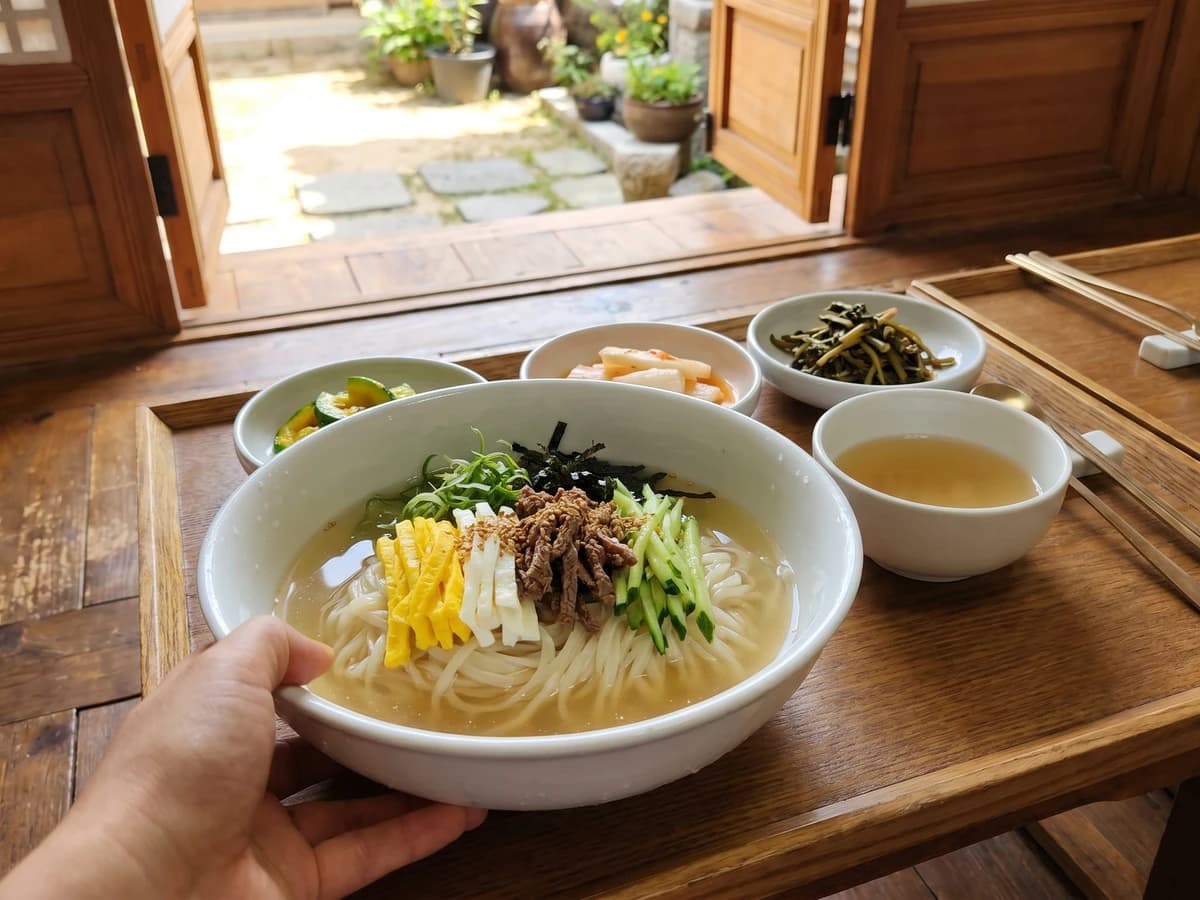
Andong's guest noodles, wheat and roasted soybean flour rolled thin, boiled and rinsed cold, then set in a clear chilled anchovy broth with careful strips of beef, egg, and cucumber.

Chef Jeong-sun
Andong's ritual-table rice served on an ordinary day: separate soy-sesame namul, warm rice, and clear radish soup, mixed without gochujang so every vegetable keeps its own voice.