Chef Joost
Aardbeienvlaai (Limburg Strawberry Vlaai)
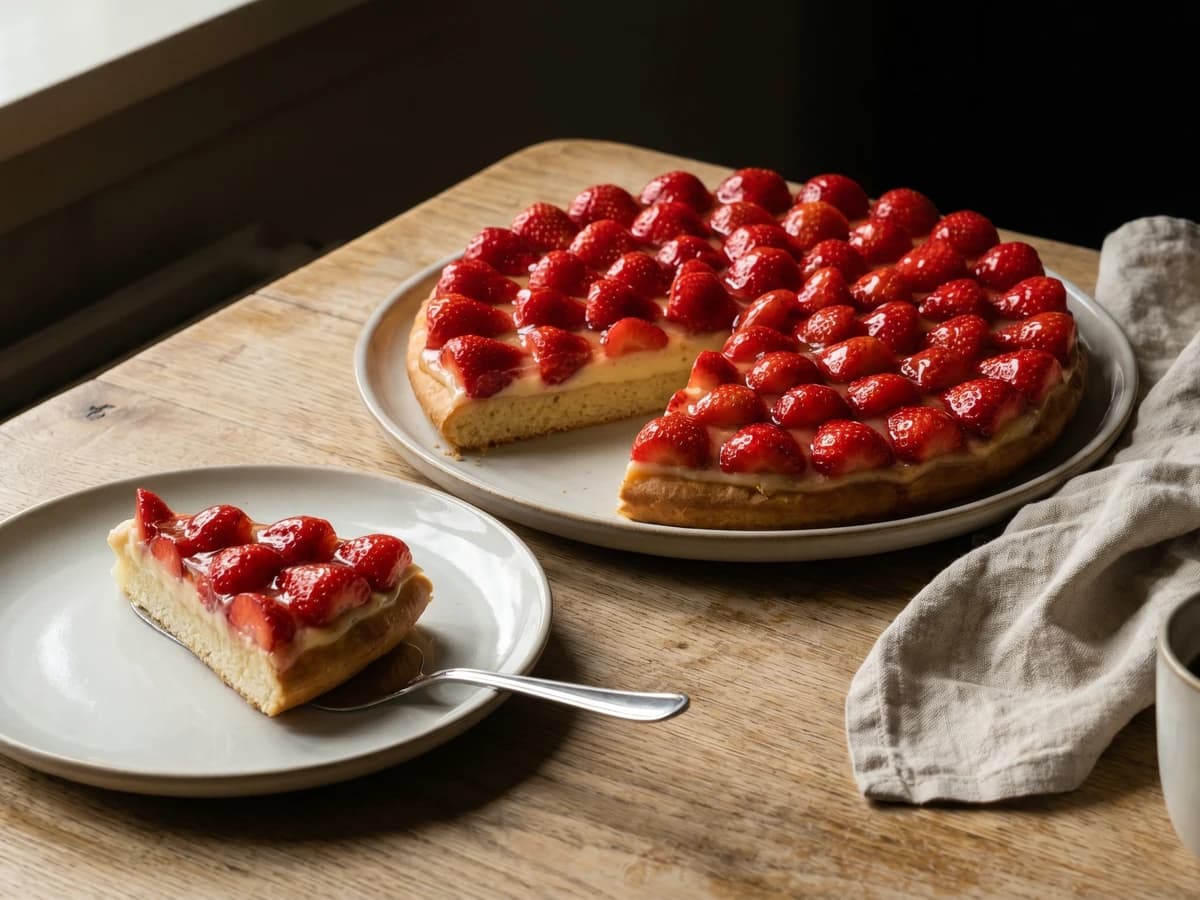
The summer vlaai that politely breaks Limburg's baked-fruit rule: soft gistdeeg, cool pastry cream, and strawberries left fresh because June knows better than the oven.
A cooking platform built around craft, culture, and the stories behind what we eat.

Created by
A Limburg birthday tart with a tender yeast crust, thick banketbakkersroom, pastry cream, and sandy butter crumbs: smooth, pale, and quietly proud beside the louder fruit vlaaien.
In Limburg, a birthday table is measured in vlaai. Not cake, not pie in the English sense, but vlaai: a low, generous tart carried in from the bakery box or lifted from a fluted pan at home, cut into narrow slices because everyone is expected to try more than one. Cherry for the dramatic aunt. Apricot for the optimist. Rice for the serious people. And puddingvlaai for the person who knows the quiet slice often disappears first.
The name already tells you two things, if you listen closely. Vlaai is traced to Middle Dutch vlade, a flat cake or flan, kin to German Fladen, and in Limburg it means a thin sheet of soft gistdeeg, yeast dough, holding the filling rather than smothering it. Pudding, here, is not a wobbling dessert from a packet, though the packet has done honest service in many Dutch kitchens. It means a thick vanilla banketbakkersroom, pastry cream, firm enough to slice cleanly and gentle enough to make the fruit vlaaien look as if they're trying too hard.
But let me tell you a secret: the crust is the point. Outside Limburg people often treat vlaai like a pie and reach for shortcrust pastry, which is how a recipe loses its accent. The dough must be yeasted, rolled thin, and baked with the filling so it becomes tender and bread-like at the edge, not brittle. The custard must be cooked thick before it ever meets the oven, because the bake is there to set the tart together, not to rescue a runny cream.
Hou het altijd simpel, always keep it simple. Make a good custard. Let the dough rise without bullying it. Scatter the kruimels, butter crumbs, with a loose hand. Then cool the vlaai completely before cutting, which is the one cruel instruction in the recipe and also the one that gives you clean slices. History and cookery, they cannot be separated, and in Limburg they arrive at the table on a round tray.
Limburgse vlaai belongs to the Maas-Rhine baking tradition of Dutch and Belgian Limburg, where open yeast-dough tarts were tied to kermis, church fairs, weddings, and birthdays rather than to one strict season. Dutch dictionaries trace vlaai to Middle Dutch vlade, a flat cake or flan, and the European Union registered Limburgse vlaai as a protected geographical indication in 2024, confirming that the name belongs to a specific regional craft. Puddingvlaai is a later bakery favorite within that family, using thick vanilla custard, banketbakkersroom, as the smooth counterpart to fruit, rice, and lattice-topped vlaaien.
Quantity
250g
plus extra for dusting
Quantity
5g
Quantity
30g
Quantity
125ml
lukewarm
Quantity
1
lightly beaten
Quantity
40g
softened
Quantity
4g
Quantity
as needed
Quantity
500ml
Quantity
1 bean or 2 teaspoons
bean split
Quantity
4
Quantity
85g
Quantity
45g
Quantity
25g
Quantity
pinch
Quantity
100g
Quantity
60g
diced
Quantity
60g
Quantity
1/2 teaspoon
Quantity
pinch
| Ingredient | Quantity |
|---|---|
| plain flour or bread flourplus extra for dusting | 250g |
| instant yeast | 5g |
| caster sugar | 30g |
| whole milklukewarm | 125ml |
| small egglightly beaten | 1 |
| unsalted buttersoftened | 40g |
| fine salt | 4g |
| butter for the pan | as needed |
| whole milk for custard | 500ml |
| vanilla bean or vanilla pastebean split | 1 bean or 2 teaspoons |
| large egg yolks | 4 |
| caster sugar for custard | 85g |
| cornstarch | 45g |
| unsalted butter for custard | 25g |
| fine salt for custard | pinch |
| plain flour for crumbs | 100g |
| cold unsalted butterdiced | 60g |
| caster sugar or lichte basterdsuiker | 60g |
| vanilla sugar (optional) | 1/2 teaspoon |
| fine salt for crumbs | pinch |
Pour the 500ml milk into a saucepan with the vanilla and bring it just to a simmer. In a bowl, whisk the egg yolks, 85g sugar, cornstarch, and a pinch of salt until smooth and pale. Pour in a little hot milk while whisking, then whisk in the rest and return everything to the pan. Cook over medium heat, whisking constantly, until the custard thickens and gives a few slow, heavy bubbles. Let it cook one minute more; cornstarch needs that moment or it tastes chalky. Take off the heat, whisk in 25g butter, scrape into a shallow bowl, press baking paper directly onto the surface, and cool until barely warm.
Mix the flour, yeast, 30g sugar, lukewarm milk, beaten egg, softened butter, and 4g salt into a soft dough. Knead for eight to ten minutes, by hand or with a dough hook, until it becomes smooth and elastic and pulls cleanly from the bowl. Cover and let it rise until doubled, about one hour. This is gistdeeg, yeast dough, so give it time to breathe.
Put the crumb flour, cold diced butter, 60g sugar, vanilla sugar if using, and a pinch of salt in a bowl. Rub with your fingertips until you have sandy crumbs with a few pea-sized pieces left. Don't make a paste. Kruimels, crumbs, should bake into little buttery stones, not a lid.
Butter a 28cm vlaai pan or shallow tart pan. Roll the risen dough on a lightly floured surface into a round about 32cm wide and 3mm thick. Lay it into the pan, press it gently into the fluted edge, and trim the overhang. Prick the base lightly with a fork and let it rest for ten minutes while the oven heats to 200C, or 180C fan.
Whisk the cooled custard once to smooth it, then spread it evenly into the dough shell. Keep the surface level, because a puddingvlaai is judged by the clean pale line it shows when cut. Scatter the crumbs loosely over the top, leaving a little custard visible here and there.
Bake on the lower-middle rack for 28 to 35 minutes, until the yeast edge is golden brown, the crumbs are biscuit-coloured, and the custard is set with only the gentlest movement at the centre. If the crumbs brown too quickly, lay a loose sheet of foil over the top for the last ten minutes.
Let the vlaai cool in the pan for twenty minutes, then lift it carefully onto a rack if your pan allows. Cool completely, at least two hours, before slicing. I know. It is unreasonable. It is also the difference between a proud wedge and a custard landslide.
1 serving (about 115g)
Culinary guides, cultural storytelling, and the editorial depth that makes cooking meaningful.
Discover Culinary ExplorerChef Joost
The summer vlaai that politely breaks Limburg's baked-fruit rule: soft gistdeeg, cool pastry cream, and strawberries left fresh because June knows better than the oven.

Chef Joost
A Limburg vlaai is not a pie trying to be grand. It is a thin yeast-dough round, fruit-bright and generous, made for birthdays, coffee, and second slices.

Chef Joost
The December bakery counter made small: cold leafed pastry wrapped around lemon-scented amandelspijs, brushed gold, and scattered with almonds so one person gets the whole holiday in both hands.
Chef Joost
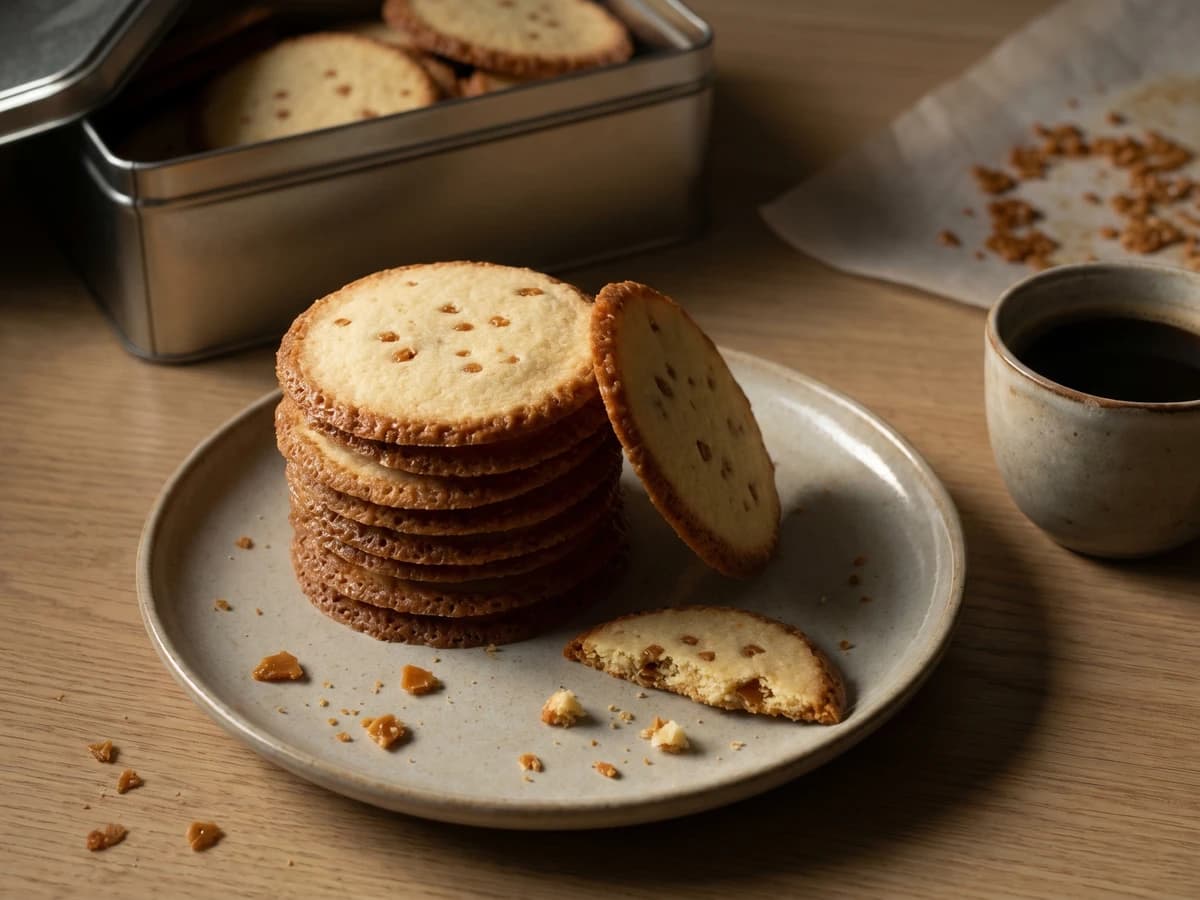
A thin Amsterdam cookie carrying a cog ship in its name: caramelized butter dough, almond nougatine, and a 1934 contest that turned municipal pride into something for coffee.