
Chef Joost
Abrikozenvlaai
A Limburg vlaai is not a pie trying to be grand. It is a thin yeast-dough round, fruit-bright and generous, made for birthdays, coffee, and second slices.
A cooking platform built around craft, culture, and the stories behind what we eat.
Created by
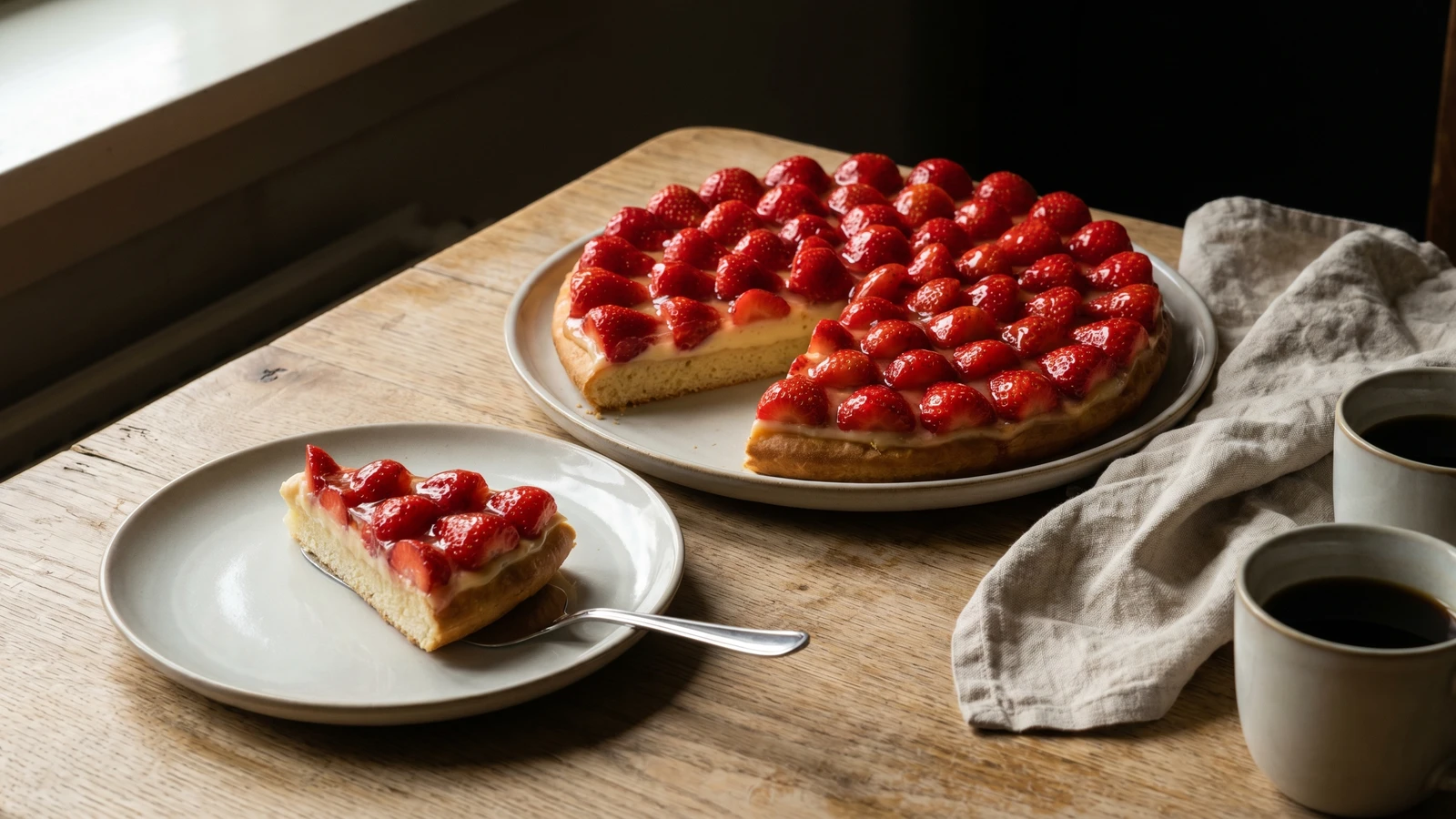
The summer vlaai that politely breaks Limburg's baked-fruit rule: soft gistdeeg, cool pastry cream, and strawberries left fresh because June knows better than the oven.
The first Limburg vlaai I learned to take seriously was not from a bakery window but from a birthday table, where every aunt had an opinion and every slice was measured by whether the bottom stayed tender under the fruit. That is how you learn regional cookery in the Netherlands: not from national slogans, thank goodness, but from provinces guarding their own sweet laws. Zeeland has its bolus. Friesland has suikerbrood, sugar bread. Limburg has vlaai, and it does not ask Amsterdam for permission.
The name already tells you enough, if you listen gently. Aardbei means earth-berry, the small red thing that ripens close to the soil, and vlaai belongs to the old family of flat filled breads and cakes, cousins to German Fladen. Most Limburg vlaaien bake their fruit into the dough, apricot, cherry, plum, rice pudding if the day is properly festive. But let me tell you a secret: aardbeienvlaai bends the rule because a good strawberry is a June argument you should not settle with heat.
So we bake only the gistdeeg, the yeast dough, until it is lightly golden and soft at the rim. Then comes banketbakkersroom, pastry cream, cool and thick enough to hold the berries without turning the base wet. The strawberries are laid on fresh, glossy under a thin clear glaze, not drowned, not decorated into embarrassment. Hou het altijd simpel, always keep it simple. When the fruit is right, your main task is restraint.
Vlaai is strongly associated with Dutch and Belgian Limburg, where round yeast-dough fruit tarts were tied to feast days, church fairs, birthdays, and coffee tables rather than everyday baking. The word vlaai is related to Middle Dutch forms such as vlade, meaning a flat cake or filled pastry, part of a broader Germanic family that includes Fladen. In 2024 Limburgse vlaai received protected geographical indication status in the European Union, recognizing the regional craft and its defining form: a round yeast-dough tart with a visible filling.
Quantity
250g
plus extra for dusting
Quantity
7g
Quantity
35g
Quantity
1/2 teaspoon
Quantity
125ml
Quantity
40g
softened
Quantity
1
Quantity
1 teaspoon
for greasing
Quantity
500ml
Quantity
1 pod or 2 teaspoons
Quantity
4
Quantity
90g
Quantity
40g
Quantity
25g
Quantity
600g
hulled and halved
Quantity
150ml
Quantity
25g
Quantity
1 teaspoon
Quantity
2 teaspoons or 4g
| Ingredient | Quantity |
|---|---|
| all-purpose flourplus extra for dusting | 250g |
| instant yeast | 7g |
| caster sugar | 35g |
| fine salt | 1/2 teaspoon |
| lukewarm milk | 125ml |
| unsalted buttersoftened | 40g |
| egg yolk | 1 |
| neutral oil or butterfor greasing | 1 teaspoon |
| whole milk | 500ml |
| vanilla pod or vanilla extract | 1 pod or 2 teaspoons |
| egg yolks | 4 |
| caster sugar | 90g |
| cornstarch | 40g |
| unsalted butter | 25g |
| fresh ripe strawberrieshulled and halved | 600g |
| clear apple juice or water | 150ml |
| sugar | 25g |
| lemon juice | 1 teaspoon |
| powdered gelatin or leaf gelatin | 2 teaspoons or 4g |
Mix the flour, yeast, sugar, and salt in a bowl. Add the lukewarm milk, softened butter, and egg yolk, then knead for 8 to 10 minutes until the dough is soft, smooth, and only lightly tacky. Cover and let it rise for about 1 hour, until doubled. This is gistdeeg, yeast dough, not shortcrust; it should feel alive under your hands.
Warm the milk with the split vanilla pod, or the vanilla extract, until fragrant. In a bowl, whisk the egg yolks, sugar, and cornstarch until pale. Pour in the hot milk slowly while whisking, then return everything to the pan and cook over medium heat, stirring constantly, until thick and glossy. Beat in the butter, cover the surface directly with baking paper, and cool completely.
Grease a 28cm vlaai tin or shallow tart tin. Roll the risen dough into a round a little larger than the tin and lay it in, pressing it gently into the corners. Trim the edge neatly and prick the base all over with a fork. Let it rest for 20 minutes while the oven heats to 200C.
Line the dough with baking paper and fill with baking beans or dried rice. Bake for 15 minutes, then lift out the paper and weights and bake for 6 to 8 minutes more, until the base is lightly golden and dry to the touch. Do not bake it hard. A vlaai base should support the slice, not argue with the fork.
Bloom the gelatin according to the packet instructions. Warm the apple juice or water with the sugar and lemon juice until the sugar dissolves, then stir in the gelatin off the heat. Let the glaze cool until syrupy but still pourable. If it is hot, wait; strawberries deserve better than being punished for your schedule.
Spread the cold pastry cream over the cooled vlaai base in an even layer. Arrange the strawberry halves cut side down in tight circles, starting at the outside and working inward. Brush or spoon the glaze thinly over the fruit, just enough to make it shine and hold its place.
Chill the vlaai for at least 45 minutes before slicing, so the cream settles and the glaze firms. Serve the same day, at a birthday table if you can manage it, with strong coffee and no unnecessary ceremony. The strawberries are the occasion.
1 serving (about 170g)
Culinary guides, cultural storytelling, and the editorial depth that makes cooking meaningful.
Discover Culinary ExplorerChef Joost
A Limburg vlaai is not a pie trying to be grand. It is a thin yeast-dough round, fruit-bright and generous, made for birthdays, coffee, and second slices.

Chef Joost
The December bakery counter made small: cold leafed pastry wrapped around lemon-scented amandelspijs, brushed gold, and scattered with almonds so one person gets the whole holiday in both hands.
Chef Joost
A thin Amsterdam cookie carrying a cog ship in its name: caramelized butter dough, almond nougatine, and a 1934 contest that turned municipal pride into something for coffee.

Chef Joost
A winter apple ring in light batter, fried for oudejaarsavond, New Year's Eve, when the oliebol makes the noise and the quieter beignet keeps the cinnamon-sugared secret.