Chef Joost
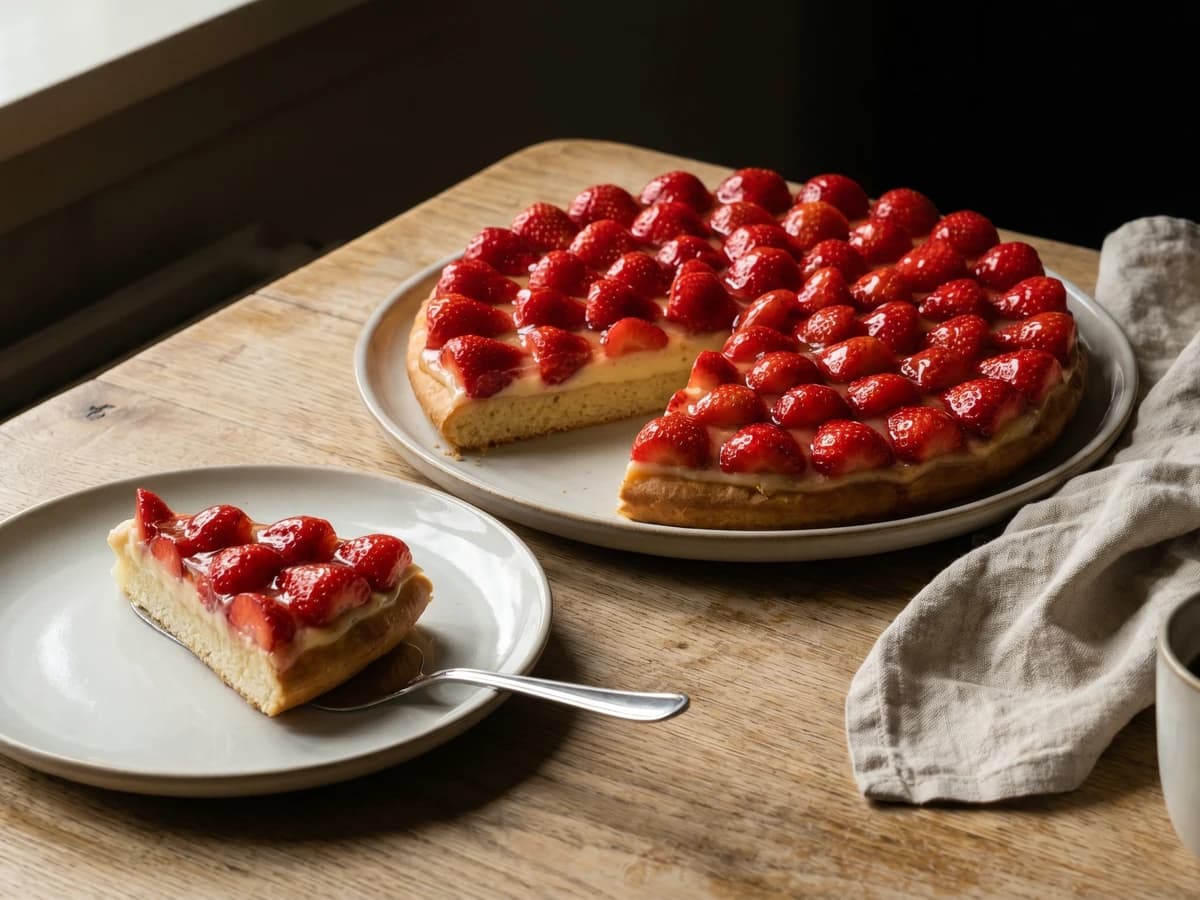
Aardbeienvlaai (Limburg Strawberry Vlaai)
The summer vlaai that politely breaks Limburg's baked-fruit rule: soft gistdeeg, cool pastry cream, and strawberries left fresh because June knows better than the oven.
A cooking platform built around craft, culture, and the stories behind what we eat.
Created by
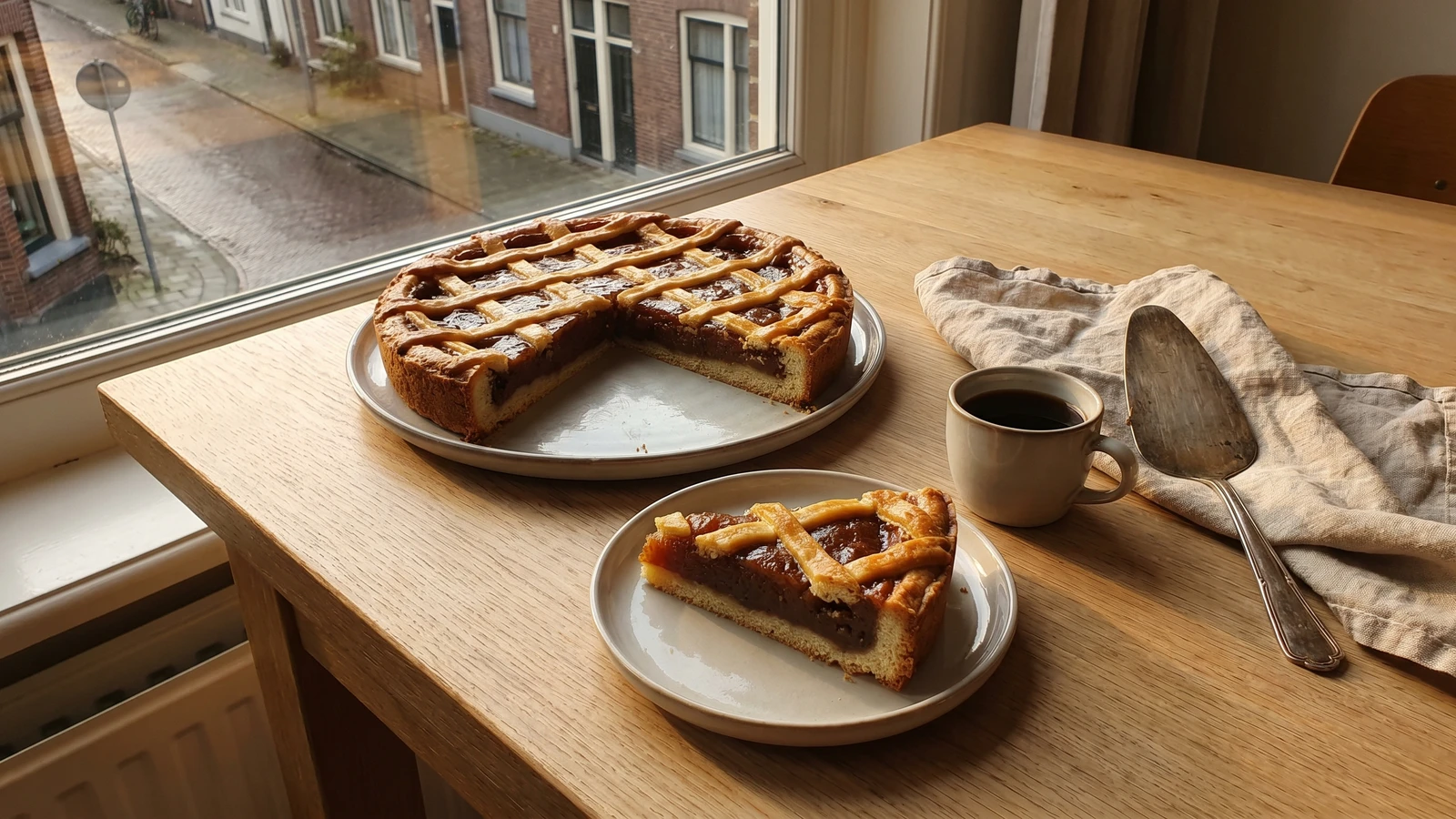
In this Limburg vlaai, humble oven-dried pears turn almost black with soaking, patience, and cinnamon, then settle into yeast dough as the Sunday tart many families never quite forgot.
Not every Dutch secret smells of salt water. Some sit inland, dark and quiet on a Limburg coffee table, a slice of vlaai whose filling looks like chocolate until the first fork says orchard. I first met bakkemoezenvlaai after a Sunday meal in the south, when the hostess saw my scholarly squint and corrected me before I had the chance to be clever: pears, Joost. Dried pears. For obvious reasons, scholarship had to wait until after the slice.
The name already tells you the trick, but only if you let Limburg speak in its own accent. Bakkemoezen are oven-dried pears, fruit put away after the autumn harvest, often in the falling heat of a bread oven, then soaked back to life and cooked into moes, fruit puree. This is not jam. Jam wants brightness. Bakkemoezen want depth, the brown, almost bitter sweetness that comes when pear has lost its water and kept its memory.
Vlaai, the shallow Limburg yeast tart, is the right house for it. A buttery shortcrust would be too rich and too loud; gistdeeg, yeast dough, gives you a tender bread edge and a thin floor that lets the filling remain the point. But let me tell you a secret: the whole recipe stands or falls before the tart goes into the oven. Soak the pears well, cook the puree thick, and cool it completely. Wet filling makes a sad bottom, and sadness has no business at Sunday coffee.
Hou het altijd simpel. Make the filling the night before, knead a plain dough, weave a modest lattice, and serve the vlaai at room temperature with coffee, as Limburg does. A dish without its story is half a meal; this one is orchard preservation, feast-day patience, and a province refusing to flatten itself into the national stereotype of plainness.
Bakkemoezenvlaai belongs to Limburg's vlaai culture, where shallow yeast-dough fruit tarts were baked for kermis, weddings, funerals, and Sunday coffee, not as anonymous bakery sweets but as regional table markers. Bakkemoezen are pears preserved by slow oven-drying after the autumn harvest, a household method that turned surplus orchard fruit into a dark filling months after fresh pears were gone. Limburgse vlaai was registered as a protected geographical indication in the European Union in 2024, and the Dutch practice of vlaai baking and eating is recognised as intangible cultural heritage; this pear version keeps the old preserving logic visible in every slice.
Quantity
300g
rinsed
Quantity
750ml, plus more if needed
Quantity
50g
Quantity
1 teaspoon
Quantity
1 pinch
Quantity
1 tablespoon
Quantity
250g, plus more for dusting
Quantity
7g
Quantity
25g
Quantity
5g
Quantity
125ml
lukewarm
Quantity
1
beaten
Quantity
40g
softened
Quantity
2 tablespoons
Quantity
1 egg yolk plus 1 teaspoon milk
for glazing
| Ingredient | Quantity |
|---|---|
| bakkemoezen, oven-dried pears, or firm unsulphured dried pearsrinsed | 300g |
| cold water | 750ml, plus more if needed |
| dark brown basterdsuiker or light brown sugar | 50g |
| ground cinnamon | 1 teaspoon |
| fine sea salt | 1 pinch |
| appelstroop, Dutch apple syrup (optional) | 1 tablespoon |
| all-purpose flour (patentbloem) | 250g, plus more for dusting |
| instant yeast | 7g |
| caster sugar | 25g |
| fine salt | 5g |
| whole milklukewarm | 125ml |
| small eggbeaten | 1 |
| unsalted buttersoftened | 40g |
| fine dry breadcrumbs or crushed beschuit, Dutch rusk | 2 tablespoons |
| egg yolk beaten with milkfor glazing | 1 egg yolk plus 1 teaspoon milk |
Rinse the bakkemoezen and put them in a bowl with the cold water. Weigh them down with a small plate so every piece sits under the surface, then leave them for 8 to 12 hours. They will look wrinkled and stubborn at first. Let them. The water is giving back what the oven once took away.
Tip the pears and their soaking water into a saucepan. Add just enough extra water to cover if needed, bring to a gentle simmer, and cook for 45 to 60 minutes until the pears yield easily to a spoon. Drain, keeping a little cooking liquid, then puree the pears with the brown sugar, cinnamon, salt, and appelstroop if using. Cook the puree a few minutes longer if it is loose; it should sit thick on the spoon and leave a clear track across the pan. Cool completely.
Mix the flour, yeast, caster sugar, and salt in a bowl. Add the lukewarm milk, beaten egg, and softened butter, then knead for 8 to 10 minutes until the dough is soft, elastic, and only slightly tacky. Cover and let it rise in a warm place until doubled, about 45 to 60 minutes. Vlaai dough is bread's Sunday coat: tender, but still honest bread.
Butter a 28cm shallow vlaai tin or tart pan. Roll two thirds of the dough into a round large enough to line the base and sides, then lift it in and press it gently into the edge. Sprinkle the base with the breadcrumbs or crushed beschuit. They disappear into the tart, but they catch the last pear juices before they can soften the bottom.
Spread the cooled pear puree evenly over the dough. Roll out the remaining dough and cut it into narrow strips, then lay them over the filling in a simple lattice. Press the strip ends into the rim and trim any overhang. Do not build the tart too high. Limburg vlaai is shallow enough to eat neatly with coffee, which is part of its good manners.
Let the shaped vlaai rest for 20 to 25 minutes while the oven heats to 200C. Brush the lattice and rim with the egg yolk and milk glaze. Bake for 22 to 25 minutes, until the rim is golden brown, the lattice is firm, and the pear filling looks dark and set through the openings.
Let the vlaai cool in the tin for 10 minutes, then slide it onto a rack and leave it for at least 1 hour before cutting. The pear filling sets as it cools, and a clean slice is your reward for patience. Serve at room temperature with coffee. No ceremony needed; the tart brought its own.
1 serving (about 145g)
Culinary guides, cultural storytelling, and the editorial depth that makes cooking meaningful.
Discover Culinary ExplorerChef Joost
The summer vlaai that politely breaks Limburg's baked-fruit rule: soft gistdeeg, cool pastry cream, and strawberries left fresh because June knows better than the oven.

Chef Joost
A Limburg vlaai is not a pie trying to be grand. It is a thin yeast-dough round, fruit-bright and generous, made for birthdays, coffee, and second slices.

Chef Joost
The December bakery counter made small: cold leafed pastry wrapped around lemon-scented amandelspijs, brushed gold, and scattered with almonds so one person gets the whole holiday in both hands.
Chef Joost
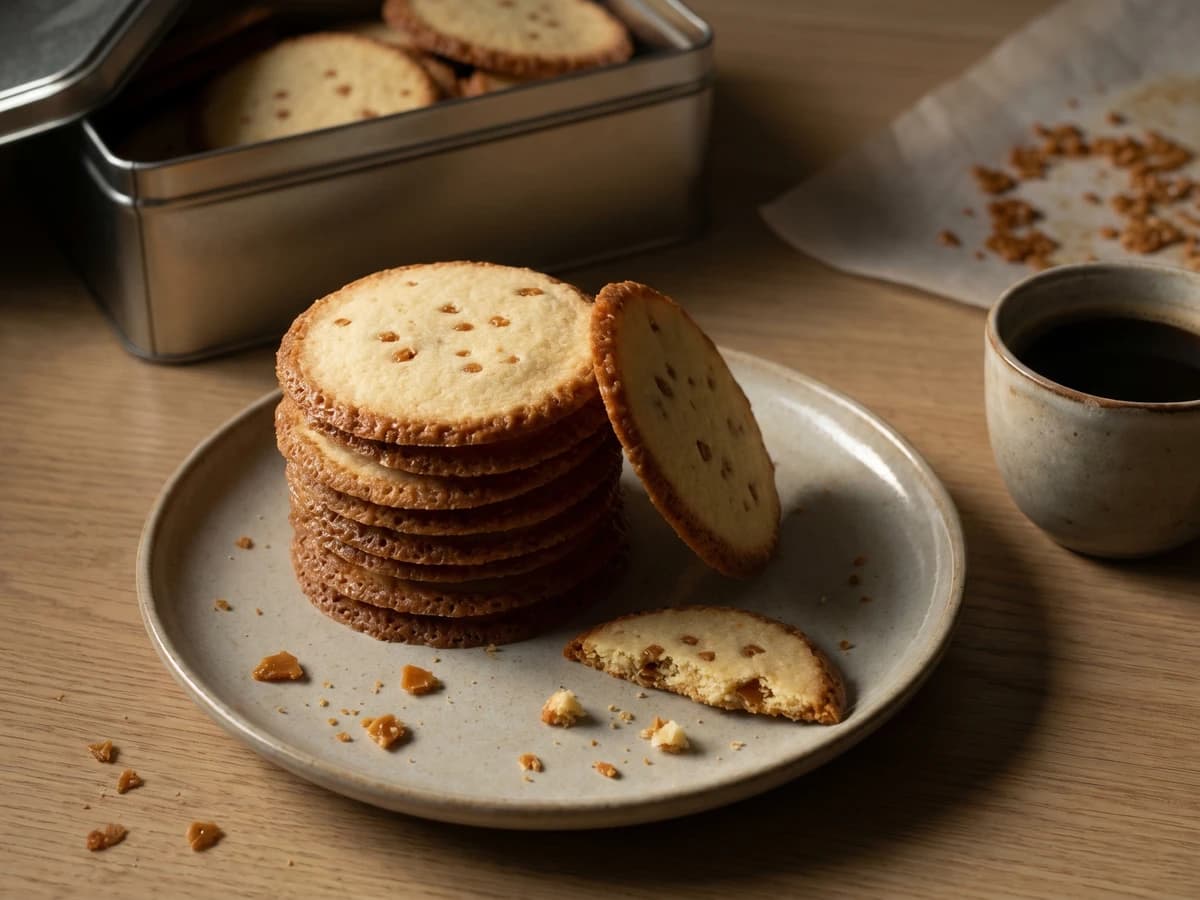
A thin Amsterdam cookie carrying a cog ship in its name: caramelized butter dough, almond nougatine, and a 1934 contest that turned municipal pride into something for coffee.