Chef Joost
Aardbeienvlaai (Limburg Strawberry Vlaai)
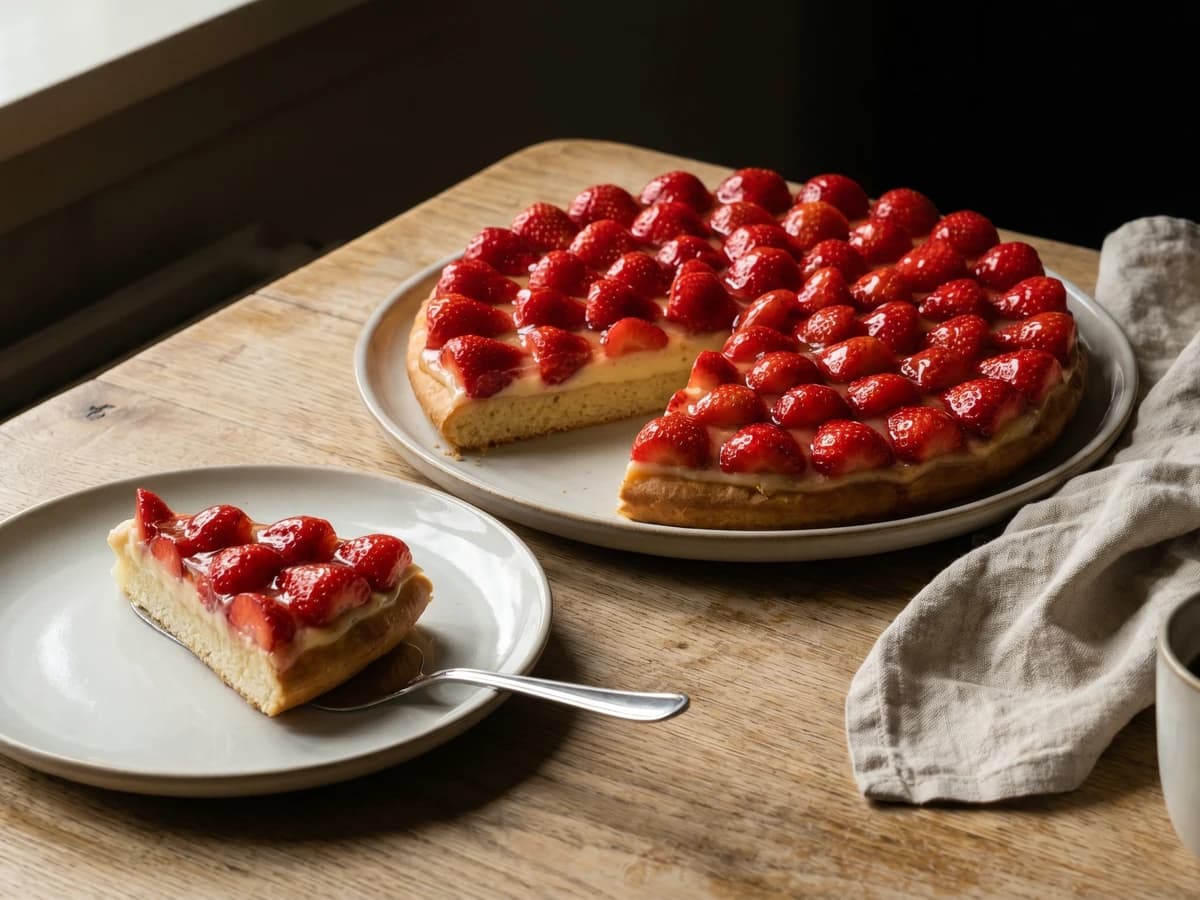
The summer vlaai that politely breaks Limburg's baked-fruit rule: soft gistdeeg, cool pastry cream, and strawberries left fresh because June knows better than the oven.
A cooking platform built around craft, culture, and the stories behind what we eat.

Created by
A Limburg vlaai for people who know fruit is not the only filling worth guarding: soft yeast dough, sweet semolina custard, and a slice that tastes like a village table.
Some pastries arrive waving flags. Griesmeelvlaai enters through the side door, carrying a clean tea towel and expecting you to have coffee ready. That is very Limburg. The province has never needed Amsterdam's permission to know what belongs on its table, and vlaai is one of those foods that proves the Netherlands is not one kitchen but many rooms, each with its own smell coming from the oven.
The name already tells you enough, without making a circus of it. Griesmeel is semolina, coarsely milled wheat, cooked first into griesmeelpap, semolina porridge, then baked into a round of yeasted vlaai dough. Vlaai itself belongs to the old family of flat festive breads and tarts of the Meuse country, the kind of thing made for kermis, birthdays, Sunday visits, and the serious Dutch institution of coffee with cake. But let me tell you a secret: the quiet fillings are often the ones a region loves most. Fruit gets the photograph. Semolina gets eaten.
This is baking by patience, not display. Cook the semolina until it thickens properly, temper the eggs so they enrich rather than scramble, and let the dough rise until it feels alive under your fingers. Hou het altijd simpel, always keep it simple. A thin yeasted crust, a soft pale filling, a little cinnamon if your house asks for it, and then the hardest instruction in Dutch cookery: let it cool before slicing. Warm griesmeelvlaai tastes good. Cooled griesmeelvlaai knows who it is.
Limburgse vlaai was registered in the European Union as a protected geographical indication, BGA in Dutch, in 2024, covering vlaai made in Dutch and Belgian Limburg according to regional specifications. The protected tradition explicitly includes non-fruit fillings such as rijstevlaai, puddingvlaai, and griesmeelvlaai, showing that Limburg's tart culture was never only about orchard fruit. Griesmeelvlaai reflects the household side of the tradition: semolina porridge, a thrifty pantry food, turned into a celebration tart by baking it inside a yeast-dough round.
Quantity
250g
plus extra for dusting
Quantity
7g
Quantity
125ml
Quantity
35g
softened
Quantity
25g
Quantity
1
Quantity
4g
Quantity
as needed
Quantity
750ml
Quantity
90g
Quantity
80g
Quantity
2
Quantity
1 teaspoon
Quantity
1/2 teaspoon
Quantity
pinch
Quantity
1 tablespoon
| Ingredient | Quantity |
|---|---|
| plain flourplus extra for dusting | 250g |
| instant yeast | 7g |
| lukewarm milk | 125ml |
| unsalted buttersoftened | 35g |
| sugar | 25g |
| egg yolk | 1 |
| fine salt | 4g |
| butter for the tin | as needed |
| whole milk | 750ml |
| fine semolina | 90g |
| sugar | 80g |
| eggs | 2 |
| vanilla sugar or vanilla extract | 1 teaspoon |
| ground cinnamon (optional) | 1/2 teaspoon |
| fine salt | pinch |
| breadcrumbs | 1 tablespoon |
Mix the flour, yeast, lukewarm milk, softened butter, sugar, egg yolk, and salt into a soft dough. Knead for eight to ten minutes, until it turns smooth and elastic and no longer tears the moment you stretch it. Cover and let it rise for about an hour, until doubled.
Bring the milk to a gentle simmer with the sugar, vanilla, cinnamon if using, and a pinch of salt. Rain in the semolina while whisking constantly. Keep whisking over low heat for six to eight minutes, until the griesmeelpap thickens enough to leave slow trails in the pan. Semolina swells quietly, then all at once; turn your back and it will make lumps just to teach you manners.
Take the pan off the heat and let the semolina cool for ten minutes, stirring now and then so a skin doesn't form. Beat the eggs in a bowl, whisk in a spoonful of the warm semolina to loosen them, then stir the egg mixture back into the pan. This small courtesy keeps the eggs from scrambling. The filling should be thick, glossy, and pourable only with encouragement.
Butter a 28cm vlaai tin or shallow tart tin. Roll the risen dough into a thin round large enough to line the base and sides, then settle it into the tin without stretching. Trim the edge neatly and scatter the breadcrumbs over the base. They disappear in the baking, doing their small honest work by catching extra moisture.
Spoon the semolina filling into the dough shell and smooth the top with the back of a spoon. Let the filled vlaai stand for fifteen minutes while the oven heats to 200C. This short rest lets the dough wake again around the filling, which is why the crust bakes tender rather than tight.
Bake for 28 to 35 minutes, until the dough edge is golden and the filling is set with a faint wobble in the centre. If the crust colours too quickly, lower the oven to 180C for the final minutes. Cool completely in the tin before slicing. I know. But a warm semolina filling runs, and Limburg did not protect vlaai so we could serve it as pudding with borders.
1 serving (about 135g)
Culinary guides, cultural storytelling, and the editorial depth that makes cooking meaningful.
Discover Culinary ExplorerChef Joost
The summer vlaai that politely breaks Limburg's baked-fruit rule: soft gistdeeg, cool pastry cream, and strawberries left fresh because June knows better than the oven.

Chef Joost
A Limburg vlaai is not a pie trying to be grand. It is a thin yeast-dough round, fruit-bright and generous, made for birthdays, coffee, and second slices.

Chef Joost
The December bakery counter made small: cold leafed pastry wrapped around lemon-scented amandelspijs, brushed gold, and scattered with almonds so one person gets the whole holiday in both hands.
Chef Joost
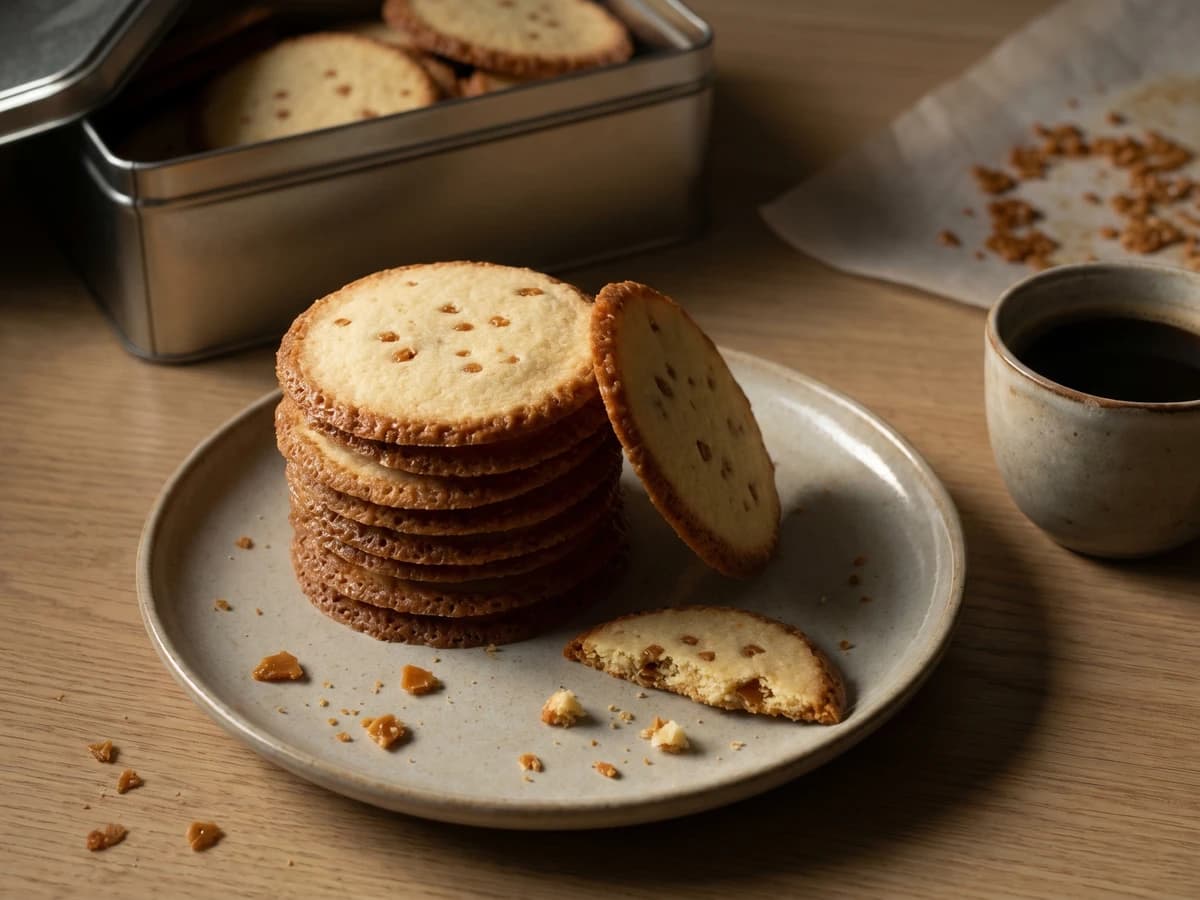
A thin Amsterdam cookie carrying a cog ship in its name: caramelized butter dough, almond nougatine, and a 1934 contest that turned municipal pride into something for coffee.