Chef Joost
Aardbeienvlaai (Limburg Strawberry Vlaai)
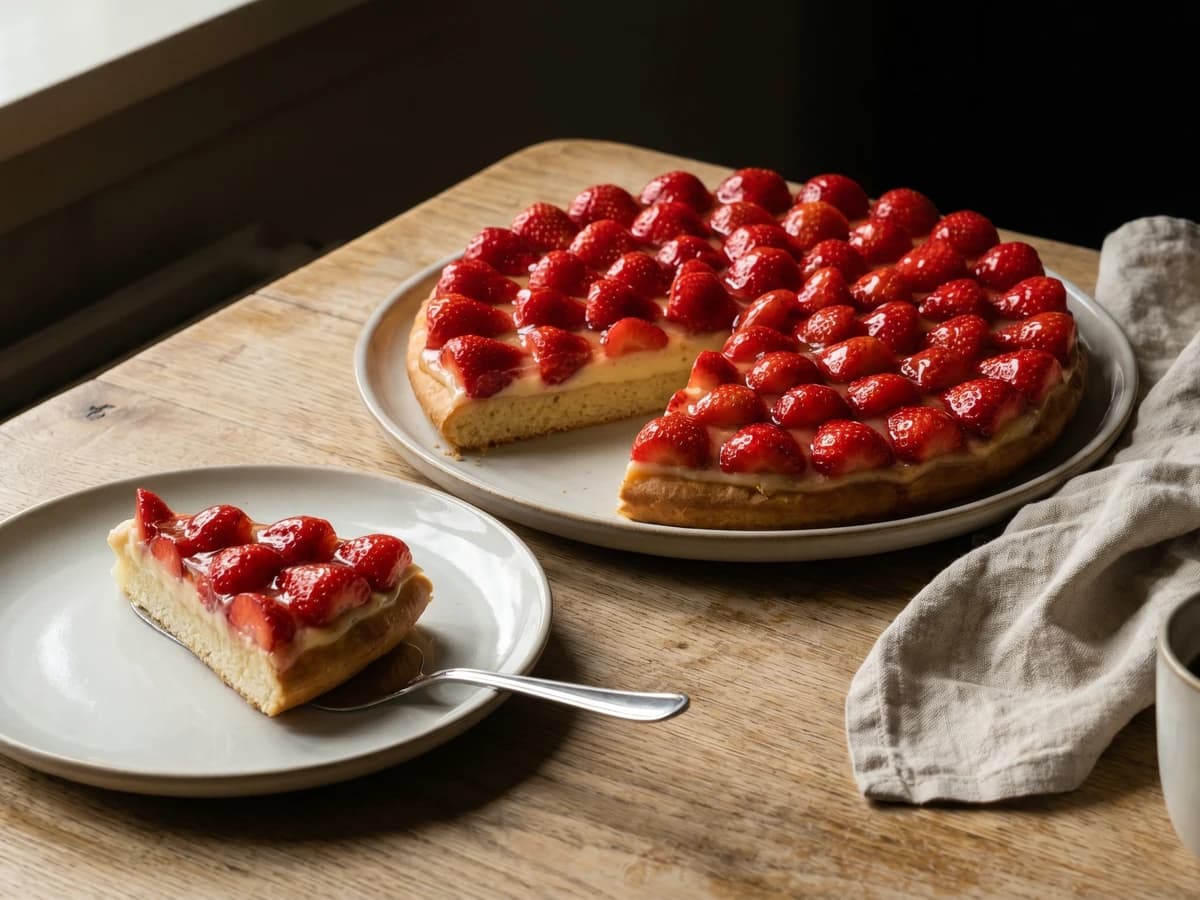
The summer vlaai that politely breaks Limburg's baked-fruit rule: soft gistdeeg, cool pastry cream, and strawberries left fresh because June knows better than the oven.
A cooking platform built around craft, culture, and the stories behind what we eat.

Created by
One of Limburg's oldest vlaaien: dark plums baked into a thin yeast-dough shell until they turn glossy and deep, a tart for feast days, funerals, and family tables.
The name already tells you to look south. Vlaai is not ordinary pie wearing a softer accent; it is Limburg speaking in dough. A vlaai should be low, round, and generous, with a yeast crust that behaves more like bread than pastry and a filling that tastes of the season it came from. Pruimen are plums, plain enough, but in Limburg the word often points to zwarte pruimen, dark dried plums, soaked and cooked until they remember the orchard.
But let me tell you a secret. Pruimenvlaai is not only a sweet thing for coffee. In old Limburg it belonged as much to funerals as to feast days, which is not contradiction but wisdom. The same tart could mark grief and celebration because it was sturdy, makeable ahead, and honest on a crowded table. History and cookery, they cannot be separated, especially when the dish is the one carried from house to house while people speak quietly in the front room.
The method asks you to be calmer than modern pastry usually allows. Hou het altijd simpel, always keep it simple: make a soft yeast dough, let the plums swell slowly, thicken them just enough so the base stays tender, then bake until the fruit turns dark and jammy. If fresh late-summer plums are in season, use them proudly. If the calendar has moved on, dried dark plums are not a compromise here; they are the old cupboard speaking.
Limburg vlaai is documented from medieval Low Countries baking traditions, with the name related to Middle Dutch vlade or vlaeye, a flat cake or flan, and to the broader Germanic family of Fladen, flat bread. Pruimenvlaai, especially the version made with zwarte pruimen, dark dried plums, became associated in parts of Limburg with funerals because dried fruit kept well and could be prepared for large gatherings without depending on the orchard's brief season. In 2024, Limburgse vlaai received European protected geographical indication status, recognizing the tart as a regional product of Dutch and Belgian Limburg rather than a general Dutch pie.
Quantity
250g
plus extra for dusting
Quantity
7g
Quantity
35g
Quantity
1/2 teaspoon
Quantity
125ml
lukewarm
Quantity
40g
softened
Quantity
1
Quantity
500g
pitted
Quantity
350ml
Quantity
60g
Quantity
1
Quantity
1 strip
Quantity
1 tablespoon
Quantity
1 tablespoon
mixed with 2 tablespoons cold water
Quantity
1 tablespoon
Quantity
1
beaten, for brushing
| Ingredient | Quantity |
|---|---|
| bread flourplus extra for dusting | 250g |
| instant yeast | 7g |
| caster sugar | 35g |
| fine salt | 1/2 teaspoon |
| whole milklukewarm | 125ml |
| unsalted buttersoftened | 40g |
| egg yolk | 1 |
| dark dried plums or prunespitted | 500g |
| water | 350ml |
| dark brown sugar | 60g |
| cinnamon stick | 1 |
| lemon peel | 1 strip |
| lemon juice | 1 tablespoon |
| cornstarchmixed with 2 tablespoons cold water | 1 tablespoon |
| fine breadcrumbs | 1 tablespoon |
| eggbeaten, for brushing | 1 |
Put the dried plums, water, dark brown sugar, cinnamon stick, and lemon peel into a saucepan. Bring to a gentle simmer and cook for 20 to 25 minutes, until the fruit is swollen, glossy, and soft enough to press with a spoon. Lift out the cinnamon and lemon peel. Stir in the lemon juice, then add the cornstarch slurry and simmer for 1 minute, just until the syrup thickens. Cool completely; hot filling makes tired dough.
Mix the flour, yeast, sugar, and salt in a bowl. Add the lukewarm milk, softened butter, and egg yolk, then knead for 8 to 10 minutes until the dough is smooth, elastic, and only lightly tacky. Cover and let rise for about 1 hour, until doubled. This is yeast dough, not short pastry; it wants patience, not cold hands.
Butter a 28cm shallow vlaai tin or tart tin. Roll two thirds of the dough into a thin round and ease it into the tin, pressing it gently into the edge without stretching. Trim the rim cleanly. Scatter the fine breadcrumbs over the base; they are not flavour, they are insurance against plum juice.
Spoon the cooled plum filling into the shell and spread it level. Roll the remaining dough thinly and cut it into strips. Lay the strips over the fruit in a simple lattice, then press the ends to the rim. Don't weave as if the queen is coming. A home lattice with honest spacing bakes better and eats just as well.
Cover the tart loosely and let it rest for 25 to 30 minutes, until the dough looks slightly puffed. Heat the oven to 200C. Brush the lattice and rim with beaten egg, then bake for 25 to 30 minutes, until the crust is golden and the plum filling is dark, thick, and shining between the strips.
Let the vlaai cool in the tin for 15 minutes, then lift it carefully onto a rack. Slice only when fully cool, because the plums need time to set. A warm slice may taste fine, but it collapses like a poorly kept secret.
1 serving (about 130g)
Culinary guides, cultural storytelling, and the editorial depth that makes cooking meaningful.
Discover Culinary ExplorerChef Joost
The summer vlaai that politely breaks Limburg's baked-fruit rule: soft gistdeeg, cool pastry cream, and strawberries left fresh because June knows better than the oven.

Chef Joost
A Limburg vlaai is not a pie trying to be grand. It is a thin yeast-dough round, fruit-bright and generous, made for birthdays, coffee, and second slices.

Chef Joost
The December bakery counter made small: cold leafed pastry wrapped around lemon-scented amandelspijs, brushed gold, and scattered with almonds so one person gets the whole holiday in both hands.
Chef Joost
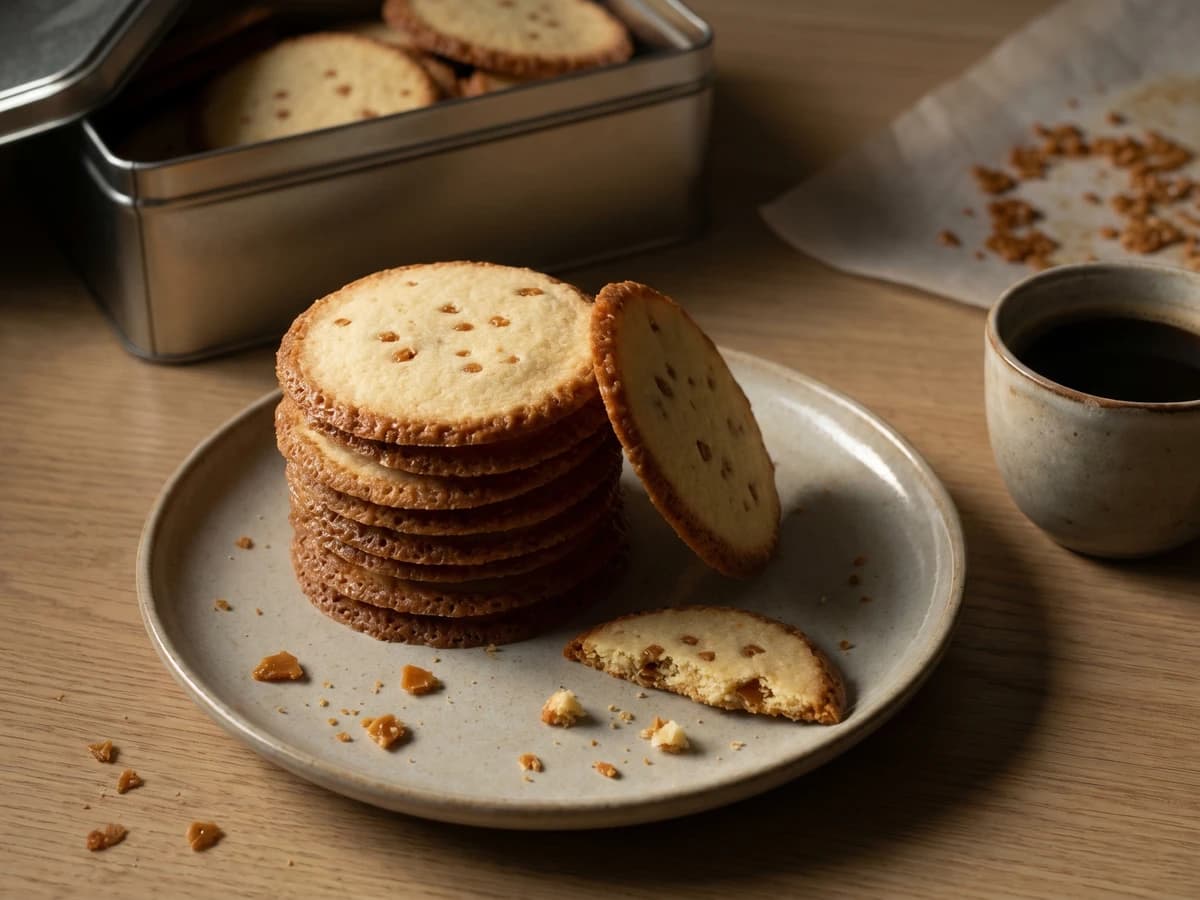
A thin Amsterdam cookie carrying a cog ship in its name: caramelized butter dough, almond nougatine, and a 1934 contest that turned municipal pride into something for coffee.