
Chef Takumi
Ago Dashi (あごだし, grilled flying fish stock)
Ago dashi is quiet luxury: roasted flying fish, konbu, and patient water. Steep it slowly and you get a clear stock that tastes sweet, clean, and full without heaviness.
A cooking platform built around craft, culture, and the stories behind what we eat.

Created by
Burdock looks stern at first glance, all root and earth. Pound it gently, dress it with sesame vinegar, and it becomes one of osechi's quiet blessings.
Gobō asks you to trust a root. It isn't pretty in the market, and it doesn't try to be. Choose one that's firm, slender, and fresh-smelling, with a damp earthy scent and no hollow bend. This dish has nothing hidden, so the burdock must be good before the sesame ever touches it.
The one detail that decides tataki gobō is the pounding. Not smashing. Not punishment, despite what the name may suggest to a person holding a rolling pin with dangerous confidence. You tap the cooked root just enough to split its fibers, so the sesame-vinegar dressing can enter. Leave it whole and the seasoning sits on the outside. Break it to pieces and you've lost the shape that gives the dish its dignity.
This is osechi food, made ahead for the New Year table, especially loved in Kansai as one of the iwai-zakana, the celebratory dishes. Gobō grows straight and deep, so it carries the wish for a household rooted firmly through the year. The method is plain: scrub, simmer, tap, dress, rest. The waiting does the last work.
Tataki gobō is closely associated with Kansai-style osechi ryōri, where it is counted among the regional iwai-zakana, the small celebratory dishes served at New Year. Burdock entered Japanese cooking early from the Asian continent, but Japan became unusual in treating the long root as a common vegetable rather than only as medicine. Its New Year symbolism comes from the plant's deep growth in the soil, a wish for family roots to hold firm.
Quantity
2 slender roots (about 300g total)
scrubbed, cut into 2-inch lengths
Quantity
4 cups
for soaking
Quantity
1 tablespoon
for soaking
Quantity
3 tablespoons
Quantity
1 1/2 tablespoons
Quantity
1 tablespoon
Quantity
1 tablespoon
Quantity
1 tablespoon
Quantity
1/2 teaspoon
for simmering
| Ingredient | Quantity |
|---|---|
| burdock roots (gobō)scrubbed, cut into 2-inch lengths | 2 slender roots (about 300g total) |
| waterfor soaking | 4 cups |
| rice vinegarfor soaking | 1 tablespoon |
| toasted white sesame seeds | 3 tablespoons |
| rice vinegar | 1 1/2 tablespoons |
| soy sauce | 1 tablespoon |
| sugar | 1 tablespoon |
| dashi or water | 1 tablespoon |
| sea saltfor simmering | 1/2 teaspoon |
Scrub the gobō under running water with a vegetable brush or the back of a knife, but don't peel it clean and white. The skin holds much of the fragrance, that good earthy bitterness that makes burdock itself. Cut into 2-inch lengths, halving thick pieces lengthwise so they cook evenly.
Put the cut gobō into water mixed with 1 tablespoon rice vinegar for 5 to 10 minutes, then drain. This keeps the color from darkening too fiercely and pulls out a little harshness. Don't soak it longer. Wash away all the character and you'll have made a very obedient stick.
Bring a pot of water to a boil with the sea salt. Add the drained gobō and simmer gently for 8 to 12 minutes, until a skewer enters with light resistance. You want tender, not soft. If it collapses now, it won't hold its shape after pounding.
While the burdock cooks, grind the toasted sesame seeds in a suribachi until most are crushed and fragrant, leaving a few seeds partly whole. Add the rice vinegar, soy sauce, sugar, and dashi or water, then stir to a rough paste. The sesame gives body, the vinegar sharpens the root, and the soy brings the seasoning back to earth.
Drain the gobō and pat it dry. While still warm, lay the pieces on a board and tap each one lightly with a rolling pin or pestle until it cracks along the grain. Stop when the fibers open. This is the whole point of tataki: the dressing can enter the root without turning it into rubble.
Toss the warm, cracked gobō with the sesame dressing until every piece is lightly coated. Let it rest at least 1 hour, turning once or twice, so the vinegar and soy settle into the opened grain. Serve at room temperature, in a restrained mound with a little space around it.
1 serving (about 65g)
Culinary guides, cultural storytelling, and the editorial depth that makes cooking meaningful.
Discover Culinary ExplorerChef Takumi
Ago dashi is quiet luxury: roasted flying fish, konbu, and patient water. Steep it slowly and you get a clear stock that tastes sweet, clean, and full without heaviness.
Chef Takumi
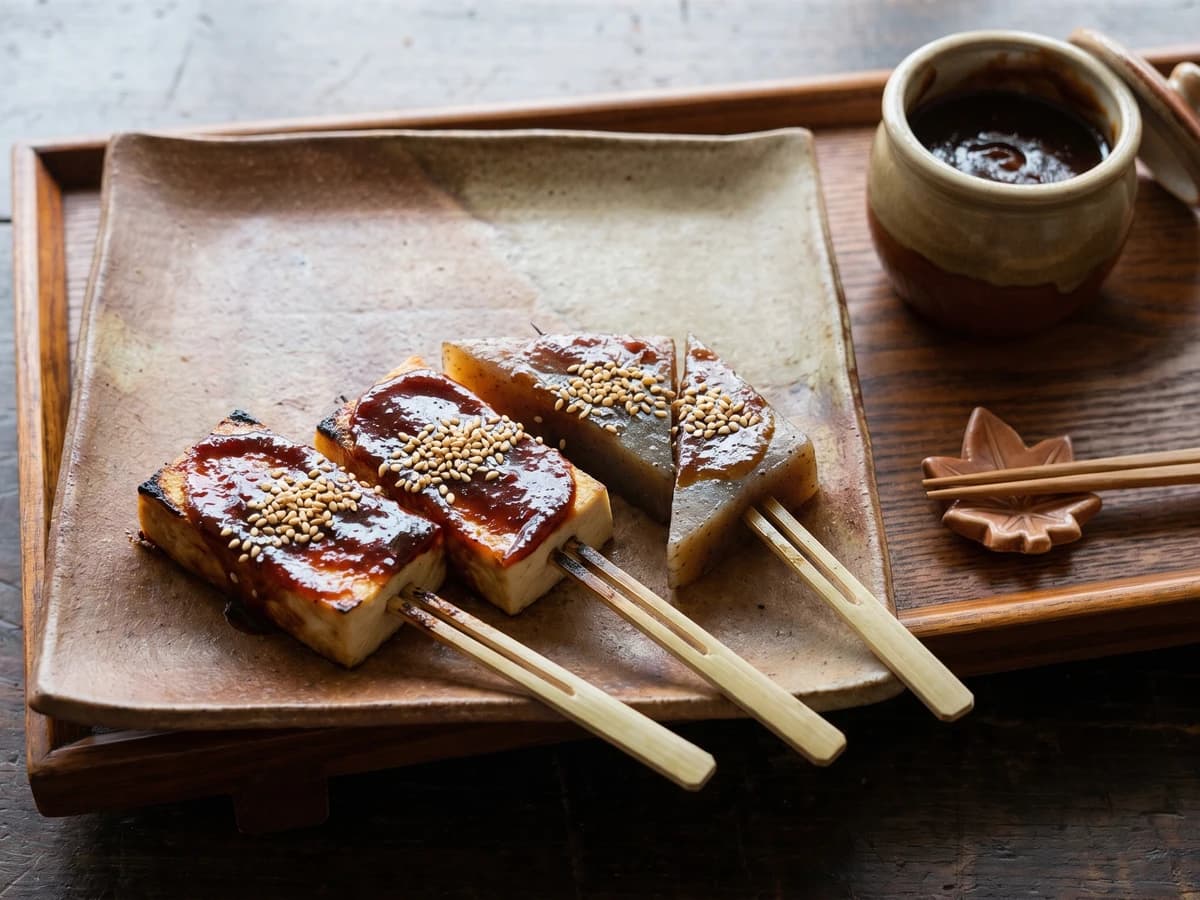
Akamiso dengaku-miso is plain work: bean miso, sweetness, sake, and patient stirring until the glaze turns dark, glossy, and thick enough to cling to the grill.
Chef Takumi
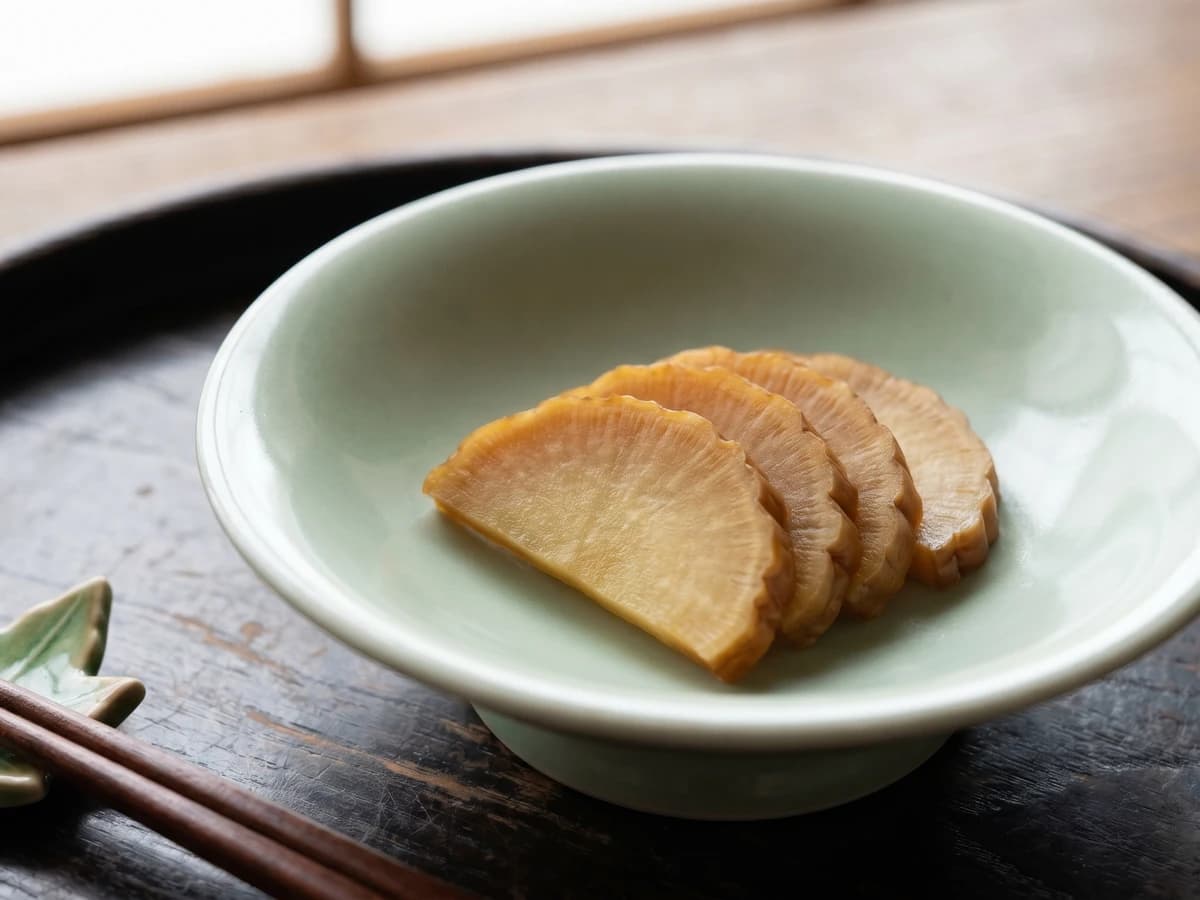
Snow-country takuan begins with smoke. Hang the daikon, dry it gently, then let rice bran, salt, and time turn it into Akita's amber pickle.

Chef Takumi
Aso takanazuke is spring caught in salt: sharp mustard greens pressed until they soften, fermented until their edge turns round, then fried briefly with sesame for rice.