
Chef Isabel
Aguaillo de la Sierra de Cadiz
Aguaillo is from the Sierra de Cadiz: cold water, stale bread, garlic, oil and vinegar, closer to a field drink than a bowl of soup, and sharp enough to wake you in the heat.
A cooking platform built around craft, culture, and the stories behind what we eat.
Created by
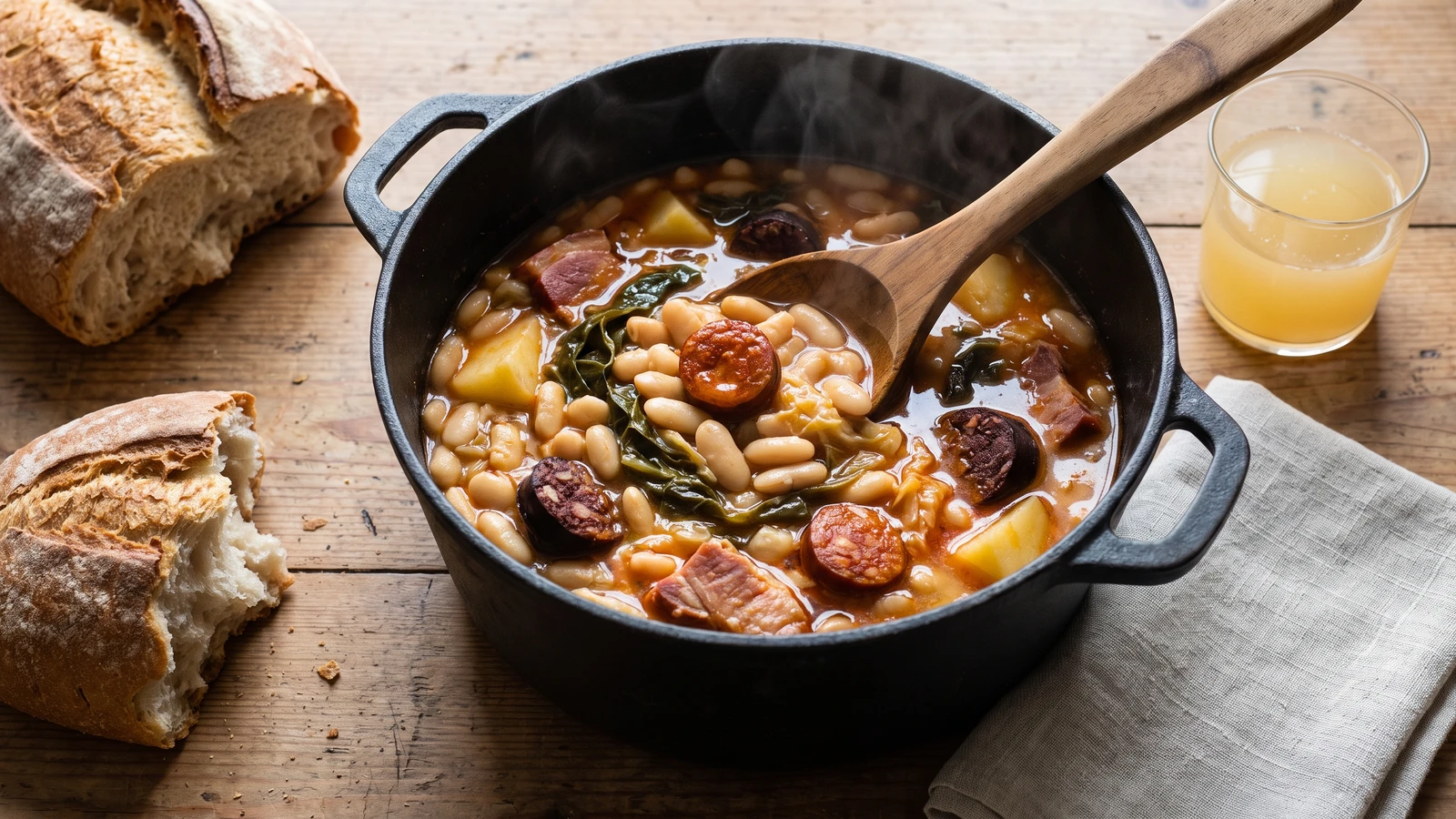
Pote Asturiano is Asturias in a winter pot: fabes, berza, potato, and smoked compango cooked slow until the greens soften and the broth turns thick and green-gold.
Pote Asturiano belongs to Asturias, and the berza is what makes it this dish and not fabada's cousin with a handful of greens thrown in. Fabes, potatoes, and cabbage cook with the same cured compango of chorizo, morcilla, and lacón, but here the greens lead the pot. This is cocina de cuchara, spoon food, older and rougher than fabada, built for cold days and hungry tables.
The method that decides it is the order of the pot. Start the soaked beans with the cured meats in cold water and let them come up slowly, then add the berza after the beans have begun to soften. Put it in too early and it goes dull and tired before the beans are ready; put it in too late and it never gives the broth that deep green, sweet edge. Low heat, no hard boil, and don't stir like you're angry at it. Shake the pot by the handles.
If you can't find Asturian berza, use a sturdy green cabbage, collards, or kale, in that order. The flavor changes a little, more cabbage-sweet with cabbage and earthier with kale, but the dish still stands. Fabes de la granja are best; good cannellini or large white beans will do if that's what your market gives you. No hace falta haber pisado Espana. You need good cured pork, greens with some backbone, and patience.
My Margin beside this one says only: cut the greens finer than pride allows. It was right. Long ribbons look handsome in the bowl and fight the spoon. Chop them well, cook them slow, and let the potato thicken the broth at the end. Siempre sale, si lo sigues.
Pote Asturiano belongs to the mountain and farming kitchens of Asturias, where an iron pote hung over the hearth and held whatever the season and the household larder could give. It is older than fabada as a daily dish: beans, berza, and potatoes stretched with compango from the matanza, the household pig slaughter that supplied cured meats for the year. Fabada became the better-known feast pot, but pote kept the greens and potatoes that made it everyday food in the wet, cold north.
Quantity
400g
soaked overnight
Quantity
250g
in one piece
Quantity
150g
in one piece
Quantity
2, about 200g total
Quantity
2, about 180g total
Quantity
1
peeled and left whole
Quantity
2
peeled
Quantity
1
Quantity
500g
tough ribs removed and leaves finely sliced
Quantity
500g
peeled and cut into rough 3cm chunks
Quantity
2 tablespoons
Quantity
1 teaspoon
Quantity
to taste
| Ingredient | Quantity |
|---|---|
| dried fabes de la granja or large dried white beanssoaked overnight | 400g |
| lacón or cured pork shoulderin one piece | 250g |
| smoked panceta or tocinoin one piece | 150g |
| chorizo asturiano | 2, about 200g total |
| morcilla asturiana | 2, about 180g total |
| small onionpeeled and left whole | 1 |
| garlic clovespeeled | 2 |
| bay leaf | 1 |
| berza asturiana, green cabbage, collards, or kaletough ribs removed and leaves finely sliced | 500g |
| waxy potatoespeeled and cut into rough 3cm chunks | 500g |
| olive oil | 2 tablespoons |
| sweet pimentón de la Vera | 1 teaspoon |
| salt | to taste |
The night before, cover the fabes with plenty of cold water and leave them to soak for 10 to 12 hours. Drain them before cooking. Pésalo, no lo adivines: old beans and short soaking are the two little crimes that make a good pot stay hard in the middle.
Put the drained beans in a tall heavy pot with the lacón, panceta, chorizos, morcillas, onion, garlic, and bay leaf. Cover with cold water by about 5cm and bring it up slowly over medium heat. Skim the grey foam that rises, then lower the heat until the surface only trembles.
Simmer gently for about 1 hour, never at a hard boil, or the beans split and the broth turns cloudy. If the water drops below the beans, add a small splash of cold water, asustar las fabes, to settle the boil. Do not stir with a spoon. Shake the pot by the handles now and then.
While the beans cook, rinse the berza well, remove the tough ribs, and slice the leaves finely. Add the greens to the pot after the beans have begun to soften, pushing them down gently into the broth. This is the point that makes pote Asturiano taste like itself: the berza must cook long enough to sweeten the broth, but not so long that it dies before the beans are tender.
After the greens have cooked for 30 minutes, add the potatoes. Cut them by snapping the last bit with the knife, chascadas, so their rough edges release starch and thicken the broth. Keep the pot at the same low tremble until the beans are creamy, the greens are tender, and the potatoes are soft, about 45 to 60 minutes more.
Warm the olive oil in a small pan, take it off the heat, and stir in the pimentón for a few seconds until it smells sweet. Do not let it scorch, or it turns bitter. Stir this oil into the pot by shaking the handles, then taste for salt only at the end, because the cured meats may have given enough.
Lift out the meats, slice the chorizo and morcilla into thick coins, and cut the lacón and panceta into pieces. Return them to the pot or serve them alongside, as many Asturian homes do. Let the pote rest off the heat for 10 minutes so the broth settles and turns glossy, then ladle beans, greens, potato, and a little compango into every bowl.
1 serving (about 550g)
Culinary guides, cultural storytelling, and the editorial depth that makes cooking meaningful.
Discover Culinary ExplorerChef Isabel
Aguaillo is from the Sierra de Cadiz: cold water, stale bread, garlic, oil and vinegar, closer to a field drink than a bowl of soup, and sharp enough to wake you in the heat.

Chef Isabel
Ajilimojili is Jaen's tomato-free cold soup: potato, roasted red pepper, garlic, olive oil, and vinegar pounded into a cool, silky spoonful.

Chef Isabel
Ajo carretero is Soriano, from the pine country of Soria: lamb cooked in a plain garlicky broth, then served the old way, meat first and bread-soaked soup after.

Chef Isabel
Ajoblanco Extremeño is the poor-kitchen cold soup of Extremadura: bread, garlic, oil, egg yolk, vinegar, and icy water, with no almonds. Whisk it slowly and serve it bien fresquito.