
Chef Isabel
Cocido Castellano
Cocido Castellano is the chickpea stew of the Castilian meseta: clear broth first, garbanzos and cabbage next, meats and fried relleno last.
A cooking platform built around craft, culture, and the stories behind what we eat.
Created by
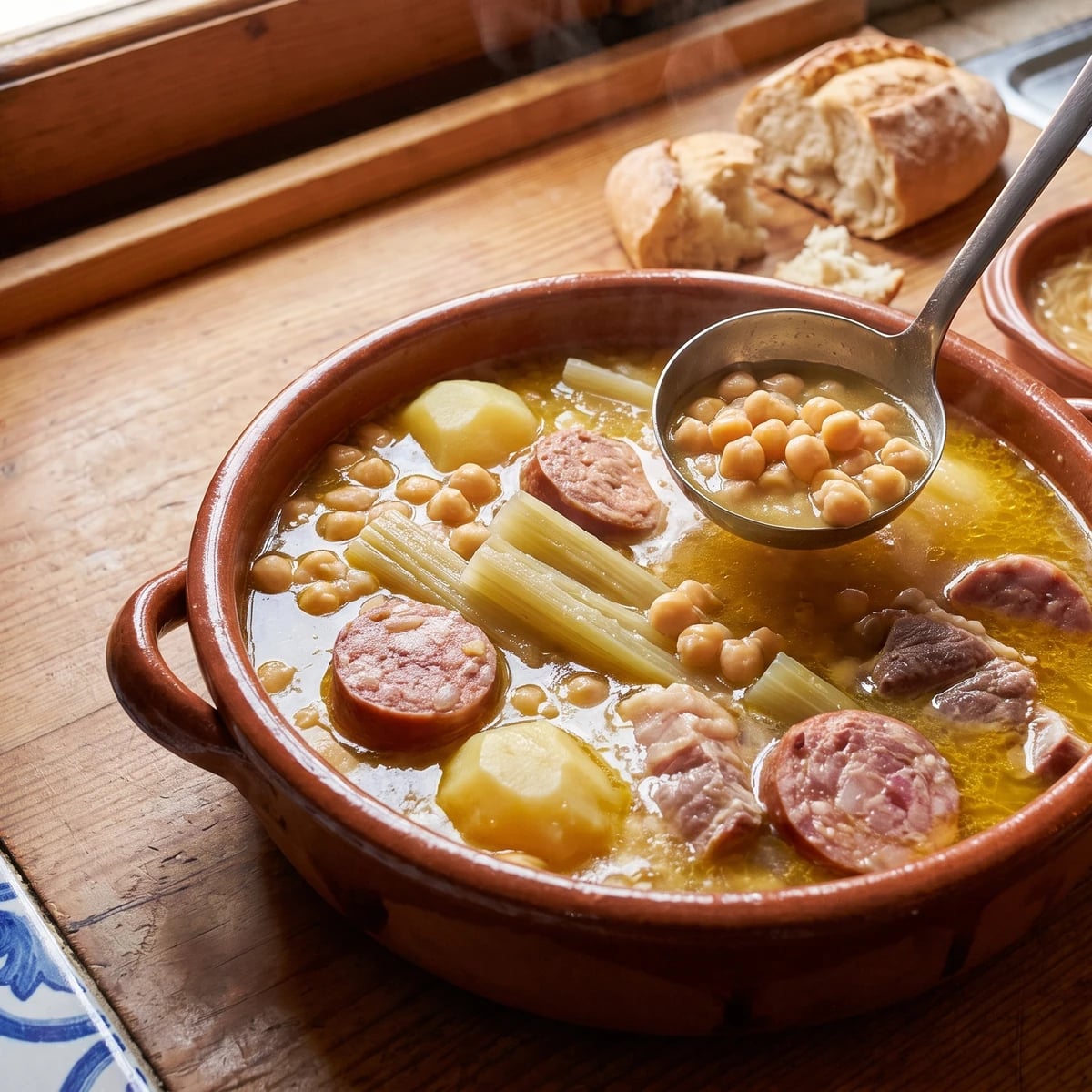
Cocido Aragonés is Aragón's chickpea stew, marked by cardo from the Ebro garden and a bread-and-meat pelota. Keep the pot gentle and the garbanzos stay whole.
Cocido Aragonés belongs to Aragón, and the cardo is what gives it its surname. Chickpeas, a good broth of pork, beef, and hen, a pelota, the big bread-and-meat dumpling, and cardoon from the Ebro garden. This is cocina de cuchara, spoon food, made for a full table and a cold day.
The method that decides it is the simmer. Soak the garbanzos well, start the meats in cold water, then keep the pot at a low tremble once the chickpeas go in. A hard boil breaks them and clouds the broth. Gentle heat gives you chickpeas that hold their skin, meat that yields, and a broth strong enough to take noodles for the first serving.
If you can't find fresh cardo where you are, use jarred cardo en conserva, drained and rinsed, and add it near the end so it doesn't fall apart. Swiss chard stems will do in a pinch, though they are milder and greener, without that slight artichoke bitterness. No hace falta haber pisado España. You need good chickpeas, patience, and a pot big enough. Siempre sale, si lo sigues.
Cocido Aragonés comes from Aragón's inland cooking, where chickpeas, preserved pork, poultry, and garden vegetables made a complete meal from one pot. Cardo and borraja belong especially to the Ebro valley larder, vegetables that appear often in Aragonese winter kitchens when the cooking turns toward broths and stews. Like other cocidos, it is traditionally served in vuelcos, first the noodle broth, then the chickpeas and vegetables, then the meats and pelota.
Quantity
500g
soaked overnight
Quantity
400g
in one piece
Quantity
1 small, about 350g
Quantity
250g
in one piece
Quantity
1 bone or 150g
Quantity
1
Quantity
1
trimmed and halved
Quantity
2
peeled
Quantity
1
peeled and halved
Quantity
2
Quantity
2.5 litres, plus more as needed
Quantity
500g fresh or 350g jarred
cleaned and cut into 5cm pieces
Quantity
300g
peeled and cut into large chunks
Quantity
120g
Quantity
to taste
Quantity
250g
Quantity
80g
soaked in milk and squeezed dry
Quantity
1
Quantity
2 cloves
minced
Quantity
2 tablespoons
chopped
Quantity
1 teaspoon
Quantity
1/2 teaspoon
Quantity
2 tablespoons
| Ingredient | Quantity |
|---|---|
| dried chickpeassoaked overnight | 500g |
| beef shin or brisketin one piece | 400g |
| hen quarter or chicken leg quarter | 1 small, about 350g |
| pork belly or fresh tocinoin one piece | 250g |
| ham bone or cured ham end | 1 bone or 150g |
| beef marrow bone (optional) | 1 |
| leektrimmed and halved | 1 |
| carrotspeeled | 2 |
| onionpeeled and halved | 1 |
| bay leaves | 2 |
| cold water | 2.5 litres, plus more as needed |
| fresh cardoon stalks or drained jarred cardocleaned and cut into 5cm pieces | 500g fresh or 350g jarred |
| potatoespeeled and cut into large chunks | 300g |
| fine soup noodles or fideos | 120g |
| salt | to taste |
| minced pork, for the pelota | 250g |
| stale bread, for the pelotasoaked in milk and squeezed dry | 80g |
| large egg, for the pelota | 1 |
| garlic, for the pelotaminced | 2 cloves |
| parsley, for the pelotachopped | 2 tablespoons |
| sweet pimentón, for the pelota | 1 teaspoon |
| salt, for the pelota | 1/2 teaspoon |
| plain flour, for dusting | 2 tablespoons |
The night before, cover the chickpeas with plenty of cold water and leave them to soak 12 hours. Drain them before cooking. Pésalo, no lo adivines: old chickpeas cook slowly and unevenly, so buy from a shop with good turnover.
Put the beef, hen or chicken, pork belly, ham bone, marrow bone if using, leek, carrots, onion, and bay leaves in a large pot. Add 2.5 litres cold water and bring it up slowly. Skim the grey foam as it rises, then lower the heat and simmer gently for 1 hour before adding the chickpeas.
Add the drained chickpeas to the pot. Keep them covered by 3cm of liquid, adding hot water if needed, and hold the pot at a low tremble for 1 hour 30 minutes to 2 hours, until the chickpeas are nearly tender. Do not hard-boil and do not stir hard. Shake the pot by the handles if anything catches.
Mix the minced pork, squeezed bread, egg, garlic, parsley, pimentón, and 1/2 teaspoon salt until it holds together. Shape into one large oval dumpling or two smaller ones, dust lightly with flour, and set aside. The bread keeps the pelota tender; pack it too hard and it eats heavy.
If using fresh cardoon, peel away the strings, rub the cut pieces with lemon if you like, and simmer them in salted water for 20 minutes before adding them to the cocido. Add the par-cooked cardo and the potatoes to the pot, then lower in the pelota. Cook gently for 35 to 45 minutes, until the potatoes are tender, the pelota is cooked through, and the chickpeas are creamy inside. If using jarred cardo, add it for only the last 15 minutes.
Taste the broth before salting; the ham may have done half the work already. Lift out the meats, vegetables, and pelota to a warm platter. Strain enough broth into a smaller pan for the noodles, keeping the chickpeas, cardo, and potatoes covered in the main pot.
Bring the strained broth to a lively simmer, add the noodles, and cook until just tender, usually 4 to 6 minutes. Serve the noodle soup first. Then serve the chickpeas with cardo and potatoes, followed by sliced meats and thick slices of pelota. Tal como se hace allí, the pot gives you the whole meal.
1 serving (about 850g)
Culinary guides, cultural storytelling, and the editorial depth that makes cooking meaningful.
Discover Culinary Explorer
Chef Isabel
Cocido Castellano is the chickpea stew of the Castilian meseta: clear broth first, garbanzos and cabbage next, meats and fried relleno last.

Chef Isabel
Cocido Gallego is Galicia's winter and Carnival pot: desalted matanza pork, garbanzos, grelos, and cachelos cooked in one broth until every platter tastes of the same deep, clean pot.

Chef Isabel
Cocido Lebaniego is Liébana's mountain pot from Cantabria: small chickpeas, pork from the larder, cabbage, potato, and a fried bread-and-egg relleno. Hold it at a tremble.

Chef Isabel
Cocido Madrileño is Madrid's winter pot: chickpeas, beef, hen, pork, cabbage, and fideos served in three vuelcos. Keep it at a bare simmer and the broth stays clear.