
Chef Takumi
Agedashi Tofu (揚げ出し豆腐)
Agedashi tofu looks like a fryer test. It is only drained tofu, potato starch, clean oil, and a hot dashi broth waiting nearby.
A cooking platform built around craft, culture, and the stories behind what we eat.
Created by
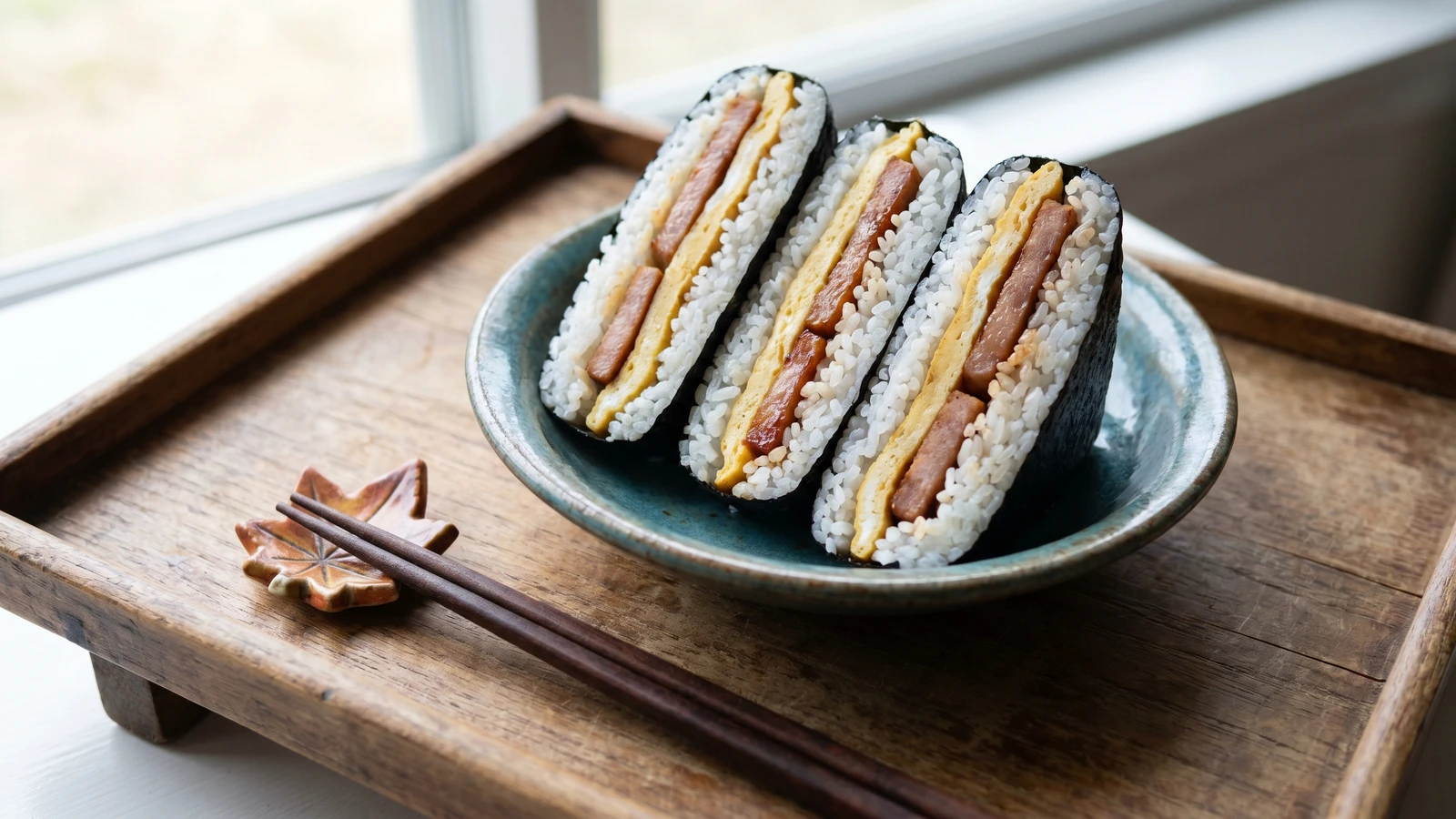
A square of warm rice, a tender egg panel, and browned pork luncheon meat make Okinawa's portable comfort food. Press lightly, cut cleanly, and the layers hold without fuss.
Start with the can. That is the honest door into pork tamago musubi, and there's no need to dress it up as something grander. In Okinawa, pork luncheon meat has its place: salty, sturdy, ready for rice and egg. Honmono here doesn't mean pretending the ingredient is old court food. It means cooking the thing as itself.
The method is almost embarrassingly plain. Rice, egg, pork, nori. The detail that decides it is shape: every layer should share the same footprint, so the first bite gives you rice, egg, pork, and seaweed together. Press the rice enough to hold, not enough to punish it. Crushed rice turns heavy, and then the whole sandwich loses its clean bite.
Brown the pork so its surface dries and deepens. Cook the egg gently so it stays tender rather than rubbery. Fold the nori after the stack is built, then let it rest seam-side down for a minute or two. That short rest is not ceremony. It lets the nori relax and hold the parcel without tearing.
This is outdoor food, comfort food, lunch-counter food, the kind of Okinawan cooking that tells the truth about the island's history without making a speech. Keep it compact. Cut it clean. Leave it room on the plate, even if everyone reaches for the second half first.
After 1945, canned pork luncheon meat entered Okinawan kitchens through American military supply routes and local markets, and it stayed because shelf-stable pork made practical sense on the islands. The pairing called pōku tamago, fried luncheon meat with egg, became a common Okinawan breakfast plate before rice and nori turned it into portable onigiri or musubi. Its resemblance to Hawaii's Spam musubi comes from the same twentieth-century canned-meat history, but Okinawa's version belongs to Okinawa's own postwar table.
Quantity
2 rice cooker cups (360 ml or about 300g)
Quantity
to the rice cooker's 2-cup mark, or 390 ml for stovetop cooking
Quantity
4
Quantity
2 tablespoons
Quantity
1 teaspoon
Quantity
1/4 teaspoon
Quantity
2 teaspoons
divided
Quantity
4 slices
each about 1/4 inch thick
Quantity
1 teaspoon
for brushing the pork
Quantity
4 full sheets
| Ingredient | Quantity |
|---|---|
| Japanese short-grain rice | 2 rice cooker cups (360 ml or about 300g) |
| water | to the rice cooker's 2-cup mark, or 390 ml for stovetop cooking |
| large eggs | 4 |
| dashi or water | 2 tablespoons |
| sugar | 1 teaspoon |
| fine sea salt | 1/4 teaspoon |
| neutral oildivided | 2 teaspoons |
| pork luncheon meateach about 1/4 inch thick | 4 slices |
| shōyu (Japanese soy sauce) (optional)for brushing the pork | 1 teaspoon |
| yaki-nori (toasted nori) | 4 full sheets |
Put the rice in a bowl, cover it with water, and stir with your fingers. Pour off the cloudy water and repeat until it runs almost clear, then drain well. This washing clears loose surface starch, so the cooked rice tastes clean and holds in grains instead of turning pasty. Soak the drained rice in its measured water for twenty minutes, then cook it in a rice cooker or covered pot. Let it rest ten minutes after cooking, lid closed, so the moisture settles evenly.
Beat the eggs with the dashi or water, sugar, and salt until the whites are broken, but don't whip them foamy. Foam makes holes, and this dish wants a flat, tender panel that cuts cleanly. Heat 1 teaspoon oil in a tamagoyaki pan or small nonstick skillet over medium-low heat, pour in the egg, and cook gently until the surface is just set and still glossy. Slide it out and cut it into four rectangles about the size of the pork slices.
Pat the pork slices dry. Heat the remaining 1 teaspoon oil in a skillet over medium heat and fry the pork until the edges brown and the surface takes on a light lacquered shine, about 2 minutes per side. Drying the slices first matters: water makes them steam in the pan, while a dry surface browns. If using shōyu, brush on only a few drops after browning. It should season the surface, not become a sauce.
Set one sheet of nori shiny-side down on the work surface, with a point facing you like a diamond. Place a musubi mold in the center, or use the clean empty luncheon-meat can lined with plastic wrap as the stand-in. Spoon in about 3/4 cup warm rice and press it into an even block. Press enough that it holds, not so hard that the grains crush. Rice remembers rough treatment, usually by becoming dull and sulky.
Lift away the mold. Set one egg rectangle on the rice, then one browned pork slice on top, aligning the edges as neatly as you can. Fold the left and right corners of the nori over the stack, then fold the top and bottom corners over like a small parcel. Use a grain or two of warm rice to seal the final flap if needed. Turn it seam-side down and let it rest for 2 minutes, which gives the nori time to soften and grip the rice.
Repeat with the remaining rice, egg, pork, and nori. Cut each musubi in half with a sharp knife wiped damp between cuts. The damp blade passes through the rice instead of dragging it, and the layers show themselves cleanly. Serve warm or at room temperature. For a picnic, cool the musubi completely before wrapping, keep them shaded or chilled, and don't leave egg and pork sitting in hot weather.
1 serving (about 275g)
Culinary guides, cultural storytelling, and the editorial depth that makes cooking meaningful.
Discover Culinary ExplorerChef Takumi
Agedashi tofu looks like a fryer test. It is only drained tofu, potato starch, clean oil, and a hot dashi broth waiting nearby.

Chef Takumi
Aspara-bacon is late-spring asparagus treated with common sense: thin bacon, hot grill, and a last brush of shōyu and mirin so the spear stays sweet while the wrap crisps.

Chef Takumi
This is Osaka street food at its plainest and best: good beef cut small, a thin batter, fine panko, hot beef tallow, and one clean dip in sauce.

Chef Takumi
Buta-bara is not a trick of the grill. Good pork belly, even cutting, steady heat, and the patience to let the fat turn glossy do most of the work.