
Chef Ally
Beef Bourguignon
Humble beef transformed by good red wine, patience, and the kind of slow cooking that fills a house with warmth and brings everyone to the table asking when dinner will be ready.
A cooking platform built around craft, culture, and the stories behind what we eat.
Created by
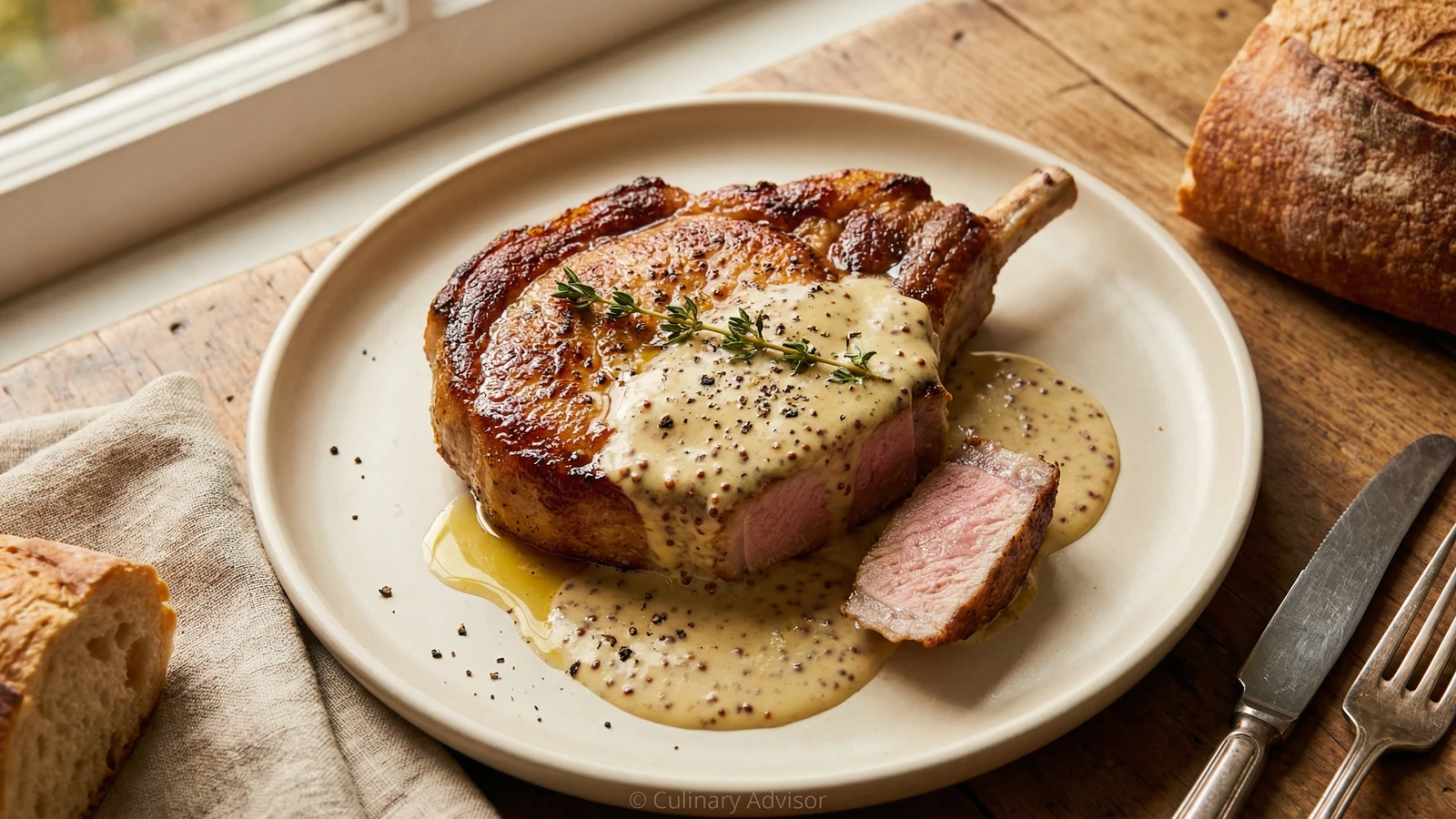
Golden-crusted pork chops draped in a velvety mustard cream sauce, the kind of French bistro cooking that turns a weeknight into something worth lingering over.
Start with the pork. Find a butcher who knows the farmer, or better yet, find the farmer yourself. Heritage breeds raised outdoors carry a depth of flavor that factory pork cannot approach. The marbling matters. The thickness matters. A chop cut an inch and a quarter thick will stay juicy at the center while developing that deep golden crust we are after.
This is the cooking I fell in love with in France: a perfect ingredient, a hot pan, a simple sauce made from the fond left behind. The mustard cream comes together in minutes while the chops rest. Dijon provides the backbone, cream softens it, and the pan drippings tie everything to the meat itself.
Every meal is a meaningful choice. When you buy pork from a farmer who raises animals on pasture, you taste the difference and you support a system worth preserving. The sauce cannot hide inferior meat. It can only honor what is already there.
Quantity
4, 1 1/4 inches thick (about 12 ounces each)
Quantity
to taste
Quantity
to taste
freshly cracked
Quantity
2 tablespoons
divided
Quantity
1 tablespoon
Quantity
2 medium
minced
Quantity
2 cloves
minced
Quantity
1/2 cup
Quantity
1 cup
Quantity
3 tablespoons
Quantity
1 tablespoon
Quantity
4 sprigs
Quantity
1 tablespoon
chopped
Quantity
a squeeze
| Ingredient | Quantity |
|---|---|
| bone-in pork chops | 4, 1 1/4 inches thick (about 12 ounces each) |
| kosher salt | to taste |
| black pepperfreshly cracked | to taste |
| unsalted butterdivided | 2 tablespoons |
| neutral oil | 1 tablespoon |
| shallotsminced | 2 medium |
| garlicminced | 2 cloves |
| dry white wine or dry vermouth | 1/2 cup |
| heavy cream | 1 cup |
| Dijon mustard | 3 tablespoons |
| whole grain mustard | 1 tablespoon |
| fresh thyme | 4 sprigs |
| fresh tarragon (optional)chopped | 1 tablespoon |
| fresh lemon juice | a squeeze |
Remove pork chops from the refrigerator thirty to forty-five minutes before cooking. Cold meat hitting a hot pan seizes. Room temperature meat relaxes into the heat and cooks evenly from edge to center. Season generously on both sides with salt and pepper. The salt will draw moisture to the surface and begin to dissolve, which helps with browning.
Set a large cast iron or heavy-bottomed skillet over medium-high heat. Add the oil and one tablespoon of butter. When the butter foam subsides and the fat shimmers, lay the chops in the pan without crowding. You should hear an immediate, insistent sizzle. If the pan is quiet, it is not hot enough. Sear without moving for four to five minutes until deeply golden brown on the first side.
Flip the chops and add the thyme sprigs to the pan. Reduce heat to medium and continue cooking for another four to six minutes. For chops this thick, you are looking for an internal temperature of 140F at the thickest point near the bone. The meat will carry over to 145F as it rests. Transfer chops to a plate and tent loosely with foil.
Pour off all but about one tablespoon of fat from the skillet. Return to medium heat and add the shallots. Cook, stirring and scraping up the fond, until softened and fragrant, about two minutes. Add the garlic and stir for thirty seconds more. The fond is where the flavor lives. Do not let it burn, but do not leave it behind either.
Pour in the wine. It will sputter and steam as it hits the hot pan. Use a wooden spoon to scrape up every bit of caramelized goodness stuck to the bottom. Let the wine reduce by half, about two minutes. The harsh alcohol smell will mellow into something more rounded.
Pour in the cream and let it come to a gentle simmer. Cook for three to four minutes until the sauce thickens enough to coat a spoon. Remove the pan from heat. Whisk in both mustards, the remaining tablespoon of butter, and the tarragon if using. Add any juices that have collected under the resting chops. Taste. Add a squeeze of lemon to brighten everything. Adjust salt and pepper.
Place each chop on a warm plate. Spoon the sauce generously over the top, letting it pool around the meat. Serve immediately with something to soak up the extra sauce: crusty bread, buttered egg noodles, or a pile of simply dressed greens. Let things taste of what they are.
1 serving (about 355g)
Culinary guides, cultural storytelling, and the editorial depth that makes cooking meaningful.
Discover Culinary ExplorerChef Ally
Humble beef transformed by good red wine, patience, and the kind of slow cooking that fills a house with warmth and brings everyone to the table asking when dinner will be ready.

Chef Dean
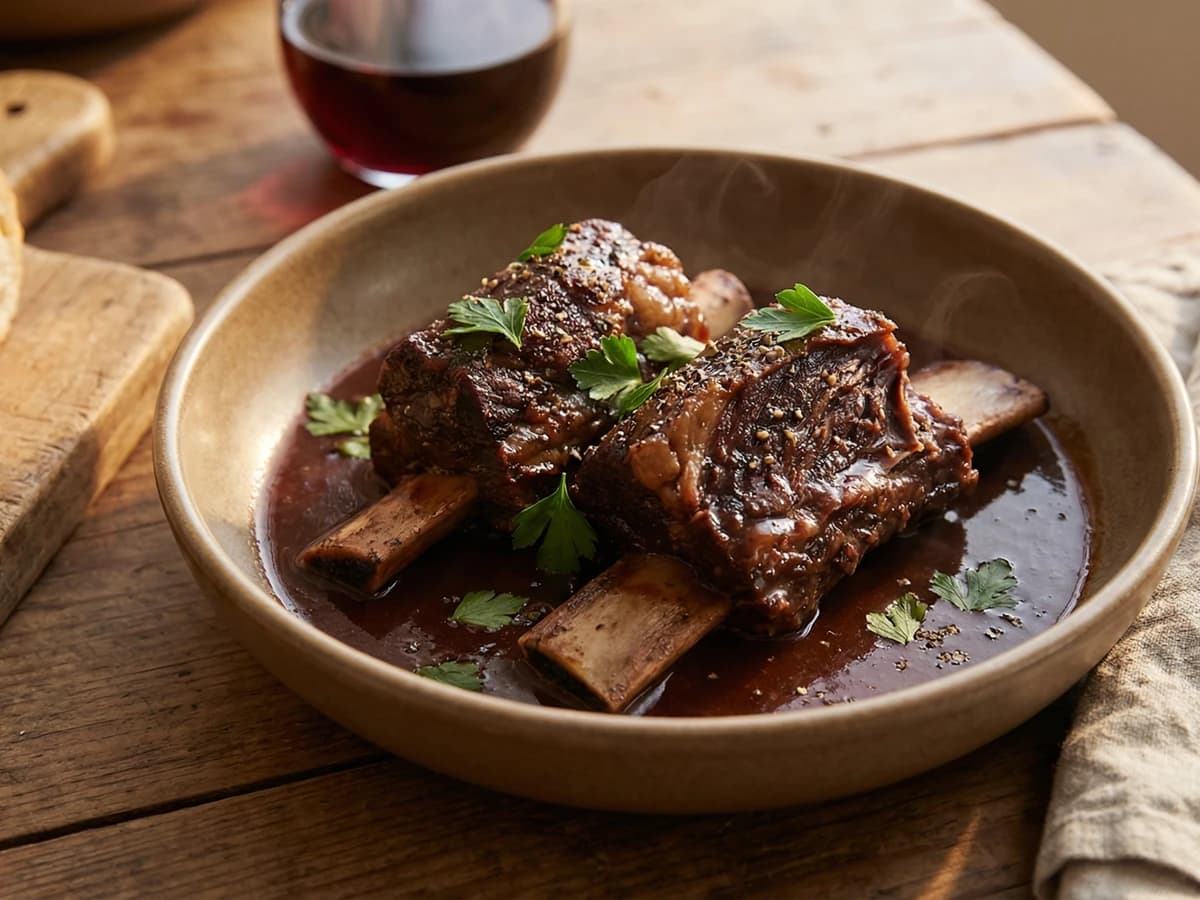
Bone-in short ribs transformed through hours of gentle braising into fork-tender, wine-dark magnificence. The kind of dish that makes your house smell like a reason to come home.
Chef Ally
Meaty, bone-in short ribs simmered low and slow in red wine until the meat surrenders to your fork, the sauce glossy and deep, the kind of cooking that rewards patience and fills the house with promise.

Chef Ally
A whole chicken nestled among forty cloves of garlic, braised until the meat falls from the bone and the garlic becomes a sweet, spreadable treasure you will fight over at the table.