
Chef Dean
Braised Short Ribs in Red Wine
Bone-in short ribs transformed through hours of gentle braising into fork-tender, wine-dark magnificence. The kind of dish that makes your house smell like a reason to come home.
A cooking platform built around craft, culture, and the stories behind what we eat.
Created by
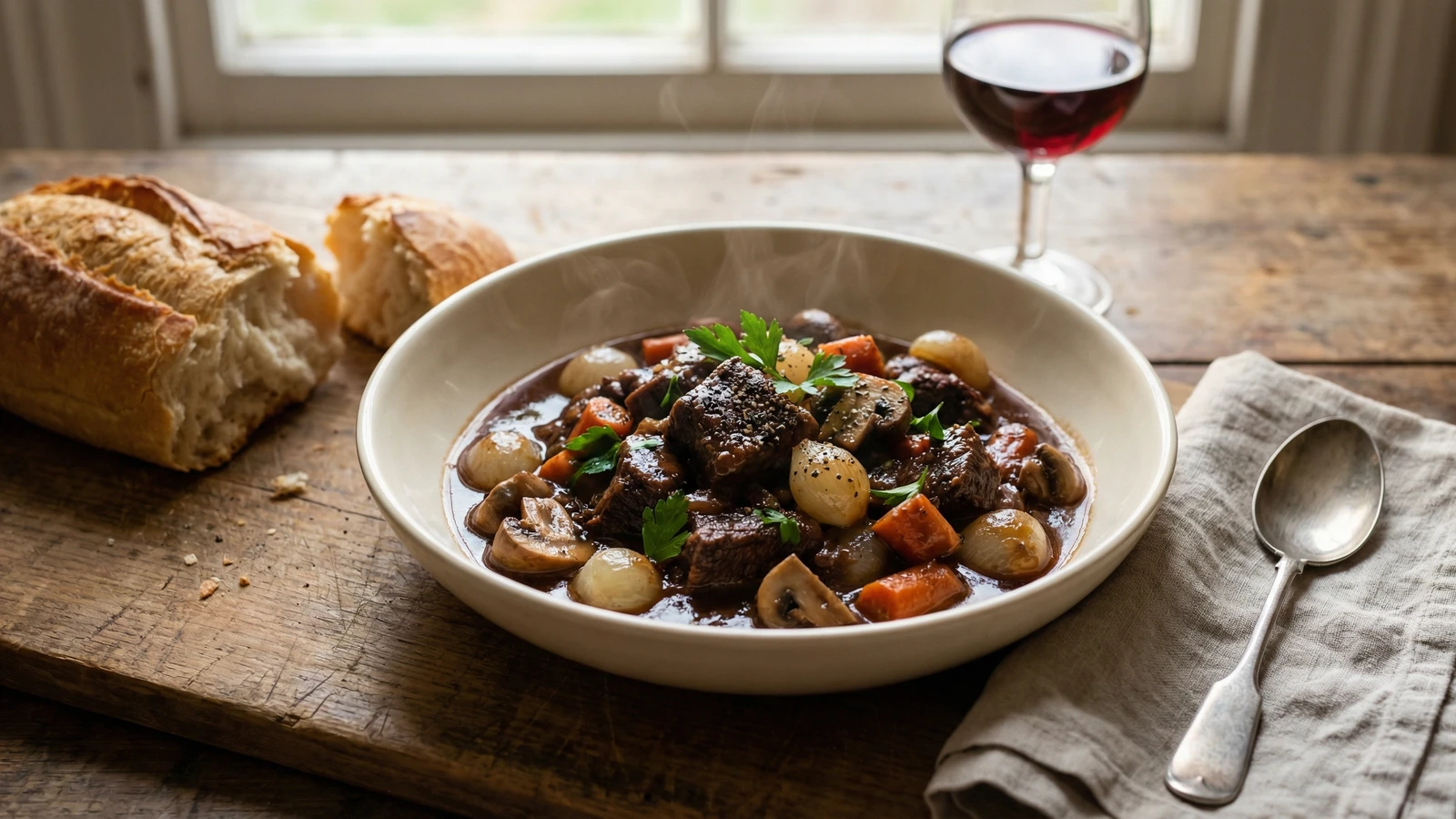
Humble beef transformed by good red wine, patience, and the kind of slow cooking that fills a house with warmth and brings everyone to the table asking when dinner will be ready.
Start with the beef. Find a butcher who knows the farmer, or find the farmer yourself. You want chuck from an animal that lived well, with fat marbled through the muscle and a deep, clean smell. This is not a dish that hides mediocre meat. The wine will not save you. The long braise will not save you. You must begin with something worth cooking.
Beef bourguignon comes from Burgundy, where peasant cooks discovered that tough cuts of beef, braised for hours in the local wine, became tender and rich. The dish is not fancy. It is not complicated. It is honest food that rewards patience and punishes shortcuts.
I learned to make this in Paris, watching women at the markets select their meat with the same care they used choosing husbands. They knew the farmers. They asked questions. They were not impressed by labels or promises. When I cook this now, I think of those women and their absolute certainty about what good food required.
Your choices shape the food system. Buy the wine you would drink, from a producer who farms responsibly. Find pearl onions at the farmers market in autumn. Use mushrooms with dirt still clinging to them. Then get out of the way and let time do the work.
Quantity
3 pounds
cut into 2-inch pieces
Quantity
6 ounces
cut into lardons
Quantity
1 bottle (750ml)
Quantity
2 cups
preferably homemade
Quantity
2 tablespoons
Quantity
4 medium
peeled and cut into 2-inch pieces
Quantity
1 pound
peeled
Quantity
1 pound
quartered
Quantity
4 cloves
smashed
Quantity
4 sprigs
Quantity
2
Quantity
2 tablespoons
Quantity
3 tablespoons
divided
Quantity
2 tablespoons
Quantity
1 tablespoon, plus more to taste
Quantity
to taste
freshly cracked
Quantity
for serving
chopped
| Ingredient | Quantity |
|---|---|
| beef chuckcut into 2-inch pieces | 3 pounds |
| thick-cut baconcut into lardons | 6 ounces |
| red Burgundy or Pinot Noir | 1 bottle (750ml) |
| beef stockpreferably homemade | 2 cups |
| tomato paste | 2 tablespoons |
| carrotspeeled and cut into 2-inch pieces | 4 medium |
| pearl onionspeeled | 1 pound |
| cremini mushroomsquartered | 1 pound |
| garlicsmashed | 4 cloves |
| fresh thyme | 4 sprigs |
| bay leaves | 2 |
| all-purpose flour | 2 tablespoons |
| unsalted butterdivided | 3 tablespoons |
| olive oil | 2 tablespoons |
| kosher salt | 1 tablespoon, plus more to taste |
| black pepperfreshly cracked | to taste |
| fresh parsley (optional)chopped | for serving |
Pat the beef pieces thoroughly dry with paper towels. Moisture is the enemy of a proper sear. Season generously with salt and pepper on all sides. Let the meat sit at room temperature for thirty minutes before cooking. Cold meat will not brown; it will steam.
Set a large Dutch oven over medium heat. Add the bacon lardons and cook slowly, stirring occasionally, until the fat renders and the pieces turn golden and slightly crisp, about eight minutes. Transfer the bacon to a plate with a slotted spoon. Leave every drop of fat in the pot.
Increase heat to medium-high. Working in batches of five or six pieces, brown the beef on all sides. Do not crowd the pot. Each piece needs contact with hot metal. You are building the foundation of flavor here. The fond, that dark crust forming on the bottom, is precious. Transfer browned beef to the plate with the bacon. This step takes twenty minutes. Do not rush it.
Lower heat to medium. Add one tablespoon of butter and the olive oil to the pot. Add the carrots and cook for three minutes. Add the smashed garlic and tomato paste, stirring until the paste darkens slightly and smells sweet, about two minutes. Sprinkle the flour over the vegetables and stir for one minute more.
Pour in the entire bottle of wine. Watch it bubble and listen to it speak. Use a wooden spoon to scrape every bit of fond from the bottom. This is where the depth lives. Add the stock, thyme sprigs, and bay leaves. Return the beef and bacon to the pot along with any juices. The liquid should nearly cover the meat.
Bring to a gentle simmer, then cover and transfer to a 325°F oven. Let it braise undisturbed for two and a half hours. The meat is ready when it yields to a fork with almost no resistance but still holds its shape. Check once at the two-hour mark to ensure a gentle bubble, not a rolling boil.
While the beef braises, melt one tablespoon of butter in a large skillet over medium heat. Add the pearl onions in a single layer and cook, shaking the pan occasionally, until golden on several sides and just tender, twelve to fifteen minutes. Season lightly and transfer to a bowl. Add the remaining butter and the mushrooms. Cook without stirring for three minutes to let them brown, then stir and cook until tender and deeply colored, another five minutes. Season and add to the onions.
Remove the pot from the oven. Discard the thyme sprigs and bay leaves. Skim any fat from the surface if you wish, though some is welcome. Gently fold in the pearl onions and mushrooms. Return the pot to low heat on the stovetop and simmer uncovered for ten minutes to marry the flavors. Taste. Adjust salt. The sauce should be rich and glossy, coating a spoon.
Let the bourguignon rest off heat for ten minutes before serving. Scatter fresh parsley over the top. Serve in warm, shallow bowls with crusty bread, mashed potatoes, or buttered egg noodles. This dish is better tomorrow. And better still the day after that.
1 serving (about 470g)
Culinary guides, cultural storytelling, and the editorial depth that makes cooking meaningful.
Discover Culinary ExplorerChef Dean
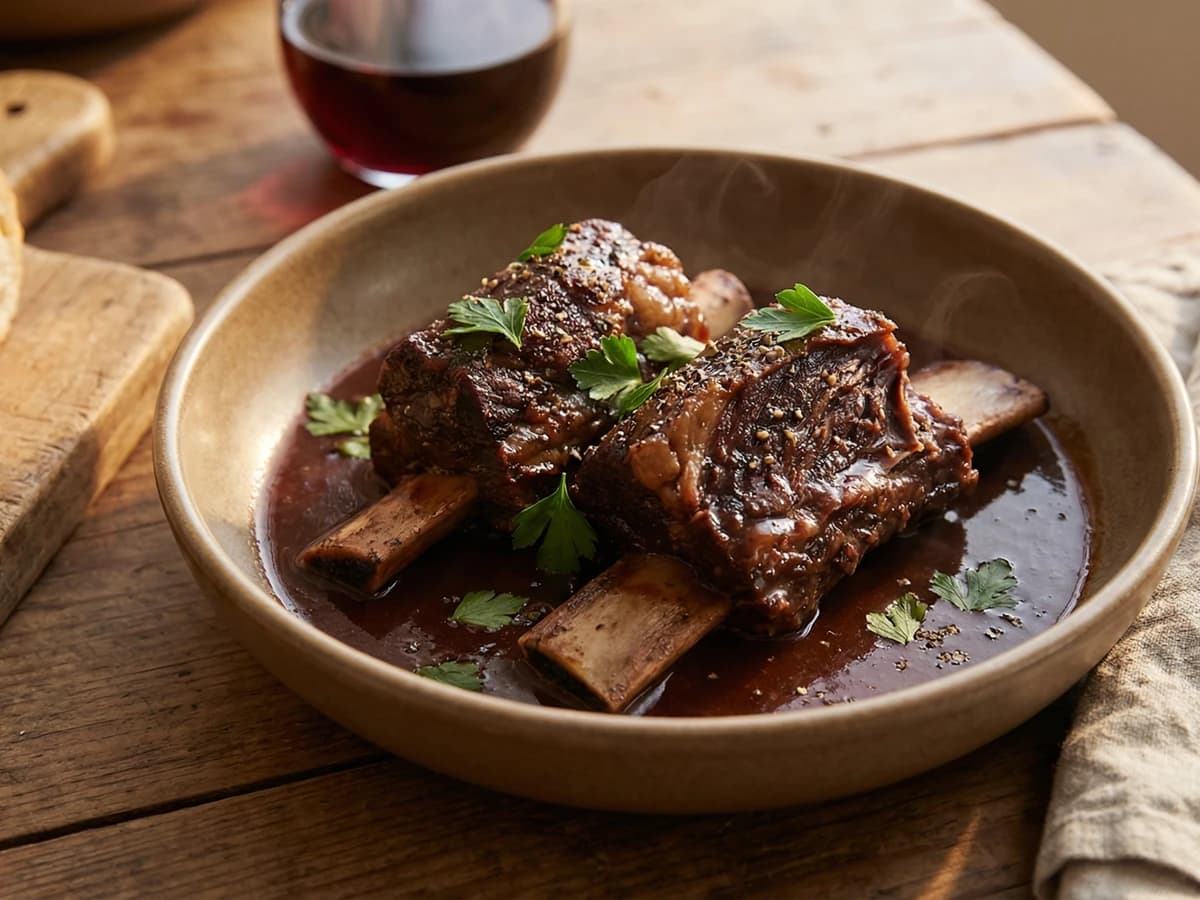
Bone-in short ribs transformed through hours of gentle braising into fork-tender, wine-dark magnificence. The kind of dish that makes your house smell like a reason to come home.
Chef Ally
Meaty, bone-in short ribs simmered low and slow in red wine until the meat surrenders to your fork, the sauce glossy and deep, the kind of cooking that rewards patience and fills the house with promise.

Chef Ally
A whole chicken nestled among forty cloves of garlic, braised until the meat falls from the bone and the garlic becomes a sweet, spreadable treasure you will fight over at the table.

Chef Ally
Bone-in chicken pieces braised until falling-off-the-bone tender in a wine-dark sauce with golden mushrooms, sweet pearl onions, and smoky bacon. The kind of dish that makes a kitchen smell like home.