Chef Isabel
Abanico Ibérico a la Plancha
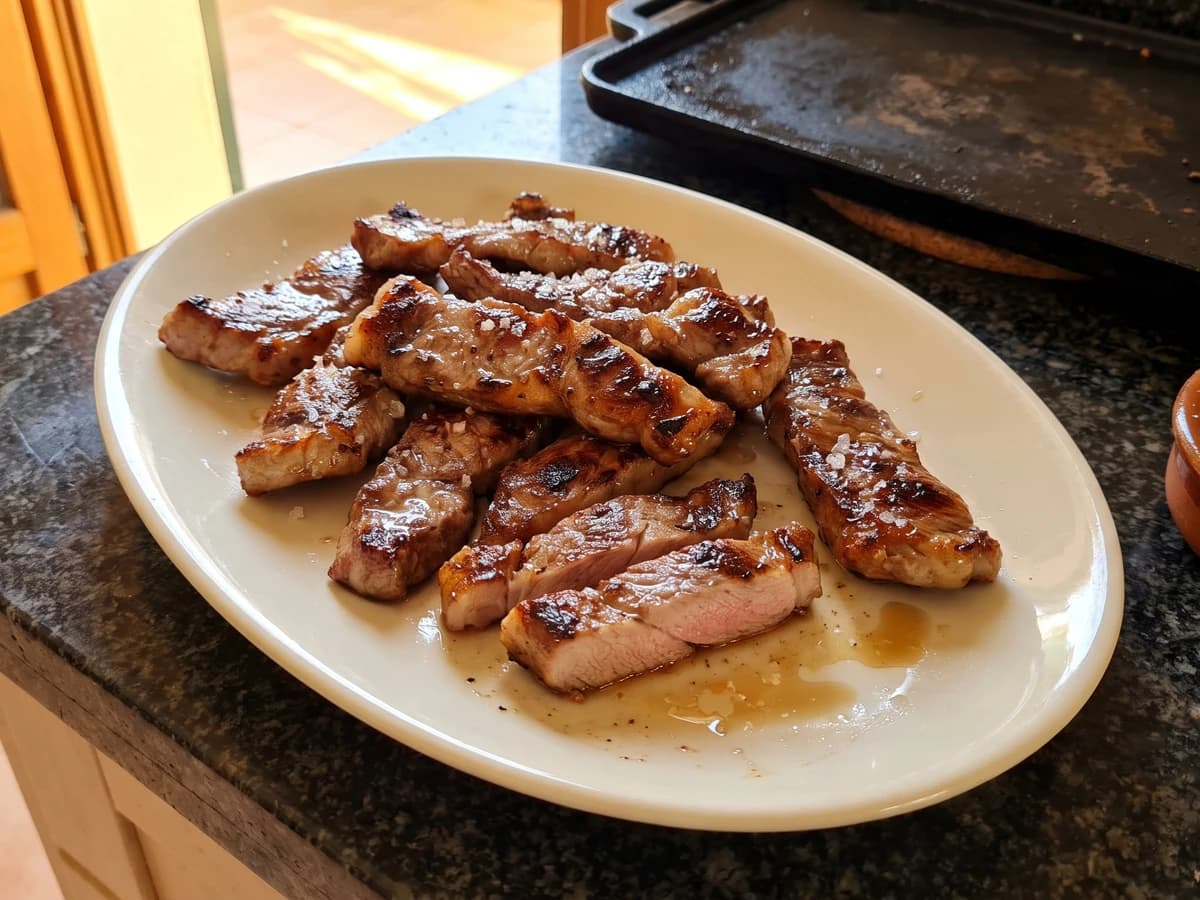
Extremadura's dehesa gives us this fan-shaped, marbled rib cut: salt it at the last moment, lay it on a fierce plancha, and count in seconds so the centre stays juicy.
A cooking platform built around craft, culture, and the stories behind what we eat.
Created by
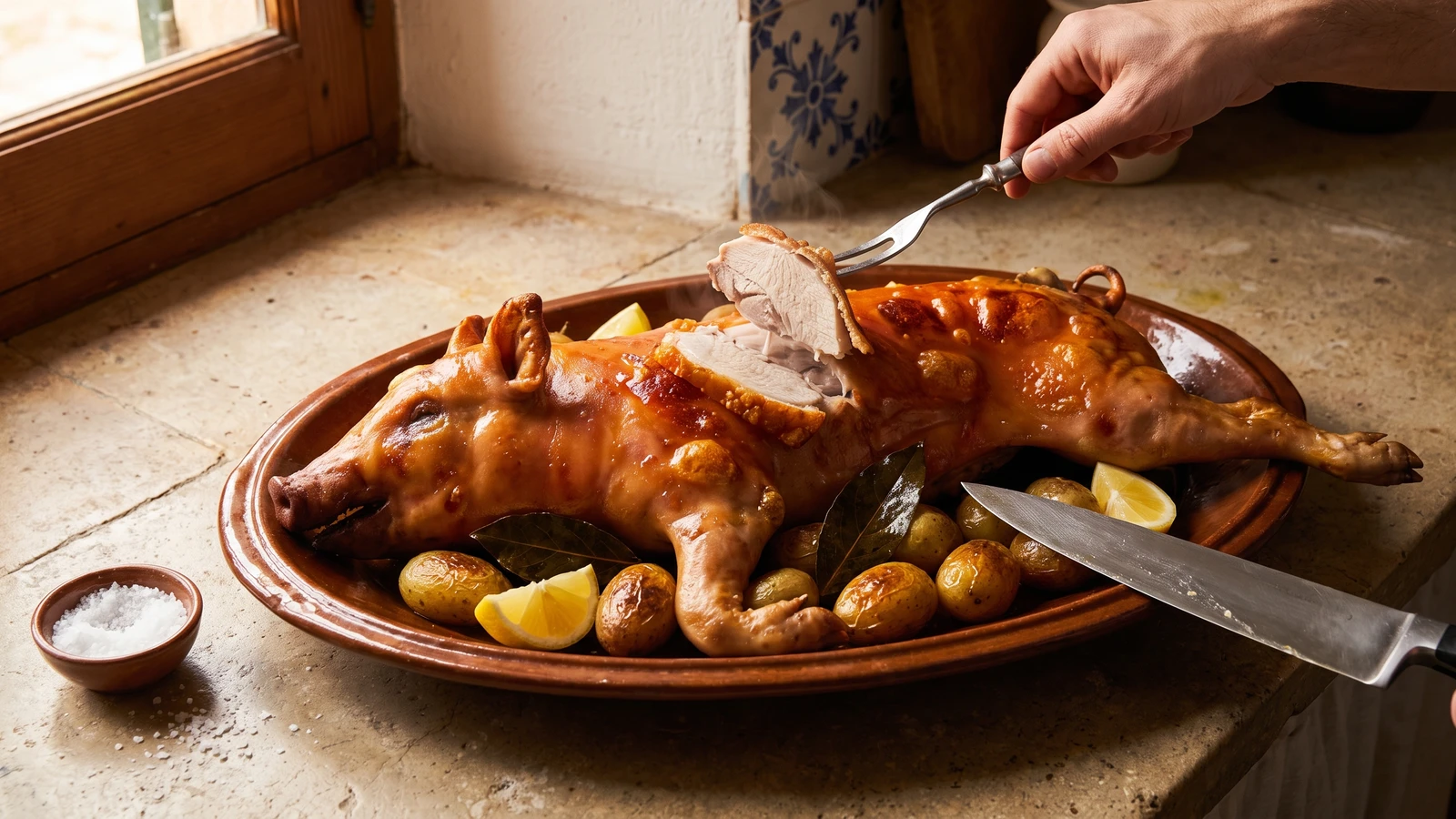
Porcella rostida is Mallorca's Christmas roast: a small milk-fed pig sharpened with lemon, garlic, black pepper, and island herbs, then roasted patiently so the meat turns tender and the skin crackles.
Porcella rostida is Mallorcan, the Balearic roast suckling pig that comes to the Christmas table bronzed, lemon-sharp, and rich with lard, garlic, black pepper, bay, rosemary, and moraduix, marjoram. It is not any old roast pork. The animal is small and milk-fed, the seasoning is plain, and the crackling carries the dish before anyone carves.
The method that decides it is the full day's adobo, the lemon-garlic seasoning, followed by drying the skin before the oven. Lemon and salt season the meat deeply, but wet skin will never crackle. Pat it dry, leave it uncovered for the last hours, and roast slow until the fat renders. Then raise the heat only at the end. Rush the heat early and you scorch the outside while the shoulders stay stubborn.
If you're far from Mallorca, ask for a whole or half suckling pig from a good butcher, split so it fits your oven. A half pig, 2.5 to 3kg, works better than a cramped whole one. If that is impossible, a skin-on fresh pork shoulder makes a good roast, but it is not porcella; it cooks longer and tastes fuller, less milky. You deserve to know that before you shop.
My Margin note on this one is short: dry the skin again. Then do it once more. Con buenos ingredientes y paciencia, with good ingredients and patience, the dish behaves.
Porcella rostida belongs to Mallorca and the wider Balearic feast-day table, especially Christmas and the winter matances season, when the household pig supplied both celebration and the preserved larder. Porcella is Mallorcan Catalan for a young female pig, and the island seasoning of lemon, garlic, black pepper, lard, bay, rosemary, and moraduix keeps the roast plain enough that the sweetness of the milk-fed meat remains the point. In village life, the largest roasts were often carried to a baker's oven, because a home hearth could not always hold the animal whole.
Quantity
1 (4.5-5.5kg)
cleaned and split through the backbone so it lies flat
Quantity
120ml
Quantity
140g
softened, divided
Quantity
45g
35g for the pig, 10g for the potatoes
Quantity
10g
Quantity
30g
crushed to a paste
Quantity
8g
finely chopped
Quantity
6g
Quantity
5g fresh or 2g dried
finely chopped
Quantity
4
Quantity
150ml
Quantity
1.5kg
scrubbed and halved if large
Quantity
1
cut into wedges, for serving
| Ingredient | Quantity |
|---|---|
| whole suckling pigcleaned and split through the backbone so it lies flat | 1 (4.5-5.5kg) |
| fresh lemon juice | 120ml |
| pork lardsoftened, divided | 140g |
| fine sea salt35g for the pig, 10g for the potatoes | 45g |
| freshly cracked black pepper | 10g |
| garlic clovescrushed to a paste | 30g |
| fresh rosemary leavesfinely chopped | 8g |
| fresh thyme leaves | 6g |
| fresh marjoram or moraduixfinely chopped | 5g fresh or 2g dried |
| bay leaves | 4 |
| dry white wine or water | 150ml |
| small waxy potatoes or patato mallorquiscrubbed and halved if large | 1.5kg |
| lemon (optional)cut into wedges, for serving | 1 |
Mix the lemon juice, 90g of the softened lard, 35g salt, the black pepper, garlic, rosemary, thyme, and marjoram into a rough paste. Pésalo, no lo adivines, weigh it, don't guess. A roast this large needs proper seasoning, not a nervous pinch.
Pat the suckling pig dry. Rub the paste all over the meat side, into the shoulders, belly, legs, and inside the cavity, then rub a thin film over the skin. Tuck in 2 bay leaves. Set it skin side up on a rack in a large tray, cover loosely, and refrigerate for 20 hours.
Uncover the pig for the last 4 hours in the refrigerator. Before roasting, scrape any wet herb paste from the skin and pat it dry again with paper towels. This is the step that decides the crackling: lemon seasons the meat, but wet skin will not crisp. Dry it, then dry it once more.
Take the pig from the refrigerator 1 hour before cooking. Heat the oven to 160C. Put the wine or water and the remaining 2 bay leaves in the roasting tray, keeping the liquid below the rack so it never touches the skin. Roast skin side up for 2 hours, brushing the meatier edges once with pan juices but leaving the skin alone.
Toss the potatoes with 40g of the remaining lard and 10g salt. Lift the rack carefully, spread the potatoes in the tray around the pig, and return everything to the oven. Roast for another 1 hour 30 minutes to 2 hours, turning the potatoes once, until the thickest part of the shoulder and ham reaches 74C and the meat gives easily when pierced.
Brush the skin with the last 10g lard and raise the oven to 220C. Roast 15 to 25 minutes, watching closely, until the skin is blistered, deep gold, and crisp under a knife tip. If one part colours faster, shield only that spot with foil. Do not cover the whole pig, or you soften the skin you worked for.
Rest the pig uncovered for 25 to 30 minutes. Move the potatoes to a warm platter, then carve the shoulders, legs, ribs, and belly so every plate gets tender meat, a little crackling, and potatoes glossed with the roasting fat. Serve with lemon wedges if you like the sharpness. Siempre sale, si lo sigues.
1 serving (about 440g)
Culinary guides, cultural storytelling, and the editorial depth that makes cooking meaningful.
Discover Culinary ExplorerChef Isabel
Extremadura's dehesa gives us this fan-shaped, marbled rib cut: salt it at the last moment, lay it on a fierce plancha, and count in seconds so the centre stays juicy.
Chef Isabel
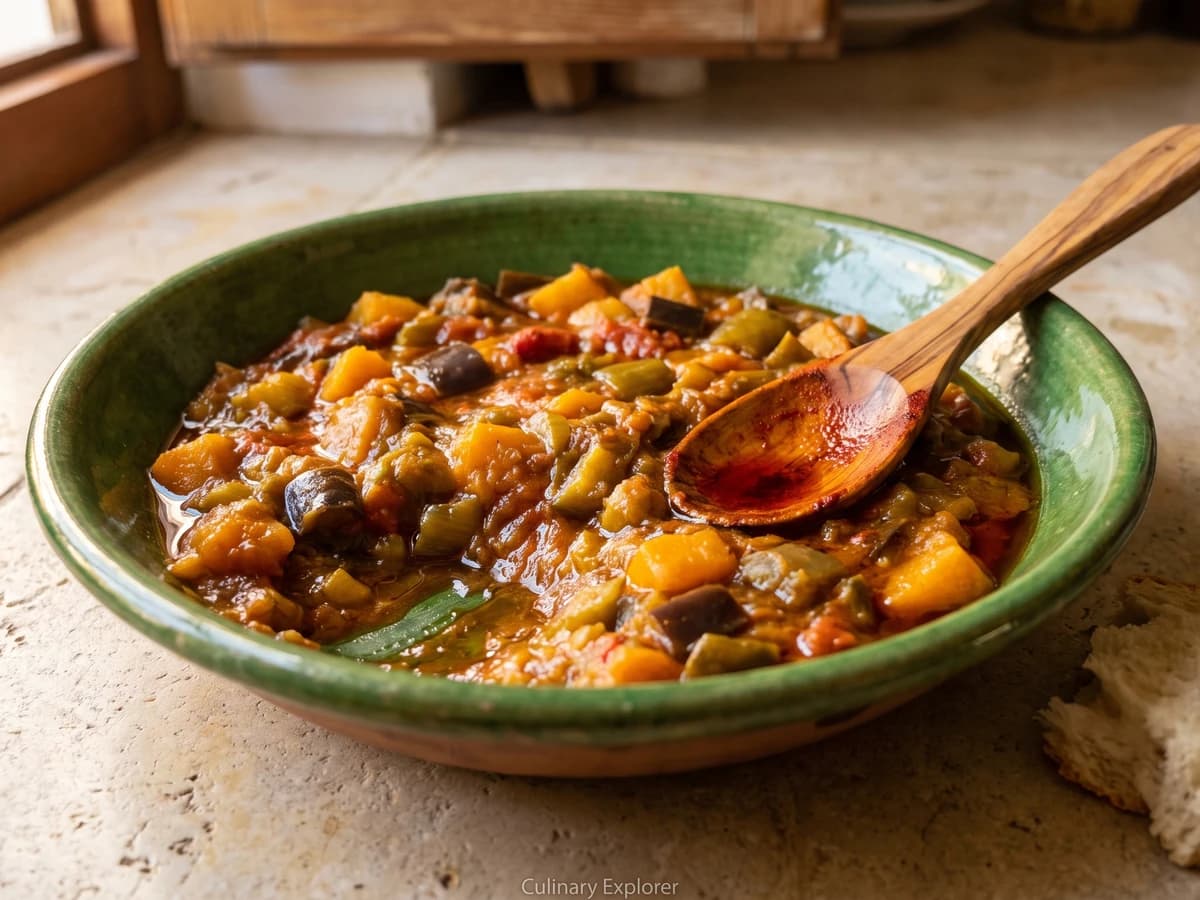
Alboronía is Andalucía's old pumpkin and aubergine stew, deepened with tomato, pimentón, and cumin, then cooked without hurry until the vegetables settle into a glossy, sweet, spoon-soft whole.

Chef Isabel
Aletría Murciana is Murcia's humble noodle guiso: fine fideos, pork ribs, potato, saffron, and a dark sweet sofrito. Get that base right and the pot knows where it's going.
Chef Isabel
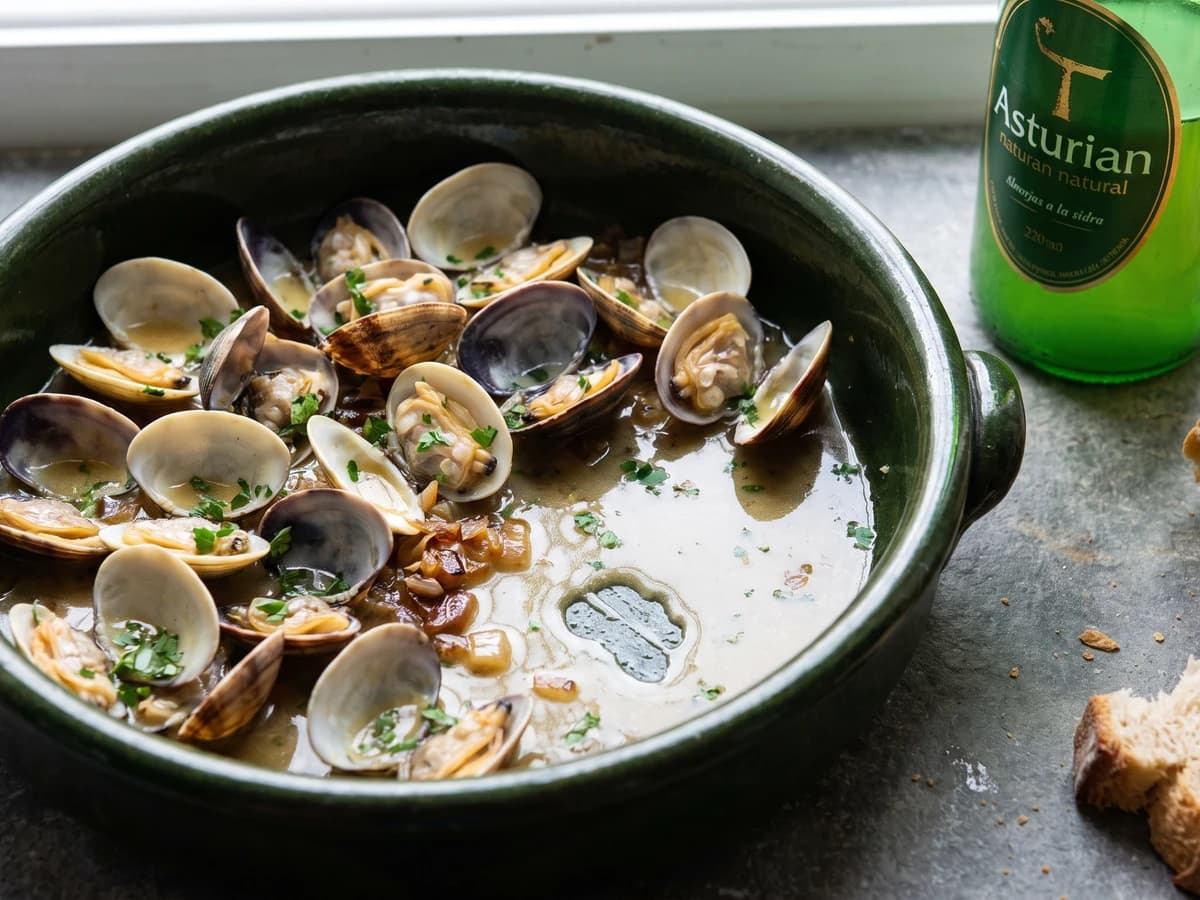
Asturias opens clams in tart natural cider over a slow onion and garlic sofrito, making a bright, briny sauce that asks for bread and rewards one rule: lift each clam as it opens.