Chef Graziella
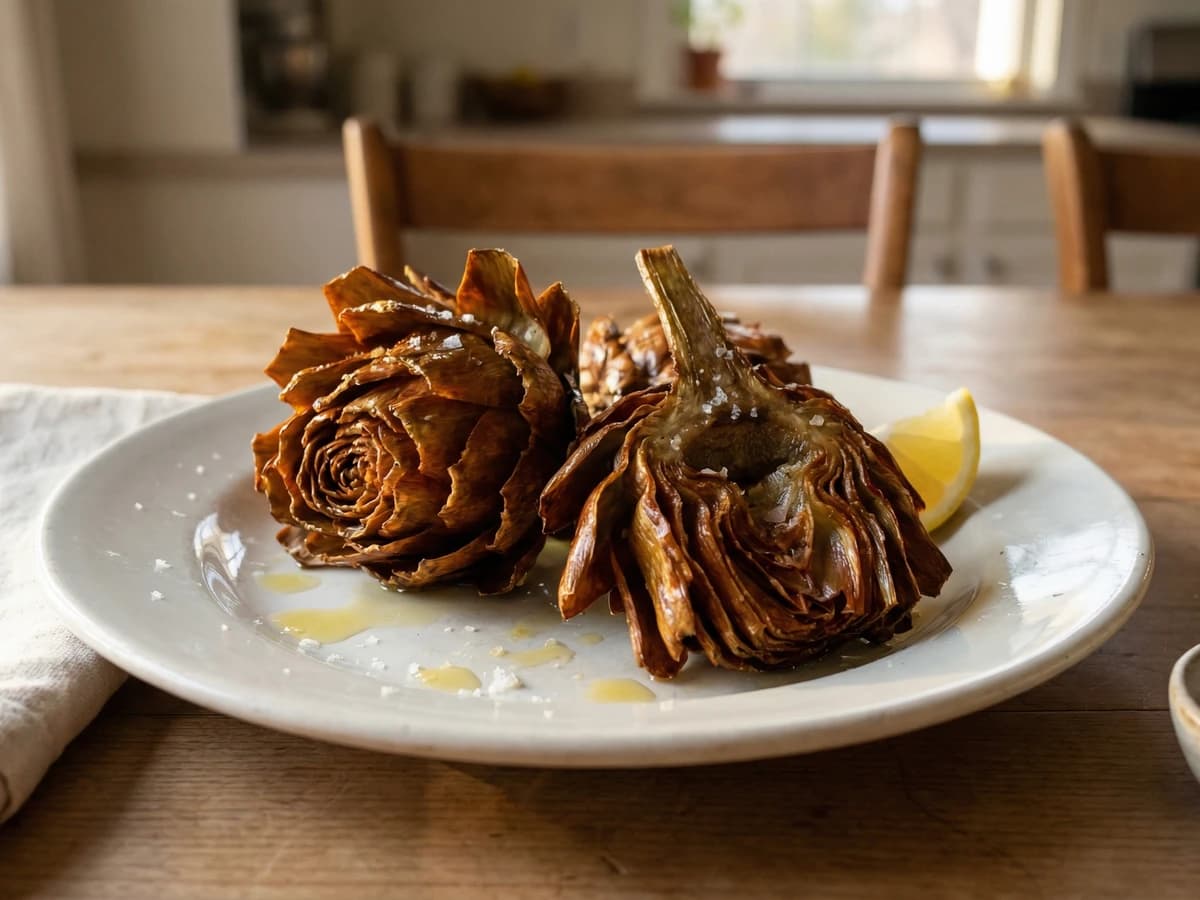
Carciofi alla Giudia
The legendary fried artichokes of Rome's Jewish quarter, each leaf crisp enough to shatter between your teeth, the heart tender as butter. Four ingredients. Technique is everything.
A cooking platform built around craft, culture, and the stories behind what we eat.
Created by
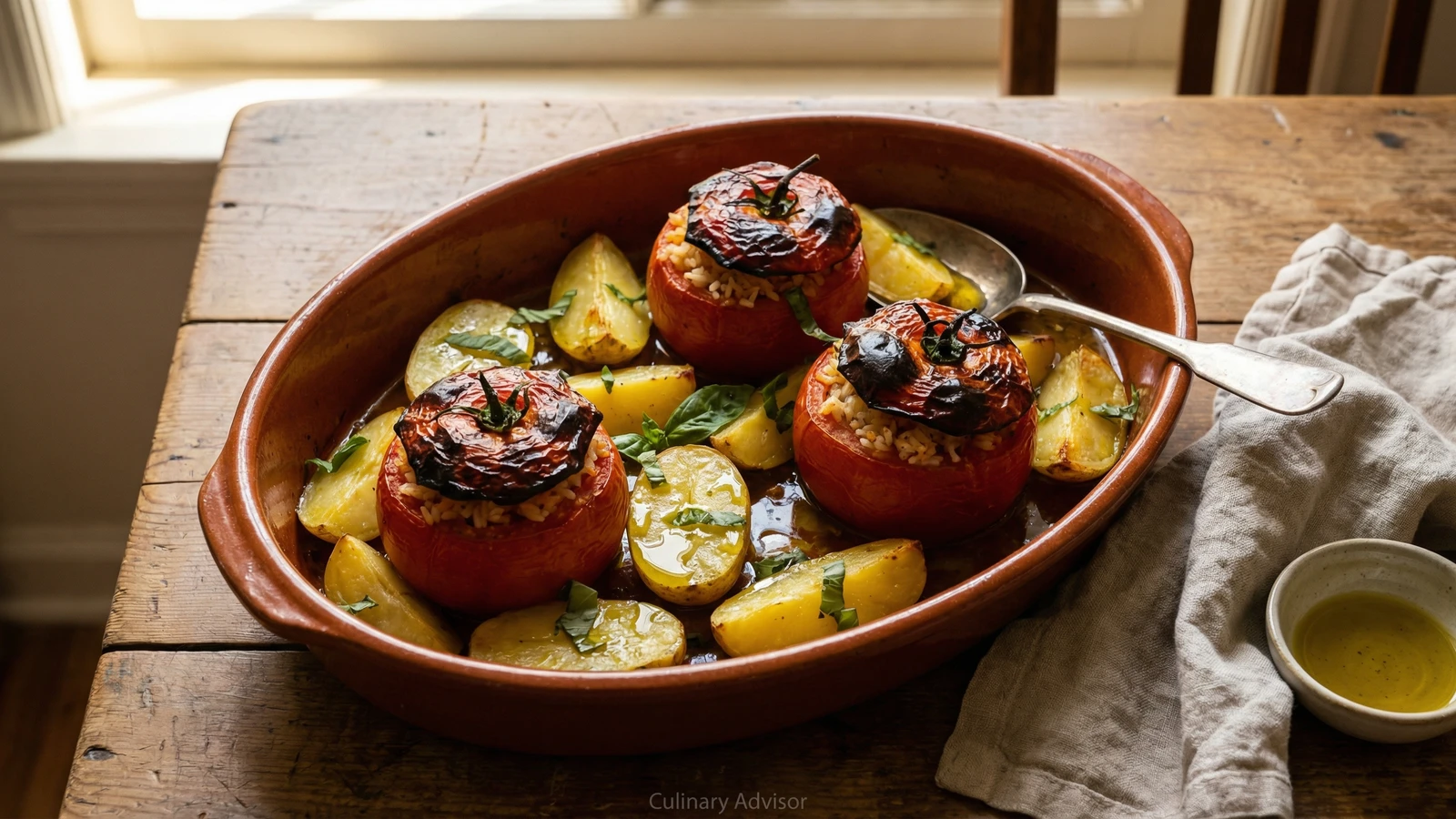
Roman stuffed tomatoes, baked until the lids char and the rice drinks in every drop of summer. Served at room temperature, as tradition demands, these are the taste of August in Rome.
Walk into any rosticceria in Rome during the summer months and you will find these tomatoes, lined up in the window, their tops blackened and wrinkled, waiting for someone with sense to take them home. They are never served hot. They wait, patiently, as good things do.
The genius of this dish is that the rice cooks inside the tomato, absorbing every drop of juice, every bit of essence. You do not boil the rice first. You pack it in raw, wet with tomato pulp and olive oil, and the oven does the rest. The tomato becomes both vessel and sauce. What remains at the end is inseparable: rice that tastes of tomato, tomato that has given everything to the rice.
Romans tuck potatoes around the tomatoes as they bake. These are not a garnish. They roast in the juices that escape, becoming soft and saturated with flavor. To leave them out is to miss the point. The whole pan works together. Nothing is wasted.
Pomodori col riso appears in Roman cooking by the early 20th century, though similar preparations existed throughout central Italy wherever summer tomatoes grew abundant. The dish belongs to the tradition of cucina povera, using staple pantry rice to stretch seasonal vegetables into a satisfying meal. Roman rosticcerie have sold them from their windows for generations, always at room temperature, always in summer.
Quantity
8 (about 8 ounces each)
ripe but firm
Quantity
1 cup
Quantity
2
minced very fine
Quantity
1/2 cup packed
torn
Quantity
2 tablespoons
chopped
Quantity
1/2 cup, divided
Quantity
1 teaspoon
Quantity
to taste
freshly ground
Quantity
1 pound
quartered
| Ingredient | Quantity |
|---|---|
| large round tomatoesripe but firm | 8 (about 8 ounces each) |
| Arborio rice | 1 cup |
| garlic clovesminced very fine | 2 |
| fresh basil leavestorn | 1/2 cup packed |
| fresh flat-leaf parsleychopped | 2 tablespoons |
| extra virgin olive oil | 1/2 cup, divided |
| fine sea salt | 1 teaspoon |
| black pepperfreshly ground | to taste |
| small waxy potatoes (optional)quartered | 1 pound |
Slice the top quarter off each tomato and set these lids aside. Using a spoon, scoop out all the pulp and seeds into a bowl, being careful not to pierce the walls. Leave shells about one-third inch thick. Lightly salt the inside of each hollow tomato and turn them upside down on a rack to drain for 15 minutes. This removes excess moisture that would make the rice soggy.
Pass the reserved tomato pulp through a food mill or press through a coarse sieve, discarding the seeds. You should have about one and a half cups of pulp. Combine this pulp with the raw rice, minced garlic, torn basil, chopped parsley, and a quarter cup of the olive oil. Season with the salt and generous grindings of black pepper. The mixture should be loose and wet. The rice will absorb the liquid as it bakes.
Turn the drained tomatoes right side up and arrange them in a baking dish where they fit snugly but not tightly. Spoon the rice mixture into each tomato, filling them only two-thirds full. The rice will expand considerably. If you fill them completely, they will overflow and you will have a mess. Place the reserved tomato lids on top of each one.
If using potatoes, tuck them into the spaces between the tomatoes. They will roast in the tomato juices that escape during baking, becoming soft and saturated with flavor. Drizzle the remaining quarter cup of olive oil over everything. The potatoes need this fat. The tomatoes need this fat. Do not reduce it.
Bake in a 350°F oven for one hour and 15 minutes, until the rice is completely tender and the tomato tops are charred and wrinkled. Check after 45 minutes. If the tops are browning too quickly, cover loosely with foil. If the dish seems dry, add a few tablespoons of water around the tomatoes, not over them.
Remove from oven and let the tomatoes rest for at least 30 minutes. They are traditionally served at room temperature, which allows the flavors to settle and meld. Romans would never serve these hot from the oven. If made ahead and refrigerated, bring to room temperature before serving. Drizzle with additional olive oil at the table.
1 serving (about 310g)
Culinary guides, cultural storytelling, and the editorial depth that makes cooking meaningful.
Discover Culinary ExplorerChef Graziella
The legendary fried artichokes of Rome's Jewish quarter, each leaf crisp enough to shatter between your teeth, the heart tender as butter. Four ingredients. Technique is everything.
Chef Graziella
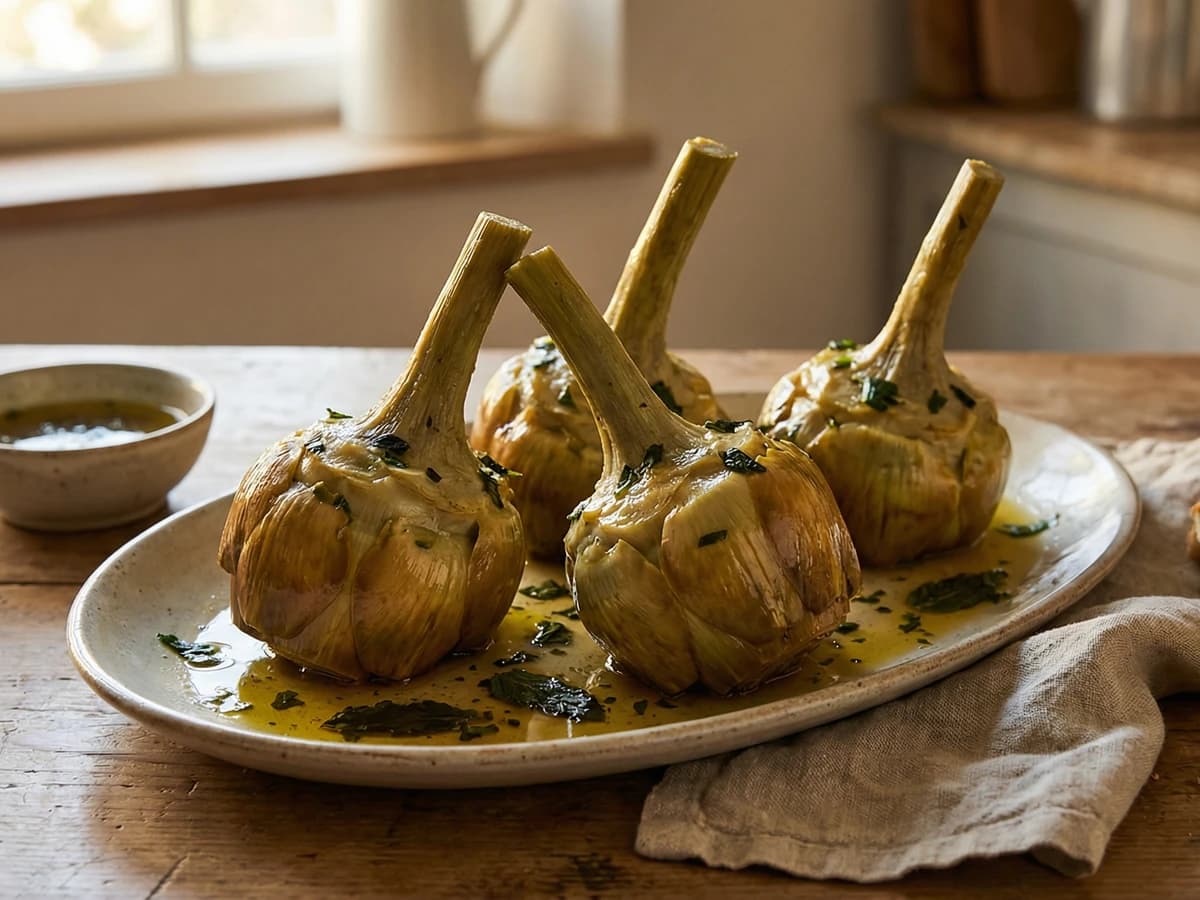
Rome's springtime ritual: whole artichokes stuffed with mint and garlic, braised upside-down until the leaves pull away like butter. The technique is precise, the reward profound.

Chef Graziella
Roman artichokes pureed with sharp pecorino and bright lemon, spread onto warm bread or scooped with crisp vegetables. This is spring on the table.

Chef Graziella
Rome's beloved fried zucchini blossoms, stuffed with mozzarella that stretches and anchovy that provides salt and depth. A fleeting summer pleasure that rewards those who seek out perfect ingredients.