Culinary Explorer

A cooking platform built around craft, culture, and the stories behind what we eat.
Discover Culinary Explorer
Pollo en Mole Costeño Afromestizo

Pollo en Mole Costeño Afromestizo

Created by

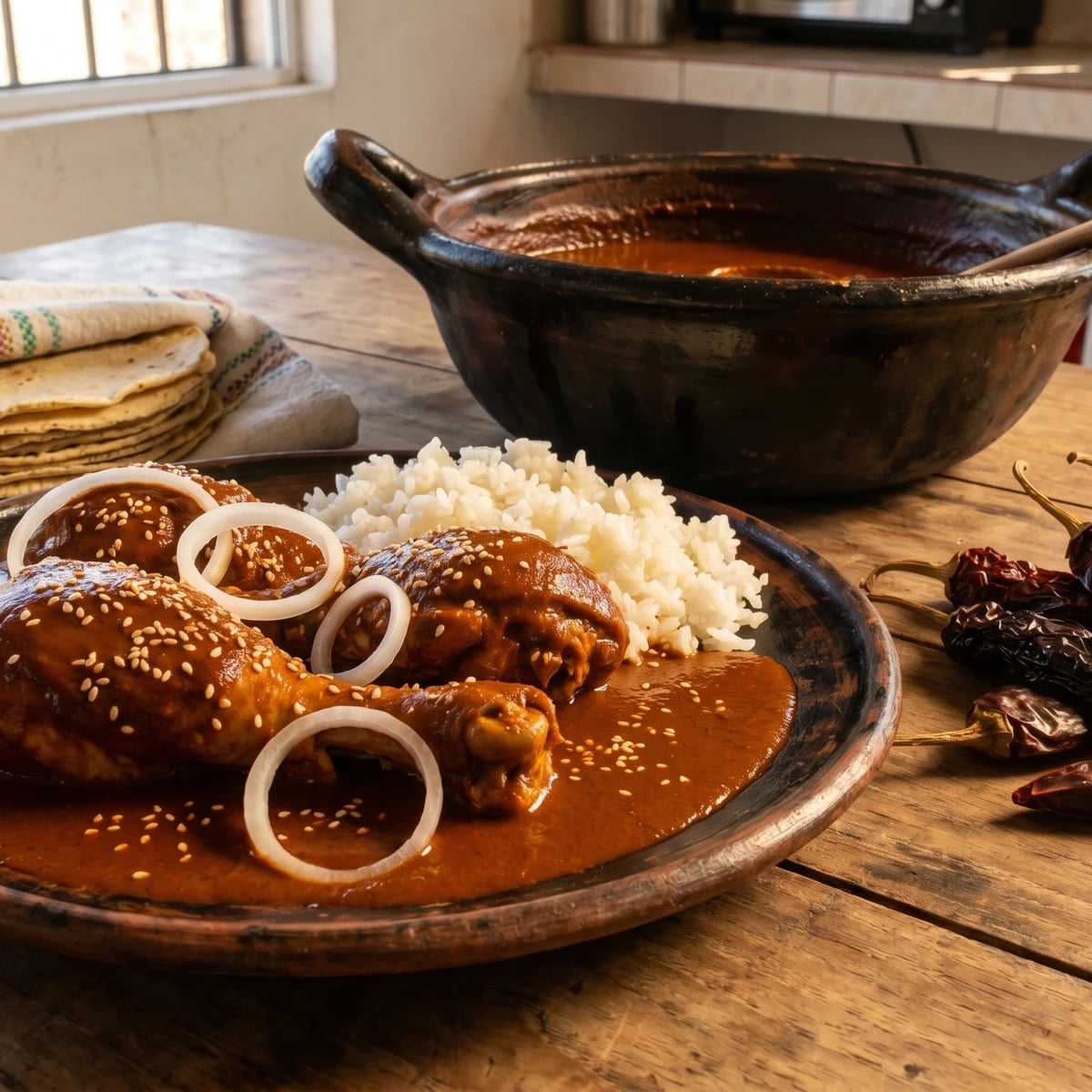
From the Costa Chica, the Afro-Mexican coast of Guerrero and Oaxaca, a brick-red mole built on chile costeño, toasted sesame, almond, and fried plátano macho, ladled over chicken the way the women of Cuajinicuilapa have always made it.

Main Dishes
Mexican
Special Occasion
Comfort Food
Make Ahead
45 min
Active Time
1 hr 30 min cook2 hr 15 min total
Yield6 servings

This is from the Costa Chica. Not Oaxaca City, not Acapulco, the stretch of Pacific coast that runs from Guerrero into Oaxaca where the towns are Black. Cuajinicuilapa. Pinotepa Nacional. Chacahua. This is the land of la tercera raíz, the third root of Mexico, African, standing alongside the indigenous and the Spanish. For five hundred years the country pretended this coast did not exist. The cooking always knew better.

Mole costeño is lighter than the moles of the central highlands. People say that like it is an insult. It isn't. The defining chile is chile costeño, a thin, bright red coastal chile with a clean heat that does not muddy the sauce the way a heavy ancho and chocolate mole can. You taste the chile. You taste the toasted ajonjolí and almond. You taste the fried plátano macho that thickens it and lays a faint sweetness underneath. Simpler than mole poblano, yes. Shallower, no. Anyone who calls this simple has never made it.

The first time I went to Cuajinicuilapa I went to record the danza, and I left with my notebook full of recipes. The women there fry their mole in manteca, not oil, and they are emphatic about it. On this coast the frying is not a technique borrowed from somewhere else. It is the inheritance of cooks whose grandmothers fried plátano and yuca and cacahuate the way their grandmothers had before them. The plantain, the peanut, the sesame, the coconut. An African-rooted pantry growing in Mexican soil.

Do not skip the frying of the mole. You toast, you soak, you blend, and then you fry the paste in hot lard until it darkens and the fat breaks through. That is the step that turns a sauce into a mole. La tercera raíz no es nota al pie. Es plato principal. Cada estado su propia cocina, and this one belongs to the Costa Chica.

Afro-Mexicans descend from West and Central Africans brought to New Spain in the colonial period, when Mexico held one of the largest enslaved African populations in the early colonial Americas; many of their descendants remain along the Costa Chica of Guerrero and Oaxaca. The region's cooking preserves an African ingredient ecology, plátano macho, yuca, peanut, and especially ajonjolí (sesame), a seed of African origin that traveled the slave routes into the Americas. Mexico did not recognize its Afro-Mexican population in the constitution until a 2019 reform to Article 2, and the 2020 national census was the first full count to record them, roughly two and a half million people, about two percent of the country.

The technique, the tradition, and the story behind every dish.

Discover Culinary Explorer

Ingredients

whole chicken

Quantity

1 (about 4 pounds)

cut into 8 pieces

large white onion

Quantity

1

halved, for poaching

white onion

Quantity

1/2

for the mole, charred

head of garlic

Quantity

1

halved crosswise, for poaching

garlic cloves

Quantity

3

for the mole

bay leaves

Quantity

2

kosher salt

Quantity

1 tablespoon, plus more to taste

dried chile costeño

Quantity

12

stemmed and seeded

dried chile guajillo

Quantity

4

stemmed and seeded

dried chile pasilla oaxaqueño

Quantity

2

stemmed and seeded

sesame seeds (ajonjolí)

Quantity

1/3 cup, plus 2 tablespoons for garnish

blanched almonds

Quantity

1/4 cup

raw peanuts (cacahuate)

Quantity

1/4 cup

ripe plátano macho (plantain)

Quantity

1

peeled and sliced 1/2-inch thick

corn tortilla

Quantity

1

bolillo or stale bread

Quantity

1 thick slice

roma tomatoes

Quantity

3

tomatillos

Quantity

2

husked

whole cloves

Quantity

2

black peppercorns

Quantity

4

Mexican cinnamon (canela)

Quantity

1 (1-inch) piece

dried Mexican oregano

Quantity

1 teaspoon

Mexican chocolate (optional)

Quantity

1 ounce (about 1/4 tablet)

raisins

Quantity

2 tablespoons

lard (manteca de cerdo)

Quantity

5 tablespoons

divided

reserved chicken broth

Quantity

4 to 5 cups

piloncillo or sugar

Quantity

1 small piece or 1 teaspoon

white rice (optional)

Quantity

for serving

hot corn tortillas (optional)

Quantity

for serving

Equipment Needed

  • Cast iron comal or heavy skillet for toasting
  • Large pot for poaching the chicken
  • High-powered blender
  • Wide 12-inch clay cazuela or heavy pot
  • Fine-mesh strainer

Instructions

  1. 1

    Poach the chicken

    Put the chicken pieces in a large pot with the halved onion, the halved garlic head, the bay leaves, and the salt. Cover with cold water by an inch. Bring to a gentle simmer over medium heat and cook 25 minutes, skimming the gray foam that rises early. The chicken should be just cooked through. Lift the pieces out and set them aside. Save the broth and keep it warm. This is the foundation of your mole, not water from the tap.

  2. 2

    Toast the chiles

    Heat a dry comal over medium. Toast the chile costeño, guajillo, and pasilla oaxaqueño separately, pressing each flat with a spatula for 20 to 30 seconds a side. They should darken a shade and smell toasty, never blacken. The costeño is thin and turns fast, so watch it. This is the chile of the coast, the one that gives the mole its brick-red color and its clean heat. Treat it with respect.

    Burned chile is bitter chile and there is no fixing it later. If one goes black, throw it out and toast another. The costeño is the soul of this sauce.
  3. 3

    Soak the chiles

    Put the toasted chiles in a bowl and cover with hot water from the kettle, not boiling. Boiling water cooks the skins and drags out bitterness. Let them soak 20 minutes until soft and pliable. Drain and discard the soaking water. It carries the bitterness you just toasted off.

  4. 4

    Toast the seeds and nuts

    Wipe the comal. Toast the sesame seeds, moving them constantly, until they turn gold and begin to jump in the pan. Pull them off and set aside 2 tablespoons for the garnish. Toast the almonds and peanuts together until fragrant and lightly browned. Ajonjolí is not decoration on this coast. It is structure, and it is African, the seed your mole is built on.

  5. 5

    Fry the plantain and bread

    Melt 2 tablespoons of the lard in a skillet over medium heat. Fry the slices of ripe plátano macho until deep gold and caramelized at the edges, about 2 minutes a side. Lift them out. In the same fat, fry the tortilla and the bread until crisp and browned. The plantain sweetens and thickens the mole. The tortilla and bread give it body. This is how the Costa Chica builds a mole without burying it under chocolate.

    The plantain has to be ripe, the skin going black. Green or barely yellow is starchy and bland and will not give you the sweetness that balances the chiles.
  6. 6

    Char the tomatoes and aromatics

    On the comal, char the tomatoes, tomatillos, the half onion, and the 3 garlic cloves until blackened in spots and soft, turning them as they go. The char is flavor. Do not peel the tomatoes. The blackened skin belongs in the blender.

  7. 7

    Toast the spices

    Toast the cloves, peppercorns, and cinnamon on the comal for 30 seconds, until fragrant. Add the oregano off the heat for a few seconds. These go straight into the blender. The spice hand on the coast is lighter than in Puebla. You want them present, not loud.

  8. 8

    Blend the mole

    Work in batches. Combine the soaked chiles, the toasted sesame, almonds, and peanuts, the fried plantain, tortilla, and bread, the charred tomatoes, tomatillos, onion, and garlic, the toasted spices, the chocolate, and the raisins in a blender with a cup or two of the warm broth. Blend each batch until completely smooth, adding broth as needed to keep the blades moving. For a fiesta, push it through a strainer for a silkier sauce. For a weeknight, a good blender is enough.

  9. 9

    Fry the mole

    Heat the remaining 3 tablespoons lard in a wide cazuela or heavy pot over medium. When it shimmers, pour in the blended paste. It will sputter, so stand back and stir. Cook it, stirring almost constantly, for 10 to 15 minutes, until it darkens, thickens, and the fat starts to break through the surface. This is freír el mole, and it is the step that turns a sauce into a mole. No me vengas con atajos. Skip it and the mole tastes raw and flat.

    La manteca es el sabor. The frying on this coast is the inheritance of Afro-Mexican cooks who fried plantain, yuca, and peanut for generations. Vegetable oil will fry the mole but it will not feed it.
  10. 10

    Loosen and simmer

    Stir in 4 to 5 cups of the warm broth, a ladle at a time, until the mole coats the back of a spoon but still pours. Season with salt and the piloncillo or sugar to round the chiles. Lower the heat and simmer gently for 20 minutes, stirring so it does not catch on the bottom. The mole should deepen to a glossy brick red.

  11. 11

    Marry the chicken

    Slide the poached chicken pieces into the mole and spoon the sauce over them. Simmer another 15 minutes so the chicken drinks the mole and the flavors marry. Taste again for salt. A mole almost always wants a little more than you think.

  12. 12

    Serve

    Plate each piece of chicken under a generous ladle of mole and shower it with the reserved toasted sesame. White rice on the side, hot corn tortillas to push it onto the fork and wipe the plate. On the Costa Chica this is fiesta food: baptisms, weddings, the Day of the Dead when the Danza de los Diablos comes through Cuajinicuilapa. Saber cocinar es saber vivir.

Chef Tips

  • Chile costeño is the one ingredient you cannot fake. It grows on the Guerrero and Oaxaca coast and it carries this mole. Mexican grocers and sellers who specialize in Oaxacan products stock it, fresh-dried and bright red, not dusty. If you truly cannot find it, a mix of guajillo for color and a couple of chile de arbol for the clean heat gets you close. It is a compromise, not an upgrade, and the mole will be missing its accent.
  • Use real manteca de cerdo, ideally rendered from a carniceria, not the shelf-stable brick. The Afro-Caribbean frying tradition on this coast runs on lard, and it shows in the finished sauce. La manteca es el sabor.
  • The plátano macho must be ripe to the point the skin is going black. Buy them a week ahead and let them ripen on the counter. A starchy green plantain will not give you the sweetness that holds the chiles in balance.
  • This mole is better the next day. If you have the time, make the sauce ahead and let it rest overnight. The chiles, sesame, and spices settle into each other and the whole thing deepens.

Advance Preparation

  • Mole costeño is a make-ahead dish by nature. The sauce can be made one to two days ahead and refrigerated, then reheated gently with a splash of broth before you add the chicken. The flavor only deepens.
  • The mole base freezes well for up to three months. Freeze it without the chicken, then thaw, reheat, and add freshly poached chicken on serving day.
  • Poach the chicken the same day you serve so it stays tender. If you poach ahead, keep it in its broth so it does not dry out.

Frequently Asked Questions

Nutrition Information

1 serving (about 550g)

Calories
990 calories
Total Fat
49 g
Saturated Fat
13 g
Trans Fat
0 g
Unsaturated Fat
32 g
Cholesterol
155 mg
Sodium
1550 mg
Total Carbohydrates
89 g
Dietary Fiber
13 g
Sugars
19 g
Protein
54 g

Note: Chef personas and recipes are created with AI assistance. Cook with care: follow safe food-handling practices, check doneness with a thermometer when needed, and adapt for allergies and your kitchen.

Where cooking meets culture.

Culinary guides, cultural storytelling, and the editorial depth that makes cooking meaningful.

Discover Culinary Explorer

More from Tichindas, Pescados a la Talla & Encacahuatados

Browse the full collection