Chef Graziella
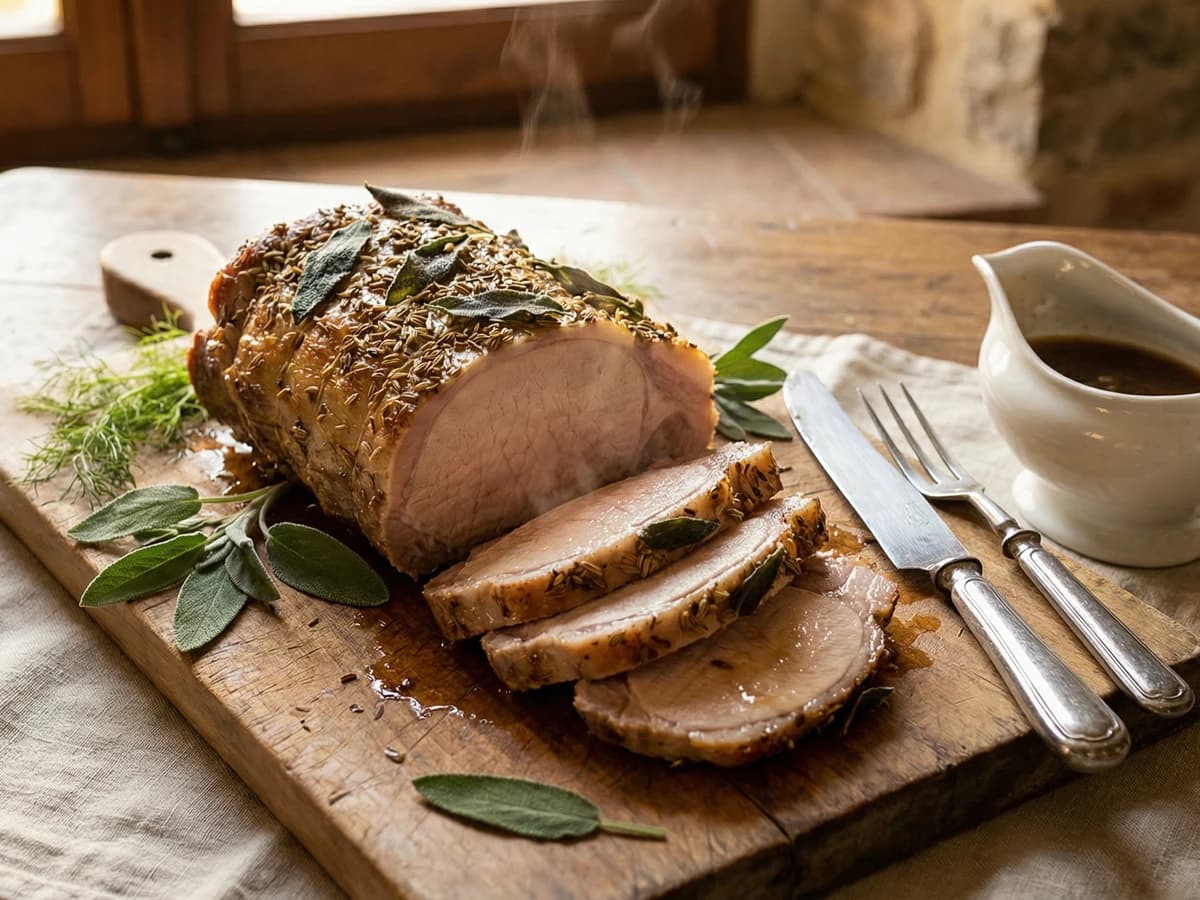
Arrosto di Maiale alle Erbe Aromatiche
Bone-in pork loin rubbed with fennel, rosemary, and sage, roasted until the herbs form a crackling crust and the meat stays pink and succulent. This is the roast that brings Sunday to life.
A cooking platform built around craft, culture, and the stories behind what we eat.
Created by
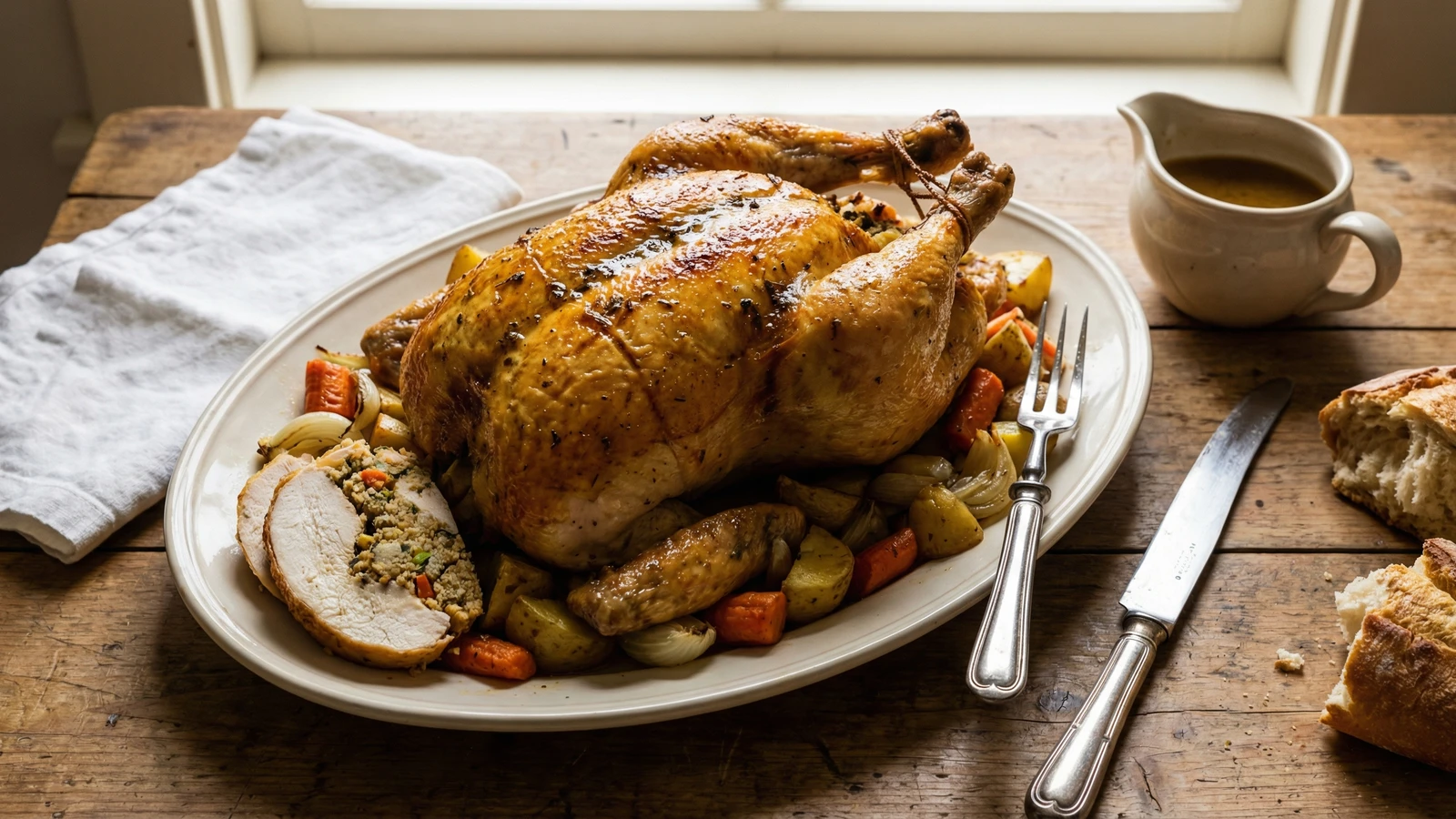
The Sunday roast chicken of Italian home cooks, stuffed with bread, prosciutto, sage, and the bird's own liver. Golden skin that crackles, meat that yields to the fork, a meal that means family has gathered.
Sunday lunch in Italy has always centered on the roast. In prosperous homes, it might be veal or lamb. In most kitchens, through most of history, it was chicken. Not the pale, flabby birds of industrial production, but farmyard chickens that lived real lives and tasted like something.
The stuffing tells you where the cook learned to cook. In Emilia, it contains mortadella and Parmigiano. In Tuscany, there might be chestnuts in autumn. This version, with its prosciutto and sage, speaks to the central regions where those flavors define the table. The liver is traditional. It gives the stuffing a depth that bread alone cannot provide.
Simple does not mean easy. You must bring the bird to room temperature. You must dry the skin thoroughly. You must trust the thermometer over the clock and resist the urge to carve before the juices settle. These are not complications. They are the difference between a roast chicken and a great one.
The Sunday roast has anchored Italian family meals since chickens moved from farmyard to table in medieval times. For centuries, poultry was more valuable than beef in much of Italy, reserved for feast days and celebrations. The tradition of stuffing the bird stretches back to Renaissance courts, though home cooks simplified the elaborate forcemeats into regional variations using local cured meats, herbs, and whatever bread had gone stale.
Quantity
1 (4 to 4 1/2 pounds)
giblets reserved
Quantity
4 tablespoons
softened
Quantity
2 tablespoons
Quantity
to taste
Quantity
to taste
freshly ground
Quantity
4 ounces
crusts removed, torn into small pieces
Quantity
1/2 cup
Quantity
3 ounces
diced fine
Quantity
1/4 cup
freshly grated
Quantity
1
beaten
Quantity
6
chopped fine
Quantity
1 tablespoon
chopped fine
Quantity
1/4 teaspoon
freshly grated
Quantity
1 medium
quartered
Quantity
2 medium
cut into large chunks
Quantity
2
cut into large chunks
Quantity
4
unpeeled and lightly crushed
Quantity
1/2 cup
Quantity
1 cup
| Ingredient | Quantity |
|---|---|
| whole chickengiblets reserved | 1 (4 to 4 1/2 pounds) |
| unsalted buttersoftened | 4 tablespoons |
| extra virgin olive oil | 2 tablespoons |
| kosher salt | to taste |
| black pepperfreshly ground | to taste |
| day-old country breadcrusts removed, torn into small pieces | 4 ounces |
| whole milk | 1/2 cup |
| prosciutto di Parmadiced fine | 3 ounces |
| Parmigiano-Reggianofreshly grated | 1/4 cup |
| large eggbeaten | 1 |
| fresh sage leaveschopped fine | 6 |
| fresh rosemarychopped fine | 1 tablespoon |
| nutmegfreshly grated | 1/4 teaspoon |
| yellow onionquartered | 1 medium |
| carrotscut into large chunks | 2 medium |
| celery stalkscut into large chunks | 2 |
| garlic clovesunpeeled and lightly crushed | 4 |
| dry white wine | 1/2 cup |
| chicken broth | 1 cup |
Place the torn bread pieces in a small bowl and pour the milk over them. Let the bread soak for 15 minutes, then squeeze out the excess milk with your hands. The bread should be moist but not dripping. Set aside in a mixing bowl.
If your chicken came with its liver, rinse it and pat it dry. Heat one tablespoon of butter in a small skillet over medium heat. Cook the liver until just firm, about 3 minutes per side. It should remain slightly pink inside. Chop it fine and add to the bread.
To the bread and liver, add the diced prosciutto, Parmigiano-Reggiano, beaten egg, sage, rosemary, and nutmeg. Season with a pinch of salt (the prosciutto and cheese provide much of it) and generous black pepper. Mix thoroughly with your hands until everything is evenly distributed. The mixture should hold together when squeezed.
Remove the chicken from the refrigerator one hour before roasting. Pat it completely dry inside and out with paper towels. Dry skin crisps. Wet skin steams. Season the cavity generously with salt and pepper. Season the outside of the bird with salt and pepper, being thorough under the wings and thighs where seasoning tends to be forgotten.
Spoon the stuffing loosely into the cavity. Do not pack it tightly or it will become dense and pasty. The stuffing should have room to expand. Close the cavity by crossing the drumsticks and tying them together with kitchen twine. Tuck the wing tips behind the back to prevent burning.
Mix the remaining three tablespoons of softened butter with the olive oil. Rub this mixture all over the chicken, coating every surface of the skin. This creates the golden, crackling exterior that makes a proper roast chicken. Place the bird breast-side up in a roasting pan just large enough to hold it with the vegetables.
Scatter the onion, carrots, celery, and crushed garlic around the chicken in the pan. These will flavor the pan juices and become part of your sauce. Preheat your oven to 425°F.
Place the pan in the hot oven and roast for 20 minutes. The high heat begins crisping the skin. Reduce heat to 375°F and continue roasting until the skin is deeply golden and an instant-read thermometer inserted into the thickest part of the thigh (not touching bone) reads 165°F. This takes approximately one hour and ten minutes more for a four-pound bird. Baste with pan juices every 20 minutes.
Transfer the chicken to a cutting board and tent loosely with aluminum foil. Let it rest for 15 minutes. This is not optional. Cutting into the bird immediately sends all the juices onto the board instead of into the meat. During this time, the internal temperature continues to rise and the juices redistribute throughout.
While the chicken rests, place the roasting pan over medium heat on the stovetop. Pour in the white wine and scrape up all the browned bits from the bottom. Let it reduce by half. Add the chicken broth and simmer until slightly thickened, about 5 minutes. Strain the sauce through a fine-mesh sieve, pressing on the vegetables to extract their flavor. Discard the solids. Taste and adjust seasoning.
Remove the twine and spoon the stuffing into a warm serving bowl. Carve the chicken into pieces or present it whole at the table for family to admire before carving. Serve the pan sauce alongside. Once the chicken is carved, serve it promptly, inviting your guests and family to put off talking and start eating.
1 serving (about 330g)
Culinary guides, cultural storytelling, and the editorial depth that makes cooking meaningful.
Discover Culinary ExplorerChef Graziella
Bone-in pork loin rubbed with fennel, rosemary, and sage, roasted until the herbs form a crackling crust and the meat stays pink and succulent. This is the roast that brings Sunday to life.

Chef Graziella
The ancient technique of salt-baking creates a sealed chamber where the fish steams in its own moisture. What emerges is flesh of remarkable purity, seasoned perfectly, ready for nothing but your best olive oil.

Chef Graziella
The ugly fish that cooks like veal, braised in tomatoes until the firm white flesh absorbs the briny sweetness of olives and capers. Fishermen's wives along the Adriatic knew its worth before restaurants discovered it.

Chef Graziella
A fifteen-minute lesson in restraint: pork chops, butter, sage, and the understanding that what you leave out matters as much as what you put in.