Chef Graziella
Casoncelli alla Bergamasca
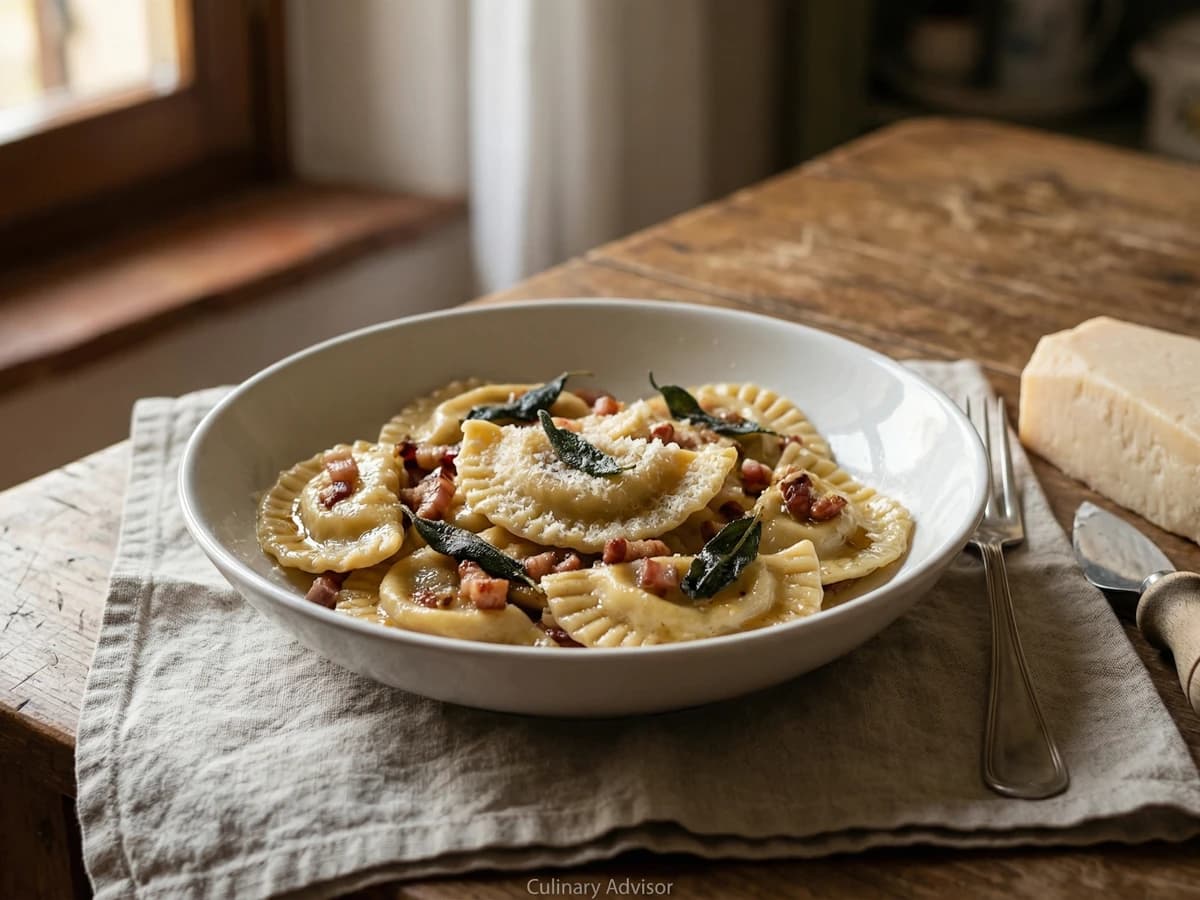
The stuffed pasta of Bergamo's valleys, where crushed amaretti in the meat filling creates a sweet-savory balance that exists nowhere else in Italy. Dressed simply in browned butter and sage.
A cooking platform built around craft, culture, and the stories behind what we eat.

Created by
The golden cutlet of Lombardy, where chicken is pounded thin, coated in the finest crumbs, and fried in butter until it shatters at the touch of a fork. Lemon is the only adornment it needs.
The true cotoletta alla Milanese is made with veal, a bone-in rib chop pounded flat and fried until the crust turns the color of old gold. I am giving you the chicken version because good veal is difficult to find in America, and because a properly made chicken cotoletta will teach you everything you need to know about this technique.
What you keep out is as significant as what you put in. There is no garlic here. No herbs in the breading. No cream sauce pooling beneath the cutlet. The Milanese understand that a perfectly fried piece of meat, golden and crisp, needs only a squeeze of lemon to cut through the richness of the butter. Anything more is distraction.
The breading must be fine, almost powdery. American breadcrumbs are too coarse. You want crumbs that create a delicate shell, not a thick armor. The butter must foam but never brown. The cutlet must cook through gently while the exterior crisps. This takes attention. Simple does not mean easy.
Watch the pan. Listen to the sizzle. When the edges turn golden and the crust pulls slightly away from the meat, you are close. This is weeknight cooking in Milan, where home cooks have made this for their families for generations without ever consulting a recipe.
The cotoletta alla Milanese appears in Milanese records as early as the 12th century, making it one of Europe's oldest documented breaded cutlet preparations. Legend claims that Austrian Field Marshal Radetzky brought the recipe to Vienna in 1848, where it became Wiener Schnitzel, though Viennese cooks dispute this origin fiercely. What remains certain is that Milan has been frying breaded cutlets in butter since before most European nations existed.
Quantity
4 (about 6 ounces each)
Quantity
1 cup
Quantity
3
Quantity
2 cups
Quantity
6 tablespoons
Quantity
2 tablespoons
Quantity
to taste
Quantity
2
cut into wedges
| Ingredient | Quantity |
|---|---|
| boneless, skinless chicken breasts | 4 (about 6 ounces each) |
| all-purpose flour | 1 cup |
| large eggs | 3 |
| fine dry breadcrumbs | 2 cups |
| unsalted butter | 6 tablespoons |
| vegetable oil | 2 tablespoons |
| kosher salt | to taste |
| lemonscut into wedges | 2 |
Place one chicken breast between two sheets of plastic wrap. Using the flat side of a meat mallet or a heavy pan, pound the chicken to an even thickness of about one-quarter inch. Work from the center outward. The cutlet should be uniformly thin so it cooks evenly. Repeat with remaining breasts. Season both sides generously with salt.
Set three shallow dishes in a row. Place the flour in the first, seasoned with a pinch of salt. Beat the eggs in the second with a fork until smooth. Place the breadcrumbs in the third. This arrangement allows you to move efficiently from coating to coating.
Dredge one cutlet in flour, shaking off excess. The flour coating must be thin. Dip in beaten egg, letting excess drip back into the dish. Press firmly into breadcrumbs on both sides, ensuring complete coverage. Set on a wire rack. Repeat with remaining cutlets. Let them rest for 10 minutes before frying.
In a heavy skillet large enough to hold two cutlets without crowding, melt 3 tablespoons butter with 1 tablespoon oil over medium heat. The oil prevents the butter from burning. When the butter foams and the foam begins to subside, the fat is ready. It should shimmer but not smoke.
Carefully lay two cutlets in the pan. Do not move them. Let them cook undisturbed until the edges turn golden and the bottom crust is deeply colored, about 3 minutes. Flip once using a spatula. Cook the second side until golden and the chicken is cooked through, another 2 to 3 minutes. The internal temperature should reach 165 degrees Fahrenheit.
Transfer the cooked cutlets to a wire rack set over a sheet pan. Keep warm in a 200 degree oven while you cook the remaining cutlets. Wipe the skillet clean with paper towels, add the remaining butter and oil, and repeat the frying process.
Place each cotoletta on a warm plate. Serve with lemon wedges alongside. The lemon is squeezed over the cutlet at the table, just before eating. There is no sauce. There is no garnish. The golden crust and the bright acidity of lemon are everything this dish needs.
1 serving (about 260g)
Culinary guides, cultural storytelling, and the editorial depth that makes cooking meaningful.
Discover Culinary ExplorerChef Graziella
The stuffed pasta of Bergamo's valleys, where crushed amaretti in the meat filling creates a sweet-savory balance that exists nowhere else in Italy. Dressed simply in browned butter and sage.

Chef Graziella
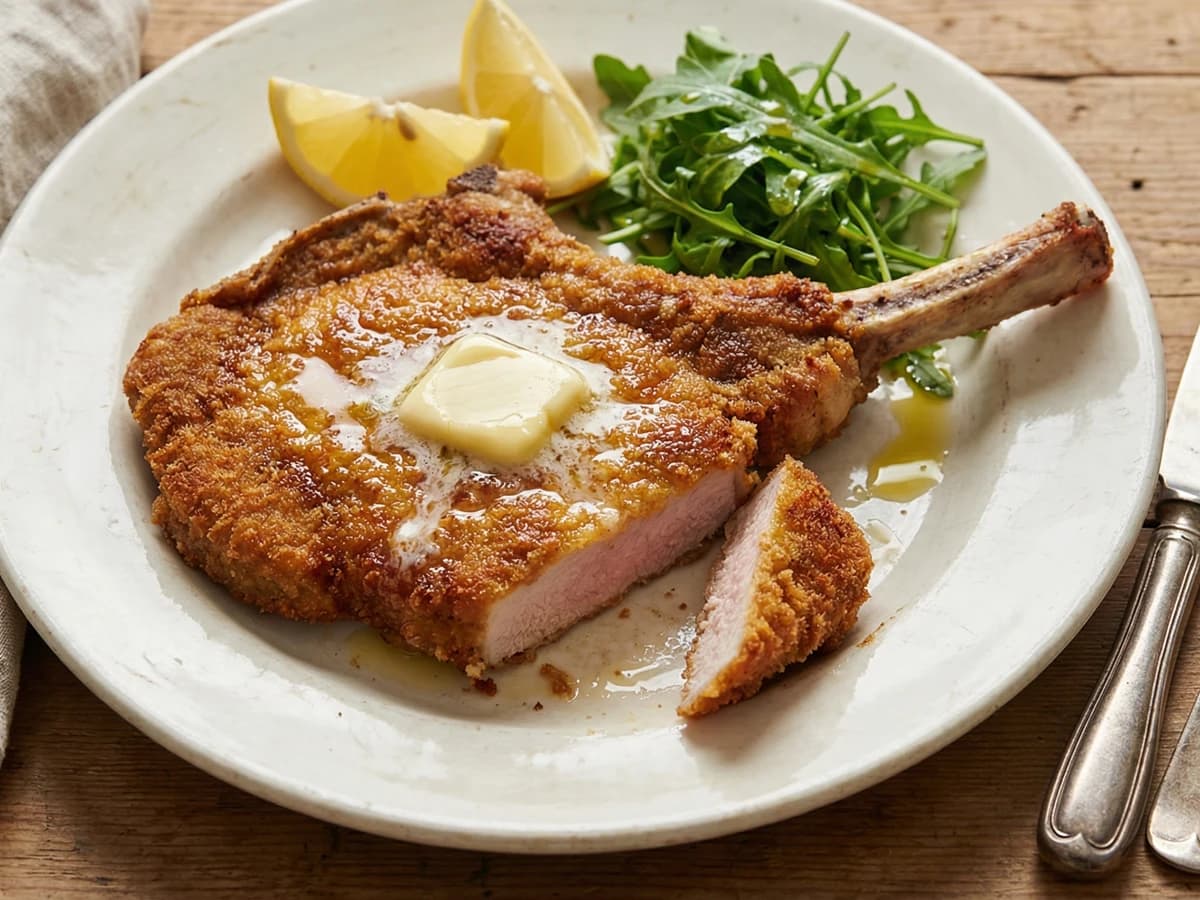
The Milanese cutlet made with pork instead of veal: bone-in, pounded thin, breaded simply, fried in clarified butter until the crust shatters at the touch of a fork. This is not schnitzel. This is older.
Chef Graziella
The original bone-in veal cutlet of Milan, pounded thin and fried in clarified butter until the crust shatters and the meat stays juicy. The Viennese borrowed this dish. The Milanese perfected it.

Chef Graziella
Veal shanks braised until the meat yields at the touch of a fork, the marrow soft and rich within its bone, finished with the bright perfume of gremolata. This is Milan at its most refined.