Chef Graziella
Arista alla Fiorentina
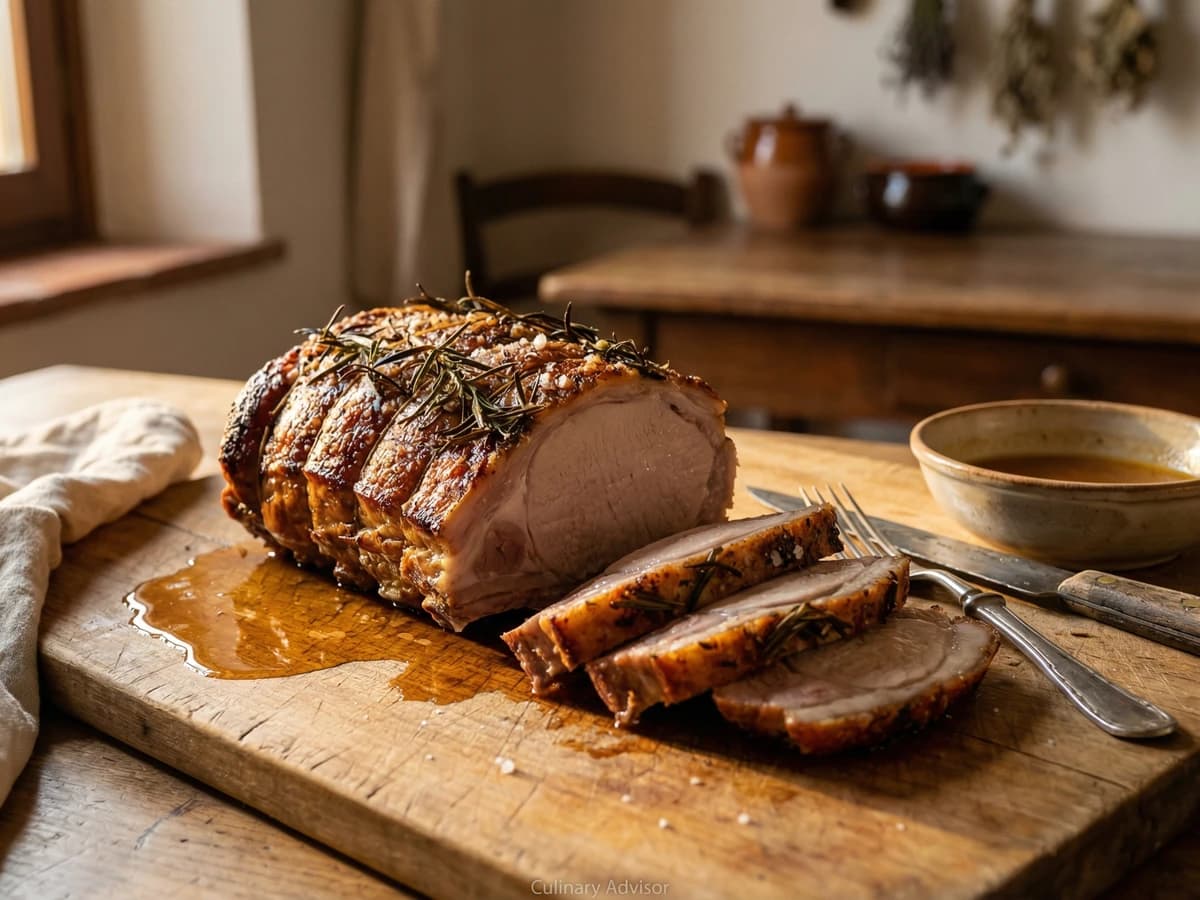
The roast pork of Florence: bone-in loin studded with rosemary and garlic, nothing more. This is the dish that earned its name from a Byzantine bishop who declared it aristos, the best.
A cooking platform built around craft, culture, and the stories behind what we eat.

Created by
Hunter's chicken as the Tuscan hills have always known it: bronzed chicken simmered with red wine, tomatoes, olives, and the herbs that grow wild along the roadsides. There is no cream. There never was.
Alla cacciatora means 'hunter's style,' and this is how hunters in the Tuscan countryside have cooked game birds and chicken for generations. They carried what they needed: a flask of wine, a few tomatoes, olives for sustenance on the trail, herbs picked from the roadside. The sauce built itself from what was at hand.
Americans have corrupted this dish beyond recognition. Cream sauces, bell peppers in three colors, enough garlic to ward off vampires. None of this belongs. The unbalanced use of garlic is the single greatest cause of failure in would-be Italian cooking. Here you use three cloves, sliced thin, cooked gently. They contribute perfume, not assault.
The wine must be good enough to drink. Chianti is traditional because Chianti is what grows in Tuscany. The olives should be small and briny, the kind that taste of the Mediterranean. What you keep out is as significant as what you put in. Simple does not mean easy. It means every ingredient earns its place.
Cacciatore preparations appear in Italian cookbooks from at least the Renaissance, when hunters needed methods to cook game in the field with minimal equipment. The Tuscan version, with its reliance on local Chianti wine and the region's superb olive oil, became codified in farmhouse kitchens throughout the Chianti hills. Each family guards its proportions, but the foundation remains constant: good wine, restrained tomato, and herbs from the garden.
Quantity
1 (3 1/2 to 4 pounds)
cut into 8 pieces
Quantity
to taste
Quantity
to taste
freshly ground
Quantity
1/4 cup
Quantity
1 medium
sliced thin
Quantity
2
sliced thin
Quantity
1 medium
peeled and sliced thin
Quantity
3
sliced thin
Quantity
1 cup
Quantity
1 can (14 ounces)
crushed by hand
Quantity
1 cup
Quantity
2 sprigs
Quantity
4
Quantity
1
Quantity
1/2 cup
pitted
Quantity
2 tablespoons
rinsed if salt-packed
Quantity
for serving
| Ingredient | Quantity |
|---|---|
| whole chickencut into 8 pieces | 1 (3 1/2 to 4 pounds) |
| kosher salt | to taste |
| black pepperfreshly ground | to taste |
| extra virgin olive oil | 1/4 cup |
| yellow onionsliced thin | 1 medium |
| celery stalkssliced thin | 2 |
| carrotpeeled and sliced thin | 1 medium |
| garlic clovessliced thin | 3 |
| dry red wine | 1 cup |
| San Marzano tomatoescrushed by hand | 1 can (14 ounces) |
| chicken broth | 1 cup |
| fresh rosemary | 2 sprigs |
| fresh sage leaves | 4 |
| bay leaf | 1 |
| black olivespitted | 1/2 cup |
| capersrinsed if salt-packed | 2 tablespoons |
| crusty bread | for serving |
Pat the chicken pieces completely dry with paper towels. Season generously with salt and pepper on all sides. Let them sit at room temperature for 20 minutes while you prepare the vegetables. Cold chicken from the refrigerator will not brown properly. It will steam and turn gray.
Heat the olive oil in a heavy braising pan or Dutch oven over medium-high heat until it shimmers but does not smoke. Working in batches to avoid crowding, add the chicken pieces skin-side down. Do not move them. Let them cook undisturbed until the skin is deeply golden and releases easily from the pan, 5 to 7 minutes. Turn and brown the other side, 3 to 4 minutes more. Transfer to a plate. The fond that develops on the bottom of the pan is essential to the final sauce.
Pour off all but 2 tablespoons of the fat. Reduce heat to medium. Add the onion, celery, and carrot. Cook, stirring occasionally and scraping up the browned bits from the bottom, until the vegetables soften and the onion becomes translucent, about 10 minutes. Add the sliced garlic and cook one minute more. The garlic should become fragrant but must not brown. Brown garlic turns bitter and will ruin the sauce.
Pour in the wine and increase heat to high. Let it boil vigorously, scraping up any remaining fond, until reduced by half. You should smell wine, not raw alcohol. This takes 3 to 4 minutes. The sauce will appear syrupy and the vegetables will be glazed.
Add the crushed tomatoes, chicken broth, rosemary, sage, and bay leaf. Stir to combine. Return the chicken pieces to the pan, nestling them into the liquid. The liquid should come halfway up the chicken; it should not cover it. Bring to a simmer, then reduce heat to low. Cover partially (leave a gap of about one inch) and simmer gently until the chicken is cooked through and tender, about 45 minutes.
Add the olives and capers to the sauce. Simmer uncovered for 10 minutes more to allow the flavors to meld and the sauce to thicken slightly. Taste and adjust the seasoning. The olives and capers contribute salt, so you may need less than you expect. Remove the rosemary sprigs and bay leaf.
Let the cacciatore rest off heat for 5 minutes. This allows the juices to redistribute and the sauce to settle. Serve directly from the braising pan, or transfer to a warm serving platter. Bring crusty bread to the table. The bread is not optional. The sauce deserves to be mopped up completely.
1 serving (about 380g)
Culinary guides, cultural storytelling, and the editorial depth that makes cooking meaningful.
Discover Culinary ExplorerChef Graziella
The roast pork of Florence: bone-in loin studded with rosemary and garlic, nothing more. This is the dish that earned its name from a Byzantine bishop who declared it aristos, the best.

Chef Graziella
The T-bone of Florence, thick as three fingers and charred over blazing coals, rested until the juices settle, finished with nothing but salt and the best olive oil Tuscany can offer.
Chef Graziella
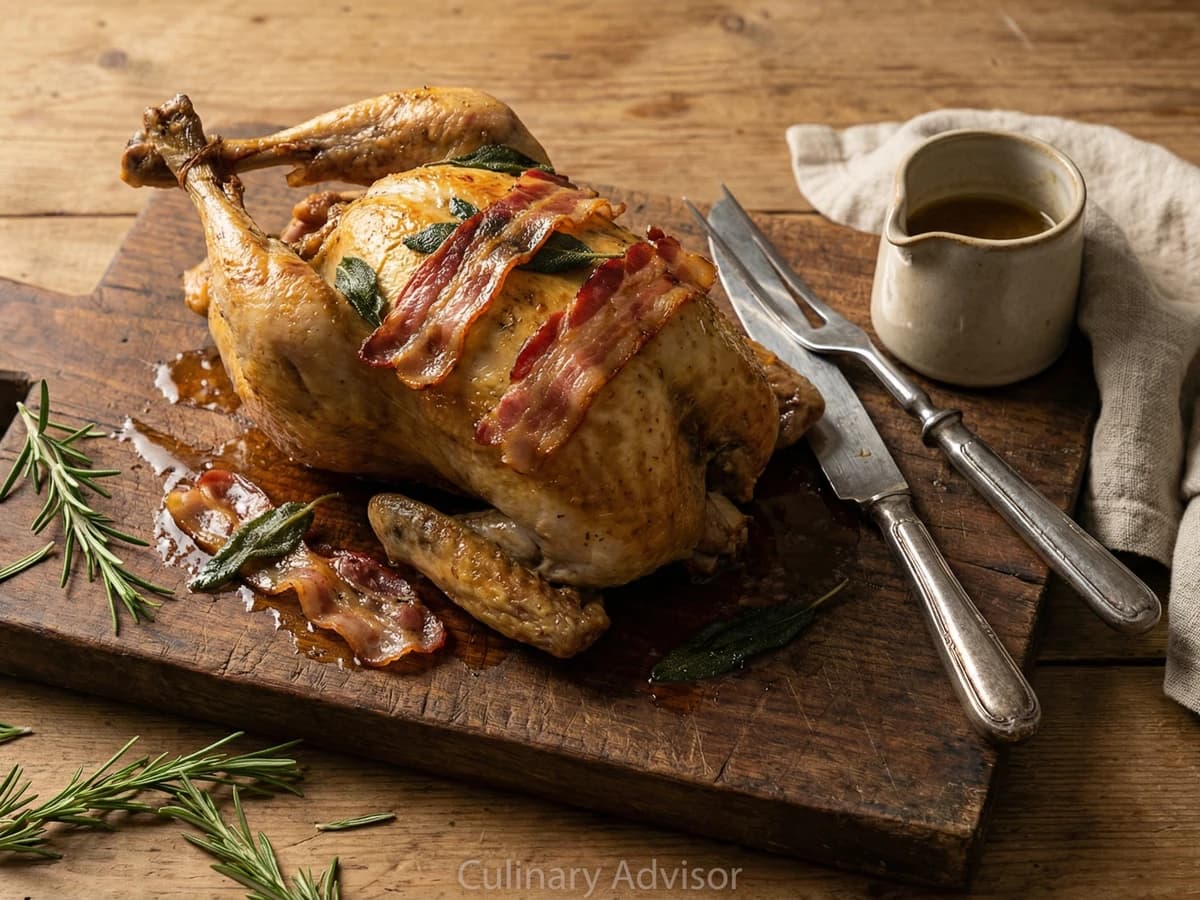
The noble guinea fowl of Tuscan farmhouses, wrapped in pancetta, perfumed with sage, roasted until the skin shatters and the meat stays moist. This is what Italians bring to the table when ordinary poultry will not serve.

Chef Graziella
The ancient grain of the Garfagnana, simmered with whatever the garden offers and finished with the green-gold olive oil that Tuscany produces better than anywhere else. Peasant food that sustained Roman legions and Tuscan farmers alike.