
Chef Dimitra
Aegean Island Kakavia (Κακαβιά)
Aegean kakavia is the fisherman’s soup named for the pot itself: small rockfish, potato, onion, lemon, and enough olive oil to turn a poor catch rich.
A cooking platform built around craft, culture, and the stories behind what we eat.
Created by
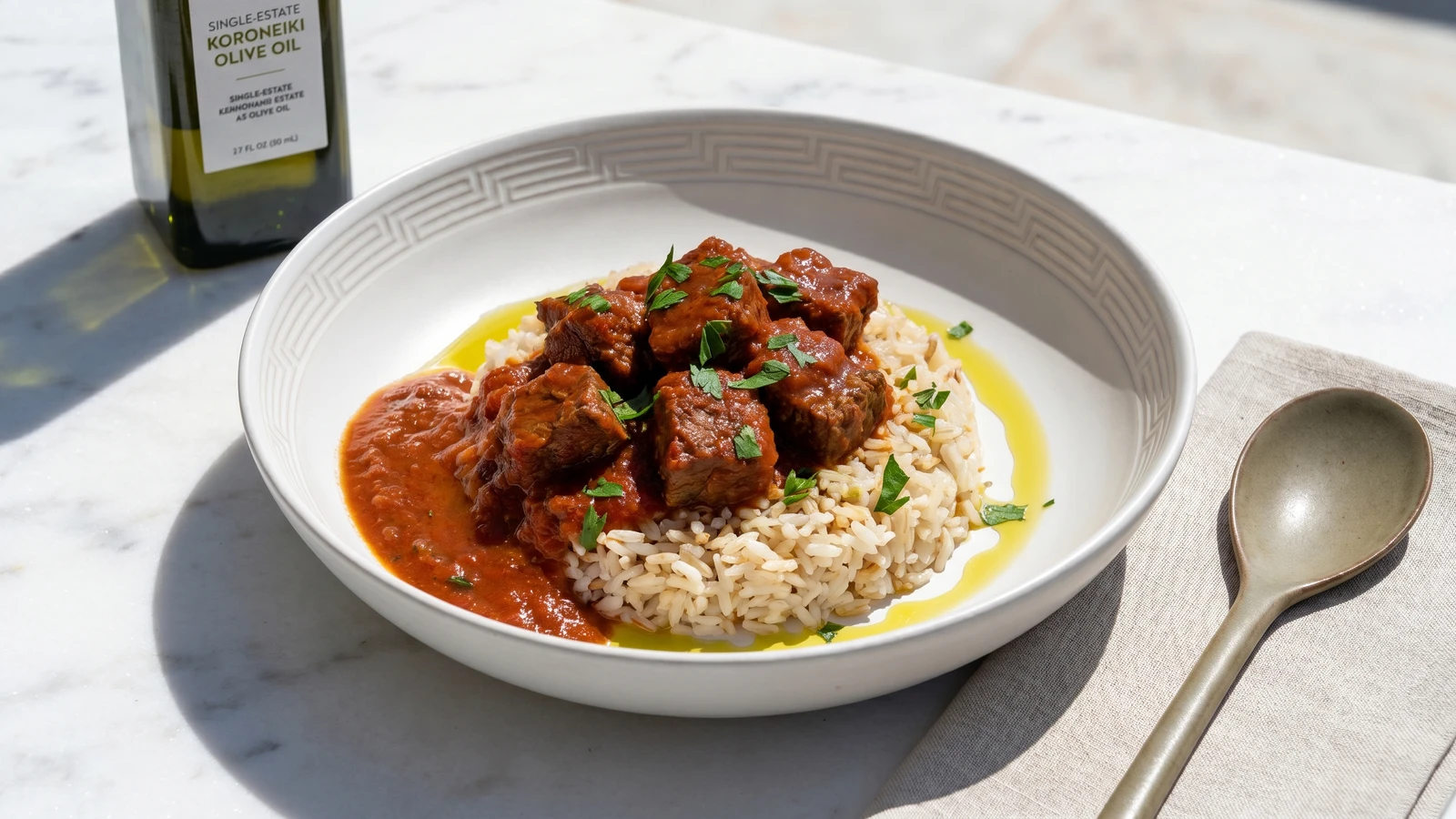
Tas kebab is the City's dark beef stew: browned meat, sweet onion, tomato, cumin, allspice and bay, cooked slowly until the sauce clings to rice or potato puree.
Politiko tas kebab is the City's beef stew, a Constantinopolitan kokkinisto with small cubes of beef, sweet onion, tomato, cumin, allspice and bay cooked until the sauce turns dark and almost spoon-thick. It is not a grill kebab. It is a pot dish, made for rice pilaf or potato puree, where every grain or spoonful catches the sauce.
The method that decides it is the browning. Brown the beef hard, in batches, and don't hurry to stir; the bottom of the pot must collect those dark sticky bits before wine and tomato loosen them. If the meat crowds the pan, it sheds water and the whole sauce goes pale. Good olive oil, and patience. That is most of the work.
I learned this version in Thessaloniki from a Politissa neighbor who served it over rice so white it made the sauce look black-red. I don't invent it. I find it, I test it, I write it down. The region is the dish's surname, and here the surname is Poli: cumin warm but not loud, allspice tucked behind it, beef soft enough to yield to the spoon.
Tas kebab belongs to Politiki kouzina, the Greek cooking of Constantinople, where urban households absorbed the spice habits of the Ottoman capital without losing their own table. The Turkish word tas means bowl, and tas kebabı in Ottoman cookery named meat cooked in a covered vessel, a city stew rather than a skewer. In Greek households it traveled through the twentieth century with families who left Constantinople after the 1955 pogrom and the 1964 expulsions, keeping cumin and allspice close to beef.
Quantity
1.2kg
cut into 4cm pieces
Quantity
12g
plus more to finish
Quantity
1/2 teaspoon
Quantity
75ml
divided
Quantity
350g
finely sliced
Quantity
4
minced
Quantity
35g
Quantity
1 teaspoon
Quantity
5
lightly crushed, or use 1/2 teaspoon ground allspice
Quantity
2
Quantity
1
about 5cm
Quantity
150ml
Quantity
450g
or use 400g good passata
Quantity
350ml
plus more as needed
Quantity
1 teaspoon
only if the tomatoes are sharp
Quantity
10g
chopped
Quantity
6 portions
for serving
| Ingredient | Quantity |
|---|---|
| boneless beef chuck, blade or shincut into 4cm pieces | 1.2kg |
| fine sea saltplus more to finish | 12g |
| freshly ground black pepper | 1/2 teaspoon |
| extra virgin Koroneiki olive oildivided | 75ml |
| yellow onionsfinely sliced | 350g |
| garlic clovesminced | 4 |
| tomato paste (pelté) | 35g |
| ground cumin | 1 teaspoon |
| whole allspice berries (bahari)lightly crushed, or use 1/2 teaspoon ground allspice | 5 |
| bay leaves | 2 |
| small cinnamon stickabout 5cm | 1 |
| dry red wine | 150ml |
| grated ripe tomatoesor use 400g good passata | 450g |
| hot water or light beef stockplus more as needed | 350ml |
| sugar (optional)only if the tomatoes are sharp | 1 teaspoon |
| flat-leaf parsley (optional)chopped | 10g |
| cooked rice pilaf or smooth potato pureefor serving | 6 portions |
Pat the beef dry and season it with the salt and black pepper. Leave it on the counter for 20 minutes while you slice the onions and set out the spices. Dry meat browns cleanly. Damp meat gives you a wet pot before the dish has even begun.
Warm 45ml of the olive oil in a wide heavy pot over medium-high heat. Brown the beef in 3 batches, 3 to 4 minutes per side, until you see dark patches on the meat and browned bits on the bottom of the pot. Move each batch to a plate. This is the step that decides tas kebab: crowded meat drops its juice, and then the sauce tastes of boiled beef instead of the browned base a kokkinisto needs.
Lower the heat to medium and add the remaining 30ml olive oil if the pot looks dry. Add the onions with a small pinch of salt and cook for 10 to 12 minutes, stirring often, until they soften and turn honey-gold at the edges. Stir in the garlic for 1 minute.
Add the tomato paste, cumin, allspice, bay leaves and cinnamon stick. Stir for 2 minutes, scraping the bottom, until the paste darkens and the spices smell warm but not burnt. Pour in the wine and let it bubble for 3 minutes, loosening every browned bit from the pot.
Return the beef and its juices to the pot. Add the grated tomatoes or passata and 350ml hot water or light stock. The liquid should come about two-thirds up the meat, not drown it. Bring it to a quiet bubble, then cover the pot.
Lower the heat and cook for 1 hour 45 minutes to 2 hours 15 minutes, stirring every 25 minutes. Keep the bubble lazy and steady. If the sauce threatens to catch, add a small splash of hot water. The beef is ready when a spoon can press into a cube without a fight.
Uncover the pot and remove the bay leaves, cinnamon stick and any visible allspice berries. Simmer for 15 to 25 minutes, until the sauce is glossy, dark red-brown and thick enough to coat the back of a spoon. Taste for salt. If the tomato is sharp, stir in the sugar. Let the stew rest for 10 minutes.
Spoon the tas kebab over rice pilaf or smooth potato puree. Scatter with parsley if you like, and finish with a thin thread of the remaining olive oil. The sauce should pool just enough for the rice or potato to take it in. Bring it to the table hot and generous.
1 serving (about 430g)
Culinary guides, cultural storytelling, and the editorial depth that makes cooking meaningful.
Discover Culinary ExplorerChef Dimitra
Aegean kakavia is the fisherman’s soup named for the pot itself: small rockfish, potato, onion, lemon, and enough olive oil to turn a poor catch rich.

Chef Dimitra
Corfu's bourdeto is a red, pepper-hot fish braise, traditionally made with scorpionfish, potatoes, tomato, and enough heat to announce the Ionian table.

Chef Dimitra
Central Macedonia's spring lamb fricassee braises shoulder with romaine, dill, and spring onion, then finishes the pot with avgolemono, the egg-lemon sauce that makes it silk.

Chef Dimitra
In Chania, tsigariasto is goat or lamb browned in olive oil, softened with wine, and left to braise without water until the pot gives back only glossy meat juices.