
Chef Dimitra
Aegean Island Kakavia (Κακαβιά)
Aegean kakavia is the fisherman’s soup named for the pot itself: small rockfish, potato, onion, lemon, and enough olive oil to turn a poor catch rich.
A cooking platform built around craft, culture, and the stories behind what we eat.
Created by
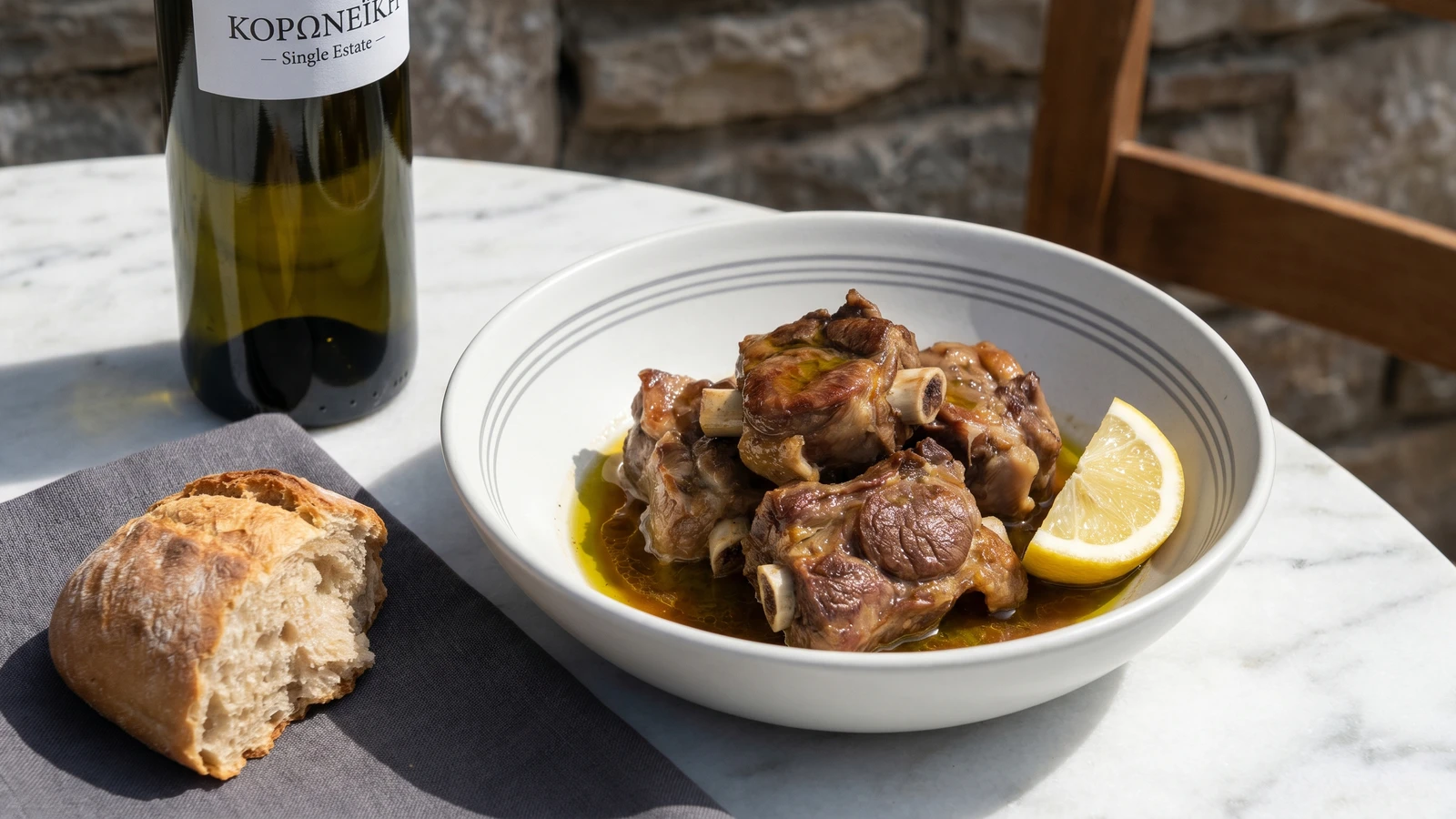
In Chania, tsigariasto is goat or lamb browned in olive oil, softened with wine, and left to braise without water until the pot gives back only glossy meat juices.
Tsigariasto belongs to the mountains of western Crete, especially Chania: goat or lamb browned in olive oil and cooked down with wine, no water, no tomato, no fragrant pile of herbs. The name tells you the method, from tsigarizo, to brown in fat. What makes it itself is the spareness. Good meat, good oil, patience.
I want you to hear this before the pot goes on: the browning is the dish. Brown the pieces hard and in batches. If the meat is crowded, it releases grey liquid and the pot becomes a plain stew; if it has space, the oil takes the browned flavor and the later wine turns that into sauce. After that, lower the flame and leave it alone.
This is the Cretan table after a fast or on a feast day, rich but not busy. I don't add onion because the old Chania version doesn't need its sweetness, and I don't add water because water erases the whole point. My notebook has three versions from Cretan cooks, and the best one is the plainest: meat, oil, wine, salt, pepper. Λίγα και καλά, a few things, and good ones.
Tsigariasto is tied to western Crete, especially Chania and the villages below the Lefka Ori, the White Mountains, where kid goat and lamb were feast meats rather than everyday food. Its name comes from tsigarizo, meaning to brown in fat, and the dish preserves that older verb in the pot: the meat is first colored in olive oil, then finished in its own juices with wine. Unlike Cretan kokkinisto, it has no tomato sauce; the reduced oil, wine, and meat juices are the sauce.
Quantity
1.5kg
cut into 5-6cm pieces
Quantity
120ml
Quantity
180ml
Quantity
12g
plus more to taste
Quantity
1 teaspoon
Quantity
1
cut into wedges, for serving
| Ingredient | Quantity |
|---|---|
| bone-in kid goat or lamb shoulder or legcut into 5-6cm pieces | 1.5kg |
| Cretan extra virgin olive oil | 120ml |
| dry white wine | 180ml |
| fine sea saltplus more to taste | 12g |
| freshly ground black pepper | 1 teaspoon |
| lemon (optional)cut into wedges, for serving | 1 |
Take the meat out of the refrigerator 30 minutes before cooking. Pat every piece very dry, then season it with the salt and pepper. Keep the bone-in pieces large. Small cubes tighten before the sauce has time to become rich.
Set a wide heavy pot over medium-high heat and add the olive oil. When the oil is hot and shimmering, brown the meat in batches, 4 to 5 minutes per side, until the edges are deep brown. This is the step that decides tsigariasto. Crowd the pot and the meat leaks grey liquid; give it space and the oil takes on the browned flavor that becomes the whole sauce.
Return all the meat to the pot, pour in the wine, and scrape the browned bits from the bottom with a wooden spoon. Let the wine boil for 2 minutes so its sharp smell softens. There is no water in this dish.
Cover the pot, lower the heat to the smallest steady flame, and cook for 1 hour 45 minutes to 2 hours 15 minutes, turning the meat every 25 minutes. The meat should soften in its own juices and the wine, not swim. If the pot threatens to catch before the meat is tender, lower the heat first; if it still needs help, add 30ml wine, not water.
When the meat is tender enough to pull from the bone with a spoon, uncover the pot and cook 10 to 15 minutes more. Turn the pieces gently until the sauce reduces to glossy oil, wine, and meat juices clinging to the meat. Taste for salt.
Let the tsigariasto rest off the heat for 10 minutes before serving. Spoon the pot juices over the meat and serve with lemon wedges if you like, fried potatoes, horta, or Cretan pilafi. It is rich food, Easter food, mountain food. It does not need decoration.
1 serving (about 240g)
Culinary guides, cultural storytelling, and the editorial depth that makes cooking meaningful.
Discover Culinary ExplorerChef Dimitra
Aegean kakavia is the fisherman’s soup named for the pot itself: small rockfish, potato, onion, lemon, and enough olive oil to turn a poor catch rich.

Chef Dimitra
Corfu's bourdeto is a red, pepper-hot fish braise, traditionally made with scorpionfish, potatoes, tomato, and enough heat to announce the Ionian table.

Chef Dimitra
Central Macedonia's spring lamb fricassee braises shoulder with romaine, dill, and spring onion, then finishes the pot with avgolemono, the egg-lemon sauce that makes it silk.
Chef Dimitra
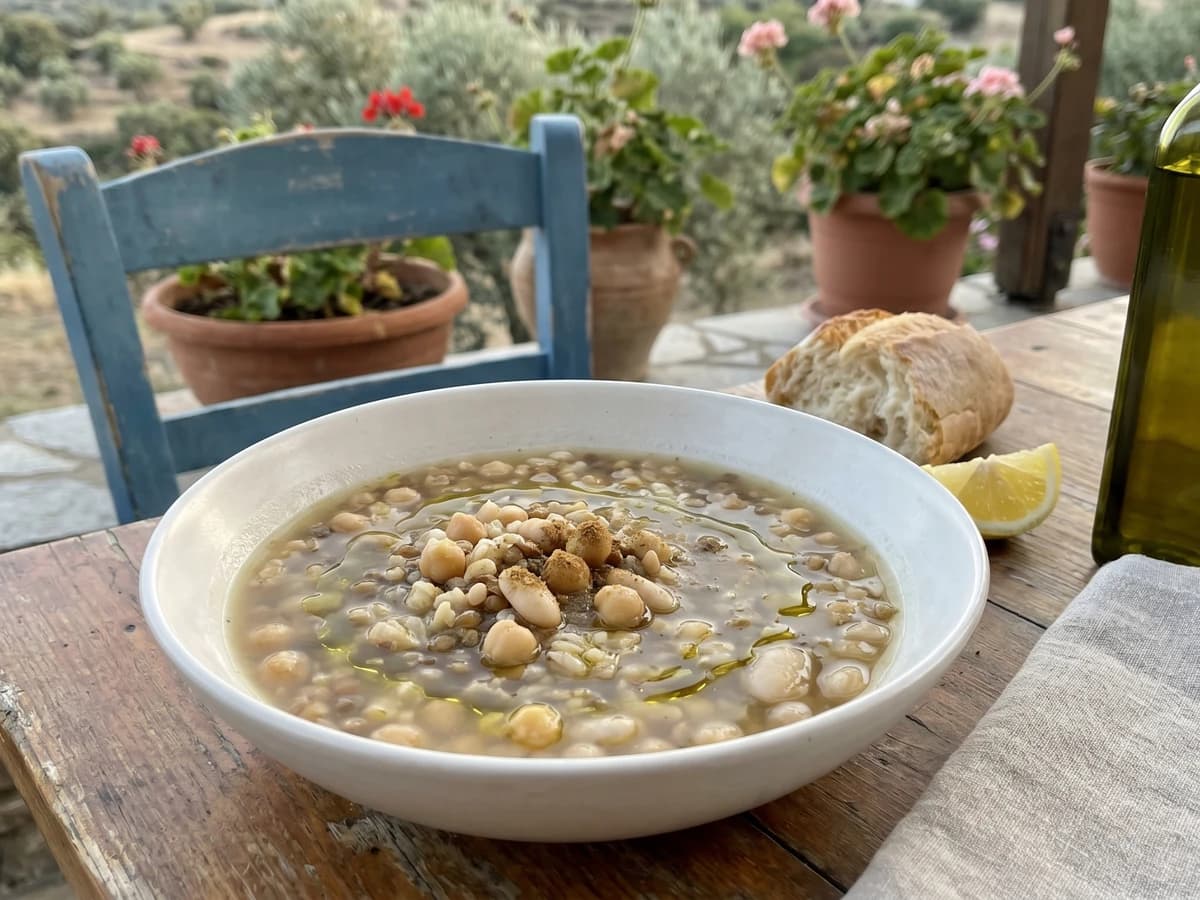
Crete's palikaria is a November fasting pot of chickpeas, white beans, lentils, and wheat, cooked in careful order and finished with cumin, lemon, and green-gold olive oil.