
Chef Dimitra
Aegean Island Kakavia (Κακαβιά)
Aegean kakavia is the fisherman’s soup named for the pot itself: small rockfish, potato, onion, lemon, and enough olive oil to turn a poor catch rich.
A cooking platform built around craft, culture, and the stories behind what we eat.

Created by
Central Macedonia's spring lamb fricassee braises shoulder with romaine, dill, and spring onion, then finishes the pot with avgolemono, the egg-lemon sauce that makes it silk.
Central Macedonia's arni frikase is spring lamb in its pale green clothes: shoulder or neck braised until tender, romaine folded in by the armful, dill at the end, and avgolemono holding the broth in a lemony silk. It belongs to the weeks around Easter, when lamb is on the table and the lettuces are still sweet enough to cook.
One method decides the dish. You take the pot off the heat and add hot broth to the eggs and lemon a ladle at a time, whisking until the bowl feels warm. Then the avgolemono goes back into the pot and thickens by the heat already there. Boil it and it curdles. Be patient and it turns glossy, clinging to the lamb and the greens.
The region is the dish's surname, and this is the Macedonian house version I write down: romaine, spring onion, dill, no tomato, no flour. If you have good endive or tender wild greens, they belong here too, but don't bury the lamb under every green in the market. Λίγα και καλά, a few things, and good ones.
Arni frikase belongs to the group of Greek dishes that kept the French word fricassée after European cooking language entered urban Greek cookbooks in the nineteenth and early twentieth centuries. In Macedonia and northern Greece, the word settled onto a spring dish of lamb or kid with lettuce, endive, or wild greens, finished with avgolemono rather than a cream sauce. Its Easter timing is practical as much as ritual: young meat and new greens arrive together.
Quantity
1.4kg
cut into 5cm pieces
Quantity
12g
divided
Quantity
1/2 teaspoon
Quantity
95ml
80ml for cooking and 15ml for finishing
Quantity
1 medium, about 180g
finely chopped
Quantity
8, about 220g
trimmed and sliced, white and tender green parts separated
Quantity
750ml
Quantity
2 large heads, about 700g trimmed weight
washed well and cut into wide ribbons
Quantity
25g
chopped, divided
Quantity
2
Quantity
70ml
from about 2 lemons
| Ingredient | Quantity |
|---|---|
| bone-in lamb shoulder or neckcut into 5cm pieces | 1.4kg |
| fine sea saltdivided | 12g |
| freshly ground black pepper | 1/2 teaspoon |
| extra virgin Koroneiki olive oil80ml for cooking and 15ml for finishing | 95ml |
| yellow onionfinely chopped | 1 medium, about 180g |
| spring onionstrimmed and sliced, white and tender green parts separated | 8, about 220g |
| hot water or light lamb stock | 750ml |
| romaine lettuce (marouli)washed well and cut into wide ribbons | 2 large heads, about 700g trimmed weight |
| fresh dill (anithos)chopped, divided | 25g |
| large eggs | 2 |
| fresh lemon juicefrom about 2 lemons | 70ml |
Pat the lamb dry. Season it with 8g of the salt and the black pepper, then let it sit while you wash the greens and cut the onions. Even twenty minutes helps the seasoning reach past the surface.
Warm 80ml olive oil in a wide heavy casserole over medium-high heat. Brown the lamb in two batches until golden at the edges, 3 to 4 minutes per side, then move it to a plate. Don't crowd the pot. The meat should take color, not sit there sweating and going gray.
Lower the heat to medium. Add the yellow onion, the white parts of the spring onions, and the remaining 4g salt to the oil in the pot. Cook for 7 to 8 minutes, stirring often, until the onions are glossy and sweet-smelling but not browned.
Return the lamb and any juices to the pot. Add 650ml of the hot water or stock, enough to come about halfway up the meat, not cover it like soup. Bring to a low simmer, cover, and cook for 1 hour to 1 hour 10 minutes, until the lamb is nearly tender when pierced near the bone.
Add the romaine by handfuls, turning it into the broth as it collapses. Add the green parts of the spring onions and half the dill. Cover and simmer gently for 15 to 20 minutes, until the lettuce is soft, the lamb is tender, and the broth tastes green and lamb-rich. Add the remaining hot water or stock only if the pot looks dry.
Take the casserole off the heat and let it stand for 5 minutes. Ladle about 350ml of hot broth into a jug or small pan. This pause matters because avgolemono wants heat, not a rolling boil.
Whisk the eggs and lemon juice in a bowl until even and pale. Add the hot broth in a thin stream, one ladle at a time, whisking the whole time, until the bowl feels warm. Pour the avgolemono back into the pot while gently shaking the casserole, then return it to the lowest heat for 1 to 2 minutes, just until the sauce thickens and turns glossy. Do not let it boil.
Rest the frikase for 10 minutes before serving. Scatter over the remaining dill, spoon on the final 15ml olive oil, and add a little black pepper. Serve in deep bowls with country bread or a plain rice pilaf to catch the sauce.
1 serving (about 385g)
Culinary guides, cultural storytelling, and the editorial depth that makes cooking meaningful.
Discover Culinary ExplorerChef Dimitra
Aegean kakavia is the fisherman’s soup named for the pot itself: small rockfish, potato, onion, lemon, and enough olive oil to turn a poor catch rich.

Chef Dimitra
Corfu's bourdeto is a red, pepper-hot fish braise, traditionally made with scorpionfish, potatoes, tomato, and enough heat to announce the Ionian table.

Chef Dimitra
In Chania, tsigariasto is goat or lamb browned in olive oil, softened with wine, and left to braise without water until the pot gives back only glossy meat juices.
Chef Dimitra
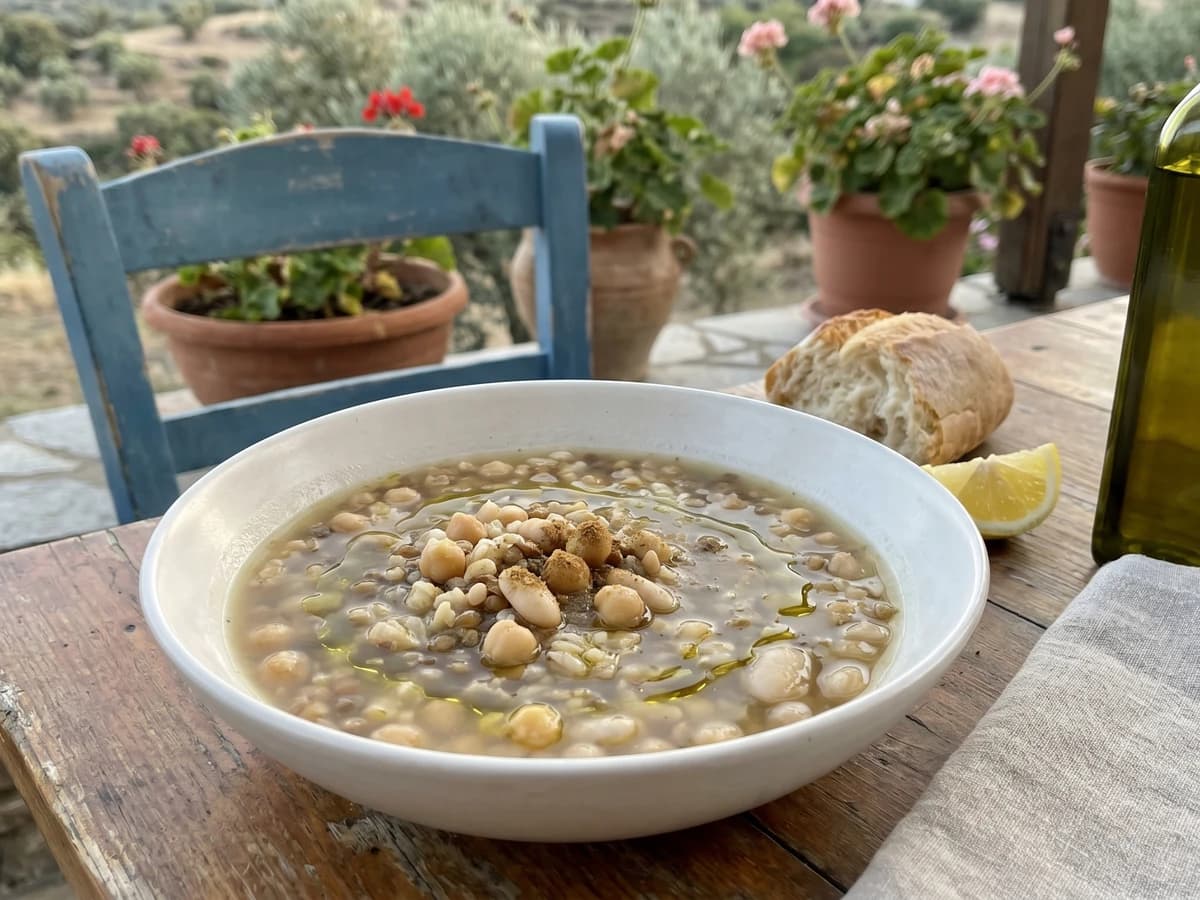
Crete's palikaria is a November fasting pot of chickpeas, white beans, lentils, and wheat, cooked in careful order and finished with cumin, lemon, and green-gold olive oil.