
Chef Dimitra
Aegean Island Kakavia (Κακαβιά)
Aegean kakavia is the fisherman’s soup named for the pot itself: small rockfish, potato, onion, lemon, and enough olive oil to turn a poor catch rich.
A cooking platform built around craft, culture, and the stories behind what we eat.
Created by
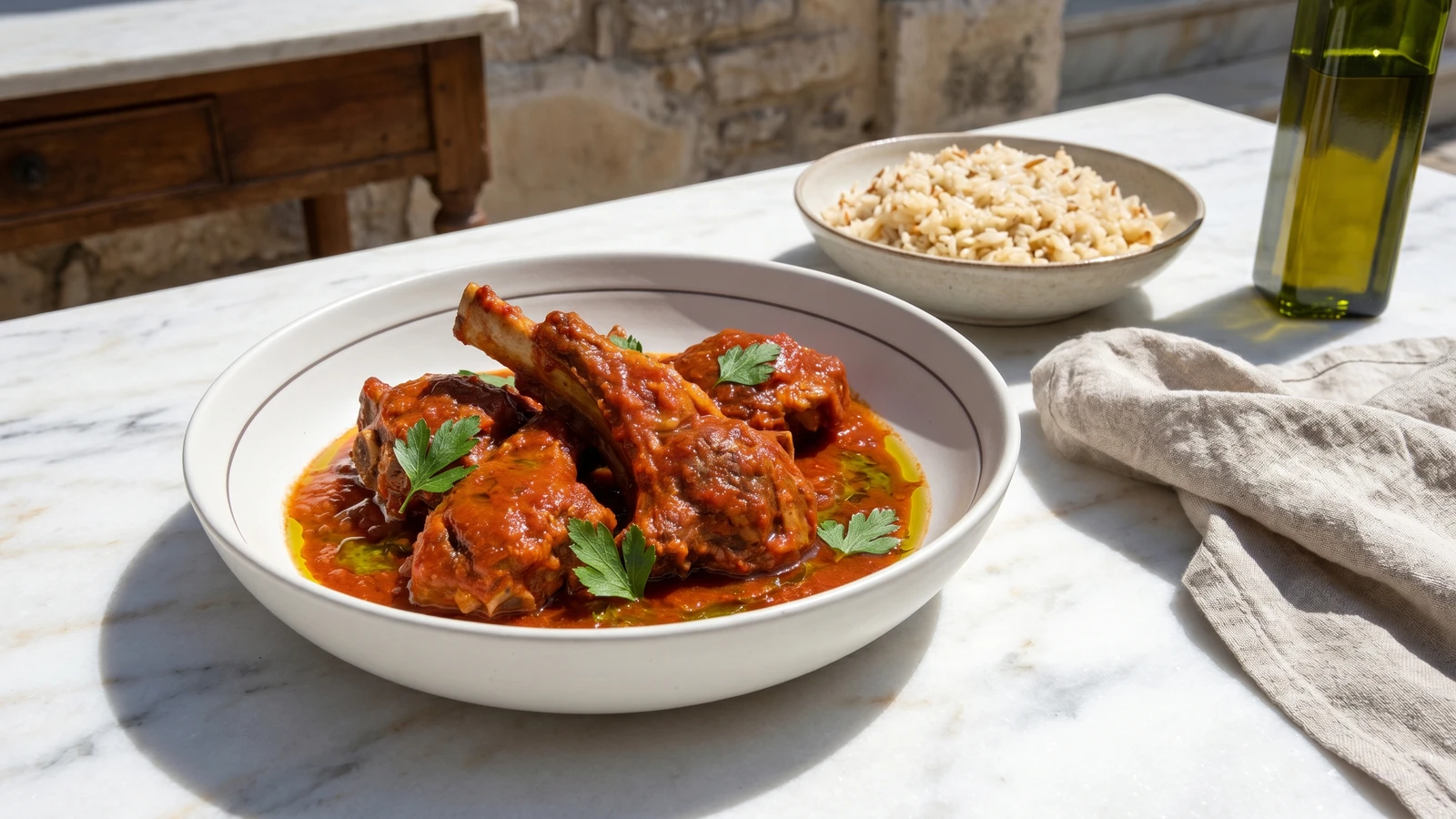
Politiki lamb kapama is a covered Easter braise, tomato-red and warm with cinnamon, clove, and allspice. Brown the meat hard first, then let the pot do its old work.
Politiki kapama is lamb cooked covered in tomato until the sauce darkens, the bone loosens, and the kitchen smells of cinnamon, clove, and bahari, allspice. This is not plain kokkinisto with a shy spice drawer. The warm spice is the identity of the dish.
The step that decides it is browning. Give the lamb real color in batches before tomato touches the pot. If the meat steams, the sauce tastes flat; if it browns, every spoonful of tomato carries lamb, oil, and spice. Then you cover the pot and let it go slowly. Kapama means covered, and the old word still knows what it's doing.
At Easter, after the long fast, this is the kind of lamb that feels generous without being noisy. In my Thessaloniki kitchen I serve it with rice pilaf or thick hilopites to catch the sauce. My grandmother Despina would have smelled the clove first and said, good, now it is from the City. You can make it without ceremony: λίγα και καλά, a few good things, and patience.
Kapama takes its name from Turkish kapamak, to cover, and in Greek kitchens it came to mean meat cooked closed in its pot until the sauce turns thick and red. The spiced tomato version belongs to the urban cooking of Constantinople and Asia Minor; after 1922, Asia Minor refugees carried related versions into Macedonia and Thrace, where spring lamb made it natural Easter food. The cinnamon, clove, and allspice mark those old trade routes more clearly than any garnish could.
Quantity
1.8kg
cut into 6-8 large pieces
Quantity
16g
Quantity
1 tsp
Quantity
80ml
Quantity
300g
finely chopped
Quantity
4
thinly sliced
Quantity
40g
Quantity
150ml
Quantity
700g
preferably preserved summer tomato
Quantity
250ml
Quantity
2
Quantity
6
Quantity
8
Quantity
1
Quantity
1 tsp
only if the tomatoes are sharp
Quantity
10g
chopped
Quantity
to serve
| Ingredient | Quantity |
|---|---|
| bone-in lamb shoulder or forequartercut into 6-8 large pieces | 1.8kg |
| fine sea salt | 16g |
| freshly ground black pepper | 1 tsp |
| extra virgin Koroneiki olive oil | 80ml |
| yellow onionsfinely chopped | 300g |
| garlic clovesthinly sliced | 4 |
| tomato paste | 40g |
| dry red wine | 150ml |
| crushed tomatoes or passatapreferably preserved summer tomato | 700g |
| hot water or light lamb stock | 250ml |
| cinnamon sticks | 2 |
| whole cloves | 6 |
| whole allspice berries (bahari, μπαχάρι) | 8 |
| bay leaf | 1 |
| sugar (optional)only if the tomatoes are sharp | 1 tsp |
| flat-leaf parsley leaves (optional)chopped | 10g |
| rice pilaf or thick hilopites (optional) | to serve |
Season the lamb pieces all over with the salt and pepper, then let them stand for 30 minutes while you chop the onions. Pat the meat dry before it meets the pot. Wet lamb browns badly, and kapama needs color before it needs sauce.
Heat the olive oil in a wide heavy pot over medium-high heat. Brown the lamb in two or three batches, 4-5 minutes per side, until you have deep dark patches on the meat. This is the step that decides the dish: crowded meat steams and gives you a flat tomato stew, but well-browned lamb makes the sauce taste of meat, oil, and spice. Set the browned pieces on a plate.
Lower the heat to medium. Add the onions to the same pot and cook for 8-10 minutes, scraping up the browned bits, until they are soft, sweet-smelling, and pale gold. Add the garlic and cook for 1 minute. If the bottom looks dry, add a spoonful of water, not more oil.
Stir in the tomato paste and cook for 2 minutes, until it darkens to brick red. Add the wine and let it bubble down by half, scraping the pot clean. Stir in the crushed tomatoes, hot water or stock, cinnamon sticks, cloves, allspice, bay leaf, and the sugar if the tomatoes need it.
Return the lamb and its juices to the pot. The sauce should come about halfway up the meat, not drown it. Cover tightly and cook on the lowest steady simmer for 2 hours to 2 hours 30 minutes, turning the pieces once or twice, until a fork slides in easily and the meat loosens from the bone. Kapama means covered, and here the name still tells you the method.
Uncover the pot. If the sauce is thin, simmer gently for 10-15 minutes until it thickens and shines around the lamb. Remove the cinnamon sticks, cloves, allspice berries, and bay leaf if you can find them. Taste for salt, then let the kapama rest for 15 minutes before serving.
Serve the lamb with rice pilaf or thick hilopites, spooning plenty of the red, spiced sauce over the top. Add parsley only if you like that fresh edge at the end. The dish wants the sauce caught, not admired from a distance.
1 serving (about 350g)
Culinary guides, cultural storytelling, and the editorial depth that makes cooking meaningful.
Discover Culinary ExplorerChef Dimitra
Aegean kakavia is the fisherman’s soup named for the pot itself: small rockfish, potato, onion, lemon, and enough olive oil to turn a poor catch rich.

Chef Dimitra
Corfu's bourdeto is a red, pepper-hot fish braise, traditionally made with scorpionfish, potatoes, tomato, and enough heat to announce the Ionian table.

Chef Dimitra
Central Macedonia's spring lamb fricassee braises shoulder with romaine, dill, and spring onion, then finishes the pot with avgolemono, the egg-lemon sauce that makes it silk.

Chef Dimitra
In Chania, tsigariasto is goat or lamb browned in olive oil, softened with wine, and left to braise without water until the pot gives back only glossy meat juices.