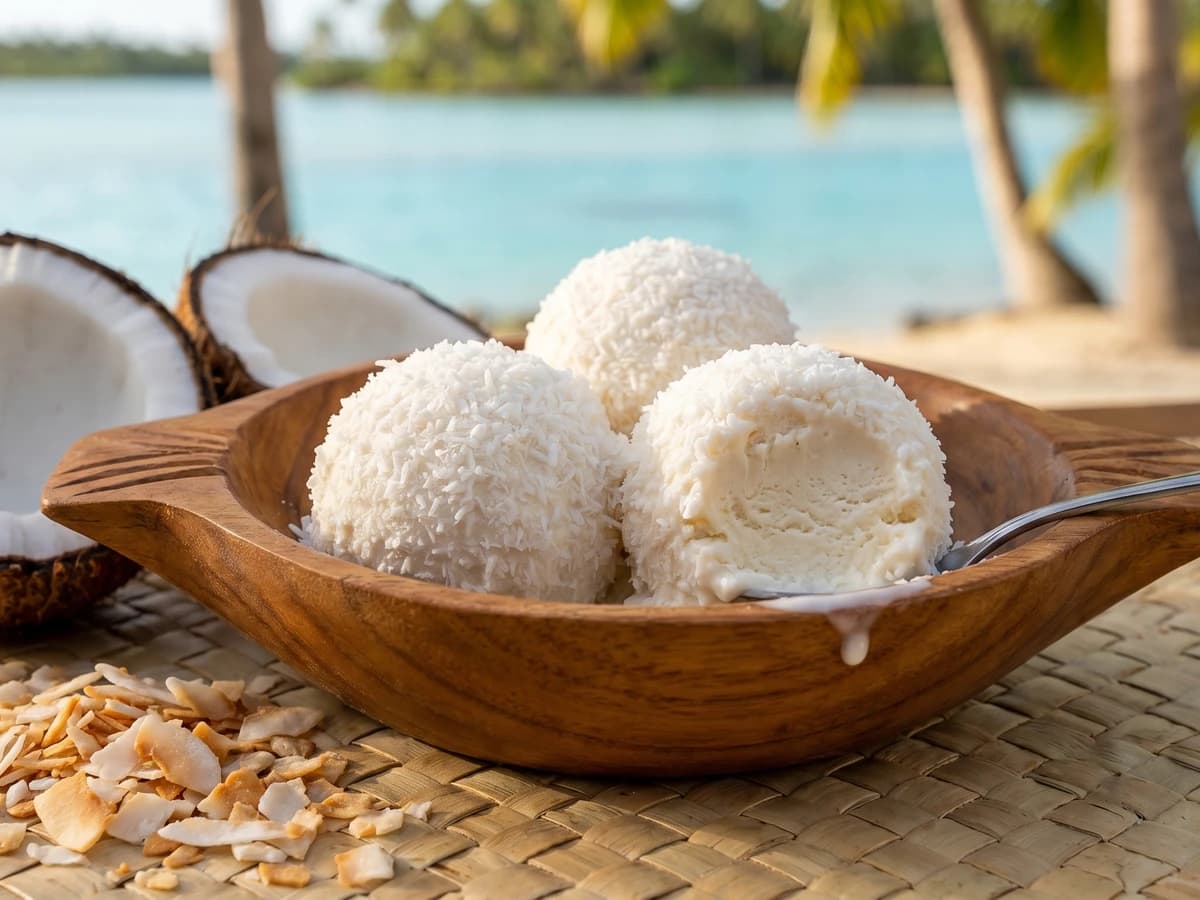
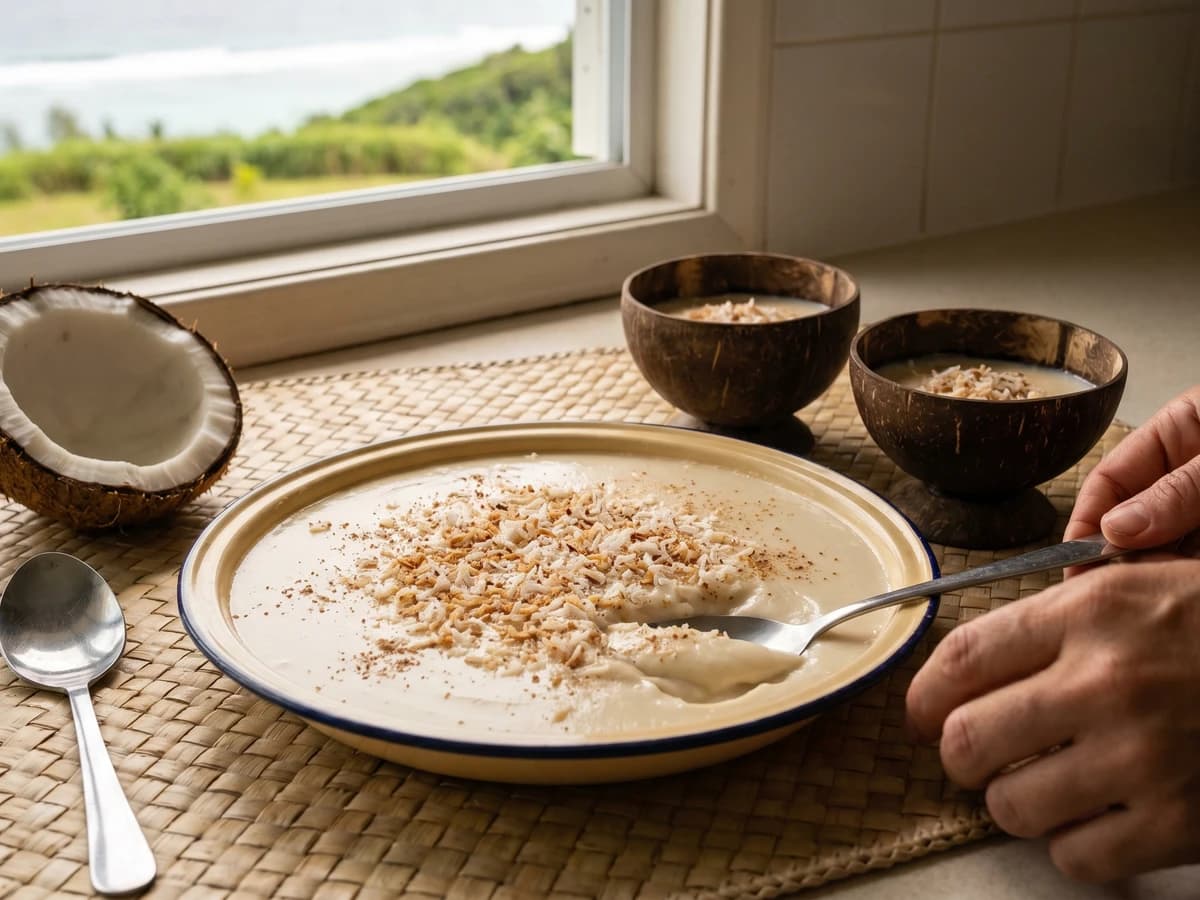
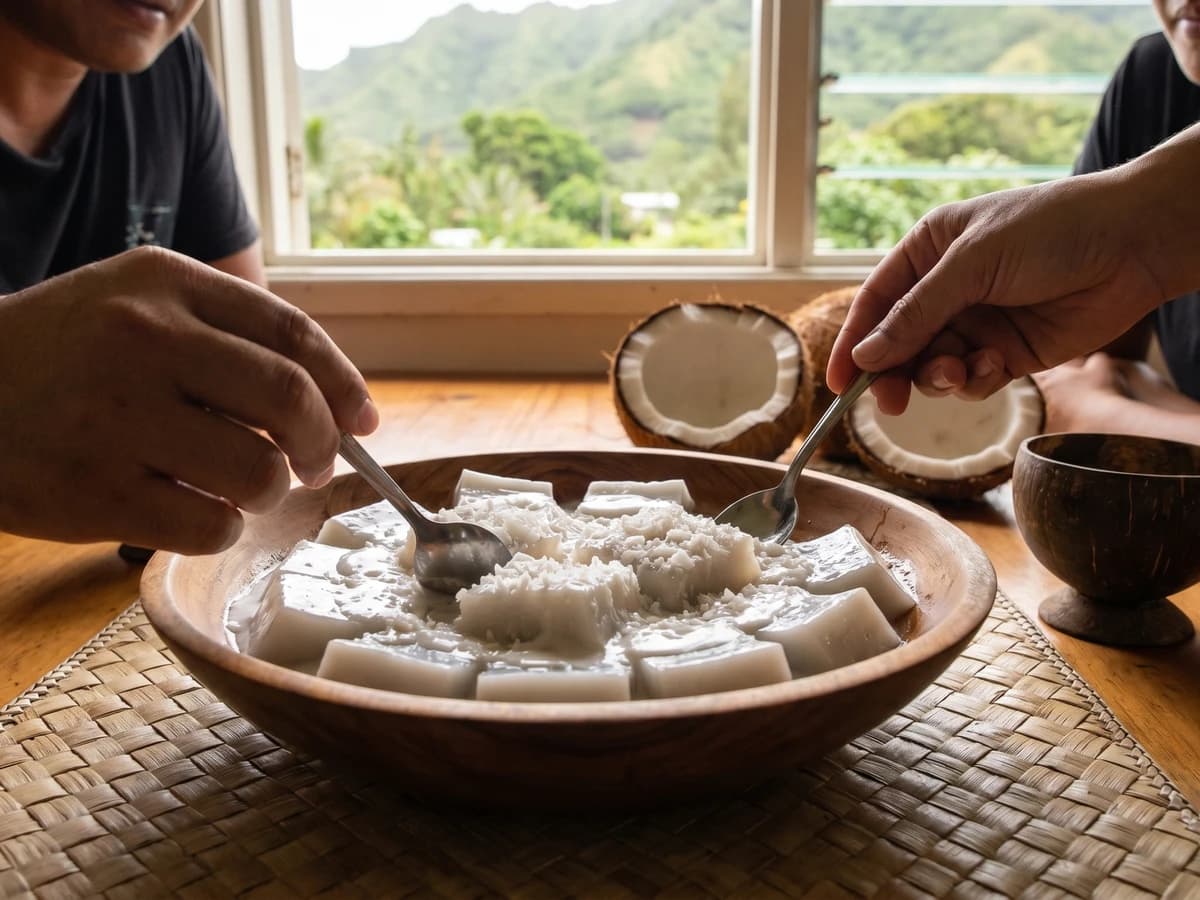
Cook Islands poke ʻanani turns ripe pawpaw into a bright orange pudding, baked until tender and chewy, then flooded with sweet coconut cream for the whole table.
Desserts
Polynesian, Cook Islands
Comfort Food
Celebration
Make Ahead
20 min
Active Time
1 hr 10 min cook•1 hr 30 min total
Yield8 servings
The canoe carried the roots, and the islands taught the fruit how to feed the people. This one belongs to the Cook Islands, poke ʻanani, a pawpaw pudding bright as sunset and soft enough for a child, but still carrying the old lesson: use what is ripe, feed who is there, waste nothing.
I learned this kind of dish from Cook Islands hands, and I hold it that way. Their umukai, the Cook Islands earth oven, has its own people and its own order, so for the deep ceremony I send you to the aunties, uncles, and ariki who carry it. Here in the home kitchen, the oven stands in plain and honest, because most of us are cooking between work, school, and somebody asking when food ready.
Poke in the Cooks has cousins all over the ocean, not because every island makes the same pudding, but because one ocean taught us the same respect for starch, coconut, and ripe fruit. Hawaiʻi has poi and kūlolo from kalo, Tahiti has poʻe with fruit and starch, and the Cooks have this orange poke with arrowroot and coconut cream. One ocean, one canoe, one root, and every island with its own hand.
Cook the pawpaw down until it smells deep and sweet, then bake it until the pudding pulls from the pan and holds a clean cut. The coconut cream goes over warm or cool, thick and glossy. No need make it precious. Just make enough, because somebody always wants one more spoon.
Cook Islands poke is part of a wider Polynesian family of fruit-and-starch puddings, often made with banana, pumpkin, or pawpaw and finished with coconut cream. Arrowroot was an important island starch before imported flours became common, and these puddings show the old food grammar living beside the modern pantry. The dish sits close to Tahitian poʻe and Hawaiian kūlolo in method, but poke ʻanani belongs to the Cook Islands table and should be named that way.
The technique, the tradition, and the story behind every dish.
Put the chopped pawpaw in a heavy pot with the 1/2 cup sugar and the salt. Cook over medium heat, stirring often, until the fruit collapses into a thick orange mash and the smell turns deep and jammy, about 20 minutes. If your fruit is already very sweet, pull the sugar back. Eat what you have.
2
Mash it smooth
Mash the fruit with a potato masher or blend it briefly with an immersion blender. You want it mostly smooth, but not fancy-smooth. A little body tells the truth of the fruit.
3
Work in starch
Take the pot off the heat and stir in the arrowroot starch a little at a time, beating well so no dry pockets hide in the orange mash. The mixture should be thick, glossy, and heavy enough to mound on the spoon. If the pawpaw was very juicy, add another tablespoon or two of arrowroot.
4
Bake the poke
Grease an 8-inch square pan or line it with banana leaf where you have it. Spread the pawpaw mixture in evenly and bake at 350F for 45 to 50 minutes, until the top looks set and shiny, the edges pull slightly from the pan, and a knife comes out with only a little orange tackiness.
5
Sweeten the cream
While the poke bakes, warm 1 cup of the coconut cream with the 2 tablespoons sugar just until the sugar dissolves. Stir in the vanilla if you're using it. Keep the last 1/2 cup coconut cream plain for finishing, so the table gets that clean coconut taste too.
6
Rest and flood
Let the poke rest at least 20 minutes so it firms into clean, tender squares. Cut it warm or cool, spoon the sweet coconut cream over the top, then finish with a little plain coconut cream for a thick white gloss against the orange. Serve family-style, with enough cream on the side for the auntie who always wants more.
Chef Tips
•Use pawpaw that smells ripe before you cut it. If the fruit is bland, sugar won't fix the whole thing, but a small squeeze of lime in the mash can wake it up without taking over.
•Arrowroot gives poke that tender, chewy set. Tapioca starch can stand in if that's what you have, but add it slowly because it thickens with a different pull.
•Fresh coconut cream is beautiful here. A good canned coconut cream is fine for a weeknight, just choose one that is thick and plain, not coconut drink.
Advance Preparation
•Poke ʻanani can be baked one day ahead, cooled, covered, and refrigerated. Cut it cold, then let it sit at room temperature before serving.
•Sweetened coconut cream keeps for one day in the fridge. Stir it well before spooning because the fat rises and the water settles.
Frequently Asked Questions
Nutrition Information
1 serving (about 230g)
Calories
350 calories
Total Fat
13 g
Saturated Fat
12 g
Trans Fat
0 g
Unsaturated Fat
1 g
Cholesterol
0 mg
Sodium
105 mg
Total Carbohydrates
59 g
Dietary Fiber
4 g
Sugars
31 g
Protein
2 g
Where cooking meets culture.
Culinary guides, cultural storytelling, and the editorial depth that makes cooking meaningful.