Chef Makoa
Chinese Almond Cookies (Hawaiʻi Local Red-Dot Cookies)
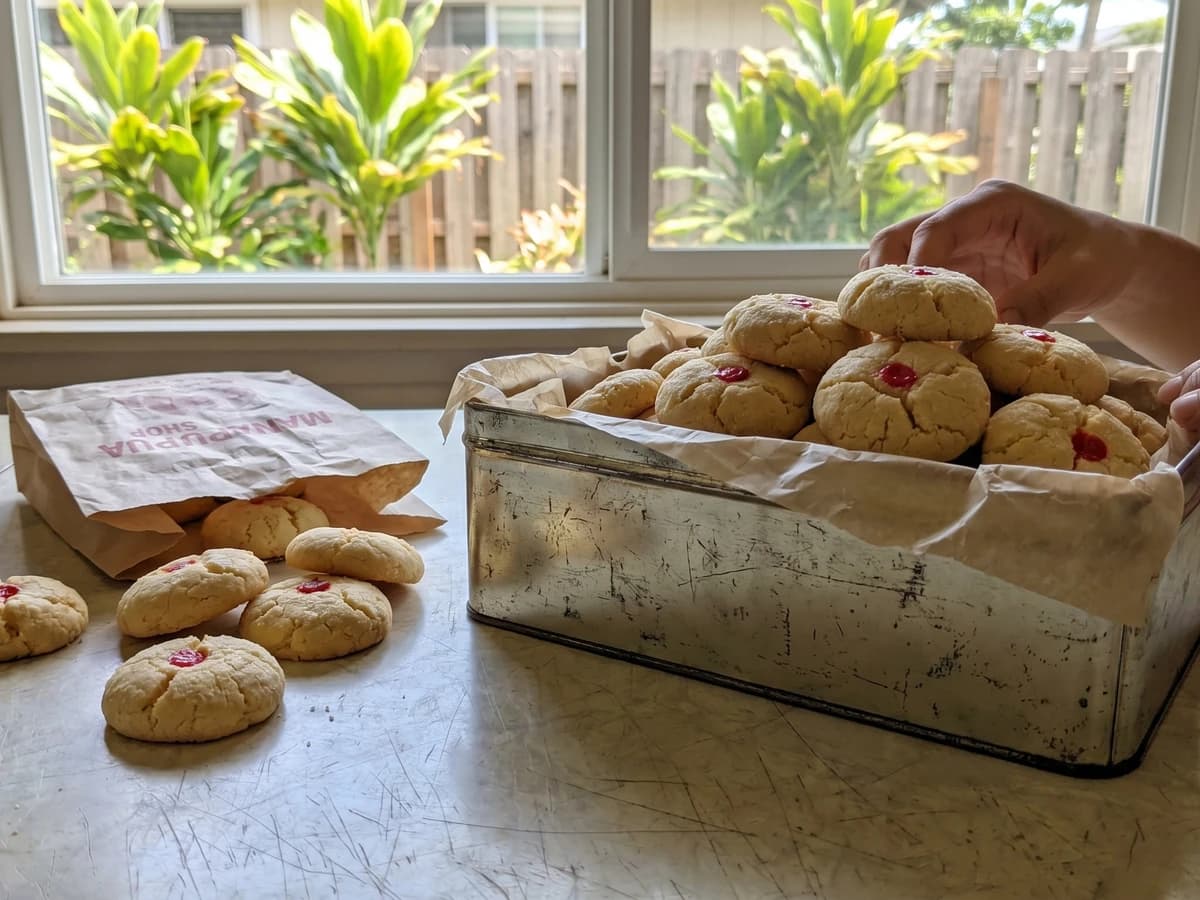
Buttery, sandy Chinese almond cookies from Hawaiʻi's Local table, marked with the lucky red dot, the kind you found in a bakery case, a manapua man's box, or a holiday tin.
A cooking platform built around craft, culture, and the stories behind what we eat.
Created by
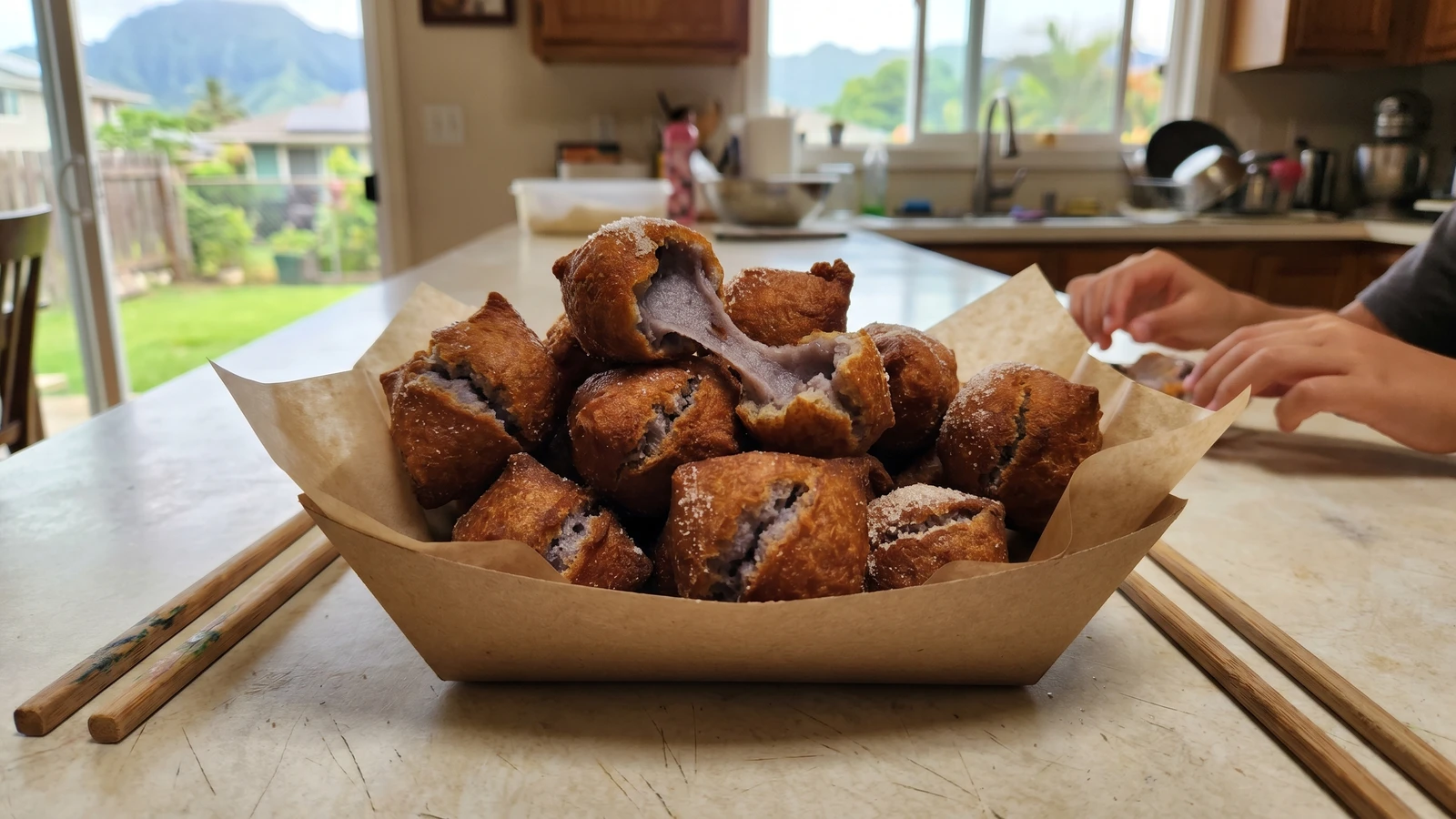
Hawaiʻi's Local fair-food sweet, where poi from the kalo board meets Japanese mochiko in the fryer, turning crisp at the edges and soft-chewy in the middle.
Hāloa is our elder brother, and even when poi walks into the Local kitchen and comes out as dessert, I still remember that. This is Hawaiʻi's dish, born from the everyday table where Hawaiian poi and Japanese mochiko, sweet rice flour, met each other in plantation-era neighborhoods, school fairs, fundraisers, and aunties' kitchens. Deep food and immigrant food sitting side by side. That's Hawaiʻi too.
Across the Triangle the cousins know the same root: kalo in Hawaiʻi, talo in Sāmoa and Tonga, taro in the Cooks, pulaka in the atolls, pounded into poi, poʻe, and popoi in different hands. One ocean, one canoe, one root. But poi mochi belongs here, to Hawaiʻi Local, not to every island under one blurred name.
The trick is simple and a little stubborn. The batter should be sticky enough to fight the spoon, then it drops into hot oil and puffs into rough little bites, crisp outside, stretchy inside, purple-gray from the poi. No need make it precious. Fry it, sugar it if you like, pass the tray while it's still got that fresh gloss, and make enough for the cousin who said they only wanted one.
Poi mochi is a modern Hawaiʻi Local sweet, shaped by the meeting of Kanaka Maoli poi and Japanese mochiko after Japanese laborers and families became part of Hawaiʻi's plantation communities in the late 1800s. It is not old ceremonial food from the loʻi, the irrigated taro patch; it is the other half of the island table, where immigrant bakery, mochi-shop, and home-kitchen hands turned what was available into something everyone wanted at the party. That honesty matters: the poi carries deep genealogy, and the fried mochi form carries Hawaiʻi's Local history.
Quantity
1 cup
fresh or lightly sour Hawaiian poi
Quantity
1 1/2 cups
Quantity
1/2 cup
Quantity
2 teaspoons
Quantity
1/4 teaspoon
Quantity
1/2 cup, plus 1 to 3 tablespoons more as needed
Quantity
for frying
Quantity
2 tablespoons
for dusting
| Ingredient | Quantity |
|---|---|
| poifresh or lightly sour Hawaiian poi | 1 cup |
| mochiko, Japanese sweet rice flour | 1 1/2 cups |
| granulated sugar | 1/2 cup |
| baking powder | 2 teaspoons |
| fine sea salt | 1/4 teaspoon |
| water | 1/2 cup, plus 1 to 3 tablespoons more as needed |
| neutral oil | for frying |
| granulated sugar (optional)for dusting | 2 tablespoons |
Pour 2 inches of neutral oil into a heavy pot and heat to 350F. Keep the pot no more than half full, because the bites puff and the oil needs room. Set a rack or paper towel-lined tray nearby.
Whisk the mochiko, sugar, baking powder, and salt together until the flour is even and no little pockets of baking powder are hiding. Mochiko clumps easy, so break it up now before the poi comes in.
Stir the poi and water together until loosened, then fold that into the dry mix. The batter should be thick, sticky, and purple-gray, more like soft paste than pancake batter. If it stands too stiff and dry, add water 1 tablespoon at a time. No blame the taro. You just help it along.
Use two small spoons or a small cookie scoop to drop tablespoon-size portions into the oil, six or seven at a time. Fry 3 to 5 minutes, turning often, until the outside is deep golden brown with darker purple-gray seams and the bites feel light for their size.
Lift the poi mochi to the rack and let the surface settle into a glossy crisp edge. Break one open from the first batch: the middle should be cooked through, chewy, and stretchy, not wet batter. Dust with sugar while warm if you like, or leave them plain the way plenty aunties do.
Serve the poi mochi the same day, warm if you can. They belong in a paper tray, on a kitchen plate, or passed around outside while everybody is still talking. Crisp edge, chewy middle, one more bite than you meant to eat.
1 serving (about 27g)
Culinary guides, cultural storytelling, and the editorial depth that makes cooking meaningful.
Discover Culinary ExplorerChef Makoa
Buttery, sandy Chinese almond cookies from Hawaiʻi's Local table, marked with the lucky red dot, the kind you found in a bakery case, a manapua man's box, or a holiday tin.

Chef Makoa
A Hawaiʻi Local bakery pie from Oʻahu: firm coconut haupia over chocolate cream in a flaky shell, chilled clean, topped with soft whipped cream.

Chef Makoa
Honolulu bakery-case comfort: crisp choux puffs filled with soft chocolate pudding and capped with Hawaiʻi-style Chantilly, the buttery cooked frosting that belongs to Oʻahu birthdays, office boxes, and after-school hands.

Chef Makoa
The Oʻahu home-tin cookie, buttery and crackly with cornflakes and rice cereal, baked by aunties for Christmas exchanges, church potlucks, and one more cousin reaching across the table.